.png)
.png) 2 months ago
21
2 months ago
21


Published May 23, 2026, 11:42 AM EDT
Daniel Trock is a Writer at DualShockers specializing in PC games, lists, and reviews. He has been writing professionally since 2018 and covering games since 2020, with previous work spanning guides, news, lists, and reviews across multiple publications.
Before joining DualShockers, Daniel contributed guides to GamerJournalist and lists to TheGamer. He currently covers tech topics for SlashGear and BGR. He holds a Bachelor’s Degree in Psychology from Marist College and a Master of Fine Arts in Creative and Professional Writing from Western Connecticut State University.
Sign in to your DualShockers account
It might seem obvious for an adventure game’s world to grow in scope as you play it. It’s a literal journey, you’re probably going to experience the world firsthand. However, in fiction, a world can have two kinds of scopes: literal scope and metaphorical scope. Many adventure games stick exclusively to the former with large worlds, but some of my favorites dabble in both varieties.
 Related
10 Best Semi-Open World Games
For players who want to explore, but not be overwhelmed by a world larger than the story.
Through a combination of multifaceted stories, dense lore, and interesting characters to carry it all, some adventure games end up feeling much larger in scope than they initially did, even if they start out with physically large maps. By the tail-end of the game, you’ve gained an understanding of not just how far you’ve walked, but the nitty-gritty details that help to bring the world to life, make it feel like a real, functional place rather than just a map you’re walking on in a game.
10 CrossCode
It’s Not Just a Game
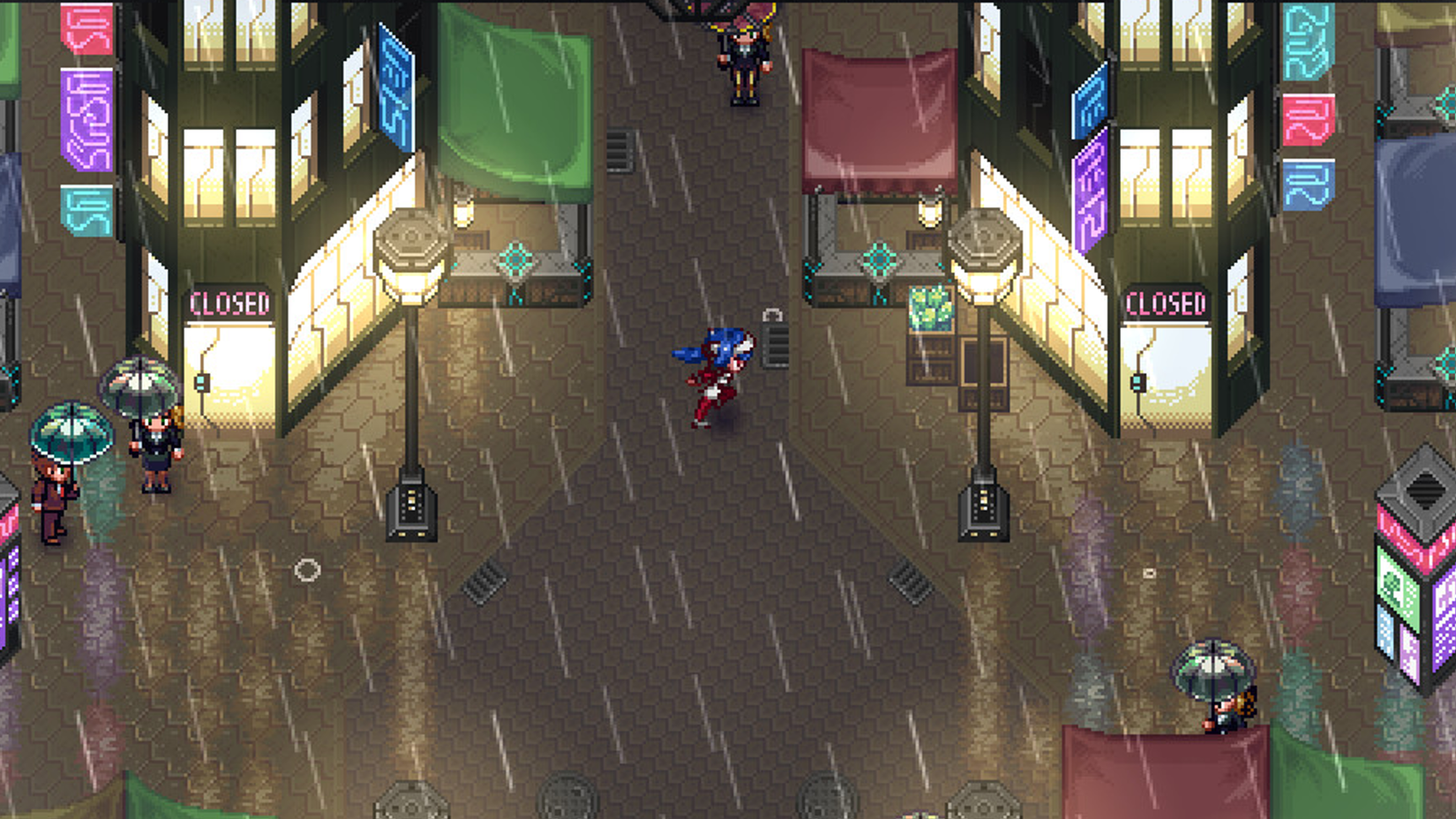
It’s usually a given that a game specifically about games is going to have some manner of hidden depths, especially if they involve our protagonist being trapped in said game, .hack style. It’s a testament to CrossCode’s setting, then, that the fact that its game world physically exists is the least interesting part about it.
The in-universe MMO CrossWorlds is set in a virtual utopia built on the moon Shadoon, with player characters being generated as sort of remotely-operated puppets. Even with its immersive element, most players are content to treat it like a traditional MMO, for Lea, who can’t actually log out, it is quite literally her entire world.
As the game reveals, Lea isn’t actually “trapped” in the game per se; rather, she’s an artificial intelligence who exists exclusively inside CrossWorld’s sphere of influence, one of many digital beings created as part of an elaborate scheme to harvest user data. It’s kind of ironic; in learning about Lea’s actual situation, rather than making her world bigger with the implication that she could return to reality, her world actually gets smaller, because CrossWorlds is literally the only place where she can physically exist.
9 Transistor
A City By the People, For the People
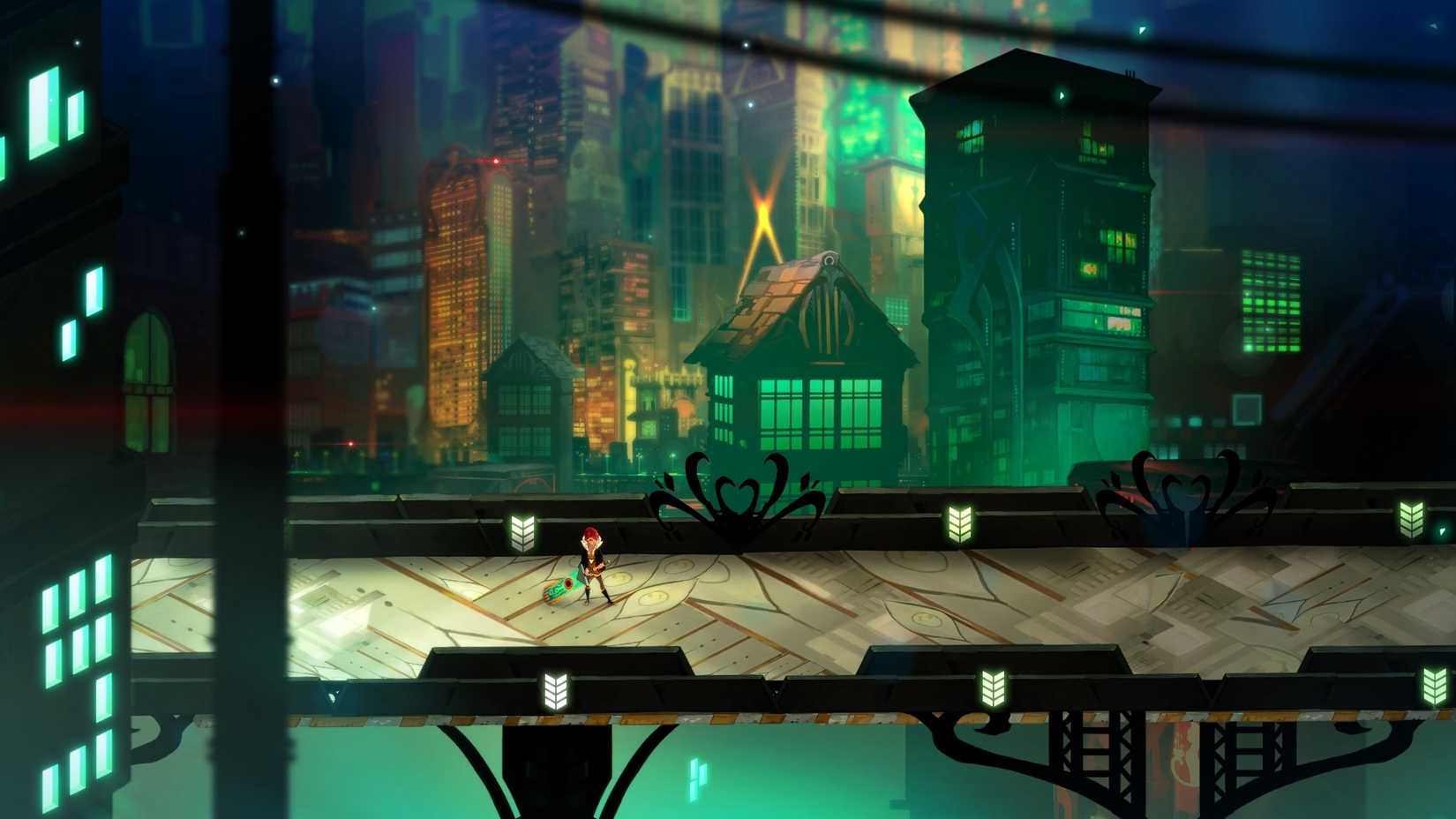
Transistor is set in the futuristic city of Cloudbank, a technological urban utopia built on the concept of all-encompassing democracy. If there’s anything about the city the populace doesn’t like, they can vote to change it, right down to the day’s weather or the color of the sky. Of course, we don’t really glean an understanding of this until a short ways into the story, since we start in media res with Red standing over the impaled body of her nameless lover.
As Red and her companion, now dwelling in the Transistor, voyage through Cloudbank and fight off the marauding Process, her companion speaks for the both of them, since Red’s voice has been taken. He reminisces about the goings-on in the city, from the humble flatbread shop where they get lunch to the sinister machinations of the city’s hidden ruling body, the Camerata.
In addition to revelations about the role of the Process in shaping the city, you can also learn more about its citizens by absorbing their trace data, and gradually understanding how such a flighty city can be a bit… difficult to live in for certain kinds of people.
8 Dungeons of Hinterberg
Vacations can be Complicated
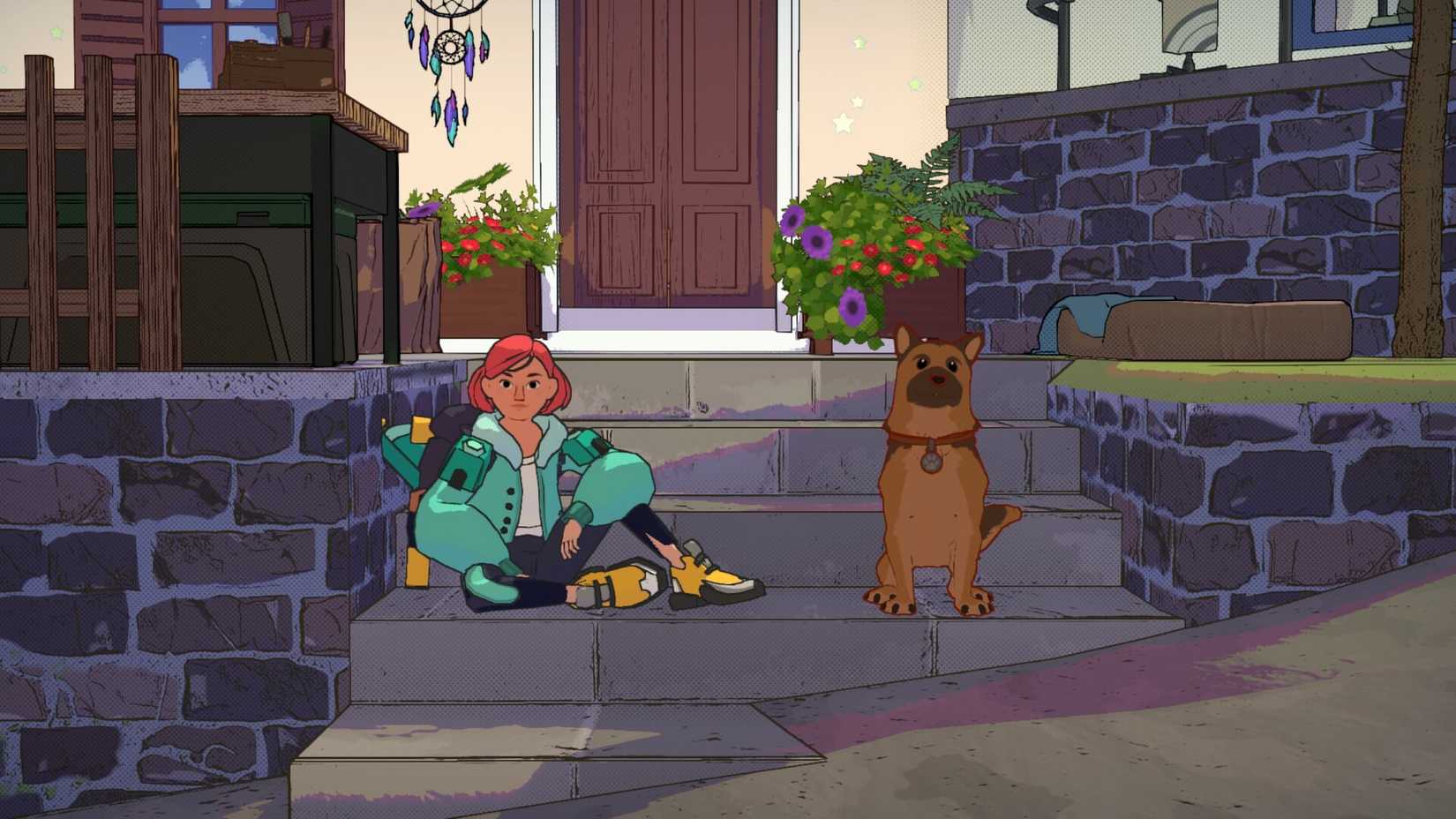
Part of the reason one typically goes on an international vacation is to broaden their scope of the world. You can have a lot of your preconceptions challenged just by visiting a place far removed from your own. And if that place should happen to have a connection to a mythological otherworld like the titular Dungeons of Hinterberg, all the better.
When Luisa first arrives in Hinterberg, she’s explicitly there for a straightforward vacation. It’s a nice town up in the Alps, and the recent uncovering of supernatural dungeons has made for quite the tourist destination, but Luisa mostly just wanted an excuse to get away from her soul-draining job. As she explores the town, the surrounding landscapes, and most importantly, the dungeons, Luisa gets a better understanding of how, exactly, the newly-formed dungeon economy is actually affecting Hinterberg.
The dungeons are being heavily exploited by the town’s mayor for an overzealous tourism push, and many of its citizens are worried about losing their way of life, not to mention getting gentrified out of their homes. There’s also the very real threat of the monsters emerging from dungeons, which does need to be dealt with, no matter how many tourists they attract.
7 Grim Fandango
Life After Life
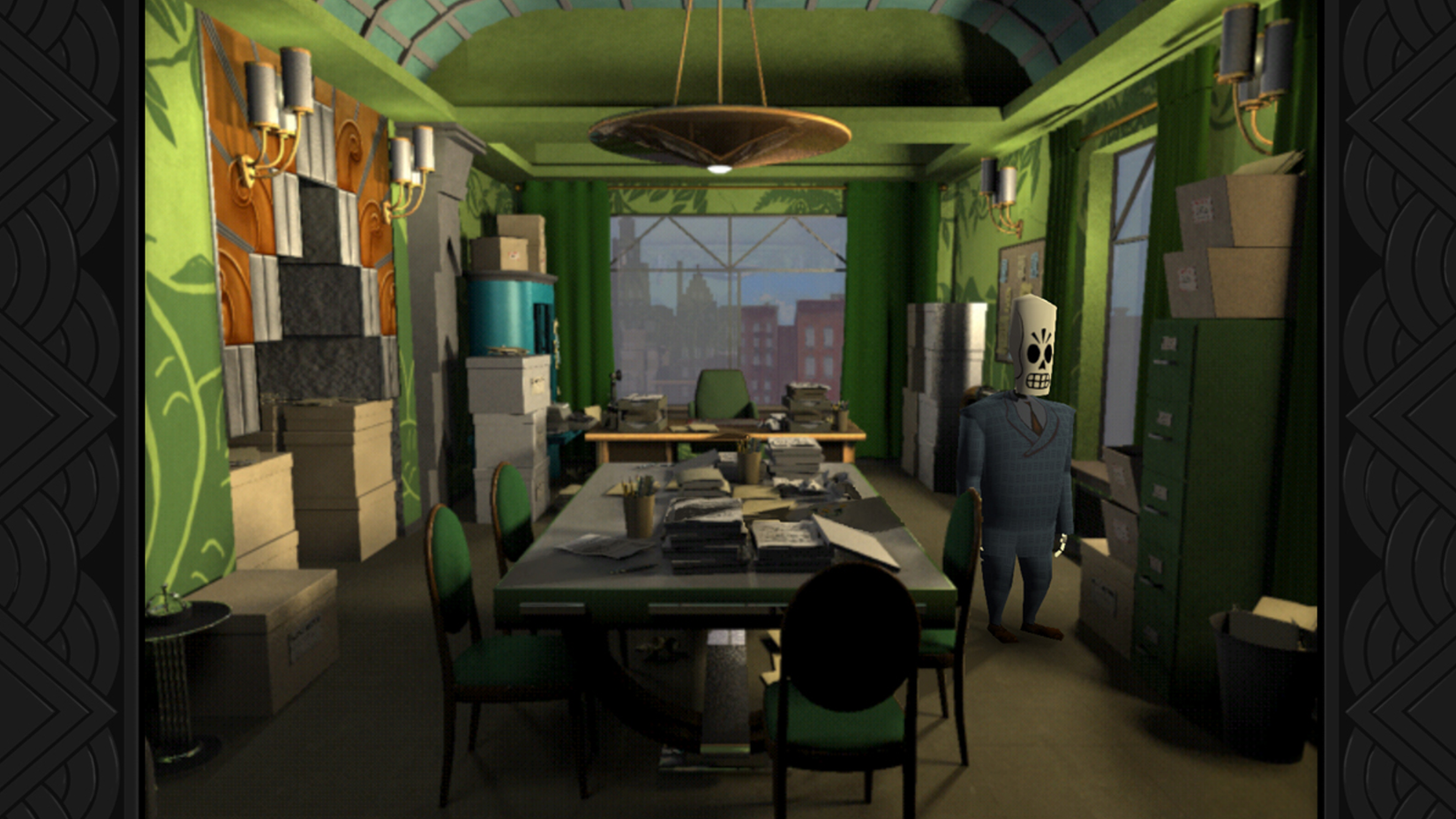
Here’s a fun fact: in the religion of the ancient Aztecs, departed souls would undergo a harsh four-year journey through the land of the dead in order to reach the land of eternal rest. This concept is used as the basis for the setting of the classic point-and-click adventure Grim Fandango, though it also gets a little more abstract than that.
In Grim Fandango’s version of the land of the dead, most departed souls must make that four-year journey on foot, which, in a word, sucks. However, those who led virtuous lives can redeem travel packages that make the trip faster and easier, and agents of death like Manny get a little karmic kickback for sending them on their way. Grim Fandango’s detective noir setting establishes a new kind of criminal element for a world where everyone wants the same thing: a way to literally cheat death.
As Manny travels through the land of the dead, you meet a lot of different people, some of whom are resolved to make that journey, while others have grown tired and disillusioned and simply settle down and make the best of things. It’s a similar kind of grimy setting you see in most noir stories, except it’s an entire world of people down on their luck rather than one city’s worth.
6 Brutal Legend
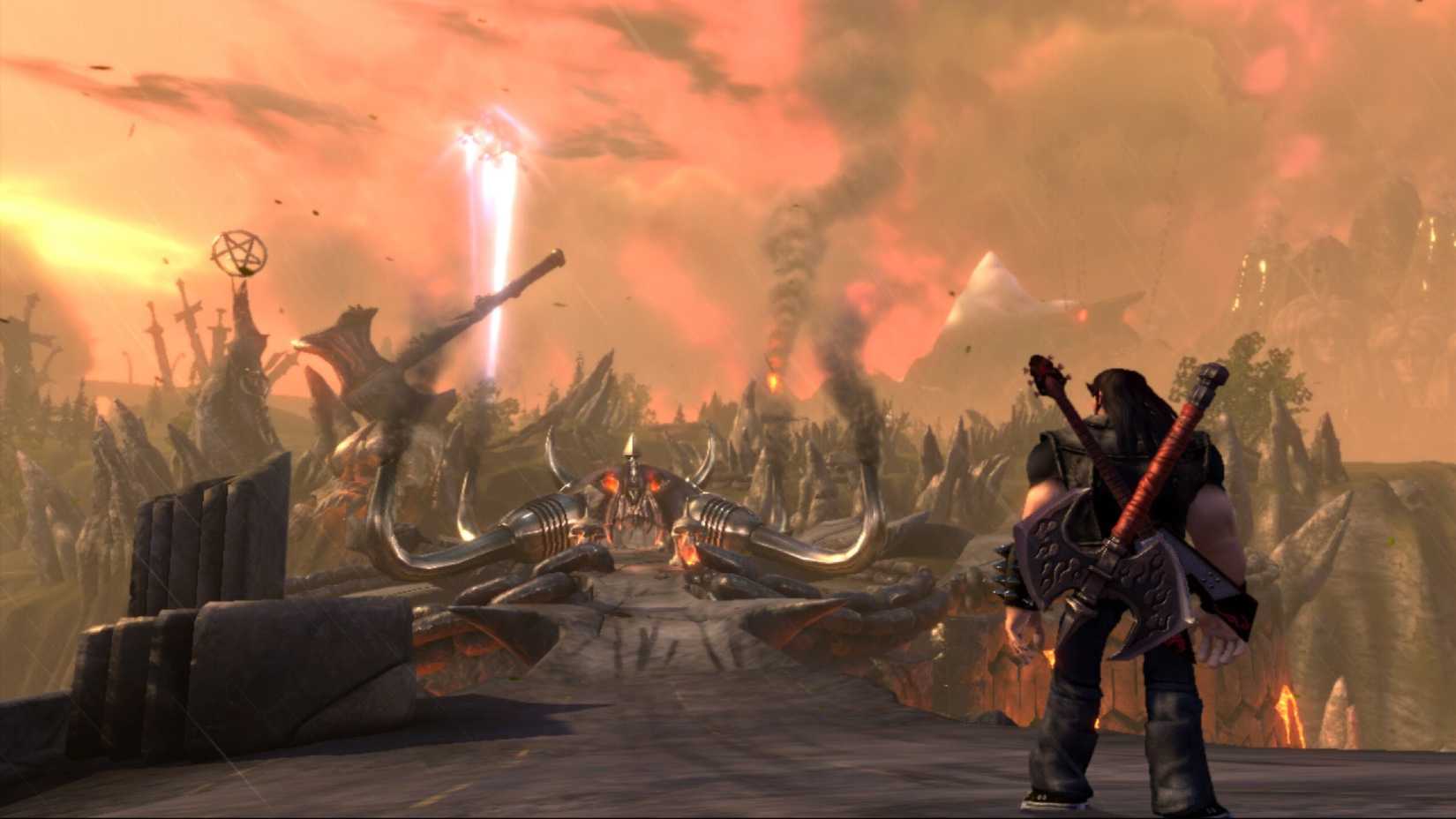
Speaking of games made by Tim Schafer, Brutal Legend’s design philosophy is pretty readily apparent from the jump: a high-fantasy landscape based on the most awesome heavy metal album covers in history. Of course, it’s one thing to appreciate a heavy metal album cover, but another thing entirely to actually live in one.
While Eddie’s initial assumption is that he’s been isekai’d into a magical land of metal, revelations both throughout the main story and in the Legend statue flashbacks make clear that we’re actually in the super-distant past, a primordial age when the power of metal could quite literally move mountains and demons dominated. Your first meeting with the Guardian of Metal also drops several implications, including the existence of the titans who arose from the blood of the ancient beast Ormagoden.
 Related
9 Best Open-World Games That Respect Your Time
When you want an open-world experience, but don't have open-world hours.
Short version, the original demons also arose from Ormagoden’s death and were taken in by the titans, and when the titans ascended to godhood, the demons made humanity in a botched attempt to recreate them. It’s all like something out of a Rhapsody of Fire album, and it’s awesome.
5 Control
Knowing the Unknowable
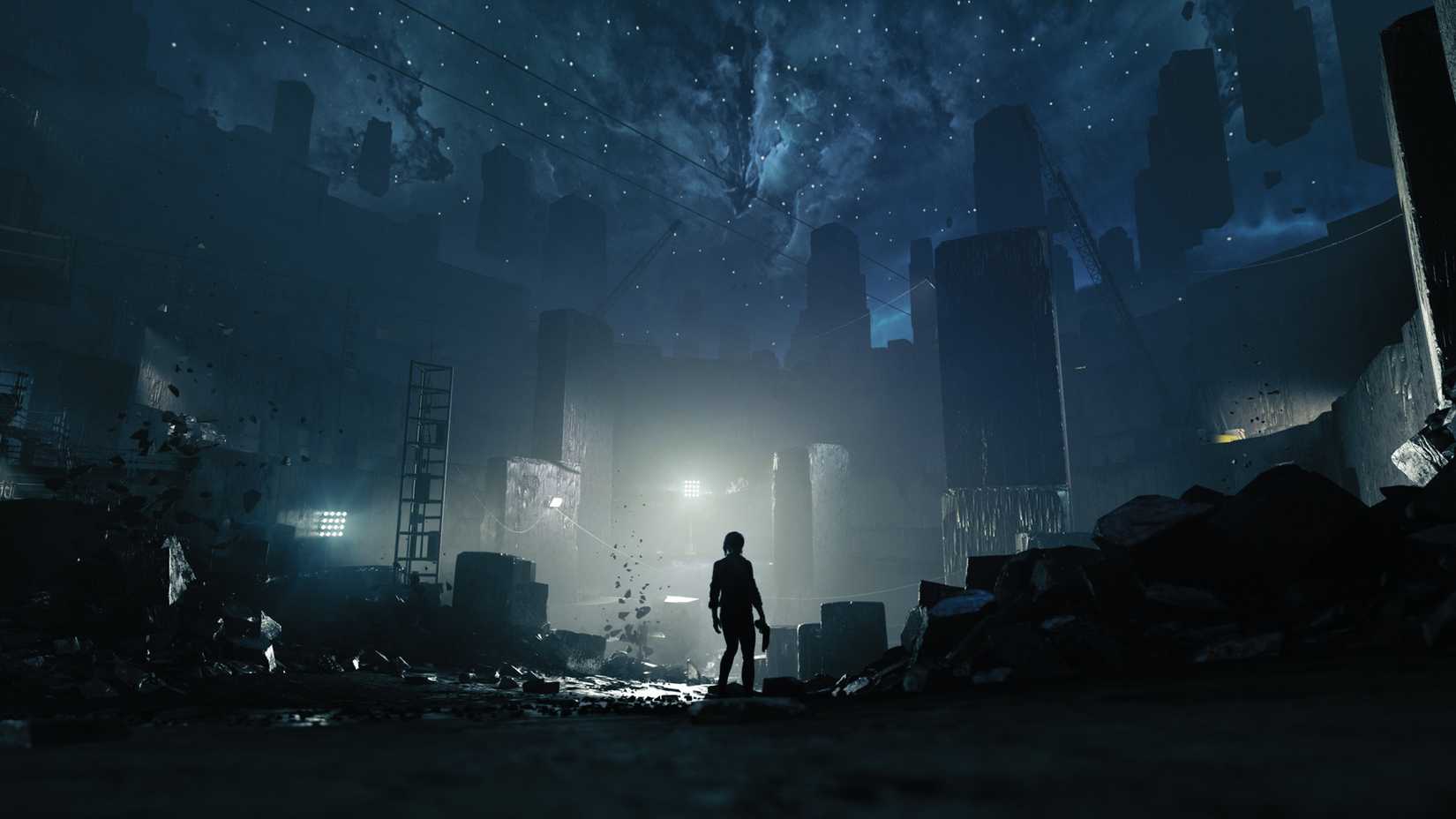
I’ve heard it said that the unknown is terrifying specifically because it is unknown; it has no name, no stated function, no known limit to its capabilities. The thesis statement behind Control is similar to that of the SCP mythos: an organization that hunts, captures, and categorizes supernatural phenomena, creating understanding where once there was none. Mostly.
All we really know about the Federal Bureau of Control when Jesse first sets foot in the Oldest House is that it’s a big, spooky government organization that may or may not have kidnapped her brother. In taking up the Service Weapon and the mantle of Director, though, Jesse is swiftly, forcefully inducted into the FBC’s inner workings. While the Hiss incursion is a new development, supernatural shenanigans are pretty much part of the daily grind here.
The sheer size of the innards of the Oldest House makes clear the overwhelming scope of the FBC’s operations, and documents show the extent to which its operations reach around the world, as well as into worlds beyond our own. You won’t understand all of it by the end, but that’s also kind of the point: not only has Jesse’s world become bigger as the Director, it’s debatably become a bit too big to fully grasp.
4 NieR Replicant
Nothing is as it Appears
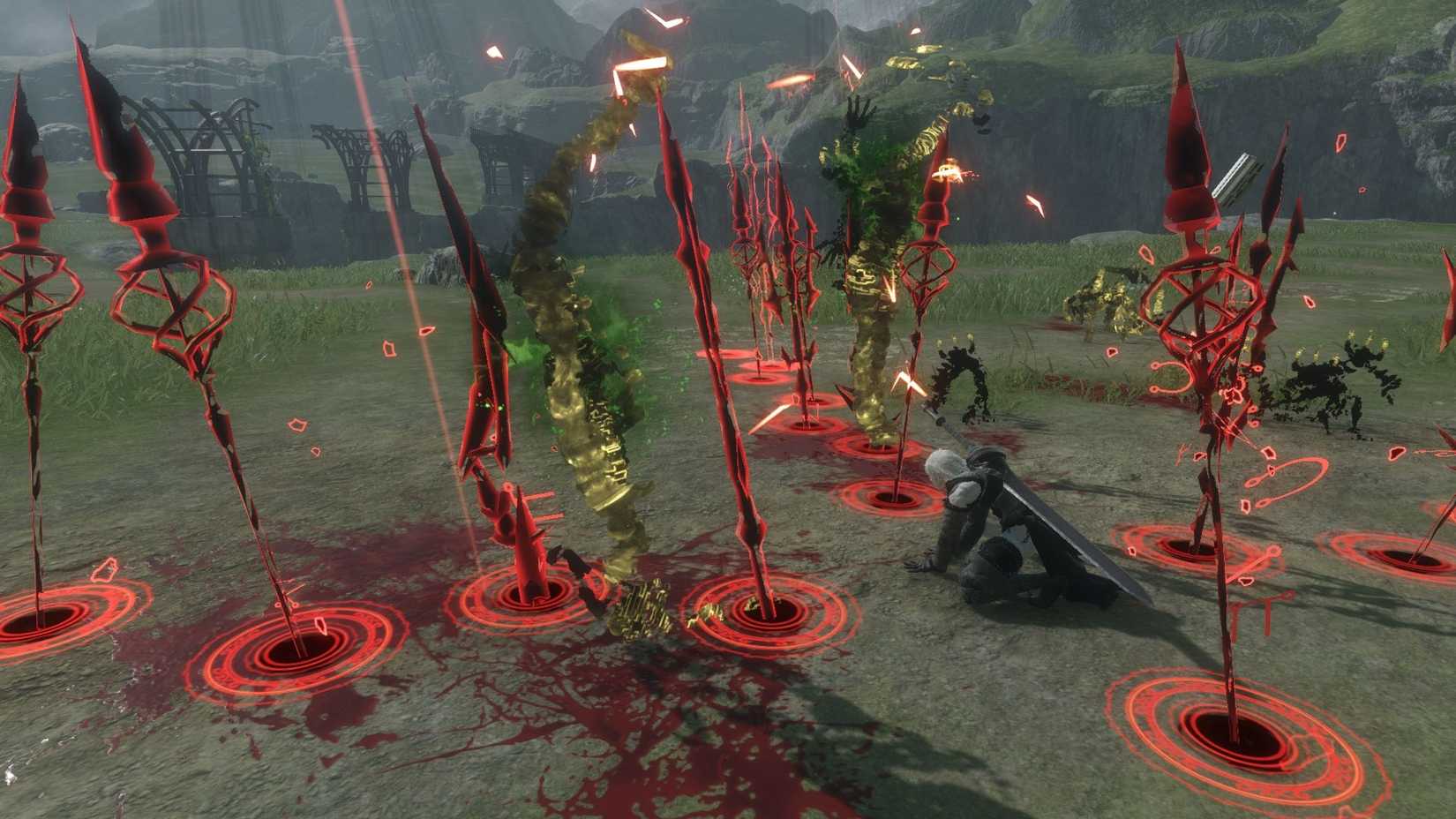
NieR Replicant ver.1.22474487139...
When you first start NieR Replicant, we get a brief vignette of a young man and his sister in a post-apocalyptic setting trying desperately to survive a harsh winter. After that ends, we suddenly cut to a pair of similar-looking siblings living in a small fantasy village. It’s difficult to guess what these two pairs have to do with each other, but the proper reality of things is gradually revealed not just throughout your playthrough, but subsequent playthroughs as well.
While it seems like a fairly straightforward fantasy setting at a glance, you can clearly see fragments of an abandoned modern world scattered about, such as the large, fractured bridges out in the overworld. The assumption is that there was some manner of society-decimating apocalypse, and that the siblings at the start simply managed to escape to safety. However, that’s only half the case.
NieR’s world is a post-apocalyptic one, but as both collected documents and the inner voices of Shades revealed in a second playthrough reveal, the “humans” we see are actually artificial homunculi, intended to be receptacles for humanity’s cast-off souls, the very Shades you’d been battling. Not only was there a full-on apocalypse, but humanity, at least as we know it, is already long-gone.
3 Lies of P
Puppets Don’t Frenzy for No Reason

If there’s any particular sub-genre of game that’s good at subtly broadening the scope of its settings, it’s Soulslikes. Case in point, Lies of P starts rather abruptly with our nameless puppet protagonist waking up in a derelict train car in an abandoned train station, and just sorta nudges us out the door without setting up anything further.
Beyond the obvious, pressing concern of the frenzying puppets, exploring the city of Krat reveals the worryingly broad grasp that the Order of Alchemists have over things, thanks to being the ones who discovered the first deposits of Ergo and Geppetto’s creation of the puppets. Not only that, but the spread of the Petrification Disease is both gradually killing the populace and, through some unethical alchemy, creating marauding Carcasses.
The more you explore the city and the surrounding countryside, the clearer it becomes exactly how many fingers are in the pie here, from the Alchemists looking to hold onto their power to Geppetto himself gathering Ergo to revive his son. Despite being the inciting incident, the Puppet Frenzy actually has very little to do with the greater scope, as it was merely incited as a cover by Geppetto so he could do his dark business unbothered.
2 God of War (2018)
An Introduction to Norse Mythology

The 2018 God of War is a soft reboot rather than a full reboot. It doesn’t remove the previous games’ events from canon, just downplays them in order to make itself more accessible to newer players. Having Kratos start over in a new mythological setting not only helps the game broaden its market reach, it also provides an entirely new world beyond that of the Greek pantheon to get accustomed to.
Presumably, in coming to the Norse realms, Kratos had to get some baseline familiarization with things, but by the game’s start, he’s not especially interested in exploring any of it. He’s just trying to lie low and raise his son in peace. It's his voyage to scatter his wife’s remains with Atreus that basically forces him to become more invested in the Norse realm and tangle with its own pantheon.
Exploring the realms not only provides insight into their combined history, including their physical size and the many races that inhabit them, but it also serves as the building blocks for Kratos’ relationship with Atreus, all of which leads into establishing their greater roles in major Norse events to come in the following game.
1 Death Stranding
The Things You Forget in Isolation

It’s very easy to forget that we live in the information age because it’s very easy to connect with and exchange ideas with other people. Knowledge is preserved because we can circulate both digital data and physical information like books. In a world like Death Stranding’s, where humanity is forced to disconnect and isolate itself, information naturally begins to vanish.
At the start of the game, it is not especially clear what’s even happening. Everyone in-universe knows about the Death Stranding, the Timefall, BTs, and all that other stuff, but they only know about it, not why any of it happened or continues to happen. As Deadman explains in some text logs, large portions of old-world information were lost after the Death Stranding, especially once people started dying and the Voidouts began.
By connecting communities to the Chiral Network, it becomes easier to share information, and the little scraps of knowledge that have managed to pool here and there begin to disseminate among humanity again. It’s still a weird situation, but you gradually start to understand why couriers are so vital, why these supernatural events are occurring and how they work, at least partially. It doesn’t quite make perfect sense at the end, but, y’know, Kojima’s gonna Kojima.
 Next
Next

![ELDEN RING NIGHTREIGN: Deluxe Edition [FitGirl Repack]](https://i5.imageban.ru/out/2025/05/30/c2e3dcd3fc13fa43f3e4306eeea33a6f.jpg)
 English (US) ·