.png)
 5 months ago
33
5 months ago
33

Published Feb 28, 2026, 3:00 PM EST
Not all pocket monsters live inside a Poké Ball
 Image: OLM/The Pokémon Company
Sign in to your Polygon account
Pokémon was officially born three decades ago on Feb. 27, 1996 with the release of Pokémon Red and Green, but plenty of fans wouldn’t discover the franchise until its television debut a year later in Japan (and two years later in the United States). With the release of the Pokémon anime, we all fell in love with Pikachu and his adorable antics. The world would never be the same again.
Today, Pokémon is a sprawling multimedia empire that includes innumerable video games, animated titles, trading card games, and highly coveted merchandise. But for many, the nostalgic pull of Pokémon is forever tied to Pokémon the Series, which aired over 1,300 episodes between 1997 and 2023. There’s a timeless element to the television series that also feels like it belongs to a simpler era.
The first season of the Pokémon anime, titled “Pokémon: Indigo League,” introduced Ash Ketchum (Satoshi in Japanese), a spirited kid from Pallet Town who receives Pikachu from the eccentric (and kind-hearted) Professor Oak. What starts as a humble attempt to compete in the Kanto League shapes up into an epic adventure with trusted friends who commit to Ash’s mantra of “gotta catch ‘em all.” These arcs aren’t rehashes of the games either, as we’re immersed in the nitty-gritties of bonding with these pocket monsters and unleashing them during battles. No matter how long Ash spends in a floating timeline, we’re inclined to hope that such a beautiful journey never ends.
The enduring popularity of Pokémon the Series inspired countless clones, also-rans, and look-alikes. Some stick close to the premise of capturing and rearing pocket monsters, while others heavily incorporate the show’s trading card game elements to branch into distinct battle mechanics. With this spectrum in mind, here are 10 anime worth checking out if you adore Pokémon.
1 Digimon Adventure
 Image: Toei Animation
The beloved Digimon franchise didn’t begin with 1999’s Digimon Adventure, but with WiZ and Bandai’s virtual pet, The Digital Monster. This toy wasn’t unlike a battle Tamagotchi, becoming popular enough to sell 24 million units worldwide by 2005. The original Digimon Adventure might’ve been created to bolster sales at the time, but it’s a breathtaking introduction to the franchise’s vibrant world. The anime opens with seven children from Odaiba (who later learn that they are “DigiDestined,” or the chosen ones) being transported into the Digital World, where digital monsters named Digimon can be evolved and deployed for combat. This is obviously similar to the concept of Pokémon trainers working in tandem to evolve creatures for tournaments, but the Digimon Adventure saga switches things up in sequel entries like the six-part Digimon Adventure tri. While the 1999 series champions a simplistic good-versus-evil ethos, it’s fascinating to watch the DigiDestined fight alongside the likes of Gomamon or Agumon throughout the arcs.
2 Beyblade
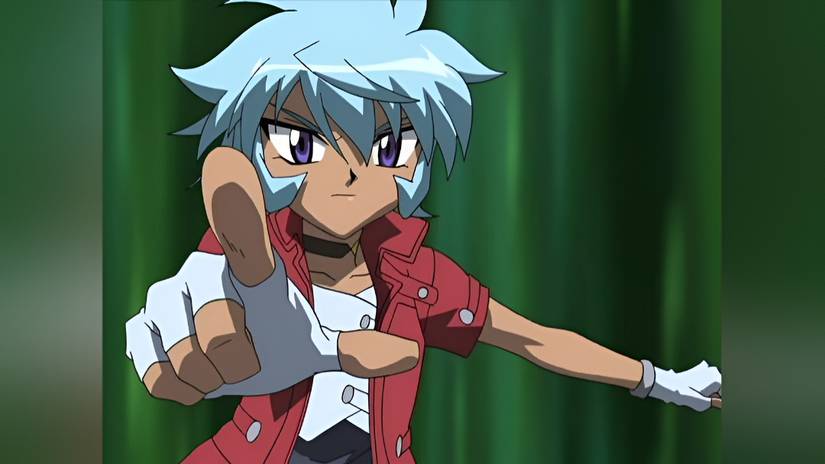 Image: Madhouse
Yet another Japanese toyline that became a multimedia franchise, Beyblade feels close to Pokémon despite operating on a distinct combat mechanic. These spinning top toys are based on traditional Japanese tops named beigoma, which are launched on a flat surface with long cords (Beigoma Academy in Beyblade Burst is a direct reference). Takao Aoki’s Beyblade manga was adapted into a popular anime of the same name by Madhouse in 2001, introducing millions of kids to Tyson Granger (Takao Kinomiya in Japanese) and his exciting adventures. After Tyson defeats a local gang leader in a Beybattle, the involvement of Kai Hiwatari, the leader of the Blade Sharks, leads to a tense rivalry between the two. Once Tyson discovers his Bit-Beast, Dragoon, he sets his sights on winning the Japanese Regional Qualifying Tournament, befriending fellow blades like Ray Kon and Max Tate along the way. While Beyblade isn’t perfect by any stretch of the imagination, its fantastical extremes are served with a side of endearing charm.
3 Yu-Gi-Oh!
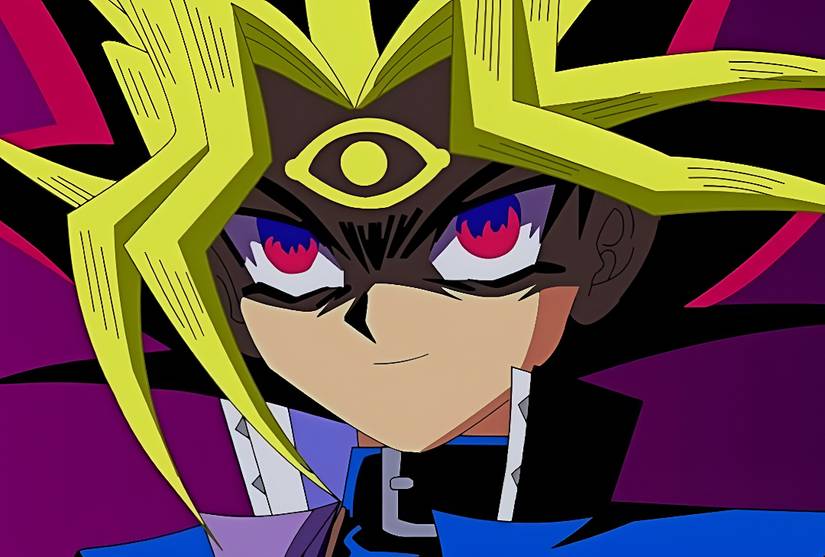 Image: Toei Animation
Kazuki Takahashi’s Yu-Gi-Oh! manga begins with Yugi Mutou inheriting the ancient Egyptian Millennium Puzzle from his grandfather, which he is able to solve after dedicating eight years to the endeavor. This prompts Yugi to become host to a gambling alter-ego/spirit named Yami Yugi (who is the reincarnation of the Pharaoh, Atem), who steers the narrative towards the card game, Duel Monsters. Today, Yu-Gi-Oh! is a massive franchise, but the 1988 Toei Animation series kick-started its well-earned popularity by embracing a darker undertone than subsequent titles like Yu-Gi-Oh! GX. The artstyle is also significantly different from the trademark aesthetic of the series, with vivid, saturated characters contrasting against muted backdrops. This early adaptation, referred to as Yu-Gi-Oh! Season 0, follows a villain-of-the-week format to keep things interesting enough, while indulging in slice-of-life elements through the bonds forged by our protagonist.
4 Dinosaur King
 Image: Sunrise
In 2005, Sega released a card-based arcade game named Dinosaur King, which shared gameplay mechanics with their mega-popular collectible card arcade title, Mushiking: The King of Beetles. A TCG followed soon after, along with the eponymous anime series produced by Sunrise. The Dinosaur King anime riffs on the core premise of Pokémon in a fun way, but it is somewhat niche (and overlooked) compared to successful Pokémon clones like Digimon. In this story, Max Taylor, the son of a paleontologist, sets out on an adventure with his pals Rex and Zoe after witnessing a meteor fall from the sky. After finding elemental stones and a card with the depiction of a Triceratops, Max accidentally activates the dinosaur (named Chomp) by rubbing the card against the stones. This gives way to conflict with various villains, and the tale takes a predictable turn over the course of two seasons. A rather middling entry that is decently enjoyable if you like the idea of summoning dinosaurs for battle.
5 Bakugan Battle Brawlers
 Image: TMS Entertainment
Bakugan Battle Brawlers was a joint venture between Sega Toys and Spin Master, with the anime contextualizing the toys and merchandise released for international markets. Bakugan’s first season centers on Dan, who happens to catch a card that falls out of the sky and invents a ranked competitive game called Battle Brawlers with his friends. The kids are gradually made aware of the alternate world of Vestroia, which is being attacked by Doom Beings like Naga (a rogue Bakugan) and Marduk (a human brawler). As with most stories with a fantastical premise, Bakugan Battle Brawlers stretches the limits of suspending disbelief and even introduces plotpoints devoid of real-world logic (for instance, Dan and fellow Brawler Shun Kazami claim to have invented the rules for Bakugan, but seem perpetually unaware of basic concepts, and even misidentify some of the monsters they summon). The show’s exaggerated nature might have something to do with the urge to cash in on the Pokémon craze without having a story to back it up. That said, the second season, New Vestroia, is much more streamlined and intricate.
6 Shadow Star
 Image: Planet
Perhaps the most underrated Pokémon look-alike, Shadow Star elevates its monster-rearing roots with great thematic complexity. The 13-episode anime based on Mohiro Kitoh’s manga aired in 2003, featuring Shiina Tamao, who bonds with a starfish-shaped shadow dragon named Hoshimaru. Their interactions take on a dreamy, laidback quality at first, but Shadow Star takes a pretty dark turn when Shiina realizes that other star dragons aren’t as well-intentioned as Hoshimaru. This sudden burst of violence goes hand in hand with the trauma experienced by impressionable kids, who icy-hearted adults fail to protect. There’s a direct link between the emotional states of humans and their shadow dragons, lending Shadow Star a psychologically dense bent. This beautiful, haunting title is on the obscure side of things, as its licensed DVD boxset (English dub) has been out-of-print since 2009.
7 Battle Doll: Angelic Layer
 Image: Bones
Clamp’s Angelic Layer manga didn’t come with any toy or merch tie-ins, but it helms a unique genre-blending premise. After moving to Tokyo, seventh-grader Misaki Suzuhara gets acquainted with a competitive game called Angelic Layer, in which players wield custom-designed dolls known as Angels to battle against opponents. This highly televised sports sensation piques Misaki’s interest, after which she creates an Angel called Hikaru and gradually becomes well-versed in the rules of the game. The concept of a predominantly female cast engaging in a battle shonen-coded sports tournament was rare in 1999, even when the Bones-produced anime, Battle Doll: Angelic Layer, aired in 2001. The near-future backdrop aesthetics are also surprisingly grounded, which works in favor of an outlandish battle-royale like Angelic Layer and its incorporation of theatrical martial arts.
8 Yo-kai Watch
 Image: OLM
Yo-kai Watch started as a console RPG series in 2013, whose popularity launched an associated toy line by Bandai (Japan) and Hasbro (Americas and Europe). The Yo-kai Watch anime, which aired in 2014, capitalized on the solid narrative foundation of children being able to befriend and summon yo-kai, or spirits. If you’ve played any of the Yo-kai Watch games, the spectacular worldbuilding and pleasantly bizarre monster design stand out right off the bat. The interactivity between humans and yo-kai is the most fun aspect of these game narratives — an aspect that is lost in the anime. Nonetheless, 2014’s Yo-kai Watch is thoroughly charming due to its comedic tone, where 11-year-old overachiever Nate indulges in all kinds of wacky shenanigans involving troublemaking yo-kai. This one is geared towards children, but that shouldn’t stop anyone from immersing themselves in such a whimsical world.
9 Zatch Bell!
 Image: Toei Animation
Toei Animation adapted Makoto Raiku’s award-winning Zatch Bell! manga in 2003, but its merits remain overlooked to this day. The anime’s interpretation of the manga is extremely exaggerated, and it is enthusiastic enough to keep you thoroughly hooked with its stylistic exuberance. The themes of overcoming adversity and forging identity feel par for the course here, but Zatch Bell! throws in a good measure of graphic violence to reinvigorate its stale inspirations. In the anime, the titular Zatch is found unconscious inside a forest by Professor Takamine, who sends Zatch to live with his son Kiyo in the city of Mochinoki. Zatch and Kiyo team up to participate in an elimination tournament held for the Mamodo, a species of mystical creatures who live in a parallel world. The duo forges alliances with several Mamodo, like Kanchomé, introducing good old power scaling employed remarkably well in this context.
10 Monster Rancher
 Image: TMS Entertainment
Tecmo’s (now Koei Tecmo) Monster Rancher games are heavily comparable to Pokémon, as they function on the same principle of rearing virtual pets to fight in tournaments. The aim is to keep these monsters healthy while influencing their morale, which directly impacts their playstyle and performance during battle. The Monster Rancher games, and by extension, the anime, carry a kernel of nostalgia. It’s the kind of franchise you thoroughly enjoy as a kid but inevitably outgrow as you grow up. Even so, the Monster Rancher anime makes effective use of the isekai trope, where monster-enthusiast Genki Sakura is transported to a monster world after inserting a video game disk into his console. After meeting Holly and her monster pal Suezo, Genki ends up summoning the duck-like monster, Mocchi. The subsequent whirlwind of monster attacks, power-ups, and new friendships makes Monster Rancher thoroughly entertaining.
If you buy something from a Polygon link, Valnet Inc. may earn a commission. See our ethics statement.


![ELDEN RING NIGHTREIGN: Deluxe Edition [FitGirl Repack]](https://i5.imageban.ru/out/2025/05/30/c2e3dcd3fc13fa43f3e4306eeea33a6f.jpg)
 English (US) ·