.png)
.png) 1 hour ago
2
1 hour ago
2


Published Jun 15, 2026, 2:48 PM EDT
Daniel Trock is a Contributor at DualShockers specializing in PC games, lists, and reviews. He has been writing professionally since 2018 and covering games since 2020, with previous work spanning guides, news, lists, and reviews across multiple publications.
Before joining DualShockers, Daniel contributed guides to GamerJournalist and lists to TheGamer. He currently covers tech topics for SlashGear and BGR. He holds a Bachelor’s Degree in Psychology from Marist College and a Master of Fine Arts in Creative and Professional Writing from Western Connecticut State University.
Sign in to your DualShockers account
Where the 2000s were a period of reinvigoration for JRPGs, the 2010s were a time of refinement and modernization. JRPGs were once again fully established in the gaming zeitgeist, having successfully come out the other side of the brown shooter years, so the next order of business was to figure out where we were going with it all. What can a JRPG be to make it, well, more of a JRPG, while also becoming more appealing to both die-hard fans and the mainstream audience?
 Related
10 Most Addictive PS2 JRPGs
These PS2 JRPGs aren't just fun, they sink their claws into you and never let go.
It was these questions that sparked the release of some pretty monumental games, the lingering effects of which are still being felt in JRPG game design and aesthetics to this day. It wasn’t just about making a functional game anymore, it was about making something really cool that you could enjoy for yourself and share around with your friends. It was a period of immense style, evolution, and a pinch of experimentation, and at least in my humble opinion, these are the best JRPGs to come out of that period.
10 The Legend of Heroes: Trails of Cold Steel
Like a Playable Anime

JRPGs and anime have always toed a similar line in terms of tone and settings. Heck, if it weren’t for Dragon Quest, we wouldn’t have most isekai anime, for better or worse. That said, there are surprisingly few JRPGs that I would consider a “playable anime.” One of those very few is 2013’s The Legend of Heroes: Trails of Cold Steel.
While a bit of a budget title compared to some other games released at the time, it was remarkably feature-rich, with a massive ensemble cast of characters joining our hero Rean Schwarzer in his new school life at a military academy. The game used a schedule system, similar to Persona, wherein you needed to regiment your time out for dungeon exploration and making friends, not to mention taking on sidequests. The more time you spend with your partymates, the more your efficiency would grow in battle using the game’s tactical link system. Some of the dialogue was a little cheesy, but who’s opposed to a plate of cheese on occasion?
9 Tales of Berseria
A Substantial Improvement

I might catch some strays for this, but I’m going to say it anyway: I did not care for Tales of Zestiria. It was a generally bad step for the Tales series, both in terms of story and gameplay, and I could yap endlessly about both if I were so inclined. If Tales was going to stand the test of time, it needed to implement some improvements, and fast. Thankfully, that’s exactly what we got from 2017’s Tales of Berseria.
While Berseria’s somewhat edgy vibes left some feeling a bit wary ahead of launch, it ended up being an almost universal improvement over everything they tried in Zestiria. It dropped the dumb system that required the protagonist to always be in the party, and in fact, made mid-battle character switching much more intuitive, adding to its overall refinement and speed-up of the battle system. It also made exploring the overworld more intuitive as well, thanks to the implementation of the Geoboard for faster travel. All of that’s on top of my favorite element of the game, its cast of lovable crooks and murderers, all of whom have exponentially more interesting personalities and motivations than Zestiria’s cast. It was a major glow-up on just about all fronts, and it’s still one of my favorite Tales games in recent memory.
8 Xenoblade Chronicles
Titanic Scale
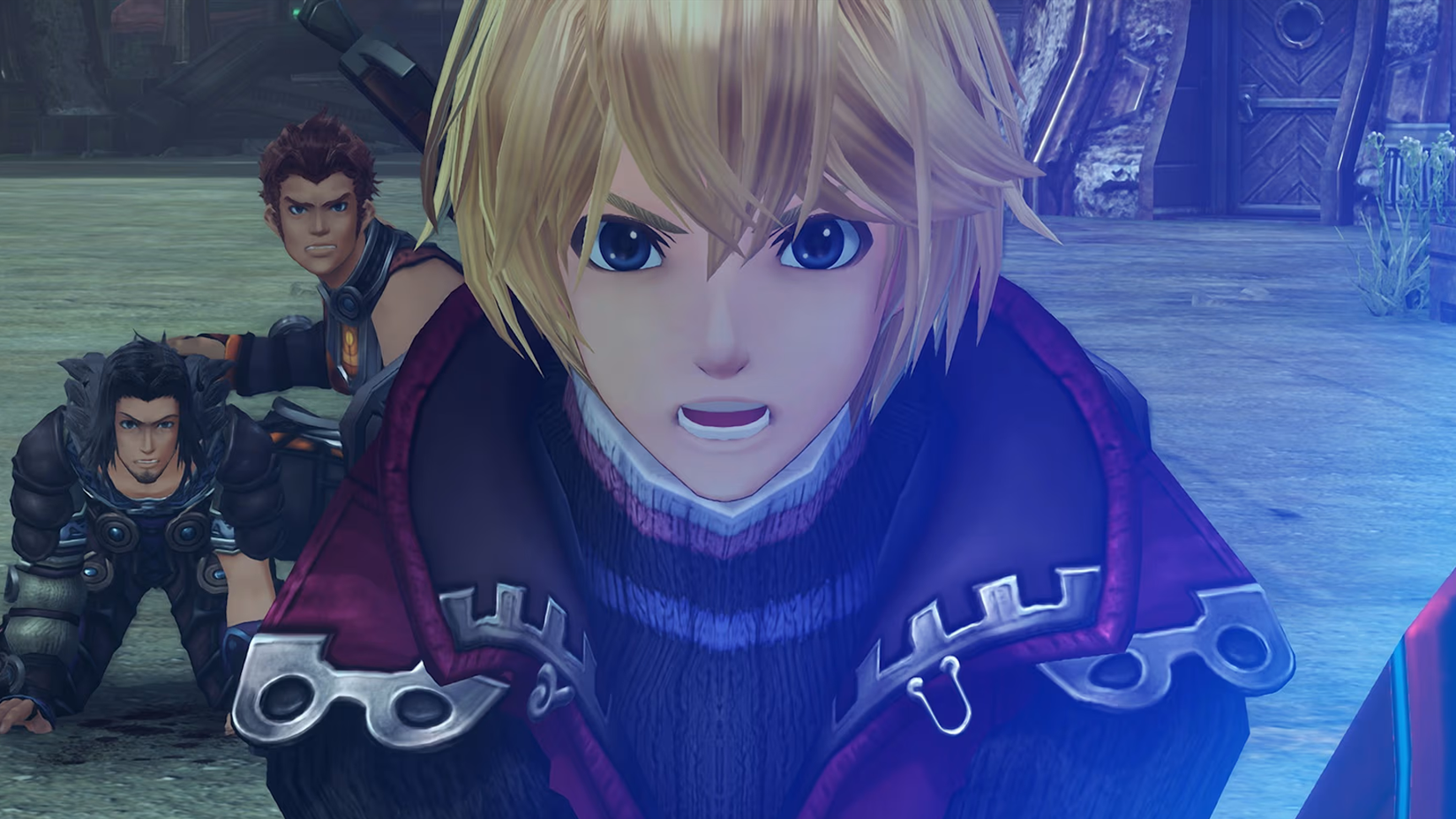
Nintendo consoles have played home to the JRPG greats as far back as the original Famicom, but during the 2000s, they tended to move more toward the Sony side of things. The Wii era, in particular, didn’t see much JRPG action, as incorporating waggle gimmicks didn’t really work with this genre. One of the few exceptions to this, as well as one of the most prominent on the platform, was 2011’s Xenoblade Chronicles (though technically it didn’t release in North America until 2012).
While the game could be played with a Wii Remote and Nunchuk, it was also, thankfully, Classic Controller compatible, so you didn’t need to engage in any obnoxious waggle-ry. That was good, because Xenoblade Chronicles was a positively massive JRPG, with both a story of titanic proportions and an equally massive world you could explore. It was also very novel in the gameplay department, almost like the combat system of an MMO reworked for solo play. Really, the game’s only consistent knock was on its graphics due the Wii’s less-than-stellar muscle, though subsequent rereleases fixed that problem just fine.
7 Pokémon Ultra Sun & Ultra Moon
Jam-Packed Pokémon

In 2013, the mainline Pokémon games finally made the jump to 3D with Pokémon X and Y. These games were great, but not the best Pokémon games of the 2010s, nor the best on the 3DS. No sir, the breakout Pokémon JRPGs of this particular era came four years later with the release of Pokémon Ultra Sun and Ultra Moon.
Ultra Sun and Ultra Moon were individually-enhanced versions of their respective games, rather than being actual sequels to Sun & Moon like Black 2 and White 2 were. This meant that a lot of the campaign was the same as Sun & Moon, but the Ultra games added a lot of welcome tweaks to the overall gameplay, not to mention a metric whoa-ton of extra content in the endgame, including the fight against Necrozma and Team Rainbow Rocket. It was the most feature-rich Pokémon game of its era, and actually one of the top-ten best-selling 3DS games of all time.
6 Shin Megami Tensei IV: Apocalypse
It’s Always Fun to Punch God

Atlus released Shin Megami Tensei IV for the 3DS in 2013, the first new mainline game since Nocturne in 2004. SMT IV was an excellent addition to the mainline series, but it had a few kinks that needed to be worked out, from a mildly whacked difficulty curve to some exploration foibles. The game that ultimately fixed all that while pushing the story further was 2016’s Shin Megami Tensei IV: Apocalypse.
 Related
10 JRPGs That Shaped Modern Gaming More Than Players Realized
The release of some JRPGs had massive, rippling effects, both in the genre and outside it.
A direct follow-up to SMT IV’s story, Apocalypse gave us a new protagonist and scenario, while building upon its predecessor’s mechanics and fixing what needed fixing. Most of the core elements remain untouched, from the demon-recruiting system to the Press Turn combat system, but the game also added a lot of quality-of-life stuff, including a revamped map, an improved partner system, changes to demon skills, and a more easily-understood alignment system. Also, it was the first SMT game in a hot minute where you got to slug YHVH at the end, which makes me smile.
5 Octopath Traveler
What’s Old is New

As Square Enix released new Final Fantasy games throughout the 2000s and 2010s, their scope and production value just kept on getting bigger and bigger. It wasn’t a bad thing per se, but it did kind of feel like the original soul of JRPGs was getting a bit lost in the sauce. In 2018, Square Enix decided to take things in a slightly more traditional direction with Octopath Traveler.
Octopath Traveler was the first game to use Square’s newly-minted “HD-2D” art style, consisting of animated pixel art sprites against more elaborate 3D environments, interspersed with more elaborate artwork for bosses and such. The game was very reminiscent of Square’s various handheld JRPGs, with a gameplay style echoing that of Bravely Default, but with a more elaborate setting and scope, particularly with its eight playable protagonists. Besides just being a generally good game in its own right, Octopath Traveler proved that the more traditional style of JRPG is still perfectly viable in the modern day, which is why the HD-2D style has become a staple of Square Enix’s developmental arsenal.
4 Fire Emblem Awakening
Building a Rapport

With the release of The Blazing Blade and Path of Radiance, Fire Emblem had officially become a contender in the JRPG space in the west, no longer relegated to being “that Japan-only thing Marth and Roy came from.” Unfortunately, the series was still on rocky footing, with some middling sales and iffy platform choices harming the series' standing. Things were starting to get a bit dire by 2013, but that’s when Fire Emblem Awakening managed to single-handedly bring it back from the brink.
Awakening shared most of the same basic DNA as its predecessors, with its sword-and-sorcery setting and its tactical combat, but it made two big additions that really turned heads. First, in a big change for the series, the option to disable permadeath was added, which was a major load off some players’ minds. Second, a much larger emphasis was placed on relationship-building between characters via Support conversations. Two characters could even be prodded into entering a relationship, getting married, and having kids, who could in turn be recruited to your army. It’s a similarly-pleasant “playing with dolls” kind of vibe to something like Tomodachi Life, but with a quality JRPG in the mix as well.
3 NieR: Automata
Yoko Taro Never Misses

Gaming has its fair share of auteur directors, and one of the most notorious is Yoko Taro. If ever there were a man who feels compelled to do whatever he wants with his games and stories, it’s Yoko Taro, and his consistent successes compel me to let him cook no matter what he tries. His first NieR game was a fantasy hack-and-slash that defied classification, and while 2017’s NieR: Automata is technically an action-JRPG, it’s also a lot more than that.
NieR: Automata combines character-building and progression with character-action-style high-flying combat, courtesy of PlatinumGames’ contribution to the project. It’s got a massive world, a story with enough layers to warrant multiple wiki deep-dives, and incredibly satisfying action setpieces. Of course, the game’s heart and soul is its characters, primarily its protagonists 2B and 9S. To say their journeys and trials left an indelible mark on the hearts of gamers would be a criminal understatement. This game doesn’t just punch you in the feels, it performs a hundred-hit aerial sword combo on your feels, and makes you like it.
2 Dragon Quest XI: Echoes of an Elusive Age
A Classic Quest for the Modern Age

Not unlike Fire Emblem, Dragon Quest had also finally managed to secure a steady spot in the western gaming consciousness during the 2000s. Following Dragon Quest VIII, Dragon Quest IX saw modest success on the DS, though Dragon Quest X opted for the MMO approach instead, leaving the mainline series more-or-less stagnant for around six years while spin-offs picked up the slack. It wouldn’t be until 2018 that mainline Dragon Quest would make a big comeback with Dragon Quest XI.
In a similar vein to Dragon Quest VIII, Dragon Quest XI was a traditional Dragon Quest adventure with just about every aspect cranked up in size and scope. It had an impressively meaty story with lots of dungeons and bosses, mechanics that were rooted in classic JRPGs while still adding a touch of modern quality-of-life, and of course, the iconic artwork of the late, great Akira Toriyama to carry the whole thing. It was the kind of JRPG that, were you to look up “2010s JRPG” in a textbook, you’d find a picture of it; a baseline, bedrock experience of unmistakably high quality.
1 Persona 5
Atlus’s Golden Goose

The Persona series was one of the banner-holders of the JRPG reinvigoration of the 2000s, and I think Atlus was well aware of this. Persona 4 got spun off to hell and back, with extra games, an anime, and even an entire rerelease in the form of Golden. Of course, Persona 4 couldn’t hold things up forever, and so in 2016, Atlus unleashed the unparalleled style of Persona 5 upon the world, quite possibly one of the most monumental game-changers for the entire genre.
Persona 5 was… well, you don’t need me to tell you what the big deal was about Persona 5. Both it and its enhanced rerelease, Royal, have become hallmarks of JRPGs as a whole. It’s got a gripping story, distinctive characters, and quite possibly one of the most hideously addicting core gameplay loops ever. Persona 5 was also when Atlus really started pulling out the stops in its UI development, with the game’s menus and interface striking the perfect balance of style and intuitiveness. Like Persona 4 before it, Persona 5 has become Atlus’s definitive golden goose, at least until Persona 6.
 Next
Next
10 Most Addictive PS5 JRPGs
Here are the most addictive JRPGs that you can play on the PlayStation 5 right now.


![ELDEN RING NIGHTREIGN: Deluxe Edition [FitGirl Repack]](https://i5.imageban.ru/out/2025/05/30/c2e3dcd3fc13fa43f3e4306eeea33a6f.jpg)

 English (US) ·