.png)
.png) 2 hours ago
1
2 hours ago
1
Video games have gone through various eras where technological advancements have coincided with creative innovations of epic proportions; milestones of such magnitude that they became inimitable.
Whether due to shifting market trends or the immeasurable task of replicating certain ideas, some projects have remained isolated in time as virtually unique video games.
The indie scene has helped alleviate the imaginative loneliness of many of these adventures by drawing inspiration from even the most niche works, but even so, the interactive medium's history is riddled with once-in-a-lifetime marvels.
Therefore, in order to recognize these titles that, however similar they may be, have truly never been equaled, I invite you to read this list of ten classic video games that were never replicated.
10 Sly Cooper and the Thievius Raccoonus
Stylized Stealth

Sly Cooper and the Thievius Raccoonus
The stealth genre, despite its immense contribution to the video game industry, has seen little development over the decades, which is why games like Sly Cooper and the Thievius Raccoonus remain unique.
Its fusion of stealth, platforming, and a distinctive cartoonish aesthetic is a product of an era when highly stylized video games were practically the norm, unlike the hyperrealism pursued today.
The creativity of its levels and situations, enabled by magnificent worldbuilding that doesn't adhere to the rules of our reality, was as unique then as it is now, because no one has dared to pursue the same philosophy on a large scale.
Sly Cooper is a series that continued until 2013, but the fact we can only find similar installments within its own franchise is the ultimate proof that it's an unparalleled adventure.
9 God Hand
The True Deity of Fighting
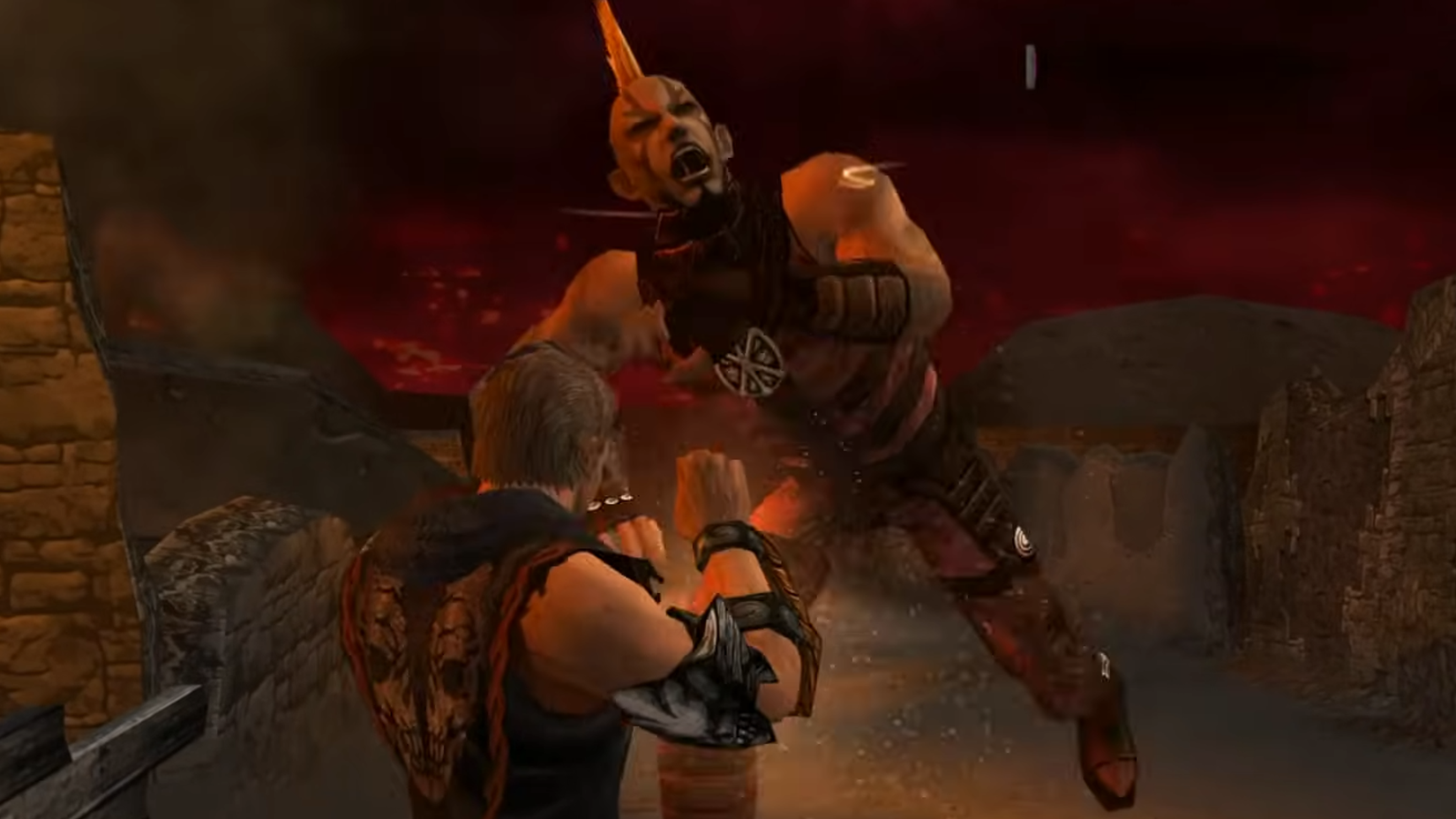
Unless we count Sloclap's games, whose approach and perspective are considerably different, God Hand remains one of the gems in Capcom's catalog that hasn't found a direct or spiritual successor.
Unlike Sly Cooper, its solitary existence makes more sense because the product was never particularly well-received, though it's surprising practically no one has wanted to take its magnificent beat-em-up ideas and refine them.
At its best, God Hand offers exceptional combat with spectacular choreography and a tremendous degree of customization, coupled with absurdly outdated humor that, nowadays, can only be described as ironically entertaining.
The Japanese company has been responsible for some of the most outlandish adventures imaginable for years, and while God Hand hasn't aged as well as some of its other titles, it's the one I'm most disappointed never had an apprentice.
8 Zusar Vasar
You've Never Raced Like This
|
Real Vision |
|
Real Vision |
|
July 27, 2000 |
|
Dreamcast |
|
Racing |
|
E |
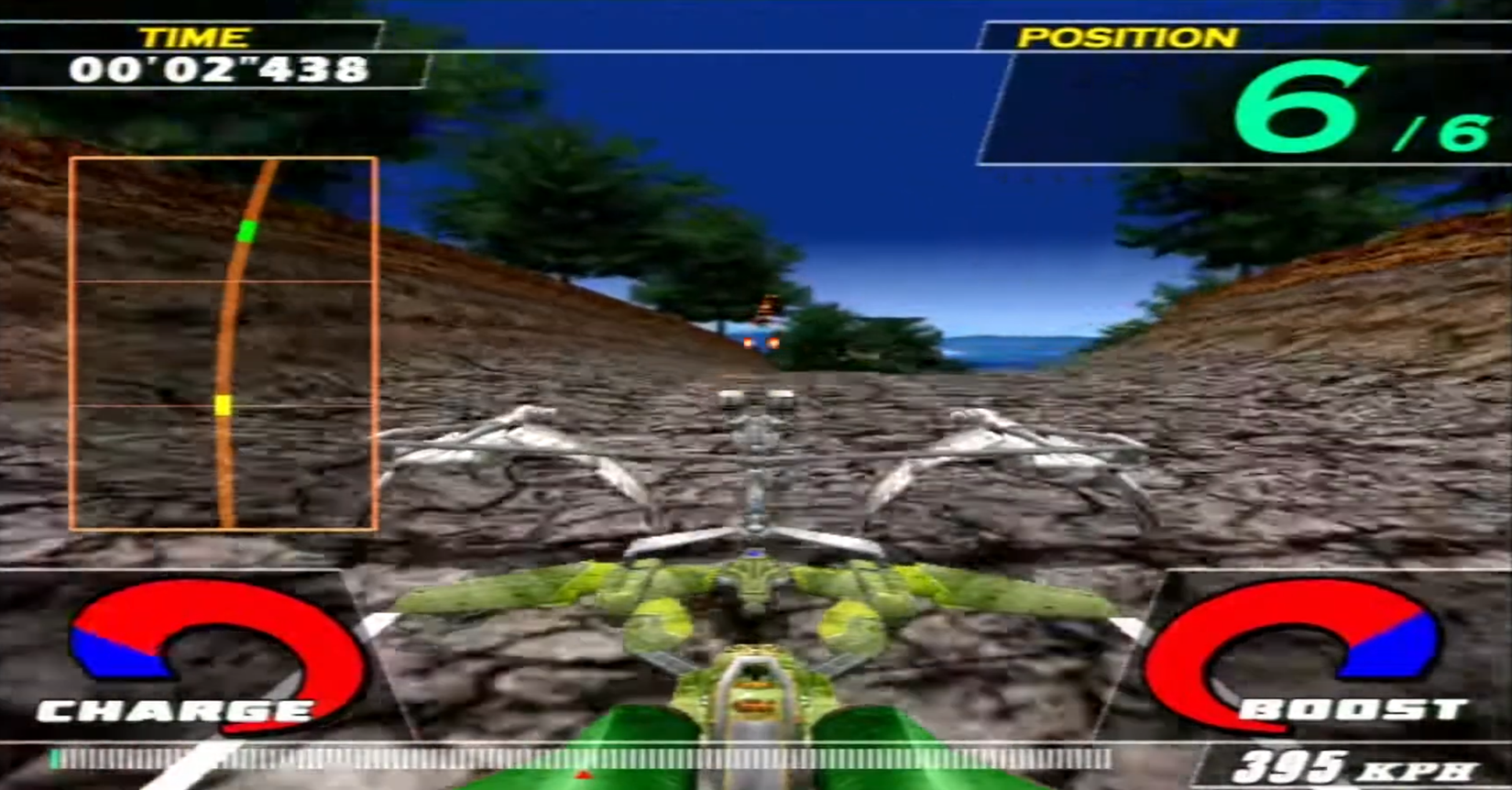
Similar to what was described with stealth games, the racing genre has found an unwavering consistency in realistic simulation, which has condemned works of the caliber of Zusar Vasar to being virtually unseen again.
Real Vision's title is so sumptuous that it's tough to imagine any modern project following in its footsteps, but the concept of piloting giant robotic beasts across diverse terrains is undeniably striking.
Whether on land, in the air, or at sea, adapting the races to their respective members of the animal kingdom is phenomenal, exploring the possibilities of science fiction in a majestic way that, once again, isn't limited by respect for reality.
Riding metal steeds through Machu Picchu was never particularly comfortable, but Zusar Vasar is more about the extravagance of speed than its practicality, and that's why it's unlikely it'll be repeated.
7 Vigilante 8: 2nd Offense
Gunfire on Wheels

Although Twisted Metal was among the pioneers of vehicular combat games, and the series that worked the longest to keep the genre alive, time has never been kind enough to grant us a blessing like Vigilante 8: Second Offense.
With more realistic and responsive physics, game modes with varied objectives and interactive environments, complex inputs to unlock the full potential of each weapon and vehicle, and a completely unexpected verticality, I always refer to it as the subgenre's most special representative.
Unfortunately, pure skirmishes with arsenals specifically designed for destruction have been relegated to the background in favor of destruction races like those seen in Blur or Wreckfest, which are great in their own right but very different from Vigilante 8: Second Offense.
I can't imagine a title like this making an appearance on the public scene beyond indie games throughout the 2020s, but the video game industry changes so frequently that it's worth dreaming of.
6 Bushido Blade
One Blow Away from Death

Infinite combos, frame-specific blocks, variations of possibilities that reach unfathomable numbers... All of that, when it comes to the fighting genre, pales in comparison to Bushido Blade's unadulterated pressure.
Without complicated interfaces or excessive flashiness, the game's brutal approach to combat, where one or two blows are enough to secure victory, feels increasingly fresh as time goes on.
Especially after the rise of e-sports, fighting games have completely abandoned this branch, confining you to two-dimensional arenas instead of the expansive environments that allow for intense chases and clashes.
Bushido Blade is a work whose timeless status was conferred by its detachment from the genre's current direction, and few things should be more regrettable than the lack of motivation to explore its lessons.
5 Thief: The Dark Project
A Bandit of Mysticism

While Dishonored's existence might suggest otherwise, there are truly no games that have attempted to capture the balance between dark fantasy and realism Thief: The Dark Project presents.
Aside from its own entries or indie titles like Gloomwood, the stealth genre, in its few iterations, has recently leaned more towards gadget-based infiltration, third-person perspective, and realism—elements that clash with Looking Glass Studios' creation.
With its constant alternation between the traditional and the fictional, shifting from human guards to ghosts, from mansions to secret mausoleums, Thief: The Dark Project is both a stealth and a horror game, centered on theft as the core of all its missions, which isn't as common as I would like.
The number of games inspired by the Thief series is considerable, but none have truly attempted to follow its trail, either out of fear of not matching its success or because they understand that, most likely, they wouldn't find much of a place in today's market.
4 GunZ: The Duel
A Multiplayer at the Speed of Light

The constant in highly successful modern multiplayer games is maximum effectiveness, prioritizing accessibility and complete elimination of bugs, which is why it's impossible to see a game like GunZ: The Duel again.
This title's very existence stemmed from unfixed technical errors, such as inputs that froze reload animations to fire faster or unintended interactions that created unique movement mechanics, so the skill ceiling was determined by your mastery of these mistakes.
Instead of being played in its original form—a multiplayer adaptation of Max Payne's shooting and flipping mechanics—it became a sword-flicking, double-shotting, and aerial maneuvering masterpiece, embracing its inherent flaws rather than trying to fix them.
Fortnite is quite similar in its underlying principles, but not in a million years can the titan Epic Games afford to embrace the irreverence and inaccessibility that GunZ: The Duel preferred, perhaps due to negligence, to become the heaven of try-hards.
3 Chrono Trigger
Unparalleled Dynamism

While countless games look like Chrono Trigger, none feel quite like it, and I believe that's the main reason why, 30 years later, it remains among the undisputed kings of JRPGs.
The way it achieves perfect dynamism, a product of the meticulously calculated balance of turn-based gameplay and real-time combat, hasn't been replicated by even the genre's greatest masterpieces in modern times.
There are many similar gems, of course, and Sea of Stars and Chained Echoes stand as prime examples, but Chrono Trigger's rhythm was determined by the gods themselves, reaching a level of excellence without predecessors or successors.
Considering it boasts the deepest and most branching time-travel mechanics in video game history, along with its timeless pixel art and a soundtrack worthy of the finest symphony, including it here is a no-brainer.
2 Portal
All Dimensions Are From Valve

The concept of portals has been extensively explored throughout the century in video games of all kinds, but Valve's mastery of physics systems is utterly unbeatable in Portal.
It's one thing to make a game with portals, and quite another to make a game about portals, and in this distinction, Aperture Science proves to be the perfect sandbox for creating some of the most incredible physics-based puzzles of all time.
Darksiders, 2006's Prey, Splitgate, Hellblade: Senua's Sacrifice... They all use dimensional doors in some way, though none dares to build an entire adventure around one of the most difficult technical feats to successfully realize.
Perhaps it's because it's also in the name, but all of this leads you to think of the comically violent duel between Chell and GLaDOS every time you hear the word "portal", and that synonymous condition doesn't seem likely to ever disappear.
1 Shadow of the Colossus
Thoroughly Titanic
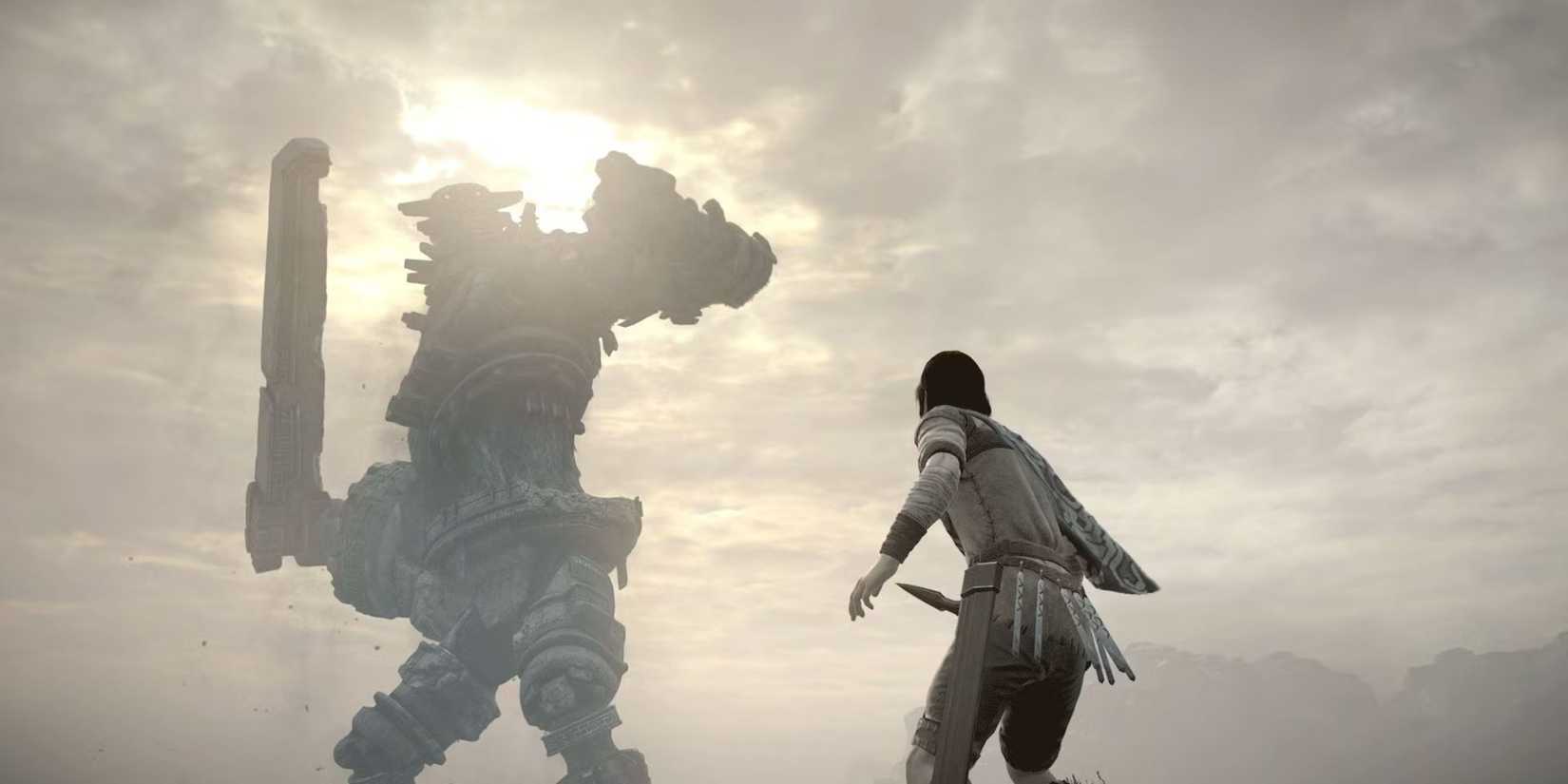
Within the realm of technical achievements, Shadow of the Colossus established one of the most acclaimed gameplay systems in the interactive media's history, but attempts to replicate it have been rather lukewarm.
Dragon's Dogma does an exceptional job, but even as the closest, it falls far short of the scale achieved by Team ICO's project, whose ability to convey the magnitude of the battles is breathtaking.
Through simple yet pristinely implemented systems, each majestic beast is a puzzle solved in two dimensions—the cognitive and the motor—achieving a superb balance that, above all, is perfectly conveyed through the stimuli, as even the control scheme was diligently implemented.
The effort your fingers exert when holding R1 is comparable to Wander's effort when clinging to the colossi, just as charging attacks, controlling Agro, and aiming the bow all contribute to immersing you in the desolate experience of the game's world.
Even without considering its stunning story and audiovisual beauty, Shadow of the Colossus is one in a million, but when you consider the totality of what it offers, it's simply one in infinity.





![ELDEN RING NIGHTREIGN: Deluxe Edition [FitGirl Repack]](https://i5.imageban.ru/out/2025/05/30/c2e3dcd3fc13fa43f3e4306eeea33a6f.jpg)
 English (US) ·