.png)
.png) 4 months ago
101
4 months ago
101


Published Mar 13, 2026, 2:19 PM EDT
Daniel has been playing games for entirely too many years, with his Steam library currently numbering nearly 750 games and counting. When he's not working or watching anime, he's either playing or thinking about games, constantly on the lookout for fascinating new gameplay styles and stories to experience. Daniel has previously written lists for TheGamer, as well as guides for GamerJournalist, and he currently covers tech topics on SlashGear.
Sign in to your DualShockers account
From the moment Atari plugged in the first Pong cabinet, gaming has largely been considered a social activity. That’s part of what’s great about this medium; it can be something you enjoy either by yourself or with friends, and in the case of the latter, it can be either competitive or cooperative. Even in the earliest days of arcade and home gaming, there were games meant to foster teamwork and coordination, and as games have become more advanced, co-op games have only become more elaborate.

Related
Best Co-Op Games From Every Console Generation, Ranked
From 1970 to the present day, non-competitive multiplayer games have given us countless memorable experiences.
There are numerous games that could be considered hallmarks of the greater co-op development effort, too many to count, but we can definitely highlight a few standouts. These were the games that changed up the formula in ways subtle or overt, leaving an indelible mark on the very concept of cooperative gameplay and paving the way for the galaxy of varied titles we enjoy today. If you like playing games alongside your friends, there’s a nonzero chance you have at least one of these titles to thank for it.
10 Double Dragon
Punching Dudes on the Couch

One of the bedrock game genres of co-op play is, and remains, the sidescrolling beat ‘em up. This genre got its start in arcades with games like the original Double Dragon, though depending on who you ask, it was the home port to the Sega Master System that really cemented that game’s place in history. Specifically the Master System, as the NES version couldn’t do co-op.
As one of the archetypal beat ‘em ups, Double Dragon had two players punch and kick their way through a city in order to rescue their mutual lady friend. The combat isn’t that complicated, but it is easy to get stunlocked by enemy attacks from both directions, so both players need to watch each other's backs and occasionally bail each other out.
The immense success of Double Dragon in both arcades and the home ports led to the golden age of arcade beat ‘em ups, particularly from publishers like Sega and Capcom. We wouldn’t have some of the most legendary co-op IPs of the 80s if Double Dragon hadn’t set the stage as well as it did.
9 Contra
Bonding Over Bullets
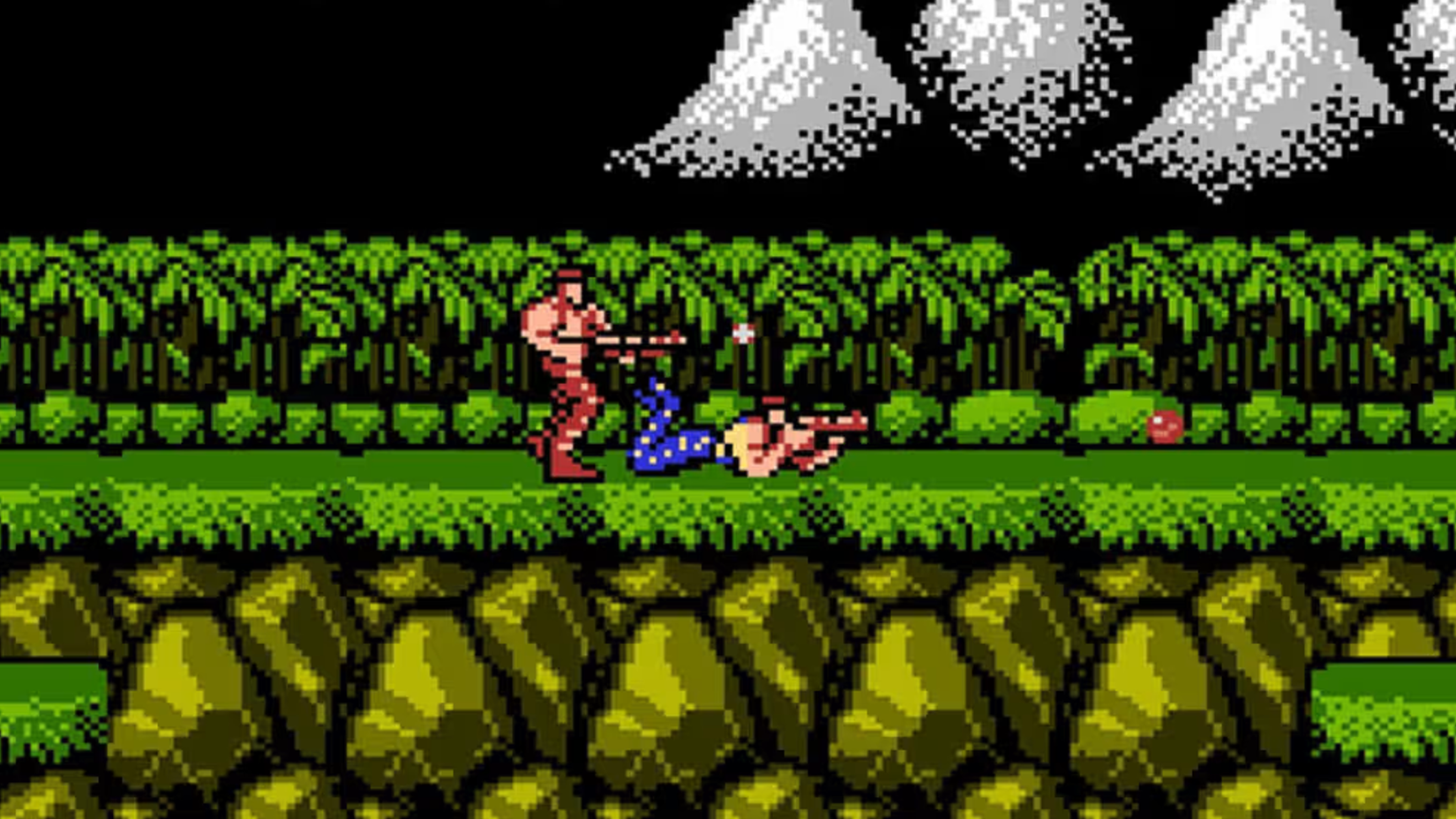
While the NES couldn’t quite handle the particular co-op flavor of Double Dragon, it was more than capable of handling the legendary run and gun stylings of the original Contra. Or, well, it could handle its own unique version of Contra, separate from the first version released for arcades, but that’s the version everyone remembers anyway.
Compared to some other games on this list, Contra wasn’t exactly elevated in a substantial way by being played cooperatively. You could play it just fine by yourself if you wanted. However, there was one thing that co-op Contra brought to the table: volume. With two players’ worth of bullets flying around at any given moment, the screen would be absolutely filled up with action, and there was some kind of magic, unstoppable catharsis to the whole experience.
Much like with Double Dragon, Contra went a long way toward setting the stage for the run and gun genre, leading to the proliferation of more elaborate games like Metal Slug and Gunstar Heroes in both homes and arcades.
8 Halo: Combat Evolved
Not the First, but Arguably the Best

If you want to get technical about it, FPSes have had some degree of co-operative gameplay as far back as the original Doom, with LAN parties skirmishing in team deathmatches. However, the FPS that really made campaign co-op cool, not to mention more accessible on consoles, was the very first Halo, all the way back on the original Xbox.
While the PC version of Halo was single-player-only, the console version of the game had split-screen co-op for the main campaign, allowing a second player to drop in and play as a second, non-canon Master Chief. Playing the game in this manner is much more flexible than solo play, as you and your friend can control the movement and turrets on vehicles, or hold the line when one of you dies and waits to respawn so you don’t have to load a checkpoint. It’s borderline required for beating the campaign on the highest difficulty.
This co-op format has become an enduring element of the Halo franchise, not to mention every other console shooter looking to follow in Halo’s footsteps throughout the 2000s (which was pretty much all of them).
7 Call of Duty: World at War
Gave Us the Gift of Zombies

Call of Duty: World at War
While Call of Duty 4: Modern Warfare was the game that really turned the franchise into the juggernaut we know today, the following year’s Call of Duty: World at War was the game that really started building upon its co-op element. Not only did it introduce split-screen co-op into the mix, but it also added one of the franchise’s most beloved sub-modes, Zombies.
World at War was the first Call of Duty game to have a dedicated Nazi Zombies co-op mode, becoming immediately available after completing the game’s campaign. Four players are placed in an enclosed location and forced to survive against endless hordes of zombies for as long as possible, earning points to repair barricades and unlock better weapons. There’s no goal or time limit; it just keeps going until all players are incapacitated.
Zombies was one of the earliest, most successful takes on the horde survival concept, which has become a mainstay of co-op games today. Zombies has also remained a recurring game mode in CoD games, mostly within the Black Ops series, but it’s more than popular enough to occasionally venture beyond it.
6 Castle Crashers
Revived a Dormant Genre

While sidescrolling beat ‘em ups were the arcade soup du jour in the 80s and 90s, by the mid-2000s, they had largely fallen out of style, taking a major chunk of the co-op sphere with them. It seemed like the sub-genre was destined for the scrap heap when, in the late 2000s, a hero named Castle Crashers pulled it from the brink.
Created by the mad geniuses behind flash content site Newgrounds, Castle Crashers was both heavily reminiscent of the beat ‘em up classics while possessing an identity unmistakably all its own. It was fast-paced, action-packed, and extremely silly, not to mention highly receptive to both local and online multiplayer to meet any friend group’s needs. It was also the game that pioneered The Behemoth’s particular flavor of “co-optional” gameplay, wherein you were free to mess with your teammates for laughs.
Related
10 Xbox Games That Made Couch Co-Op Feel Like an Event
These 10 original Xbox couch co-op titles made highly memorable experiences for friends and family alike.
Besides being an excellent game in its own right, Castle Crashers was proof positive that the beat ‘em up genre still had plenty of fight left in it, gradually leading to a resurgence in the indie sphere that’s kept things alive to this day.
5 Minecraft
United in Creativity

Prior to the 2000s, if you were asked to describe a game in which you could create your own little world, you’d probably think of something like Harvest Moon; very straightforward, and definitely not something you could play cooperatively. That, however, was before the initial alpha of Minecraft released in 2009 and changed the world forever.
In addition to its sprawling, highly-customizable worlds, Minecraft featured server-based multiplayer with an inherently cooperative slant. You could be competitive in Minecraft, I guess, but it was substantially more fun to get a large gaggle of friends together in a server to gradually and painstakingly assemble a massive creative project from carefully-sourced composite parts. It wasn’t just a co-op game, it was a platform for crowdsourced creativity.
Obviously, Minecraft was an absolute juggernaut from the very moment it was released, and continues to be to this day. More than that, though, Minecraft paved the way for large-scale server co-op experiences and the many forms they could take, whether in competitive or creative settings. It was an endlessly flexible format, a nexus of inexhaustible creative energy.
4 Left 4 Dead
A Well-Oiled Zombie-Shooting Machine

In 2008, coincidentally the same year that World at War came out, Valve released its newest Source engine game, an entirely new IP independent of the likes of Team Fortress, Half-Life, Counter-Strike, or Portal. That new game was the original Left 4 Dead, and it was a game that got you and your friends working like a proper team.
Rather than World at War’s survival emphasis, Left 4 Dead was a level-based zombie-battling game, wherein a team of four Survivors needed to make their way across various linear locales, blasting away hordes of Infected as they went. This was not a game one player could succeed in alone, as many of the Special Infected types had techniques that could pin or strangle Survivors and require them to be rescued. You always needed to be watching your teammates' backs if you wanted to get to the end of the campaign in one piece.
Left 4 Dead was a major blockbuster, leading to the release of Left 4 Dead 2 just a year later. It’s still a gold standard in co-op design, though its particular framework has proven tricky to ape. The only game that’s really tried is Back 4 Blood, the results of which were… iffy.
3 Demon’s Souls
Asynchronous Adventuring

Over the years, some large-scale RPGs and JRPGs have had token multiplayer elements, like plugging in multiple controllers for battles in the Tales games, but nothing particularly substantial. The original Demon’s Souls was wholly unlike its contemporaries, and not just for its gut-busting difficulty, but for its novel approach to online co-op multiplayer.
Demon’s Souls was the game that pioneered FromSoftware’s signature asynchronous multiplayer concept. The game was always online, and as you ventured around, you would see phantoms of other players exploring in the same place as you, as well as recorded messages showing how players sought out secrets and marched to their deaths. You could also invite players into your world as full co-op helpers for large boss fights, or, if you were inclined, invade a player’s world and try to steal their Souls.
It goes without saying that this particular multiplayer concept has become FromSoftware’s bread and butter, going on to appear in both the Dark Souls games and Elden Ring. It’s also become inexorably linked to the entire Soulslike genre, with even non-FromSoft games like Remnant 2 using something similar.
2 Portal 2
Adding New Dimensions to Established Formulas
The idea of a co-op puzzle game is conceptually very tricky. After all, puzzle games are methodical, cerebral experiences, something that can be very difficult to coordinate between two players, especially if they’re not sitting next to each other. If anyone knew how to innovate with their designs, though, it was Valve, and boy howdy, did they make it happen with Portal 2.
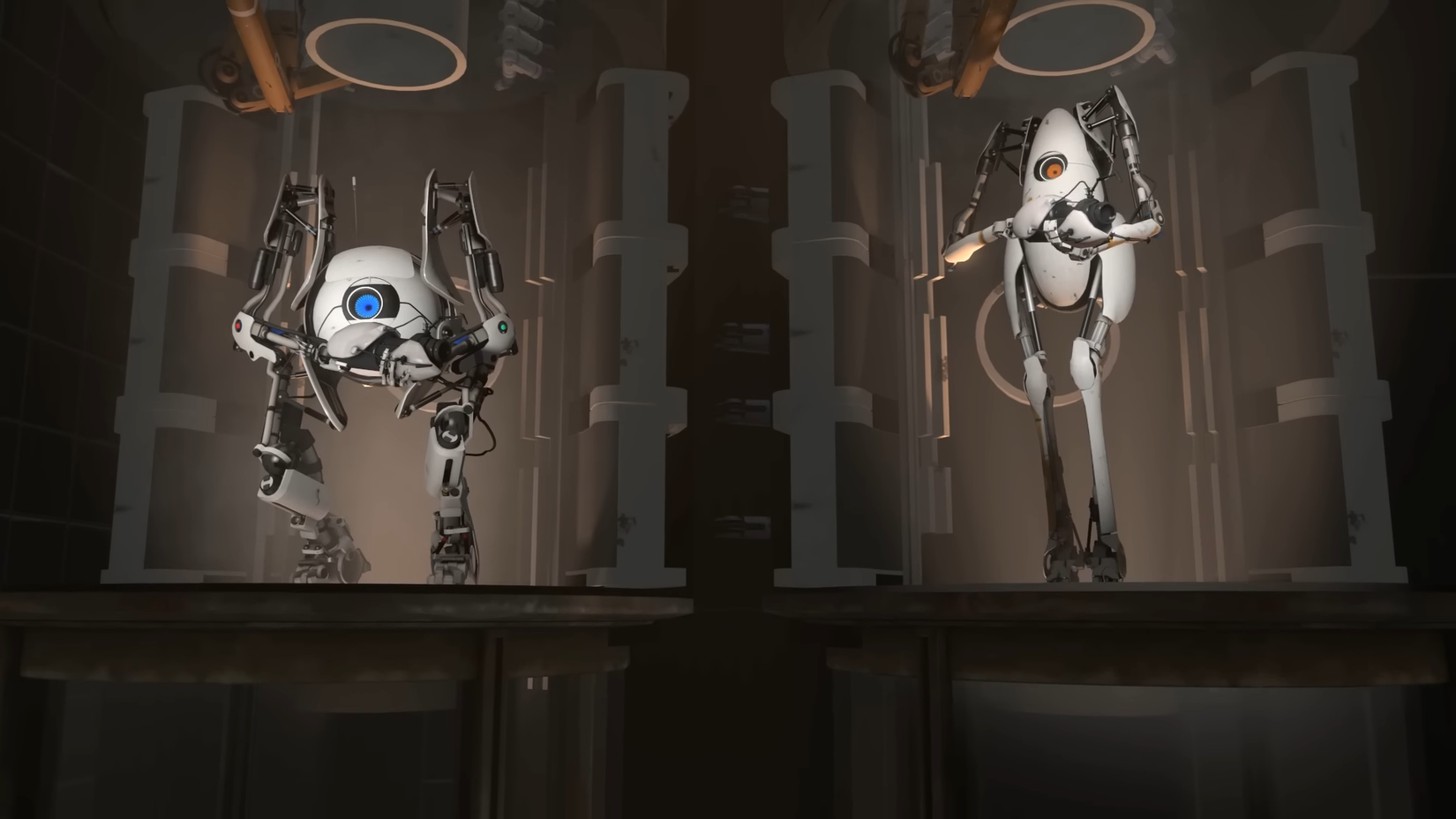
Portal 2 has an excellent single-player campaign, of course, but it also came with a completely separate co-op campaign bundled in, in which two players control robots Atlas and P-Body in GLaDOS’s new cooperative experiments. The addition of a second portal gun into the equation allows for all kinds of new mind-bending physics puzzles that encourage careful timing and clear communication between players. A particularly smart inclusion was the various pings and timers players could use to communicate non-verbally, handy for online play without voice.
Portal 2 was one of the most ambitious attempts at co-op puzzling, and while it may be presumptuous to credit it with any current 3D environmental puzzle games, I can’t help but notice those games started to become much more common after it came out.
1 A Way Out
Co-op with a Co-op Story
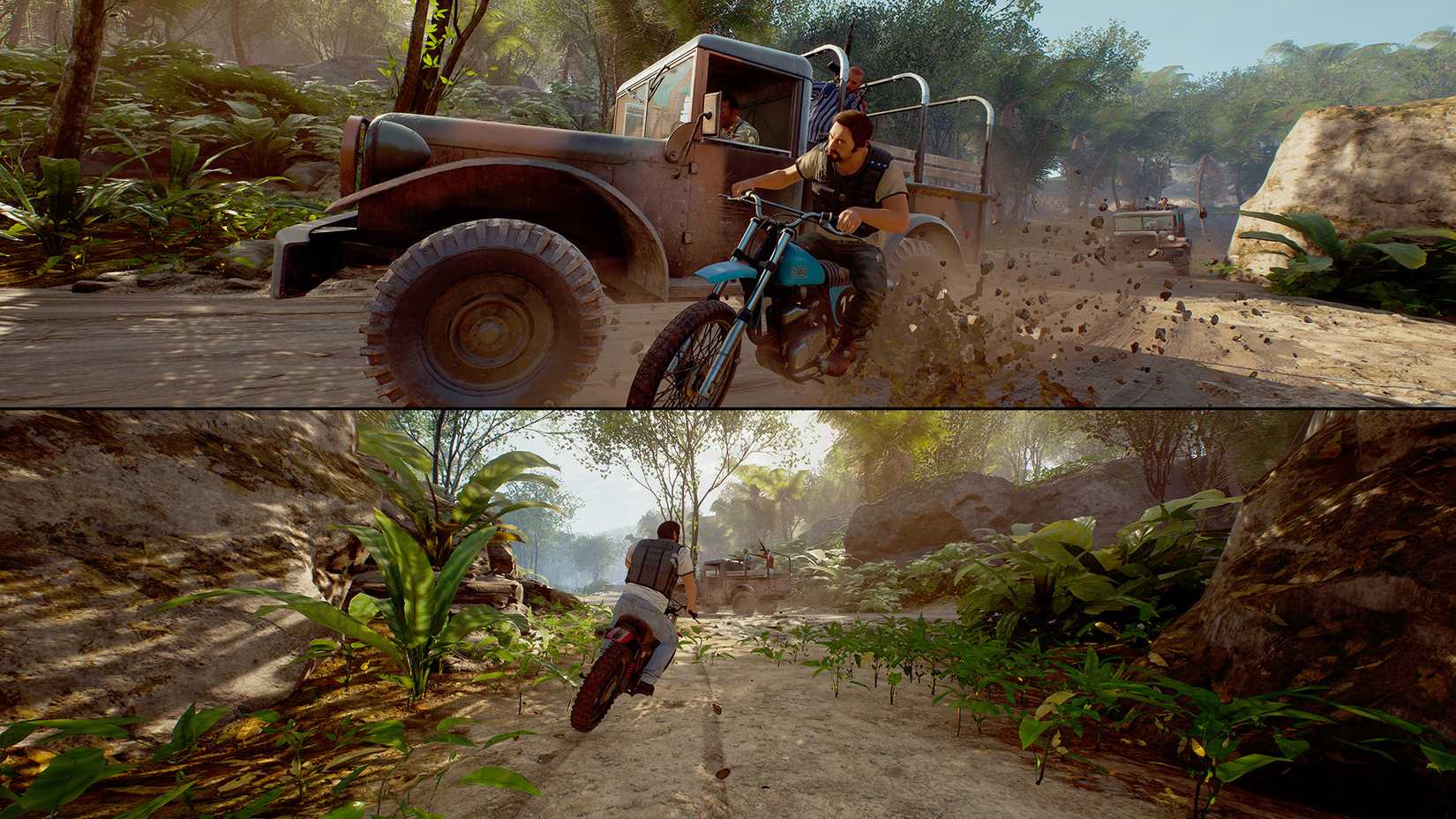
Speaking of tricky elements, building a game’s story around co-op is another challenging little tidbit. Most games with a co-op element specifically employ drop-in co-op, which allows a partner to be controlled by a CPU if a friend isn’t available. This, unfortunately, cheapens the story in a co-op game a bit, because usually only the first player’s character is ever directly acknowledged in a meaningful capacity. A Way Out was a major departure from that concept.
Rather than drop-in co-op, A Way Out’s co-op is expressly mandatory; you cannot play this game by yourself, and that’s by design. The whole point of the game is to show the intersecting stories of its two leads, Vincent and Leo, and the only way to ensure both of these stories have weight is for both of them to be player-controlled, forcing you and your partner to work together to survive and escape.
While not the first co-op game made by Hazelight Studios, A Way Out was the standard setter for the studio’s entire paradigm, with its following titles It Takes Two and Split Fiction opting for the same co-op-mandatory approach to impressive acclaim.
Next
Best Co-Op Games From Every Console Generation, Ranked
From 1970 to the present day, non-competitive multiplayer games have given us countless memorable experiences.



![ELDEN RING NIGHTREIGN: Deluxe Edition [FitGirl Repack]](https://i5.imageban.ru/out/2025/05/30/c2e3dcd3fc13fa43f3e4306eeea33a6f.jpg)
 English (US) ·