.png)
.png) 2 months ago
51
2 months ago
51
If you were a Final Fantasy fan between the years of 2000 and 2002, you were definitely livin' la vida loca, baby! And you also probably got that last reference, too. That three-year span saw three groundbreaking entries in the franchise. There was Final Fantasy IX, a return to the series' roots which, fittingly, saw the last direct involvement of series creator Hironobu Sakaguchi. Final Fantasy XI, on the other hand, brought the franchise to the world of MMORPGs, paving the way for the success of Final Fantasy XIV - well, eventually, anyway.
 Related
10 Best Final Fantasy Minigames
You'll play these minigames more than the actual game they're in.
Sandwiched between those two games was Final Fantasy X - and both the franchise and gaming in general were never the same. X brought changes, big and small, and did them so well, it's still celebrated to this day as one of the best. So, on this day, we'll see clearly just what Final Fantasy X brought to the table.
10 The First Final Fantasy in Full 3D
No Pre-Rendered Backgrounds Here! No Sir!

It's easy to forget sometimes, considering how much more advanced Final Fantasy games looked on the original Playstation compared to the generation before, but those games weren't in full 3D, either. Instead, the backgrounds were pre-rendered in 3D and then converted to 2D, with the 3D character models placed on top of them. It's not like the Playstation couldn't render entire 3D environments. Keep in mind, though, even with the backgrounds pre-rendered, Final Fantasy VII still came on a whopping three discs.
With the power of the PlayStation 2, however, no such compromises were necessary. Which meant that every section of Spira was in full, glorious 3D. It wasn't a vast, open world like Grand Theft Auto III, of course. Final Fantasy X's story took our heroes to way too many different biomes to do that. But, the places they did go to were way more immersive and diverse.
9 Giving Voices to the Previously Voiceless
And What Voices, Too!
 Steam
SteamIt's fairly common knowledge that Final Fantasy X was the first game in the franchise to feature full voice acting. It's not the first game ever to do this, obviously. However, those early instances were usually performed by, well... "non-professionals" would probably be the most diplomatic way to put it. "Interns and other folks around the office" would be another way.
 Related
Square, however, wasn't messing around when it came to casting X. While not loaded with Hollywood celebs like Grand Theft Auto III, X starred a Who's Who of vocal talent. It featured the talents of John DiMaggio (Futurama, Adventure Time), James Arnold Taylor (Star Wars: The Clone Wars), Paula Tiso (Dexter's Laboratory), Tara Strong (Teen Titans Go!, Powerpuff Girls), and Michael McShane (Vampire Hunter D, Whose Line Is It Anyway?, and Friar Tuck in Robin Hood: Prince of Thieves) - and that's just scratching the surface. You kind of look at the game in a whole new way once you realize that Bender from Futurama was the voice of Wakka.
This kind of casting showed the gaming industry just how voice acting can enhance a game. Also, that "fake laughing" scene near the start of the game was supposed to be like that, so shut up.
8 The Sphere Grid Leveled Up Levelling Up
A New Way to Power Up
 Final Fantasy Wiki
Sometimes a game will switch up a tried and true element of its genre seemingly just for grins. Sometimes it's a lateral move — like how The Legend of Zelda replaced your standard Hit Points with hearts. And, sometimes it's... kind of dumb. Like Final Fantasy VIII's Junction System. OK, now look, I'm one of FFVIII's most ardent defenders, but even I have to admit that the magic system in that game is just weird.
The Sphere Grid in Final Fantasy X, though? That's a whole different animal. I can't think of a level progression system in an RPG that's both so complicated yet so simple at the same time. Characters earn Sphere Points, which they can use to unlock nodes on a chart for stat boosts or new abilities. Unlocking those makes different nodes available, depending on what was selected. It's a much more organic and interactive way to build characters rather than just adding points to a stat every level or so. It's such a radical departure from what came before — so much that it still seems revolutionary today.
Speaking of sphere...
7 More Than a Mini-game
Blitzball Could Have Been a Stand-Alone Game on Its Own
 Steam
SteamFinal Fantasy VIII introduced Triple Triad, an in-depth mini-game that's in itself a part of the game's world. Square would follow that up with IX's Tetra Master, which was still fun but wasn't received as positively. I'm still not 100% how that game is supposed to work. It's also a part of one of that game's quests — which is probably a big part of why I've never actually finished it, now that I think about it.
 Related
10 Final Fantasy X Characters Who are More Important than Players Realize
10 Final Fantasy X characters you may not have realized are more instrumental to the events of the game.
Blitzball in Final Fantasy X, however, is something truly special. It was more than just a mini-game, it was a sport. You built a team, leveled up your players, competed in tournaments, and much more. Unlike Tetra Master, getting proficient at it wasn't a requirement to pass a certain mission, but it was damn satisfying if you did.
It was probably the first mini-game of its ilk that could theoretically be a game of its own. Think of how Gwent from Witcher III: Wild Hunt was turned into a stand-alone release — that's the kind of impact we're talking about here.
6 The Al Bhed Language
Turning "Learning" Into a Collectible
 Final Fantasy Wiki
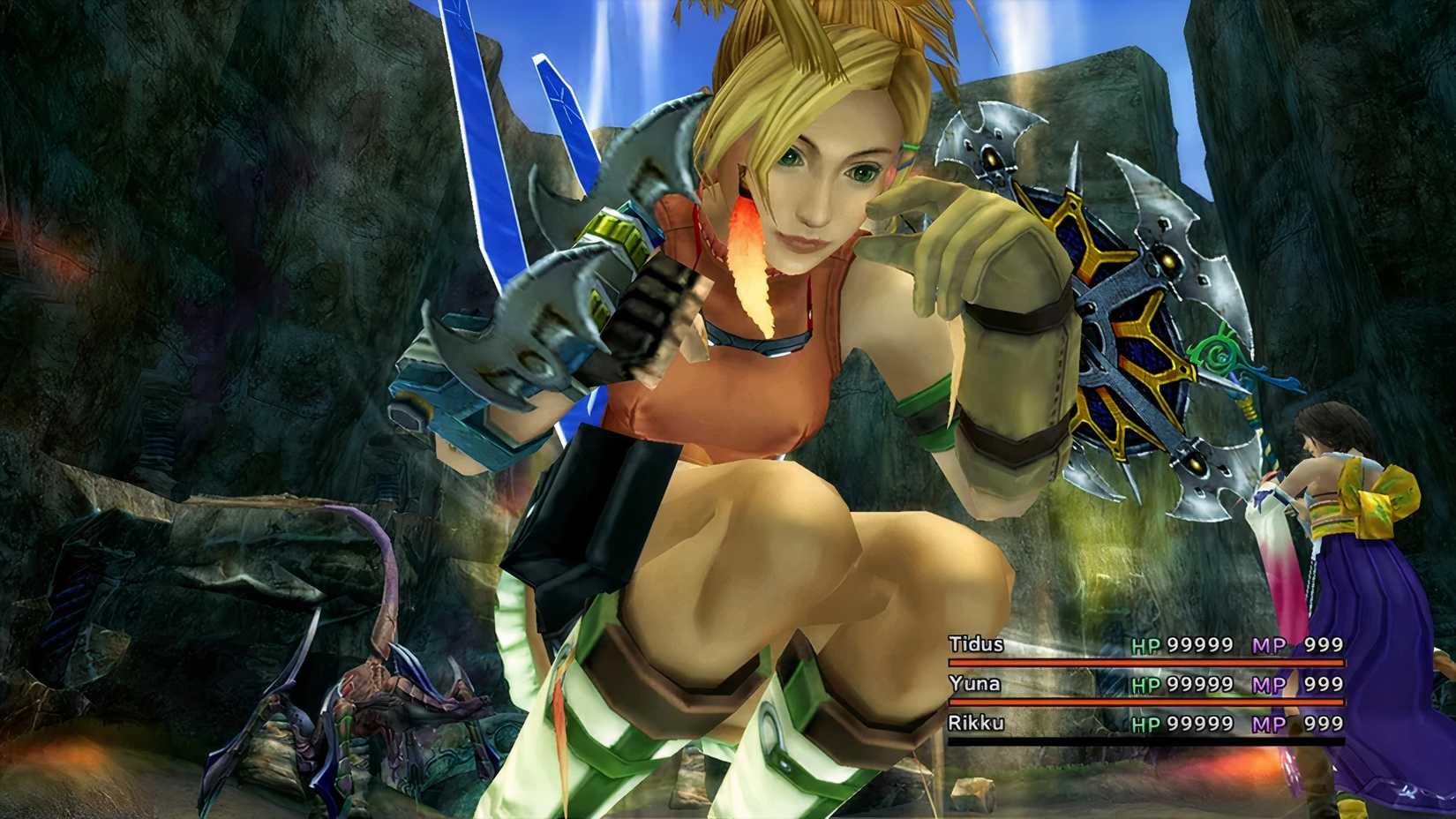
When I was a kid, I got really into codes and ciphers — because spies use those and spies are cool. I would write out the entire alphabet on one line and then, underneath it, write the letters used as its substitution. I'd send secret messages to my friends... who would have no idea what they said because I never gave them the key. Although it was usually "Do you want to trade Nintendo games?" or something like that. We weren't dealing with nuclear launch codes here.
Well, someone at Square was clearly spying on me as a child, because one of the stand-out features in Final Fantasy X was "translating" the language of Spira's machine-expert denizens, the Al Bhed. By collecting "primers" hidden across the world, you would decipher a different letter until you had a whole alphabet. Think of it like an early version of the language learning in No Man's Sky, except with just letters. What was cool was how the letters would transfer over into a New Game+ run, unlocking dialogue that was basically gibberish before.
5 Capturing Motion, Capturing Emotion
Like Voice Acting, Motion Capture and Cinematography Brought These Characters to Life
 Steam
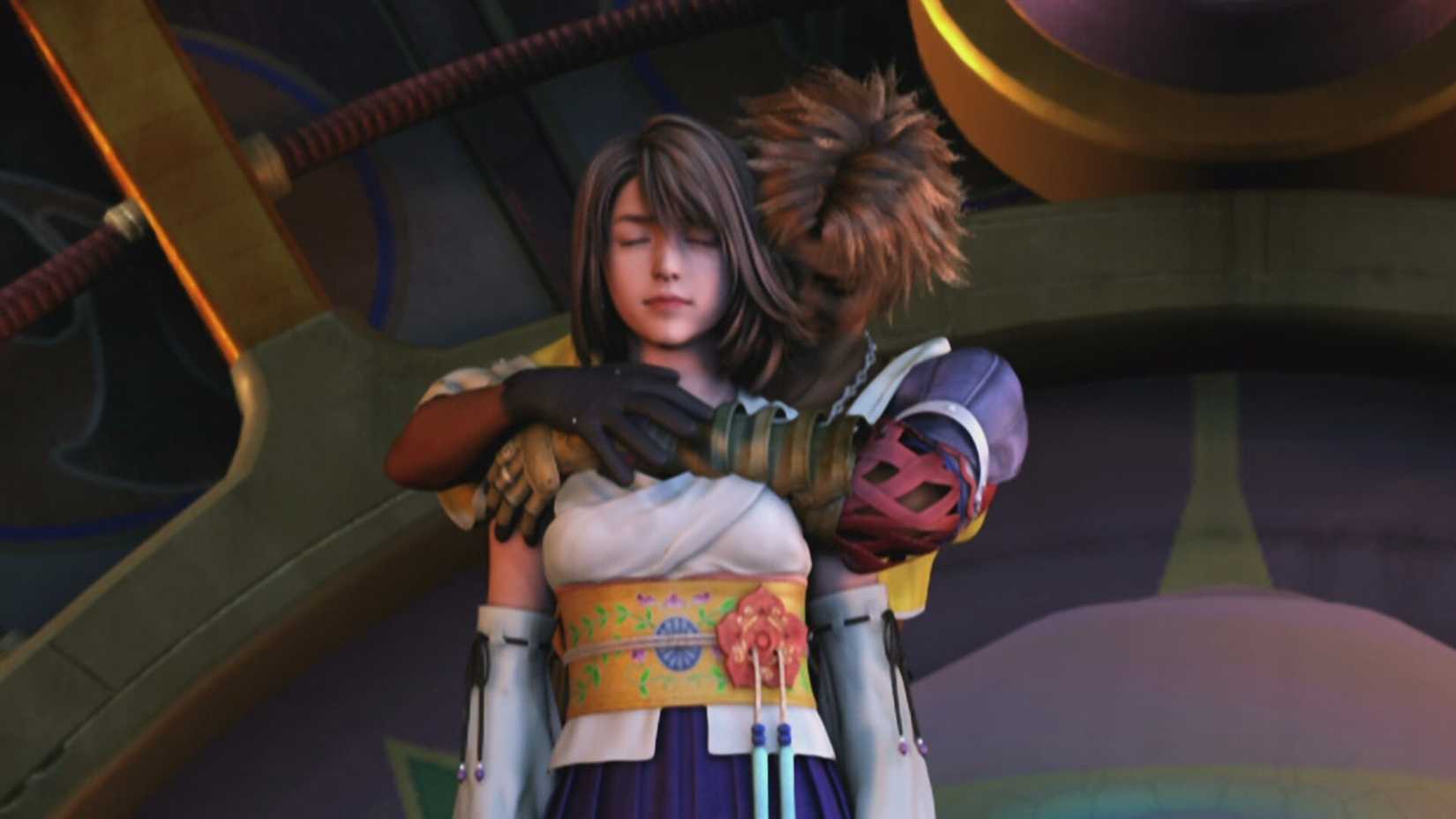
SteamOne element that really makes Final Fantasy X still shine even today is how everything looks and moves. Take for example that very first battle Tidus (or whatever you name him) has with that fish monster thing when he first arrives in Spira. Watch the way the camera moves around the field, or how it cuts to a close-up of his eyes. The previous PlayStation One games in the series showed glimpses of this, but it was in X when it really shines. In fact, you rarely see it any more considering the transition to real-time combat.
Of course, these fancy camera tricks wouldn't amount to much without some cool movement to show using them. This was the first game in the series to use motion capture, especially in the cutscenes. Yuna's sending dance in the village of Kilika following Sin's attack is still unrivaled to this day, and it was all done using motion capture.
4 A Changing of the Guard
Nobuo Uematsu Passes the Musical Torch

If there is any composer that could be universally acclaimed as the "John Williams of Video Games," it would be Nobuo Uematsu. From the very first game in the series to the groundbreaking PSX titles, Uematsu's brilliant writing and legendary melodies were synonymous with Final Fantasy. There are entire orchestras across the world that put on performances of his work. Not just video game scores, his video game scores.
When it came time to provide the music for the franchise's PS2 debut, the maestro made room for some new blood. The soundtrack still features a staggering 51 of his compositions, but the rest of the score was put together by Junya Nakano and Masashi Hamauzu. The result was one of the franchise's most eclectic — and best received — soundtracks. Uematsu would provide some music for XI, as well as a single track for XII, before leaving Square Enix in 2004.
3 Take Your Turn!
A New Take on a Classic Battle System
 Final Fantasy Wiki
One of the reasons the Final Fantasy series has stayed as relevant over the years as it has is its ability to innovate on classic RPG elements. Nowhere is that more evident in the various battle systems they have employed over the years. Starting with the traditional "Heroes attack in order, then the enemies" type of combat (which probably has a proper name), the franchise would introduce the Active Time Battle system, with every character involved in a fight having their own individual recharging bar indicating their turn. Final Fantasy X employs a system that's somewhere in between - the Conditional Turn-Based system.
Every character has a place in the order, and everyone waits their turn. However, they don't battle as groups, and their place in that order can change based on all sorts of factors. Characters can also be swapped in and out at any given time, which means you don't have to wait for a party member to get knocked out before you can replace them. This leads to strategic, but fast-paced battles each and every time. It began the series' gradual shift into real-time action and, honestly, no FF title since then has really recaptured its magic.
2 Spira
A Setting Unlike Any FF Game Before It
 Final Fantasy Wiki
Traditionally, settings in RPGs have been pretty static. You had your outliers, of course — such as the modern day settings of the Mother and Shin Megami Tensai franchises. But the majority of games released in the genre were typically set in a high fantasy, medieval setting. Wizards and warriors and dragons and the like. Fantasies Final VII and VIII mixed things up, each having a more science fiction-tinged setting. However, IX intentionally returned to its fantasy roots as a celebration of the series itself.
When Final Fantasy X came around, however, fans were treated to something not just brand new for the series, but somewhat for RPGs in general. The franchise's PlayStation 2 debut started out in a fairly futuristic environment, in Zanarkand, a city straight out of a sci-fi novel. However, it wouldn't be long until we were sent to the future of that world — except that an apocalypse called Sin sent that world back to its Stone Age.
While these fantasy set games seemed to take their cues from Medieval Europe, Spira reflected the aesthetics of the South Pacific of our world. For once, a Final Fantasy game actually looked like it was inspired by the region of the world it was created in. It was a tropical paradise with a horrifying secret, and it was unlike any other place seen in games — role-playing or otherwise.
1 Final Fantasy X-2
The Most Unlikely Thing in Final Fantasy History

Since the very beginning, Final Fantasy games all told a self-contained story in its own self-contained world. Those worlds certainly contained many similar elements. Chocobos. Magic crystals. Dudes named Cid. But, what happened in one game had no effect on what happened in another. It was as if that game's story was the... final fantasy to be shared regarding it. Eh? EH?! Get it?! OK, you get it. Moving on. Even when demand for more stories exploded, Sakaguchi and Squaresoft held steadfast. One story per world.
I don't know what it was about Spira and the world of Final Fantasy X, however, because that rule was tossed aside as quickly as Tidus throws a Blitzball. In 2003, two years following the release of X, Square dropped Final Fantasy X-2, the very first continuation of a Final Fantasy story ever. Interestingly enough, it was also the very last game Squaresoft released as, well, Squaresoft! That following April, the company merged with their biggest rival, Enix, the company behind the Dragon Quest games, to form Square Enix.
Well, that release opened the floodgates. It wasn't long before we saw new games set in the world of Final Fantasy VII. The next two single-player entries into the series, Final Fantasy XII and XIII, each saw sequels of their own.
 Next
Next





![ELDEN RING NIGHTREIGN: Deluxe Edition [FitGirl Repack]](https://i5.imageban.ru/out/2025/05/30/c2e3dcd3fc13fa43f3e4306eeea33a6f.jpg)
 English (US) ·