.png)
.png) 2 months ago
54
2 months ago
54

Published May 23, 2026, 9:30 AM EDT
Linda Güster is a Contributor at DualShockers and a German, UK-based gaming journalist specializing in video games, esports, industry analysis, features, lists, reviews, interviews, and news. She has been writing professionally since 2020 and began covering video games and esports in 2025, turning a lifelong passion into her professional focus.
Before joining DualShockers, Linda worked as content lead for Esports Insider DACH and The Escapist Magazine Germany. She previously worked in software engineering and digital media, giving her a strong technical background and the ability to explain complex systems clearly. Across her career, she has written thousands of news pieces and covered gaming culture, esports, technology, and broader industry developments.
There's a specific feeling you get when a sequel arrives with noticeably more money behind it than the last one. It's not always about graphics. Sometimes it's the scale of a setpiece. Sometimes it's the number of voice lines in a zombie round, or the fact that a studio built a brand-new engine just to make the lighting look right. Sometimes it's a Hollywood cast and an Alternate Reality Game that sent fans to payphones across the country.
 Related
These ten sequels make absolutely no attempt to hide how much more they cost, and it’s fun to see which aspects different companies prioritize first when they get more budget. Square Enix loves their CGI, Bungie and Microsoft their Hollywood voice actors, but what about the rest?
10 Halo 2
From Duct Tape to Keith David
 YouTube via DraKulis
Halo: Combat Evolved was made for under $20 million. It famously reused map layouts in its latter half just to fit onto the disc. It was, by most accounts, a scrappy project held together by genuine talent and an eleventh-hour influx of Microsoft money. It sold over 5 million copies and proved first-person shooters could work brilliantly on consoles.
Halo 2 had a $40 million development budget and nearly $80 million in marketing. One million of that went to "I Love Bees" – an Alternate Reality Game that created real-world interactive events leading up to launch, which is still one of the most creative marketing campaigns in gaming history. The cast included Ron Perlman, David Cross, and Keith David. It made $125 million in its first 24 hours. Going from CE to 2 isn't just a visible jump in the game itself – it's a visible jump in the entire cultural footprint of the thing.
9 Dark Souls 3
The Growing Pains Finally Ironed Out
 YouTube via Silent Run
Demon's Souls and Dark Souls have a mid-budget feeling that is, honestly, part of their charm. The jank, the obvious missing content, the oddball design choices that slipped through because nobody had time – all of that contributed to making those games feel discovered rather than authored. Dark Souls 2 started sanding down the edges and introduced more aggressive difficulty marketing that smelled like publisher meddling.
By Dark Souls 3 and Bloodborne, that scrappiness was mostly gone. The easiest way to see it is to compare the Asylum Demon on DS1 to its equivalent on DS3 – the difference in animation quality, visual polish and general ambition is night and day. The extra budget was largely a good thing because FromSoftware maintained their design philosophy throughout. It just looks considerably more expensive now, and it shows.
8 Monster Hunter Stories 3
The Spin-Off That Started Demanding to Be Taken Seriously
 YouTube via Gamer's Little Playground
Monster Hunter Stories felt like a spin-off. Charming, but clearly working with less than the mainline series. By the third entry, something had shifted significantly. The main character can speak now. Monstie kinship attacks are more elaborate and more visually impressive. The whole thing looks genuinely great – the kind of great that makes you wonder how a spin-off got this much care put into it.
Capcom has never disclosed the Stories budgets, but the mainline Monster Hunter series is serious business – the Hollywood film adaptation alone cost $60 million. The trajectory from game one to game three does the talking. This is a spin-off that started modest and has been making a case for more resources ever since. The third game is the strongest argument yet.
7 Final Fantasy VI
Watch the Opening Cutscenes in Order
 YouTube via SvalPlay
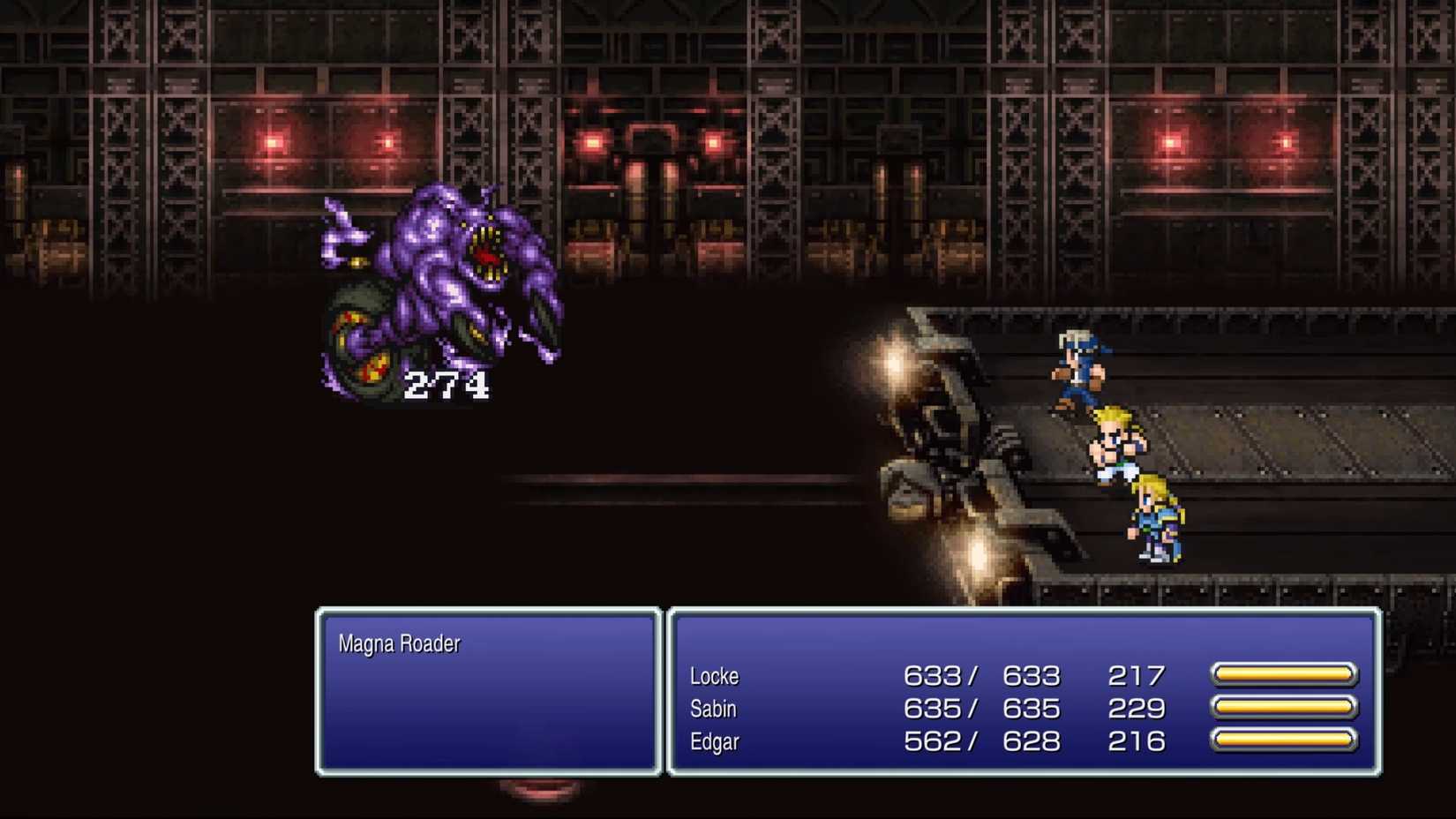
The first cutscene of Final Fantasy IV, then V, then VI. Each one is more ambitious than the last. By VI, you can feel exactly what Square were doing – pushing the hardware and their own production values toward something that could genuinely impress you on a Super Nintendo. Every entry was making a statement about what the team could now afford that they couldn't before.
This pattern continues into Final Fantasy XIV. The voice acting jumped from A Realm Reborn to Heavensward. Encounter design became bolder in Stormblood. Shadowbringers made the boldest narrative and musical choices in the game's history. Recent Dawntrail patches have introduced class-specific reactions to climactic cutscenes. Square Enix has always put their money visibly on screen – which is a strength right up until it becomes a company that thinks it's a CGI studio that makes games on the side. That path nearly killed them once already, and it's worth remembering.
 Related
10 Co-Op Games Reviewed Higher Than Split Fiction
Split Fiction is one of the best co-op games you can play, but believe it or not, we found ten better ones.
6 Kingdom Hearts 3
You Can Smell the Budget

Kingdom Hearts 3 wants you to know how much it costs. Aerial dogfights. Fighting up a mountain. Water physics that feel almost aggressive in how good they look. Set pieces that exist primarily to show you what the team could now afford to build.
Part of that cost came from switching engines mid-development – moving from a custom in-house engine to Unreal Engine 4 cost roughly a full year of progress. Part of it came from securing Toy Story, Monsters Inc. and Frozen worlds, which required consulting directly with Pixar animators.
The development cycle stretched to around five years. It became the best-selling game in the franchise at over 6.7 million copies, but the profit margin was smaller than Square Enix expected. When you're watching Sora fight alongside Woody and Buzz in a world that looks like it was pulled straight from the film, you're looking at exactly where that money ended up.
5 Sonic Unleashed
The Last Time Sega Really Bet on Sonic
 YouTube via Sonic Destiny
Sonic Unleashed is estimated to have cost between $20 and $27 million, and by Sonic standards, that was a genuine statement of intent. Sega built the proprietary Hedgehog Engine specifically for this game. Each day stage was reportedly budgeted at a minimum of one million dollars individually. The cutscenes were produced by Marza Animation Planet. A live orchestra recorded the soundtrack.
The result was a game with a completely clear vision for what Sonic should be – fast, mostly linear, reaction-time focused, with the camera zooming out during a boost and the sound design built to support the momentum. It executed that vision at a visual quality level the series hasn't really returned to since. It sold over 2.45 million copies and is widely considered the last genuinely big-budget Sonic game. Frontiers had ambitions but didn't have this, and you could feel the difference immediately.
4 Diablo 4
Every Dollar Is on the Screen
 YouTube via MKIceAndFire
Diablo 2 was a landmark game made on an era-appropriate budget. Diablo 3 had a more modest traditional spend and produced act-based maps, a brighter colour palette and pre-rendered cinematics. Diablo 4 had an estimated combined development and marketing budget exceeding $100 million, which produced a massive seamless open world, ray-traced lighting and fully motion-captured cutscenes.
The jump from 3 to 4 is the most visible generational step-up in production investment the Diablo series has taken, and it shows in almost every frame. Whether the money produced a game that's proportionally better than its predecessor is a different conversation. But that the money was spent, and that it's visible, is not in any doubt.
3 Resident Evil 2
More Than a Million Dollars and a Complete Restart
 YouTube via LongplayArchive
The original Resident Evil was made by a team of around 60 people. Resident Evil 2 cost approximately over $1 million, and received a $5 million advertising budget to boot. The story behind the sequel is not an easy one: an almost-complete version of the game – now known as RE 1.5 – was scrapped entirely because Capcom's quality standards weren't met. The team restarted from scratch.
What came out the other side was one of the best survival horror games ever made. If you play the mainline RE games in release order, RE1 through to the 2002 remake is one of the most dizzying technical and artistic progressions you'll find compressed into six years. RE2 is one of the clearest examples in gaming of a sequel where some extra investment and the team finding its footing has gone directly and visibly into the quality of the finished product.
2 Call of Duty: Black Ops 7
When the Budget Goes Up and the Results Don't Follow
 YouTube via UnitedG
Call of Duty: Black Ops 7
Black Ops 7 had an estimated budget of around $1 billion, a development credit of over 8,000 people – roughly 68% more than previous entries – and launched to the franchise's lowest US sales in years. Post-launch content budgets were cut in response.
The comparison to Black Ops is instructive. Kino der Toten in BO1: four characters who only talk to themselves, a handful of perks, Pack-a-Punch, the occasional music Easter egg. Totenreich in BO7: eight characters with full location-specific conversation trees, a two-hour questline with its own mechanics and boss fight, ten sidequests, one of which is only accessible by playing a specific character – and that's per map. The scope increase year on year-on-year is real. The money is clearly there. The results, for once, didn't match what was spent on them.
1 Persona 5
Every System, Rebuilt
 YouTube via The Game Archivist
Persona 4 had randomly generated dungeon floors. Persona 5 has meticulously handcrafted Palaces, each built around its villain with unique environmental storytelling, puzzles, and traps. The UI is one of the most stylish in any game ever made. Stealth mechanics, a grappling hook, mid-dungeon safe rooms, Baton Pass, gun attacks, proper SMT demon negotiation back in the mix. Every individual system is a visible step up.
The Confidant system was rebuilt so that maxing out relationships grants actual game-changing perks rather than just fusion bonuses. Tokyo replaced a small town as the setting. The Velvet Room got significant upgrades. Persona 5 is a game where every corner you look into has been improved, and the cumulative effect is a sequel that feels like ATLUS finally had the resources to make the version of Persona they'd been working toward all along. It shows absolutely everywhere.
 Next
Next
10 Game Franchises With The Most Mainline Sequels, Ranked
From Pokemon to Call of Duty, we're ranking 10 game franchises with the most sequels.


![ELDEN RING NIGHTREIGN: Deluxe Edition [FitGirl Repack]](https://i5.imageban.ru/out/2025/05/30/c2e3dcd3fc13fa43f3e4306eeea33a6f.jpg)
 English (US) ·