.png)
.png) 2 hours ago
4
2 hours ago
4


Published Aug 2, 2026, 12:30 PM EDT
Adam Braunstein is a Contributor at DualShockers who has been covering games professionally since 2019. He primarily writes lists and features, with a focus on RPGs, JRPGs, action-adventure games, VR, long-running franchises, nostalgia, and the broader state of the gaming industry.
Before joining DualShockers, Adam contributed to gaming outlets including Venture 4th, GameSkinny, The Nerd Stash, Attack of the Fanboy, and Daily Gamer. He has also interviewed developers, written occasional guides and news articles, and reviewed games for previous publications. Adam holds a Master’s Degree in Creative Writing.
Sign in to your DualShockers account
Nothing is perfect. Even your 10/10 childhood nostalgia trips that didn't have a single thing wrong with it. Everyone has their own nitpick when it comes to any JRPG, and even the best ones always seem to have a section or a character or a boss that you just absolutely hate.
JRPGs have been a genre that has remained very static in its approach for a long time now, and while the battle systems and stories change, that feeling of "I'm playing a JRPG" never really becomes something different. Because of that. Old problems get repeated, and it's hard to shake even for the best of them.
We're going to check out some flaws in otherwise incredible JRPGs.
10 Xenogears
One Step Too Many

Xenogears is one of my favorite games of all time, but other than the infamous 2nd disc problem, which I actually didn't mind all that much, there is a far bigger flaw that you feel throughout the game. And that would be the random battles. The random encounter rate of the game is simply ridiculous. From your first steps into the wilderness to the last steps you take in the final dungeon, it's a rapid-fire assault like nothing you've ever seen before.
Take off those nostalgia-tinted glasses and play this one today. It's still a great game, but if you don't love the combat, you're going to be pulling your hair out trying to play this game. It's every 2 steps, sometimes seconds apart, that the battles start. Even worse, you're going to have to keep healing and restoring fuel, and if you're not prepared for a particular area, it can drain your supplies really fast. A fan patch makes it much more tolerable, but that's only available on PC. It's an amazing journey, and this is really the only flaw I can find with it, but it's one that makes it really difficult to play these days.
9 Tales of Arise
A Tale of Two Halves

Tales of Arise was a return to form for JRPGs in 2021, combining incredible art style, really fun combat, and an engaging story with a colorful cast of characters that gave the series its biggest hit yet. About 30 hours into the game, you'd be hard-pressed to find a better JRPG; it just does everything right from the pacing to the boss battles and exploration in between. But then the rest of the game comes, and while the story revelations are interesting, this thing goes absolutely bonkers in the worst way.
What started as a somewhat grounded story about escaping slavery and liberating a population becomes a space-faring adventure with literal aliens involved, and by the time we were talking face to face with one, I was like, "what are we even doing anymore?" It's such a wild kitchen sink approach to a game that really didn't need it, and then with that comes more endless dungeons with the most damage-spongy enemies imaginable and bosses that seemed designed to test your patience rather than your skill. It all bogs down a really great product and makes you wonder what the devs were thinking when they built the second half of this game.
8 The Last Remnant
One of the few Xbox 360 Standouts
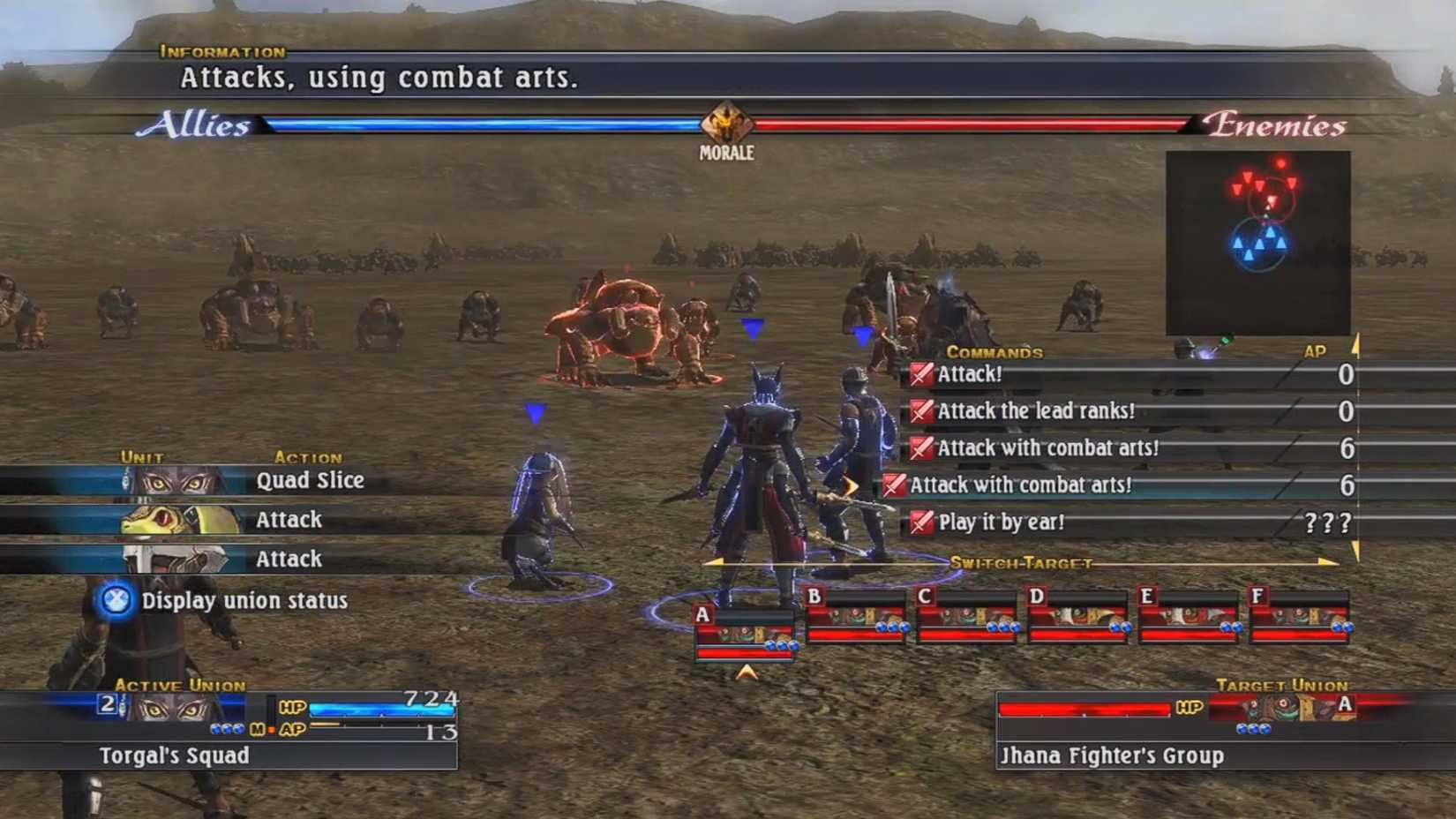
The Last Remnant is one of the few must-play JRPGs on the Xbox 360, and it's one of Square Enix's most interesting games. Not so much for the story, but the battle system. That's because it's simultaneously its biggest strength and its biggest flaw. The reason is that the in-game tutorials are absolutely horrible. The phrasing they use is so unclear that you end up just speeding through it because you think you can figure it out on your own.
And here's the thing: you really can't, not unless you get lucky at least. It's a really deep system that requires a few YouTube tutorials to even remotely understand what you're doing, how the team morale meter works, and what leads to triggering special attacks. It's really an awesome time once things click, and you understand how battles work, but it's likely going to be some time before that happens, and that barrier of entry scared a lot of players away back when it first released.
7 Xenoblade Chronicles 2
Learning Curves
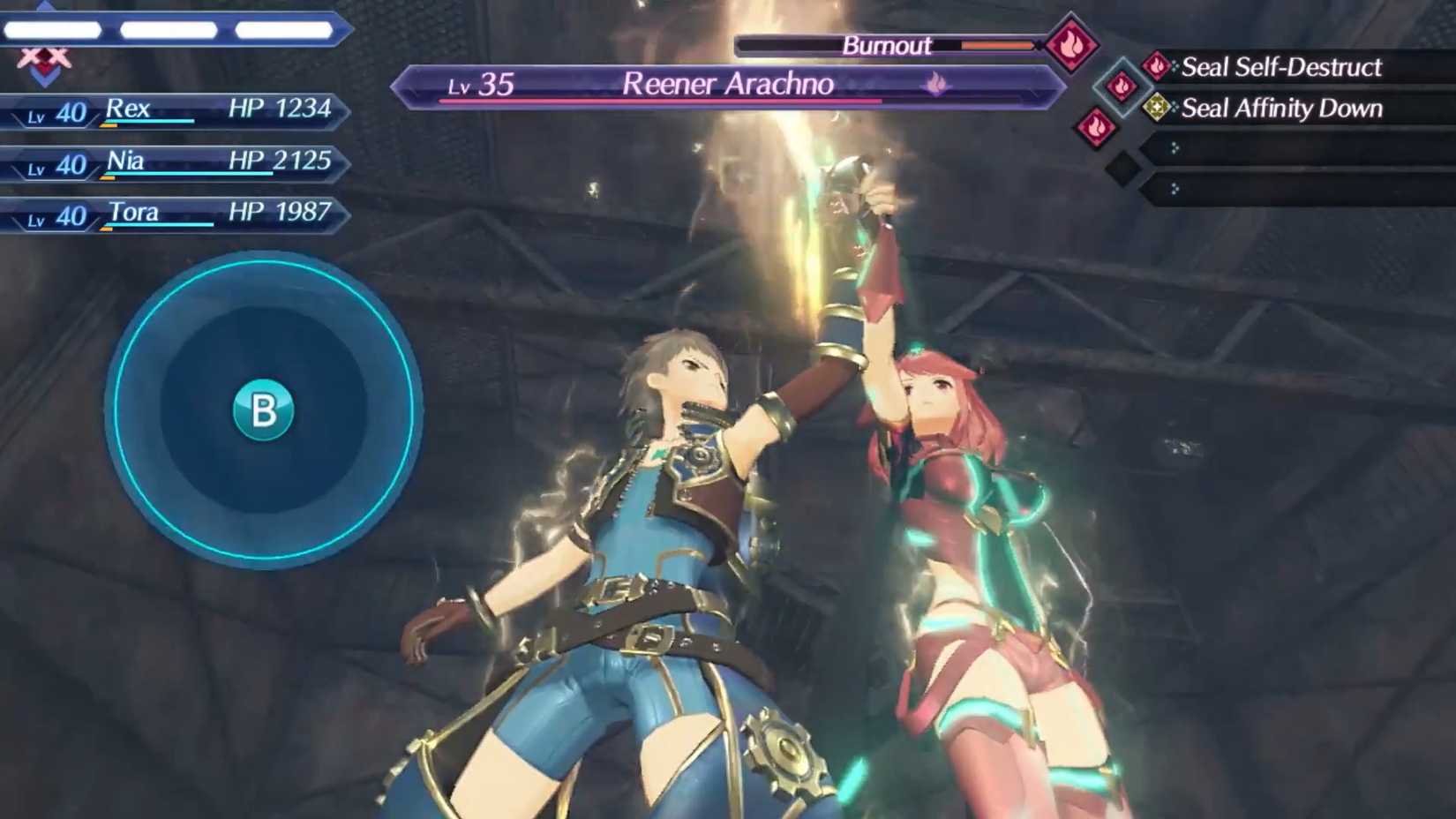
Allow me to go off on this one for a second here. Xenoblade Chronicles 2 is a game I love and deeply hate at the same time. It's got so much good, with beautiful graphics, a simply breathtaking world, deep characters, and a fascinating story on top of some really kick-ass moments and boss fights. But along with that is a combat system that is barely, and I mean barely, even explained. If you want to understand what the hell is going on here, you'll need tutorial videos galore, and it's not a one-stop fix, because 60 hours into the game, you're still getting new features added to the combat that, you guessed it, are also barely explained.
But that's not the only flaw this one has. The tone is just baffling. You've got borderline hentai-looking female characters combined with some of the most childish and poorly written dialogues imaginable, and I can't figure out who this game was actually made for. It's so ridiculously unserious most of the time, but then has moments where it feels like things are finally being taken a bit more seriously, only to drop that tone 5 minutes later. And then there's Rex, who is the worst protagonist in JRPG history, for my money. The voice acting, the character design, the combat yells he has, the terrible emoting during huge story moments. Oh my god, take my ears and eyes please. But aside from all of that, I've got 100 hours in the game. Go figure.
6 Arc Rise Fantasia
Spectacular Combat, But Play on Mute

Arc Rise Fantasia is a really great JRPG for the Wii and one of the few games in the genre worth mentioning when it comes to that console. It has some of the best JRPG combat around, with a thrilling system that emphasizes quick thinking, smart preparation, and predicting your enemy's next moves before they make them. It's also got some nice graphics for the time, with impressive 3D models and some great battle effects for the bigger attacks in the game.
But then comes the big flaw. The voice acting. In most games, I really don't mind the voice acting, good or bad, but here, it's another level. This voice acting comes from the 7th circle of hell, and I'm convinced it could be used to torture prisoners of war. It's so bad that it makes it hard to fathom how the game was allowed to be released this way. Whether it be lackluster deliveries of lines where emotion is clearly called for, or the hilariously awful reactions to characters getting hit, it's almost comical how bad this game sounds when people are talking. Now, you could just play it that way, and act like it's a big comedy, but even then, you'd be wondering why you're not laughing, because the game isn't funny enough to pull that off. Genuine suggestion here: play it on mute. Throw on some of your favorite music, and you'll enjoy it far, far more.
5 Vagrant Story
A Gothic Tale

Vagrant Story came out in 2000 and was from Square Enix, so you'd imagine fans of Final Fantasy were expecting something spectacular and grand. Well, they'd have been disappointed, because this is a much quieter story and a more restrained game than Final Fantasy. Its visuals at the time were pretty dated; with the PS2 already gaining momentum, it was a bit hard to rationalize a company like Square Enix releasing something that looked so primitive, but that ugliness was part of its beauty. Vagrant Story tells arguably the most mature and nuanced story of Ashley Riot and his mission to stop a madman.
It's a simple premise, but it's done incredibly well. The combat in the game is both a huge positive and negative for the game depending on who you are. It's a real-time and turn-based system all in one, and it's complex as hell and requires your careful attention if you're going to have any success in the game. The timing in particular is incredibly difficult, and once you start performing combos, one wrong timing, and you're going to lose out on big damage. Aside from the combat, the level design is incredibly understated and, at times, pretty boring. They could've done a lot more to make this feel like the oppressive gothic horror story it was supposed to be, but it's possible that the budget may have been in other games like Chrono Cross, Final Fantasy X, and perhaps even the ill-fated Final Fantasy: The Spirits Within.
4 Final Fantasy XVI
Are You Not Entertained?

Final Fantasy 16 is definitely the best of the newer Final Fantasy games circa 2006, but despite having a great main character, thrilling battles, and a really interesting story, some big-time flaws are holding it back from reaching the upper echelon that other games in the series sit. First off, it's just too easy. All these big fights are great and all, but if there is little to no challenge to any of them, does the spectacle really matter in the end? These fights as the Eikons are incredible visually, and some have the most jaw-dropping moments I've ever seen in a boss fight, but there is nothing to them.
They are glorified quicktime events, often with literal quicktime events interwoven. Even the boss required little effort. It dumbed down everything and made the journey that should've been a brutal and arduous one feel rather nonchalant. Also, limiting Clive to only Ifrit meant that you didn't get to experience the other Eikons as you probably should've. Seeing as you can shift through powers to use different abilities, you'd think it would be obvious that your limit breaks and maybe even your full Eikon transformations would change too, but nope. You're stuck as Ifrit the whole time. And you barely get new abilities to use as him, so his fights consistently feel like a slog. I wish this game gave you an actual party to play with as well. There was so much potential for this one to have a party of Clive, Jill, Joshua, Dion and Cid, but Square Enix wanted this to be a Clive story, for better or worse. And I think it was for worse.
3 Star Ocean: Till The End of Time
Till the End of the Game

Star Ocean: Till the End of time
Star Ocean: Till the End of Time is a game that took the franchise to a whole other level as far as I'm concerned, and it did so with an awesome combat system and really gripping storyline that keeps you heavily invested after the initial slow moments. Those moments are pretty damn slow too, as you wander around a cruise ship with absolutely no clue what to do or where to go, but they end soon enough, and the real story starts.
Because the story is so good, it makes the major flaw of this game so hard to ignore. And that's the thing, because an ending should never undo the rest of a journey, right? Like Mass Effect 3's ending doesn't discount how great the rest of the game and the previous 2 were, right? Well, no, not when you do what Star Ocean: Till the End of Time did. The ending of this game basically tells you this whole thing was a simulation. It's the equivalent of the "it was all a dream" trope but in videogame form. It's so jarring that it immediately ruins everything that came before that moment. It's an ending spoken of in hushed tones to this day, because it did irreparable damage to the franchise and made them make a prequel in Star Ocean: The Last Hope and then shift to what appeared to be an entirely different timeline with Star Ocean: The Divine Force. It should've been a time to celebrate Star Ocean's ascension into the mainstream of the gaming world, but that ending set it back, despite following a fantastic game.
2 Xenosaga: Episode 1
Get Your Popcorn Ready

Xenosaga Episode I: Der Wille zur Macht
Xenosaga: Episode 1 is a fantastic JRPG for the PS2, and though its visuals are a little bit hard to get used to, the plot and the characters and the combat carry them quite admirably. It's on the longer side for a JRPG, and it can take a bit to really get going, but once it does, you'll be utterly gripped by its complex story and themes. The problem is, to get there, you need to sit through multiple movies' worth of cutscenes.
In a game that's roughly 40 hours or so, there are 8 and a half hours of cutscenes. Nearly 1/4th of your playthrough will be spent watching the story unfold rather than playing through it as it unfolds. No joke, there are many times when you won't need to touch the controller for at least 45 minutes. It is a stunning way to go about making a game and can really bog down the experience. Now, are the movie-length cutscenes good? Yeah, they're fantastic, but most people don't want to watch a game; they want to play it, and it's easy to see why this one didn't click with everyone despite being an outright great JRPG.
1 Baten Kaitos
Pick a Card, Any Card
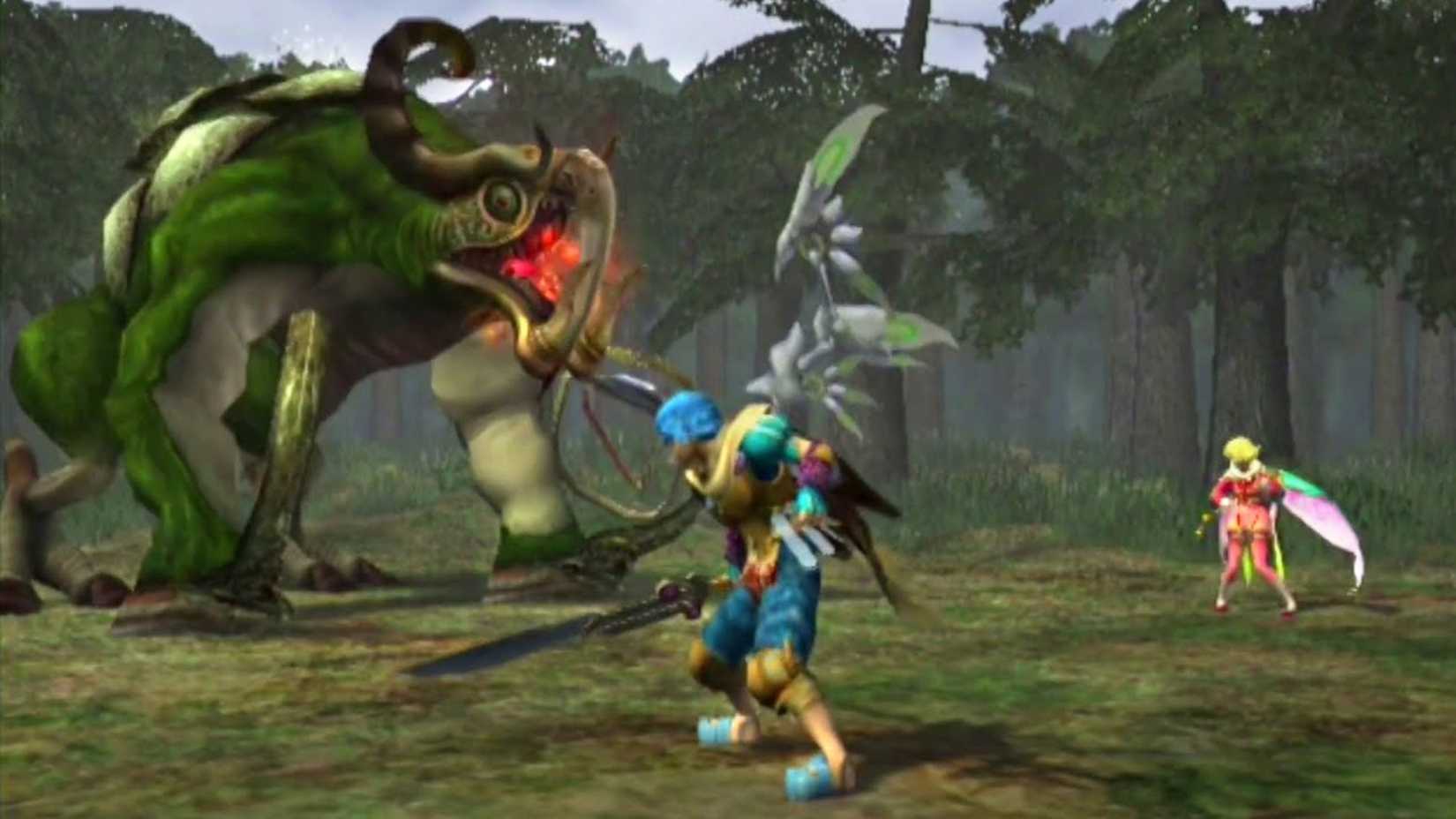
Baten Kaitos: Eternal Wings And The Lost Ocean
Baten Kaitos is a game from way back in 2004, during the waning years of the first golden era of JRPGs, and I think this one was really overlooked. Having come back to it in 2026, it has that classic JRPG feeling, a great protagonist, an awesome story, some pretty locales, and some great characters too. That's not a surprise because this is from the early days of Monolith Soft. It's also got a really interesting combat system, but it's one that takes a lot of getting used to. The reason is it's kind of based around RNG. You set up your deck of attacks and defensive abilities and healing and just shuffle up and deal at the start of every battle. That means you could easily find yourself out of luck if you're out of healing cards, and you're facing the attacks of your enemies.
You need to block attacks in real time too, which can be a task in itself. Then there is the speed of the combat, which is incredibly slow. Now, if you play the modern remaster of it, you can alter that speed, but then comes the problem of blocking, which is damn near impossible with increased combat speed. So it's an uncomfortable combat system no matter what you do. It's fun to play, but it's super frustrating at the worst moments, and you can't really do anything to mitigate it simply due to the nature of the game as a deck builder.



![ELDEN RING NIGHTREIGN: Deluxe Edition [FitGirl Repack]](https://i5.imageban.ru/out/2025/05/30/c2e3dcd3fc13fa43f3e4306eeea33a6f.jpg)
 English (US) ·