.png)
.png) 19 hours ago
5
19 hours ago
5
Hollow Knight has become a flagship title in independent game development, securing its place among the most defining works of the past decade.
Team Cherry crafted an immeasurable adventure that is as challenging as it is immersive, garnering a global following thanks to its attention to detail, undeniable charisma, and holistic excellence.
Ten years have passed since its release, and aside from its successor, it truly hasn't been surpassed; in fact, the more time passes, the more one appreciates the timelessness of its concept.
Therefore, to truly understand the magnificent anomaly that it is, I invite you to read this list of ten Hollow Knight details that show why the game still feels ahead of its time.
10 A Living World
Hallownest is Bigger Than Our Experience

One of the common characteristics of video games is that their components are at the mercy of the player's signals, but Hollow Knight takes a different approach.
From encountering non-aggressive creatures, whether because they're too busy praying or simply because they respect you, to seeing NPC stories that progress independently of your interaction with them, Hallownest doesn't revolve (that much) around The Knight.
In an era where interest in content must be justified by making everything epic or rewarding, Hollow Knight's design opts for the genuine and contemplative, creating a compelling world that feels real despite being populated by drawn insects.
This ability to convey authenticity through its environments, enemies, and secondary characters is incredibly unusual, demonstrating that the game sees itself as more than just a demanding action-adventure.
9 Cinematic Damage Reduction
One Millisecond to Understand Everything

Despite the above, Hollow Knight is undeniably a punishing title, and this is evident in its exhilarating combat, which requires fast reflexes, both physical and mental.
Every second in a fight is a decision to be made, whether it's attacking, dodging, healing, or so on, so the brief pause the game makes when you take damage is the landing on the ladder to victory.
Given the limited health, the game doesn't allow for too many mistakes in a single encounter, so those milliseconds are extremely valuable, giving your brain enough room to register that you've just been hit and must react accordingly.
That could mean becoming more aggressive, retreating to think more clearly, or simply fleeing, though the key is that momentarily frozen screen that gives you space to judge, instead of just allowing you to absorb damage from various sources and die before you know it.
8 Acoustic Immersion
Everything Sounds in Real Time

Hollow Knight's sound design is, by far, the most underrated marvel of the entire game, as very little is said about how reactive the physical world is to our every step.
Depending on the material we're walking on, or whether we're in the water or standing, the game adapts the specific circumstances of the Knight to the sound, modifying the output of our actions to make us feel the presence of our surroundings.
Because it applies equalization filters in real time, it informs you about the environment without you even noticing, which is amazing, especially considering the large number of different biomes the game features.
Everyone praises Hollow Knight's magnificent soundtrack, and it's entirely deserved, but not enough of the accompanying sound structure, which deserves just as much acclaim as the music.
7 Adjustable Physics
Jumping as a Form of Art

The controls in Metroidvanias are among the most crucial aspects because they determine how enjoyable the gameplay feels and how feasible it is to deal with the threats thrown at us, but none do it as well as Hollow Knight.
Instead of predetermined trajectories, our beloved knight responds every millisecond we press the jump button, granting a degree of control when leaving the ground no other title offers.
If we add the pogo, which also varies depending on the surface it's performed on, it becomes clear Hollow Knight's vertical plane is almost scientifically calculated to be realistic, always leaving us in complete control.
Platforming is vital to the adventure in Hallownest, and this capability to give us every last bit of agency over such an important element as jumping is a game-changer of immeasurable magnitude.
6 Unmistakable Enemy Silhouettes
Pure Pattern Recognition
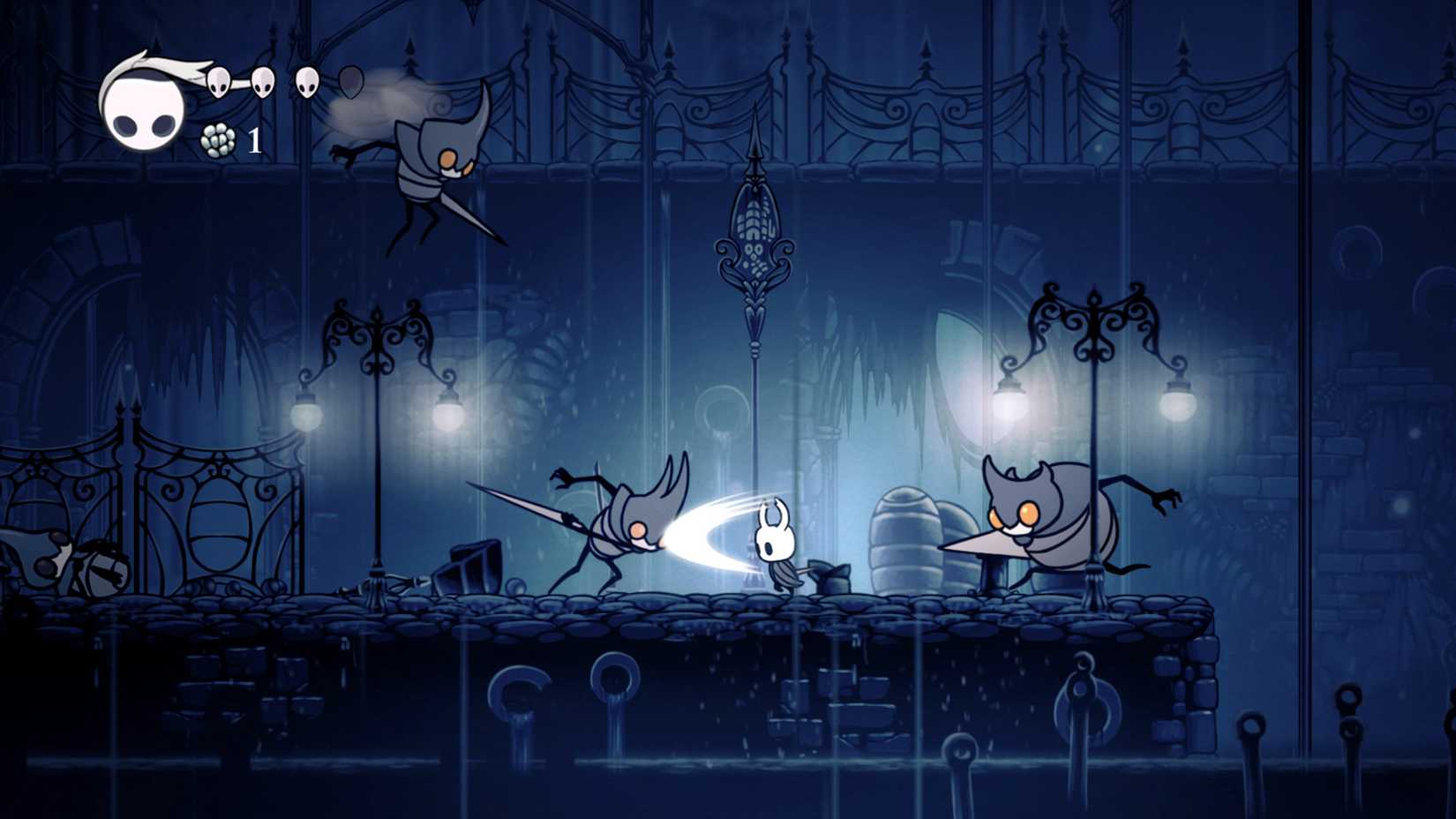
It often happens to me in games of this genre that, given the density of enemies, I struggle to distinguish them to react accordingly, unlike in Hollow Knight, where I recognize them from a mile away.
The studio did an exceptional job creating unique inhabitants whose design and abilities are seared into your memory, whether due to the strikingly distinct nature of their silhouettes or the consistency of the color palettes across biomes and species.
You can encounter a foe you've never seen before and yet quickly adapt to its threat because you've seen similar specimens before, reaching such a level of synchronization that skirmishes like the Colosseum of Fools become manageable when, in theory, they shouldn't be.
If you catch a glimpse of a Primal Aspid, a Crystal Hunter, or a Pilflip, you don't need to register anything else to immediately recognize the situation you're in, which is so drastic it feels like black magic.
5 Narrative Interface
Drawing the Map as We Go

I always praise Hollow Knight's talent for conveying its size and layout, particularly through a mapping system that feels simply timeless.
Normally, Metroidvanias have extradiegetic maps divided into static squares that tell you about the entrances and exits of the room you're in, which is highly functional but ultimately artificial.
On the other hand, the game incorporates the very notion of each biome's layout by giving you an item through which The Knight imperfectly and amateurishly documents his passage through the areas, serving as a reference until Cornifer, the actual cartographer, sells you the map with all its details.
Besides being just as useful as the traditional model, it adds an immersive and narrative layer as it includes one of the friendliest NPCs in the entire game, so you never tire of mapping Hallownest.
4 A Pristine Soul System
To Heal, or Not To Heal
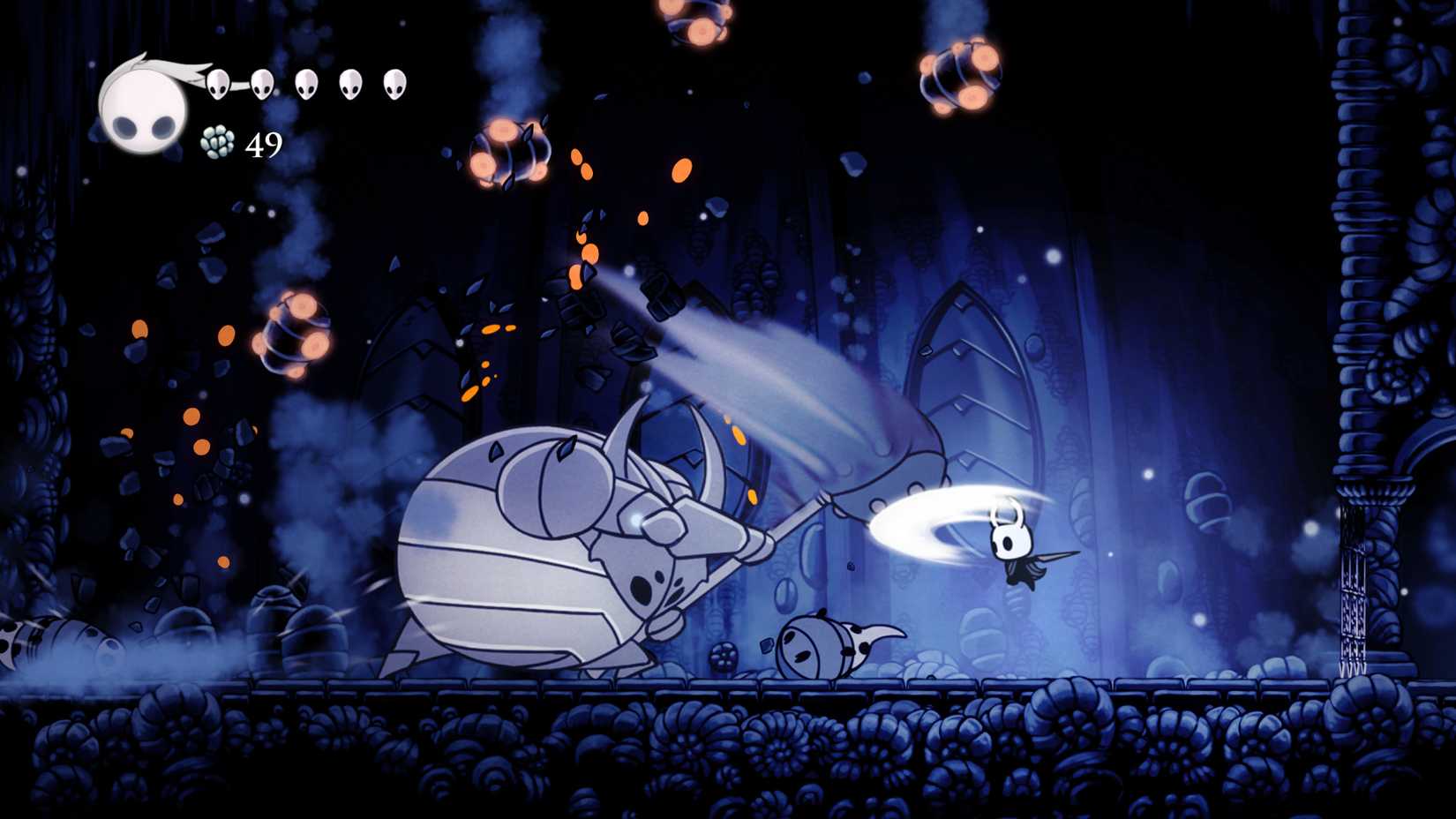
While it doesn't usually appear on lists of the most iconic Metroidvania power-ups, given it's more of a core mechanic than an ability in itself, the Soul System is the heart of Hollow Knight's battles.
Without this risk-reward method, which forces you to adopt aggressive tactics even when your goal is to protect yourself, fights would be much more static, as players wouldn't be required to adapt to enemy patterns, even when adopting a defensive strategy.
The fact that both healing and powers are linked to the same energy bar adds a layer of subtle complexity, where your mastery of the gameplay determines how much you can sacrifice your healing abilities to increase your damage output.
It may seem basic, though the simplicity of its concept is what makes it extraordinarily perfect, as it needs nothing more and nothing less to completely change the way we understand 2D combat.
3 Background Continuity
A Thoroughly Cohesive Place

As video games ceased to be seen as isolated levels connected only by simple loading screens, the opportunity arose for spatial wonders like those in Hollow Knight to take shape.
The transitions between each of the areas that make up Hallownest are unforgettable for how, aesthetically, musically, and in terms of gameplay, they blur together to create a fluid transition while exploring, making you believe you are in a systematically interconnected world.
Being able to see the Forgotten Crossroads from Greenpath in the background, or being able to circle the edges of The Hive from Kingdom's Edge and stumble upon stray bees, are reminders of the profound topography the game handles when it comes to its locations.
The game's terrain is as perfect as that of nature itself, with a pristine and enviable cohesion that, once again, we have only seen in the genre through its own sequel.
2 The Lore of Dreams
An Invisible but Powerful Layer
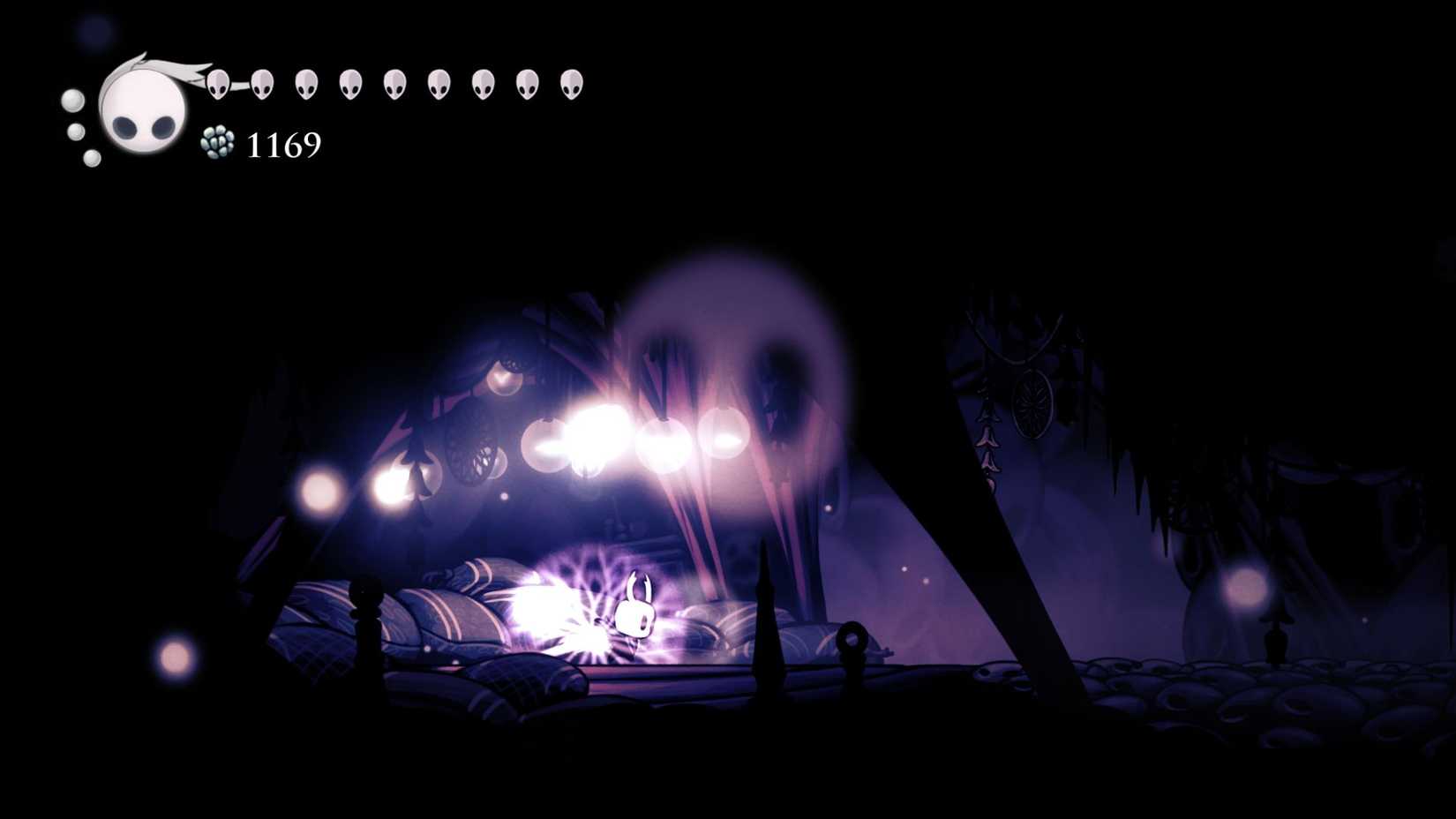
The impact of games by creators like Fumito Ueda and Hidetaka Miyazaki, with their ambiguous narratives scattered throughout the architecture and symbols, blurred by obtuse dialogue, has had an ever-increasing presence in the interactive industry, and Team Cherry has become one of their heirs.
Nevertheless, the studio strives to tell its story through its own devices, and to that end, it crafted a mechanic that allows you to access the dreams and thoughts of both enemies and NPCs, which is simply breathtaking.
Hollow Knight is already a massive game with countless entities teeming within it, and introducing a Dream Nail midway through the campaign that lets you read the internal monologue of these living beings, and even visit their dreams to fight against the most idyllic versions of themselves, is absolutely insane.
Years go by, and I haven't come across a structure that combines gameplay and story in such a fascinating way, much less on the same scale.
1 Authentic Playable Synergies
More Than Just Passive Stats

While passively altering a game's mechanics is a monumental and admirable task for balancing purposes, since "increasing damage by 5%" or "doubling critical hit chance" are complex technical feats in the grand scheme of things, the natural synergies of Hollow Knight's Charms are far superior.
The title, instead of simply changing your stats, allows you to create entire builds around archetypes, so you can summon a horde of minions, become a spell-crazed shaman, or try to transform into a walking fortress that deals damage while healing.
All these combinations affect even the abilities' aesthetics, changing particle effects and even the models of each one, practically allowing you to modify the game's code to suit your preferences.
Despite having so many possibilities under so many circumstances, Team Cherry gives you the right to redesign Hollow Knight's mechanics, so you'll always have a new way to enjoy the campaign, even if you've already done it dozens of times.
If there's only one reason to believe it's ahead of its time, it's clearly the structure that helps revolutionize each playthrough as if it were the first, as this profundity within such complex gameplay has been seen, in the best case scenario, just a bunch of occasions in all history.

Released February 24, 2017
ESRB E10+ for Everyone 10+: Fantasy Violence, Mild Blood
Developer(s) Team Cherry
Publisher(s) Team Cherry
Engine Unity
Franchise Hollow Knight





![ELDEN RING NIGHTREIGN: Deluxe Edition [FitGirl Repack]](https://i5.imageban.ru/out/2025/05/30/c2e3dcd3fc13fa43f3e4306eeea33a6f.jpg)
 English (US) ·