.png)
.png) 1 month ago
12
1 month ago
12


Published Jun 2, 2026, 9:30 AM EDT
Ronald is a Contributor at DualShockers with more than a decade of experience covering video games. He began writing about games in 2013 through public forums, reviews, news, and opinion pieces, before moving into professional games writing in 2015. His work focuses on games as an artistic medium, combining long-term industry experience with a background in political science, economics, and teaching.
Before joining DualShockers, Ronald contributed in Spanish to GamElegant and AlfaBetaJuega, and he is currently part of Areajugones. He has also worked as a journalist and editor-in-chief, and he is a professor of Political Science at Fermín Toro University in Venezuela. Ronald holds degrees in Political Science and Economics.
Sign in to your DualShockers account
The influence of indie video games is now immeasurable, so much so that it's become commonplace for them to consistently rank among the highest-rated games year after year.
 Related
10 Games That Felt Like the End of an Era for Experimental AAA Development
Between genres and design philosophies, video games were never the same after these releases.
However, this ecosystem didn't emerge overnight, as it has taken approximately 20 years of hard work, both individual and collective, to reach its current level of importance.
To achieve this, numerous projects had to step forward and set precedents that would be followed by hundreds of thousands of developers worldwide, helping to create the structure that now supports one of the most important spheres of gaming.
Therefore, in order to recognize those pivotal moments that forever changed the history of indie gaming, I invite you to read this list of ten indie games that truly felt like the beginning of an era for an entire generation.
10 Balatro
Mundanely Addictive

Despite its recent release, Balatro became a global phenomenon, spawning countless memes and attracting a significant number of players who embraced the mundanely magical aspects of its philosophy.
By taking a popular element of human culture like poker and infusing it with Roguelike characteristics, LocalThunk created the blueprint for more developers to take real-world games, adapt them to the digital realm, and incorporate procedural elements to boost their addictiveness.
Clover Pit, Gambonanza, Replicat, Word Play, Insider Trading, Lavatro, Feng Shui: Meowjong… I've lost count of the number of titles, from chess to laundry, that have adapted everyday elements of human life to the Roguelike genre.
And, frankly, it makes sense because, since Balatro's meteoric rise in popularity, it was all too easy to anticipate that everyone would try to follow in his footsteps, even though none have managed to match it to the point of also being nominated for Game of the Year (yet).
9 Firewatch
Walking is an Art
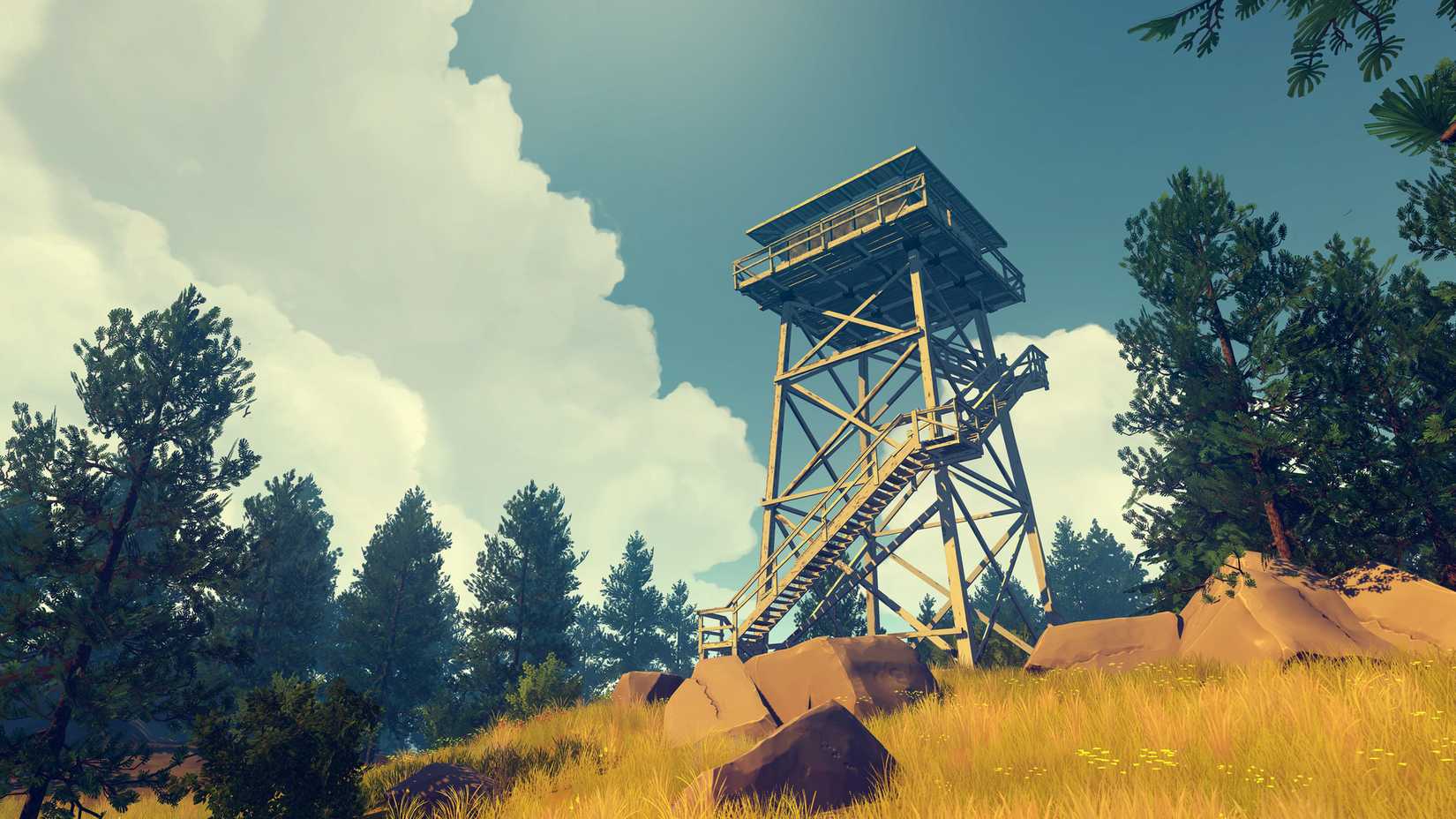
Walking simulators predate Firewatch, as it wasn't the game that invented or established the genre's foundations. But it was the first to achieve massive popularity, appealing to a considerable audience.
Experiences like Gone Home and Dear Esther had done an exceptional job of introducing a new variation to narrative-driven titles, but Campo Santo redefined the ambition, scope, and tone to the point of representing a new awakening for the fledgling genre.
It turns out that walking could also be captivating and that the ordinary story of a park ranger could be remarkable; qualities already achieved by Firewatch's predecessors, but that wouldn't find a huge audience until its arrival.
Of course, it can't be said it's among the most popular genres, even within the independent scene, but what can be said about Firewatch is that it did a titanic job by demonstrating that indie games have their own way of telling stories, and they have nothing to envy about AAA products in said aspect.
8 Papers, Please
Overcoming the Arcades

The Binding of Isaac, Minecraft, Fez, Bastion, Terraria, Super Meat Boy… The turning point experienced by indie games at the beginning of the last decade remains the most important historical moment for the ecosystem, but little is said about Papers, Please's influence.
 Related
10 JRPGs That Became the End of an Era for Traditional Turn-Based Combat
Many titles introduced mechanical differences that still serve as benchmarks for modern JRPGs today.
Lucas Pope broke the standard set by his indie peers by opting for a diegetic work in which the goal wasn't pure fun through an arcade philosophy, but rather to generate feelings of discomfort, repulsion, and doubt through pure interaction.
It's not fun to stamp passports, accept bribes, or witness terrorist attacks in a claustrophobic customs post, which is exactly what Papers, Please conveys through its brief but unforgettable campaign.
From this point onward, early in this new explosion of indie games, the game showed that gameplay, narrative, thematic, and aesthetic possibilities were countless, and that they didn't have to be limited to colorful adventures with endless entertainment.
7 Undertale
More Than It Lets Be Seen

Certain eras didn't begin with their movements' true origins, but rather with those works that were in the right place at the right time, consequently leading us to Undertale.
Between Earthbound, OFF, and a host of Nintendo games, it's easy to see how Toby Fox didn't reinvent the wheel, though he did imbue it with a charisma previously unknown to an audience unfamiliar with its sources of inspiration, and who, therefore, were blown away.
I count myself among those individuals, and the fervor that Undertale caused remains virtually unprecedented even ten years later, with its pop culture references, fourth-wall breaks, and constant reflections on video games and players.
If you add a soundtrack that remains among the finest of all time, an emotional story that captivates on every level, and its strong presence at The Game Awards despite looking like a free game made by a university student, the impact Undertale generated, relative to its initial expectations, was extraordinary.
6 Slay the Spire
Cards for Everyone

From Yu-Gi-Oh! and Magic: The Gathering to Hearthstone and GWENT, video games understood cards in a rather linear way, until Slay the Spire arrived and demonstrated how indie developers can take a well-established foundation and give it a much-needed twist.
The Roguelike genre once again stands as the indispensable framework that allowed for the creation of a mass phenomenon so devilishly fun and addictive that it was straightforward to foresee everyone would try to follow suit.
With infinite difficulties, even stronger possibilities, and a gameplay loop perfectly designed to last an eternity, Slay the Spire did what no other card game could: become immune to eventual monotony and the metagame's tyranny.
Deck-building Roguelikes weren't a thing until Slay the Spire (although Dream Quest was the first, credit where credit is due), and this variant has gained so much strength in the last decade that it's impossible not to acknowledge Mega Crit's contribution.
5 Bastion
A Magical Modesty

Despite what I mentioned earlier, Bastion isn't only an emblem of indie gaming because of the historical moment in which it appeared, but also because of how it appeared and, even more so, because of who created it.
 Related
10 Most Ambitious PS4 RPGs
An era of some of the best RPGs.
First and foremost, it stood out as the face of its kind on the Xbox Live platform, establishing itself among the first titles championed by a major company within the video game industry to lend legitimacy to developments outside the traditional publishing ecosystem.
However, it also stands out because it was Supergiant Games' debut title, which would go on to become one of the longest-running companies in indie development, publishing two Game of the Year contenders and two of the best Roguelikes in history: Hades and Hades 2.
Bastion encapsulates the birth of Supergiant and the rise of indies as part of the massive machinery of video games themselves, and although the product itself isn't the most outstanding, it's certainly among the most significant of all.
4 Journey
Expanding the Possibilities

For years, Xbox represented indie works within the mainstream video game market, and it wasn't until Journey's release that PlayStation, very importantly, joined the conversation.
After Bastion's debut in 2011, thatgamecompany and Sony solidified the indie scene a year later with a game that helped to shift the decade's narrative paradigms, emphasizing that showing can be more powerful than simply telling.
Its silent multiplayer nature, set in a beautiful world with an unforgettable soundtrack, made it an instant classic, evoking a wide range of emotions with only a fraction of the scale of a blockbuster, though its release meant more than just being a masterpiece.
Instead, Journey brought PlayStation into the conversation and definitively proved to the world what is now obvious but, at the time, not so much: indie games not only have no reason to be jealous of AAA titles, but they actually have a lot to teach them.
3 Stardew Valley
Transcending the Medium

Despite moving millions of people and dollars annually, players like you, reading this article, and me, writing it, still represent a small portion of gaming's global audience, and forgetting this makes us overlook Stardew Valley's significance.
Even today, despite its remarkable increase in presence and relevance, indie games remain a niche compared to many other sectors of the video game industry, though Eric Barone managed to break through this barrier with resounding force.
Like Candy Crush or Subway Surfers, Stardew Valley managed to appeal to casual gamers, transcending its theoretical limitations and becoming a true colossus, capable of remaining unscathed by the passage of time even a decade later.
The act of attracting even the most averse to video games was dominated by companies teeming with psychologists, marketers, and other professionals who dedicate their lives to understanding the human mind in order to make it addicted to a game, while Stardew Valley achieved the same effect with far more honesty.
Today, we take for granted the probability that one in ten indie titles will achieve mainstream popularity, but that's not really the case, as Stardew Valley is a virtually unique case in history.
2 Hollow Knight
An Impact Impossible to Anticipate

Despite having a shoestring budget and coming from a studio with little experience in game development, Hollow Knight broke all the molds and redefined so many things that it's difficult to list them all.
While drawing heavily from other giants like Dark Souls, Metroid, and Castlevania, Team Cherry was able to create a title that would completely change the way indie games tell stories, design level layouts, refine controls, and emphasize their overarching themes.
Metroidvanias haven't been the same since 2017, which speaks volumes about Hollow Knight, given it's one of the two genres completely dominated by indie developers, though the standard to which indie games are held in general has risen significantly since then.
The quality of the hand-drawn designs, launch prices, depth of the additional content, work ethic, price-to-performance ratio… Hollow Knight raised the bar for all the demands placed on an indie developer, and also the level of respect.
1 Minecraft
The Icon of an Entire Demographic

As obvious as it might have seemed, it was impossible to close this list without Minecraft, a game whose generational relevance is so immense that it could easily occupy this list on its own for ten different compelling reasons.
Not only is it the touchstone for an entire demographic of young people who grew up alongside it, but it's also the foundation upon which the mechanics of survival, sandbox, and user-generated content games were built.
Furthermore, Minecraft is largely responsible for the existence of content creation as a concept, which led to a surge in indies and online discussions about video games in general, completely transforming how we interact with the medium on the internet.
This title has shaped everything from genres to careers, demonstrated that video games can be an educational tool, and become the first franchise to originate from an indie project, having such a profound cultural impact that there should be a division of eras between before and after Minecraft.
Whether it felt exactly like that in its beginnings is difficult to recall without the influence of hindsight, but considering one day I saw my 70-year-old history teacher playing it on her phone illegally in a country where video games are invisible, I risk saying yes.
 Next
Next



![ELDEN RING NIGHTREIGN: Deluxe Edition [FitGirl Repack]](https://i5.imageban.ru/out/2025/05/30/c2e3dcd3fc13fa43f3e4306eeea33a6f.jpg)
 English (US) ·