.png)
.png) 4 months ago
31
4 months ago
31


Published Mar 24, 2026, 11:30 AM EDT
Murillo Zerbinatto is a contributor from Brazil. He's a JRPG enthusiast who has been around the world of games and content creation for more than six years now. He has a particular love for Final Fantasy and has absorbed all the content this long-running series offers, including its obscure spinoffs such as Dimension I & II, Explorers, and My Life as a King. While playing JRPGs is already a time-sinking endeavor, Murillo doubles down by being a platinum hunter as well.
Sign in to your DualShockers account
In the past, I felt like JRPGs were synonymous with grinding. Since the progression of the main story was entirely based on combat, unlike CRPGs and WRPGs, where we could potentially resolve conflicts through dialogue and in a peaceful way, it was expected that we would have to grind at some point in a JRPG.
As the genre evolved and became more diverse, I feel like grinding became more optional, whether for players who enjoy maxing out their party from the get-go, or for those aiming at post-game challenges, which often require high levels, top-tier equipment, and so on.

Related
10 PS1 JRPGs Still Trapped on Original Hardware
Some are in dire need of a port, I would say, simply because I want to replay them.
Even so, there are still plenty of JRPGs nowadays that make grinding an enjoyable experience, motivating us to fight the same enemies over and over again just because we feel like it. I'll show you some of those games, and I promise I'll try not to go overboard with JRPGs featuring classes, because by nature, it's a blast to grind in most of them to learn new abilities.
10 Bravely Second: End Layer
Chaining Battles

More often than not, you can catch me complaining about JRPGs that have random encounters. This is one of the mechanics of old that I don't miss and still frown upon when a modern game features it. However, I can see that some JRPGs try to bring their own twist to random encounters and innovate on it.
That's the case with Bravely Second: End Layer. I'm not talking about the gauge that lowers random encounters, that's just a crutch. Here in the second Bravely Default, we have a system where if we win a battle on the first turn of our party, we can chain another one immediately after. Not only do we gain experience and JP from both encounters, but there's also a multiplier that keeps increasing the more consecutive battles we win.
Winning battles isn't that hard. The tricky part is winning on the first turn, because in the first bouts, we can burn through our BP and unleash multiple AoEs at once, but as battles keep chaining, our BP starts to run dry. This turns every random encounter in Bravely Second: End Layer into an exercise of "how do I defeat my enemies efficiently?" and, in turn, makes grinding far more enjoyable than usual, because we're rewarded for thinking strategically.
9 Rogue Galaxy
Synthesizing New Weapons

Rogue Galaxy is a JRPG that many people love, often hailed as one of the hidden gems on the PS2, but I have mixed feelings about it. I like the game and appreciate everything it tries to do, but I think its problem is trying to do too much. It offers so many systems and mechanics that, although they're deep, they end up feeling exhausting and a bit of a chore at times.
However, if you enjoy diving deep into all of them, then whoo boy, expect some serious time-sinking grinding coming your way. I won't even get into the Factory or Insectron and will stick to Weapon Synthesis, which is the best reason for you to stay engaged in grinding.
Rogue Galaxy has a system where you can evolve your weapons. By using them in battle, you increase the skill of each weapon, and when it's maxed out, you can then synthesize two weapons, fusing them into a new one. This becomes a vicious cycle, because as soon as you unlock a new weapon, you want to max it out and then think, "what if I synthesize this with another one?" and suddenly you're stuck in an endless loop chasing high-level weapons that will eat up your time.
8 Granblue Fantasy: Relink
Grind Is the Game

I thought about putting a Monster Hunter on the list, but I don't really consider them JRPGs. However, the best alternative is Granblue Fantasy: Relink, because technically, the grind in both games works in a very similar way.
First, we pick a mission that matches our level, whether it's a simple boss fight or something more dynamic like protecting an airship. Then, either solo with AI or in online multiplayer, we complete the objective. At the end, we get our spoils, which can vary from that material or Sigil we've been chasing to absolutely nothing.
As someone who has the platinum trophy in Granblue Fantasy: Relink, I know just how extensive the grind can get. It took me way too long to get Id's Terminus weapon, but in the meantime, I could switch party members, test new builds for my main, or even rotate missions to keep things fresh. The main story of Granblue Fantasy: Relink is relatively short for a JRPG, but if you focus on grinding and character progression, you can easily go past the 100-hour mark.
7 Final Fantasy VIII
The Drawback of the Junction System

While thinking about a mainline Final Fantasy to include on the list, the one that came to mind as requiring the most grind was Final Fantasy VIII. While it's possible to grind in the others, it's not necessary, whereas Squall's Junction System is almost mandatory, especially if you play the game like a traditional JRPG.
Are you the type who draws and stocks 100 of every spell you come across, or just a few? I'm definitely the former. That way, I make sure that even if I fight every enemy and level up, the challenges will always scale accordingly. On top of that, there's nothing better than adding Petrify, Death, or Sleep as a status effect to your weapon and wiping enemies out.
I understand there are plenty of complaints about Final Fantasy VIII's mechanics and the game itself, but I like the Junction System - not so much Draw. It's one of the few JRPGs where I can clearly see how relevant my grinding is and how much each stat impacts battle outcomes, which in turn makes grinding all the more appealing.
6 Digimon Story: Time Stranger
Give Me More Digivolutions
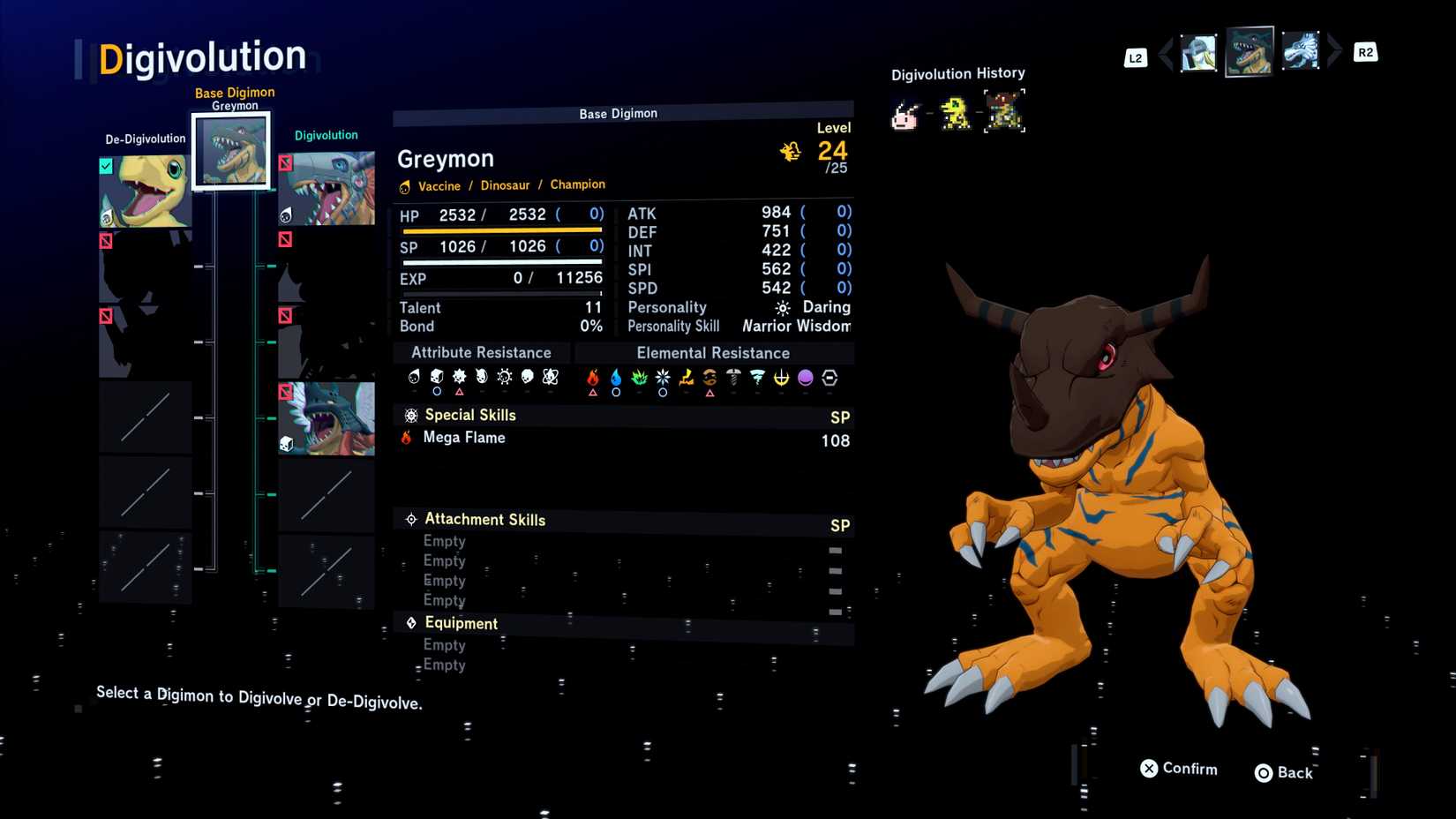
Digimon Story: Time Stranger
If there's one thing that motivates me to grind in any JRPG, it's any game that lets me see stronger evolutions of my characters, whether that's classes, fusions, transformations, or, even better, digivolutions. You could put almost any Digimon game here, but I'll stick with the more modern mainline entry, Digimon Story: Time Stranger, because it's also one of the most solid titles in the franchise.
Digimon Story: Time Stranger features more than 450 Digimon, and if you want to collect them all, you already know what that means. At first, when the game showed me that all stored Digimon gained experience, it felt a bit odd. In Cyber Sleuth, it didn't quite work like that, which motivated me to constantly switch my party so I could see all the digivolutions.
But considering how many Digimon are available and how battles can get a bit repetitive, basically playing themselves at times, I started to appreciate the system and just enjoy my new transformations. It soon became addictive. I wasn't playing Digimon Story: Time Stranger because I wanted to see more of the time-traveling story or help my Digimon companions. I just wanted to evolve my team and keep unlocking more and more digivolutions indefinitely.
5 Dragon Quest VII Reimagined
Jack of All Vocations
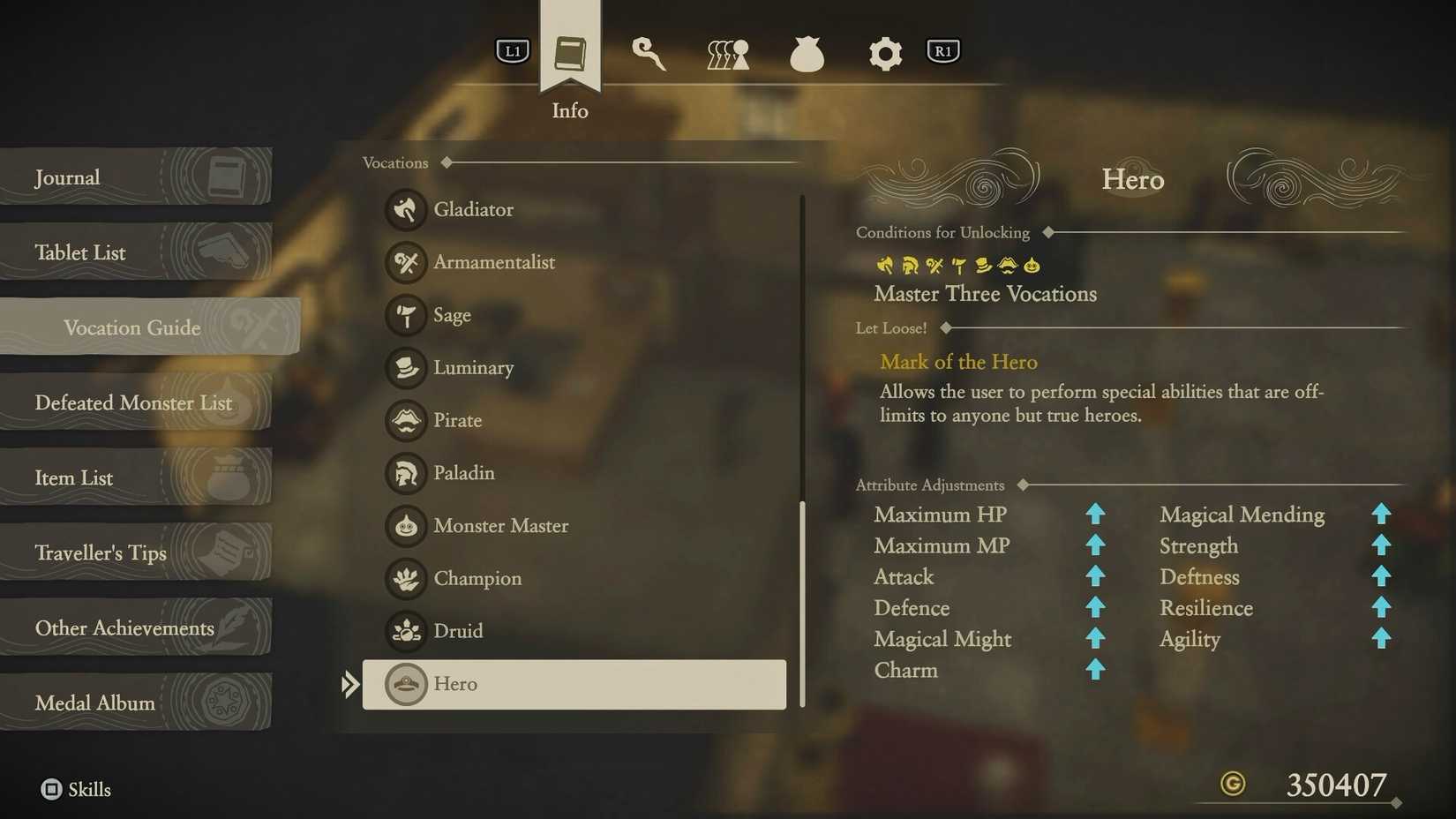
There's a notion in the gaming community that turn-based RPGs no longer have a place in the industry. That idea has already been proven wrong by several excellent turn-based games that have shown not only that audiences still enjoy the system, but also that, when well executed, it can break barriers. One thing, however, that many turn-based games try to do is improve combat pacing.
Almost every turn-based RPG includes some way to speed up battles, while others, like Dragon Quest VII Reimagined, let us defeat enemies without even entering combat if we're strong enough. Being able to take down enemies with a single hit on the field while still earning both character experience and vocation progress just makes everything better.
Needless to say, this also makes all the vocation learning much more satisfying. To unlock the expert vocations in Dragon Quest VII Reimagined, we need to level up the initial ones. At some point, this can feel a bit tedious because we've already gone through these vocations with other characters and know what to expect. Still, nothing stops us from farming even the earliest enemies on the map and grinding vocations until we unlock the most powerful ones.
Mastering Archetypes

Following the same idea as Dragon Quest VII Reimagined, and even doing it beforehand, Metaphor: ReFantazio also features a system where we can defeat enemies in the field and quickly earn their spoils. The biggest difference is that progression in this JRPG is a bit more modular.
Metaphor: ReFantazio introduces Archetypes, and besides learning new skills as their rank increases, we also unlock more powerful Archetypes. Plus, when switching between them, we can inherit up to four skills from everything we've learned, which makes character customization in Metaphor: ReFantazio an absolute joy.
To me, satisfying grinding is the kind that fits perfectly with the progression system. The only real motivation to level up quickly is if the payoff is worth it, and in Metaphor: ReFantazio, it absolutely is. Finding the ideal skill combination with a given Archetype and overwhelming the enemy justifies every extra hour spent fighting the same enemies over and over again.
3 Monster Rancher 1 & 2 DX
You Wanna Be the Very Best

I understand this might be an odd entry, but the whole gameplay loop of Monster Rancher is training your monsters and watching their stats grow as you compete in tournaments and go on expeditions. And let's be honest, we grind specifically for that, to see numbers go up.
In Monster Rancher (any of them, but preferably Monster Rancher 1 & 2 DX), you train your monster day in, day out, increasing individual stats and sending them on expeditions and training sessions to learn new skills. Then, you compete in tournaments, gradually raising your rank.
The most fun part is acquiring a monster. Back in the day, I used to spend hours swapping and testing every CD I had at home, whether it was a PS1 game or a music album. Nowadays, in the digital era, we have built-in music in games that streamline the process while still maintaining that mysterious feeling every time a new monster is summoned.
2 Trails in the Sky 1st Chapter
A Sublime Gameplay

Trails in the Sky 1st Chapter
It's somewhat ironic to include Trails in the Sky 1st Chapter because the game has a system that somewhat limits grinding. If we're at a much higher level than a given area in the JRPG, the experience gained becomes almost negligible, and leveling up is very unlikely. However, grinding in Trails in the Sky 1st Chapter isn't just about levels.
We also earn sepith, which can be used to acquire new Quartz or exchanged for money. On top of that, we can obtain materials and equipment from certain enemies, materials that are used to either cook new meals or improve equipment. Not to mention the money itself, which can be spent freely or saved for later.
Best of all, the hybrid turn-based/real-time system in Trails in the Sky 1st Chapter makes grinding incredibly fun. It feels so smooth to jump into combat, crush enemies in action mode, or enter turn-based mode after stunning them in the field and starting the fight with a powerful Link attack. By Aidios, it's so fulfilling.
1 Disgaea
Astronomical Numbers

I recognize that grinding in Disgaea, or any other tactical JRPG from Nippon Ichi, isn't for everyone. If you're only interested in the game's quirky story and not in the post-game or unlocking all classes and reaching absurd levels and damage numbers, then you can skip this entry. However, if you already enjoy grinding and never want it to end, then Disgaea is your holy grail.
All Disgaea games feature a system where the max level goes way, way beyond the usual 99. Almost every mainline entry lets you reach level 9,999, with Disgaea 6 going a bit overboard by allowing it to go up to 99,999,999, which, yeah, was a bit unnecessary and probably why they scaled it back in Disgaea 7.
Need I say more? It's not just your level that increases, but also your weapon stats, class reincarnation, skills, and everything else. As expected, you won't be leveling up one level at a time all the way to the cap. There are countless tricks that let you gain a massive chunk of levels in a single go, which might make the grinding process even more satisfying.

Next





![ELDEN RING NIGHTREIGN: Deluxe Edition [FitGirl Repack]](https://i5.imageban.ru/out/2025/05/30/c2e3dcd3fc13fa43f3e4306eeea33a6f.jpg)
 English (US) ·