.png)
.png) 4 months ago
29
4 months ago
29
Despite technically being an offshoot of the greater role-playing game genre, I would go as far as to call JRPGs one of the bedrock genres of gaming. Some of the biggest titles, series, and franchises in gaming as a whole are JRPGs, after all, so I’d say it’s more than earned its place at the adults table.
Related
10 SNES JRPGs That Are in Dire Need of a Modern Port
There are still many SNES JRPGs that could be rescued from the console with a modern port.
Besides being home to some truly excellent games, though, the JRPG genre has also given us an array of highly influential games, their releases causing rippling effects and changes throughout both the genre itself and the wider gaming industry and zeitgeist. Modern JRPGs may follow a lot of conventions and easily sort into a variety of subgenres, but it’s only thanks to these games that the genre has become as broad and accessible as it has, not to mention prolific, reaching out across national barriers and even spawning entirely new genres of game in the process.
10 Makai Toushi SaGa
The First Handheld JRPG

When the original Game Boy first dropped in the spring of 1989, it wasn’t quite as fully-fledged as its console compatriots. It was great for playing Tetris, of course, as well as more compact platformers like Super Mario Land, but something like a JRPG seemed a little too complicated. Later that same year, though, Square showed it was very possible with the release of Makai Toushi SaGa, retitled The Final Fantasy Legend in the west for marketing purposes.
As the first game in what would become a full franchise, SaGa featured all the elements players had come to expect from games like Final Fantasy, but in a portable package you could take anywhere with you. SaGa cribbed game mechanics from both Final Fantasy and Dragon Quest, like overworld maps and recruitable characters of various classes to fill out your party.
It’s thanks to SaGa showing us how it was done that JRPGs have enjoyed a healthy presence on portable consoles ever since. Turns out, long-form games with engaging stories make great time-killers on lengthy trips.
9 Phantasy Star
Square and Enix's First Major Competitor

In the late 80s, hot on the heels of grand slam success with Dragon Quest and Final Fantasy, Square and Enix were the definitive authority in the burgeoning JRPG scene. Nobody else was making games like this, and those two had this entire sector all to themselves to milk at their leisure. Then, in 1987, Sega stepped up to the plate to challenge its dominance with Phantasy Star.
Phantasy Star was one of the earliest console JRPGs not made by Square or Enix, not to mention a major case-maker for the Sega Mark III console, better known as the Master System. Sega wanted a JRPG that could wrest control of the scene away from the Famicom, pulling out all the stops to really differentiate Phantasy Star from its contemporaries. This included making the story a Star Wars-esque space opera and incorporating then-novel elements like 3D dungeon-crawling.
While the Phantasy Star series' success has been quite a bit quieter over the years than that of Final Fantasy, it was one of the first signals in what would become the JRPG race, with other developers really beginning in earnest to take a shot at Square’s and Enix's previously-undisputed crown and diversifying what it meant to be a JRPG.
8 Sweet Home
Planted the Seeds of a Completely Different Genre

The funny thing about the early years of gaming and the realization of the many concrete genres we have today is that progression wasn’t always a straight line. For example, if you’re a fan of survival horror games, you may be interested to know that the game that largely inspired the genre was actually a JRPG. Specifically, a movie tie-in game called Sweet Home.
A 1989 Famicom-exclusive based on a horror movie of the same name, Sweet Home was one of the first overtly horror-tinged gaming experiences, pitting your party of hapless humans against all manner of supernatural horrors with an ever-present risk of a violent, permanent death. For its time, and especially for a tie-in game, it was pretty unnerving.
Sweet Home was directed by Tokuro Fujiwara, and it was his experiences with this game that directly led to his work as producer of one of the most legendary, influential horror games of all time, Resident Evil. Without Sweet Home, the survival horror genre as we know it might not even exist.
7 Mother
The Flag-Bearer for Off-Kilter Stories

When it comes to quirky, nonstandard JRPGs, EarthBound is usually the first word in the conversation. However, I think it’s important to remember that Earthbound is actually the second game in a trilogy, which means we have that trilogy’s first game, Mother, to thank for the quirky indie RPG renaissance we enjoy today.
Mother, retroactively named EarthBound Beginnings in the west, was a 1989 Famicom JRPG written and directed by Shigesato Itoi, who wanted to try making something more experimental after playing Dragon Quest. Rather than demons or fantasy monsters, it told a story of small-town America focused on cryptids and extrasensory abilities, with an extremely distinctive writing style and sense of humor that was equal parts lovably bizarre and absolutely heartbreaking. There’s a reason that “no crying until the end” has endured as the game’s, and trilogy’s, key marketing tagline.
Mother and its subsequent games showed us that there’s no one way to tell a JRPG story. They can be weird, off-putting, and deeply personal, but as long as they’re done earnestly, they’ll reach the right people. It’s thanks to Itoi’s work that we have such monumental indie games like Undertale.
6 Super Mario RPG: Legend of the Seven Stars
Showed Us the Wonders of Action Commands
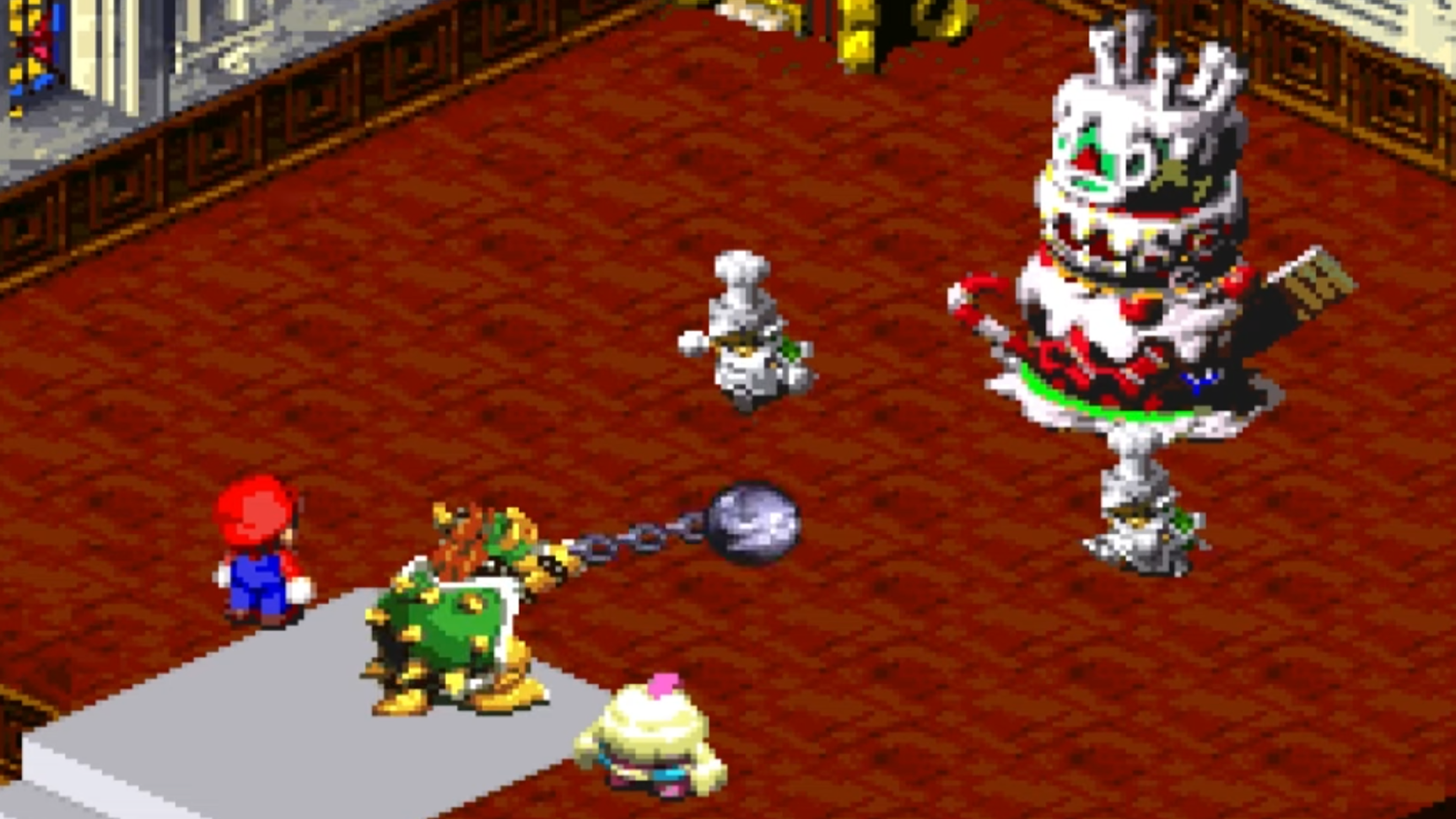
Super Mario RPG: Legend of the Seven Stars
In the early days of the genre, you didn’t really need to pay active attention to a JRPG, at least not in the same way you would a platformer, for example. You just picked options from a menu in turn-based combat and let the fight play out on its own. One of the first games to challenge this norm was 1996’s Super Mario RPG: Legend of the Seven Stars.
While Super Mario RPG is still a turn-based JRPG, it introduced what we now commonly know as action commands, subtle inputs you could make when performing attacks, using special skills, and taking damage from enemies that increase the efficacy of your moves while lessening damage from your enemies. You couldn’t just put the controller down in the middle of the fight and work menus with your toes or something, you needed to be ready and able to tap buttons with precise timing to mitigate incoming damage and maximize outgoing damage.
Action commands have gone on to become a major recurring element in other Mario RPGs, of course, but also in the broader JRPG genre. The precise nature of an action command can vary wildly, from a simple timing-based input on a gauge to elaborate command inputs, but they all help to make the games feel a little more impactful.
5 Final Fantasy 2
Gave Us a Cast with a Story

The early JRPG experience seen in Dragon Quest and Final Fantasy had a greater emphasis on the “role-playing” part of the equation, having you establish your characters effectively from nothing and building up a narrative around them. In 1988, a year after Final Fantasy, Square shifted things up in the narrative department with Final Fantasy 2.
Compared to the nonspecific Warriors of Light from the first Final Fantasy, Final Fantasy 2 featured a static party of specific, named characters, each with their own backstories and motivations. Rather than playing the role of “you, but in a fantasy world,” you were specifically playing the role of Firion and company, seeing their interactions and reactions to how the plot unfolded.

Related
10 JRPGs Perfect for Players Who Love Final Fantasy, But Want Something Different
The Final Fantasy series has produced some of the best games of all time, but some of the most amazing JRPG franchises aren't connected to it.
Compared to later Final Fantasy games, Final Fantasy 2’s story isn’t the most in-depth, but it was an important pace-setter. Where the norm of JRPGs at the time was to just give you a blank slate of a protagonist and run with it, Final Fantasy 2 showed us that we could follow the journey of specific characters and grow to appreciate them, a vital component of what makes current JRPGs so likable.
4 Digital Devil Story: Megami Tensei
The First True Creature Collector

Digital Devil Story: Megami Tensei
When you think of creature-collecting games, the first thing that probably springs to mind is Pokémon. However, another major JRPG franchise actually managed to beat Pokémon to the punch by nearly a decade: Digital Devil Story: Megami Tensei, originally released exclusively for Japan for the Famicom in 1987.
In addition to its interesting use of contemporary fantasy, combining a modern-day Japan setting against a backdrop of biblical angels and demons, Megami Tensei was the first JRPG to have you recruiting monsters to your side in addition to fighting them. The series’ signature demon negotiation system debuted here, having players attempt to persuade encountered enemies to join their party by answering questions and offering items, as well as fusing recruited demons together to make stronger ones.
The concept of recruiting and managing demons, in one form or another, has endured through most of the Megami Tensei franchise, including many of its spin-offs, and more importantly, set the stage for what came next in creature collecting.
3 Pokémon Red & Blue
Made Creature Collecting Accessible (and Profitable)

While Pokémon wasn’t the first JRPG to feature creature collecting, it did make some major strides in the concept over Megami Tensei’s initial conceptualization. Specifically, where Megami Tensei’s system required a healthy dose of guesswork and intuition, the system pioneered in the original Pokémon Red & Blue Versions (Red & Green in Japan) was simplified enough that even kids could understand them, and boy howdy, was there money to be made there.
Pokémon’s catching system was so simple, it could be explained to you in the form of a 30-second in-game tutorial: make it weak, chuck a Poké Ball at it, success. There were some factors and probabilities under the hood, of course, but the basic idea of it could be boiled down to those three steps. Just about anyone could wrap their head around such a straightforward concept, which made the games exponentially more accessible than Megami Tensei’s more high-concept approach.
It goes without saying that Pokémon’s simplicity and accessibility is what sparked off the PokéMania of the mid-to-late 90s, making it the most profitable IP in the world to date. In addition to that, though, it also showed how to make a creature collector game simple enough that anyone could play it, which has led to many attempts from devs big and small over the years, even if some of them were of questionable quality.
2 Shin Megami Tensei: Persona 3

Atlus was always pushing the envelope with the Megami Tensei franchise, especially once it started branching off into spin-off territory. Each Megami Tensei sub-series has its own distinct quirks while building off the main games’ mechanics. The first few games in the Persona series changed things up slightly, but were mostly the same as mainline MegaTen. That changed in a big way with the landmark release of Persona 3.
Persona 3 threw almost the entire MegaTen playbook out the window, keeping only the contemporary setting, the library of demons, and the bones of the fusion system. Where the game really distinguished itself was in the introduction of the calendar and Social Link systems; gameplay was regimented into set days, during which you only had so much time to befriend people, which in turn would empower you when dungeon crawling.
Persona 3’s social sim elements became the spin-off series’ defining element, popular enough that it’s only technically still a MegaTen spin-off. Thanks to that test case, many new JRPGs, both AAA and indie, have incorporated social elements to help you get closer to party members and major NPCs.
1 Dragon Quest
The Origin Point of the Entire Genre

Here in the United States, Dragon Quest is a well-known, well-liked JRPG franchise with a healthy fanbase. However, on the franchise’s home turf in Japan? Dragon Quest is an institution, an unapproachable standard against which all other JRPGs are judged, with every new game release being an event in itself. The reason for this was that the very first game in the series was an absolute bolt from the blue.
The original Dragon Quest, also known as Dragon Warrior here in the States, was heavily inspired by the popular PC western RPGs of the early 80s like Wizardry and Ultima. However, where those games were very mechanically dense and tonally serious, Dragon Quest is a much more streamlined, lighthearted experience. It was a fun and simple way to experience a fantasy story from the comfort of your living room, with simplified mechanics and combat.
It was the titanic success of Dragon Quest’s release that really put Enix on the map, indirectly inspiring many other Japanese game developers to try and get a piece of the pie and spawning the JRPG genre as we know it. Heck, many of the norms we see in fantasy anime, like heroes and demon lords, originated with Dragon Quest.
Next
10 JRPGs That Don't Feel At All Like Anime
Just because they’re RPGs inspired by Japanese culture doesn’t mean they automatically have anime aesthetics.





![ELDEN RING NIGHTREIGN: Deluxe Edition [FitGirl Repack]](https://i5.imageban.ru/out/2025/05/30/c2e3dcd3fc13fa43f3e4306eeea33a6f.jpg)
 English (US) ·