.png)
.png) 2 months ago
24
2 months ago
24
One of the main reasons I love JRPGs is that I’m a huge lore nerd. These kinds of games often have settings that are not only immediately appealing, but deceptively dense, packed with numerous fantasy races and sprawling, multifaceted locales. Now, there’s nothing inherently wrong with a JRPG that has a static, “what you see is what you get” kind of setting, especially if it means that the characters and plot get more focus. That said, I think some of the best stories in the genre manage to treat the world like a character in itself.
 Related
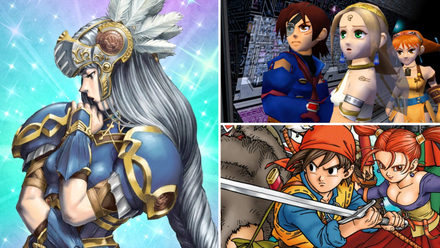
8 Best JRPG World Maps
Check out the greatest JRPG world maps in our list.
Where some JRPGs seem very cut-and-dry in their premises and the general state of their worlds, some JRPG worlds only become larger and more elaborate the more you venture through them, both in terms of literal size and narrative weight. What may have initially seemed like a straightforward adventure in a traditional locale can take on a completely different vibe the further you get from home.
Spoilers ahead for all the following games!
10 Skies of Arcadia
Sailing the Skies

Given the titular setting of Skies of Arcadia, composed as it is of multiple floating islands in an endless sky, you may expect some manner of late-game twist. You know, something like they all used to be one world, but then blew up or something? Well, surprisingly, they’ve always been like that, but that doesn’t mean they’ve always been peaceful.
While the likes of the Blue Rogues are content to just fly around and make trouble in their one patch of the sky aboard a single ship, there used to be a much larger presence of warships and vehicles ruling the skies, with the six main civilizations of Arcadia waging progressively more elaborate warfare against each other thousands of years ago. This ultimately culminates in the Silver Civilization making a big enough weapon to force the war to end, then sinking their society, so nobody can ever find and use it again.
Unfortunately, war never changes, and the Valuan Empire, eventually usurped from its empress by Galcian and Ramirez, attempts to co-opt this weapon to conquer the world. This is why the solution to ending war is not to just “build a bigger gun.”
9 Octopath Traveler
Gods in the Periphery

Octopath Traveler’s main focus from the start is, of course, its eight protagonists and their respective goals and journeys. That’s the big hook: eight stories, eight adventures around the world. Said world is a fairly ordinary fantasy setting, with both small villages and elaborate, guarded cities with various degrees of technological innovation and external interaction.
However, as you play through the eight storylines, you gradually start to notice the connective tissue between all of them, not to mention the low-key lore elements you stumble across, like the 13 gods that shaped the world and served as the basis for the classes. It all remains firmly in the background, though, at least until all eight adventures are complete.
Upon finishing all eight stories, you unlock the final dungeon, where the truth of the world is revealed: one of those creator deities was sealed away for being a butt, and his daughter is the one who orchestrated just about every antagonist’s actions in those stories in an effort to unseal him. I guess nobody’s more than six degrees of separation away from an ancient, evil god.
8 Ni no Kuni II: Revenant Kingdom
It’s Always Politics
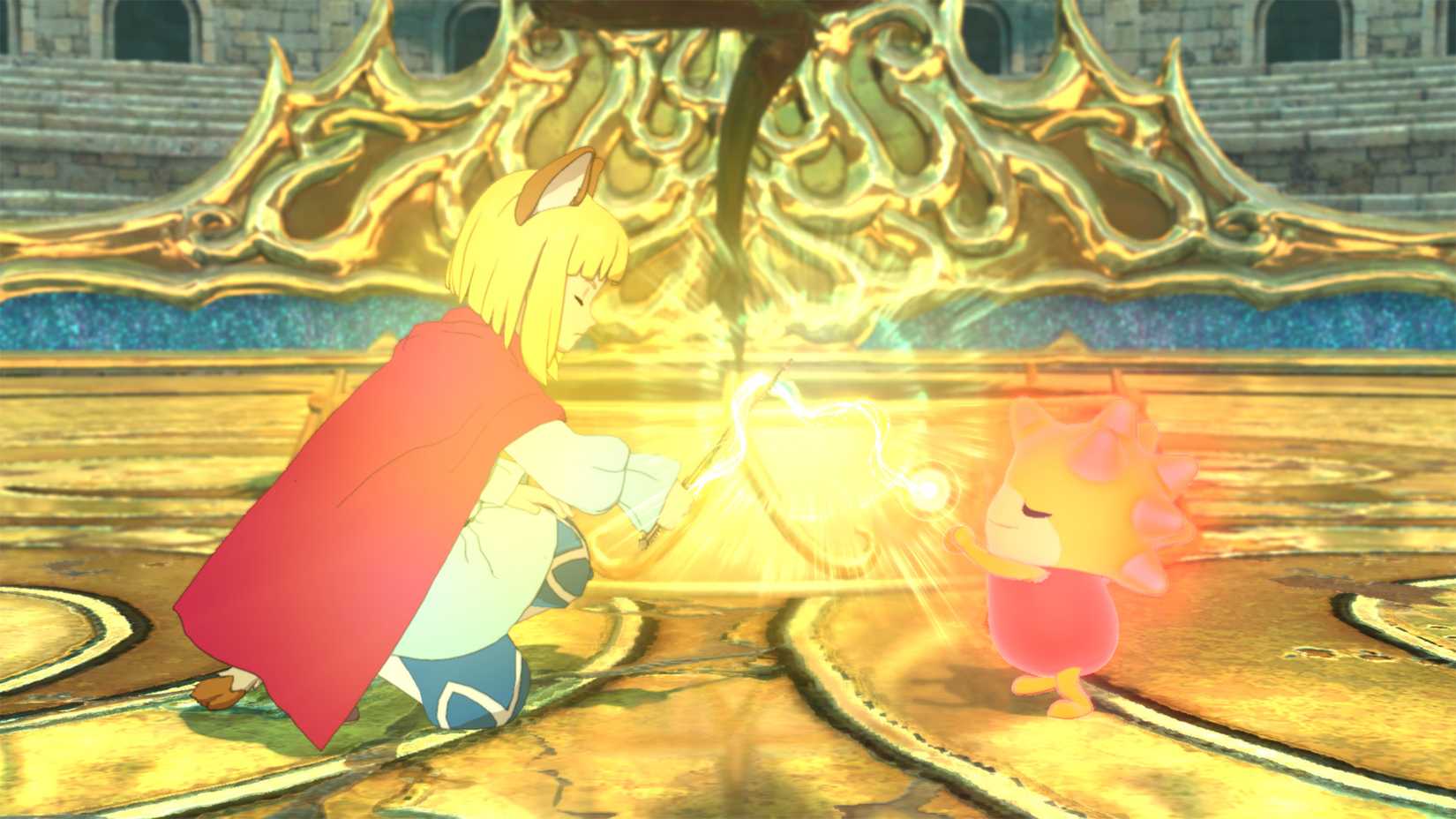
Where Ni no Kuni: Wrath of the White Witch is a very traditional fantasy romp, with a little boy visiting another world to bring his mother back to life, Ni no Kuni II focuses on a very different facet of its other world: politics. The world runs on politics, with the head of each kingdom or nation literally having the backing of a godlike entity that receives power from that nation’s denizens.
At first, our protagonists, isekai’d president Roland and fantasy heir apparent Evan, have an extremely vague goal of establishing a new country after Evan’s nation of Ding Dong Dell is usurped. This gradually builds up into establishing friendly relationships with all the other major nations and convincing them to establish a treaty of interdependence.
That’s not even the height of it, though; there’s also a dude going around stealing everyone’s Kingmakers, all so he can both revive his own kingdom and summon forth a giant ancient monster that also happens to be the departed soul of his lost love. Politics really do be like that sometimes.
7 Earthbound
Leaving Home for the First Time

You never realize how big the world is quite like when you leave home for the first time. Whether it was being sent off to summer camp or moving out for your first job, you’re suddenly thrust into a setting wholly unlike the one you’re used to with no parental figures or familiar faces to guide you. Earthbound is like that, cept with aliens and psychics and whatnot.
Ness’s hometown of Onett is textbook small-town America (which is ironic for a Japanese game): little houses and picket fences in the hills, a single drug store and burger joint for the whole place, and a bunch of annoying thugs with questionable fashion sense annoying everyone. Even with how forthcoming Buzz Buzz is with the Giygas situation, it doesn’t really feel like you’re anything more than a random kid getting in over his head at first.
As you explore Eagleland, though, visiting larger towns and working your way up to the sprawling city of Fourside, not to mention dungeons and caverns packed with progressively weirder monsters, you gradually get a better idea of just how twisted the world is coming due to Giygas’s presence. It’s a weird world, but it’s not supposed to be this weird.
6 Trails in the Sky 1st Chapter
Too Big for One Game

Trails in the Sky 1st Chapter
Rather than literal size, the scope of Trails in the Sky’s story is more about the impact of its events on the kingdom of Liberl. Joshua and Estelle don’t have any particular goals at first beyond just training to become accomplished Bracers, but by simply doing their jobs, they end up embroiled in progressively heavier events and schemes.
Where they’re just exterminating monsters and finding lost junk at first, they gradually bumble into getting involved with an entire conspiracy to overthrow the kingdom from within and swipe an ancient magical artifact. It’s kind of like a small-town police officer stopping a terrorist plot to kill a president.
What’s distinct about Trails in the Sky is that, despite introducing other countries on the continent early on, the game is set entirely in Liberl. However, this escalation of stakes continues right up to the end of the game, to the point that the game itself isn’t even big enough to contain it all, leading directly into the sequel.
5 Xenoblade Chronicles
Built on the Backs of Giants

Xenoblade Chronicles: Definitive Edition
Xenoblade Chronicles comes at you hard and fast with its initial hook: two gigantic entities standing in the middle of an infinite ocean, one carrying organic life and the other carrying mechanical life. They were originally locked in a big ol’ fistfight, but have remained frozen in place for untold millennia, giving both forms of life time to emerge and start hating each other.
It feels like the setting already has a pretty massive scope, but it still manages to find a way to get even bigger once the origins and motivations of the Bionis and Mechonis are revealed. Apparently, a couple of relatively-normal human scientists were trying to figure out how to make an entire universe in the interest of helping humankind reach divinity. They succeeded… sorta, with only two humans surviving and becoming gods, i.e. the Bionis and Mechonis.
The god of the Bionis, Zanza, needs people to stay on his body and live out their lives, as without their ether, he’d die. So, he launched a one-sided attack on the Mechonis to start a war, which would kill lots of people and ensure they never tried to leave him.
4 Chrono Trigger
Across Time and Space
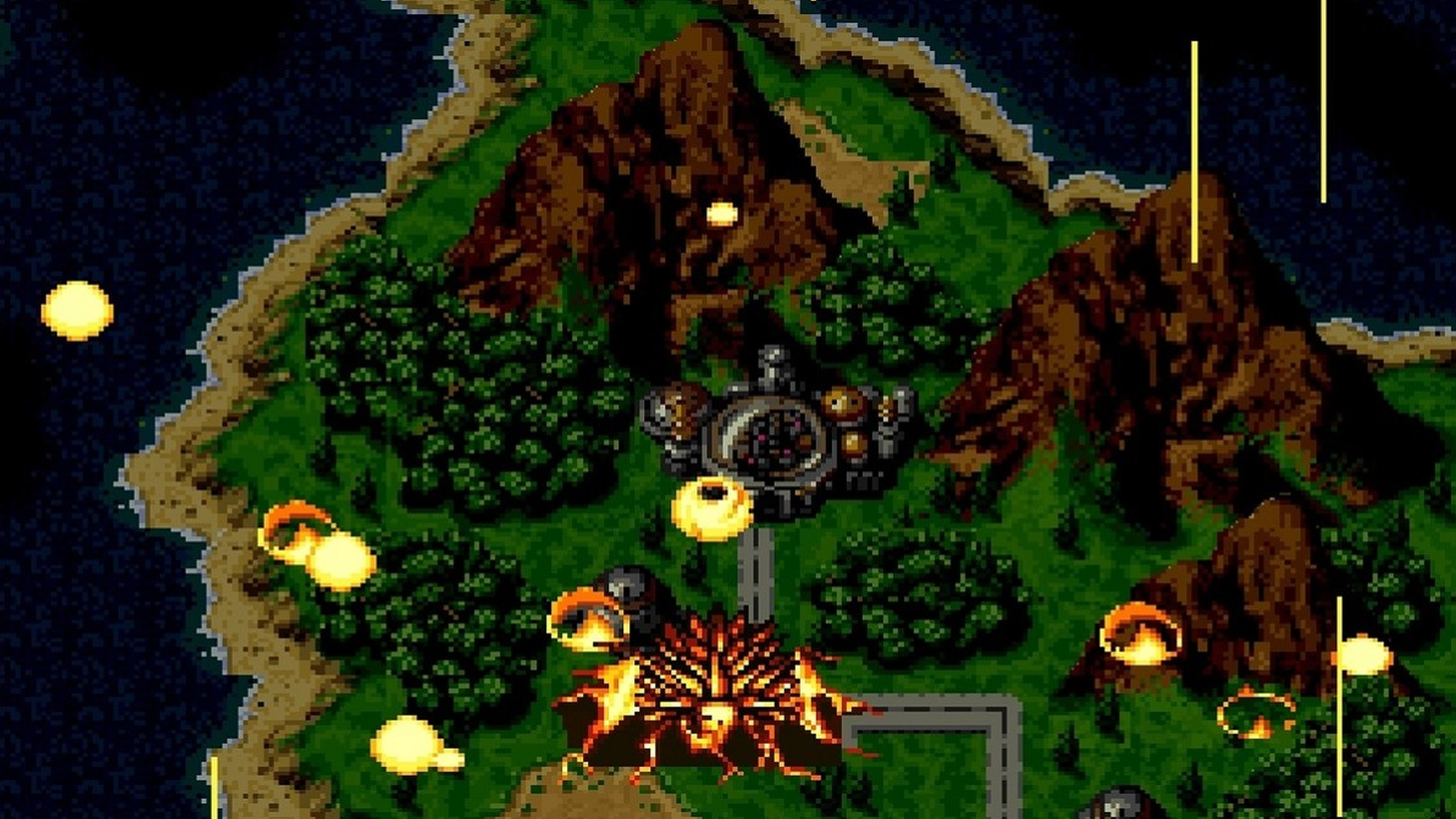
A world isn’t just made up of physical landmasses, it’s also the product of its history. If you don’t know anything about past events, you’d just assume your world has always existed exactly as it currently does and always will. That’s a naive perspective, as Chrono Trigger so expertly illustrates with its time-and-space-defying plot.
When the adventure starts in the present, you’ve got a pretty bog-standard fantasy setting with just the barest hint of technological development thanks to Luka and her dad. As you traverse the ages, though, more elements of the world start to come into clearer contrast. Things are peaceful now because humanity won the war against the Mystics in the past, but everything is ruined in the future due to the eventual emergence of Lavos. It’s all a single sequence of cause-and-effect events shaping the land and its societies.
Perhaps one of the most haunting aspects of this is the emergence of the Black Omen in the distant past, a giant, floating castle. Even when you return to the present, it’s still floating there, and when you ask the townsfolk, they don’t regard it with any particular interest. Because history has changed with the Black Omen’s emergence in the past, what’s considered “normal” in the present has changed to include a giant, ominous death fortress in the sky.
You Just Missed a Cataclysm

When Will first arrives in the royal capital of Grand Trad at the start of Metaphor: ReFantazio, it seems like a pretty standard fantasy setting. There’s magic in the air, lots of different humanoid races, and a lot of institutionalized fantasy racism. Like, I don’t think I can adequately impress upon you how much fantasy racism is in this game. All that aside, though, nothing exceptionally out of the ordinary.
That swiftly begins to change upon your first encounter with the horrid, misshapen monsters known as Humans, and only escalates from there. The Kingdom of Euchronia seems rather cagey with its historical records, but just from traveling the world in your Gauntlet Runner, you get a sense that something really big went down not that long ago, relatively speaking. Even just the cool sightseeing spots like Solstice Crossing and Midnight Sunsands imply a world where magic and monsters once ran rampant.
As is revealed in the game’s later acts, the big thing that went down was the end of the world as we knew it. Literally “we”, as in human beings; we discovered magic and ruined everything, with all the remaining fantasy races being bioengineered creatures made to survive in the new world. That’s why “humans” are monsters to them, because we’re the ones who borked the world.
2 Tales of Symphonia
Two Worlds’ Worth
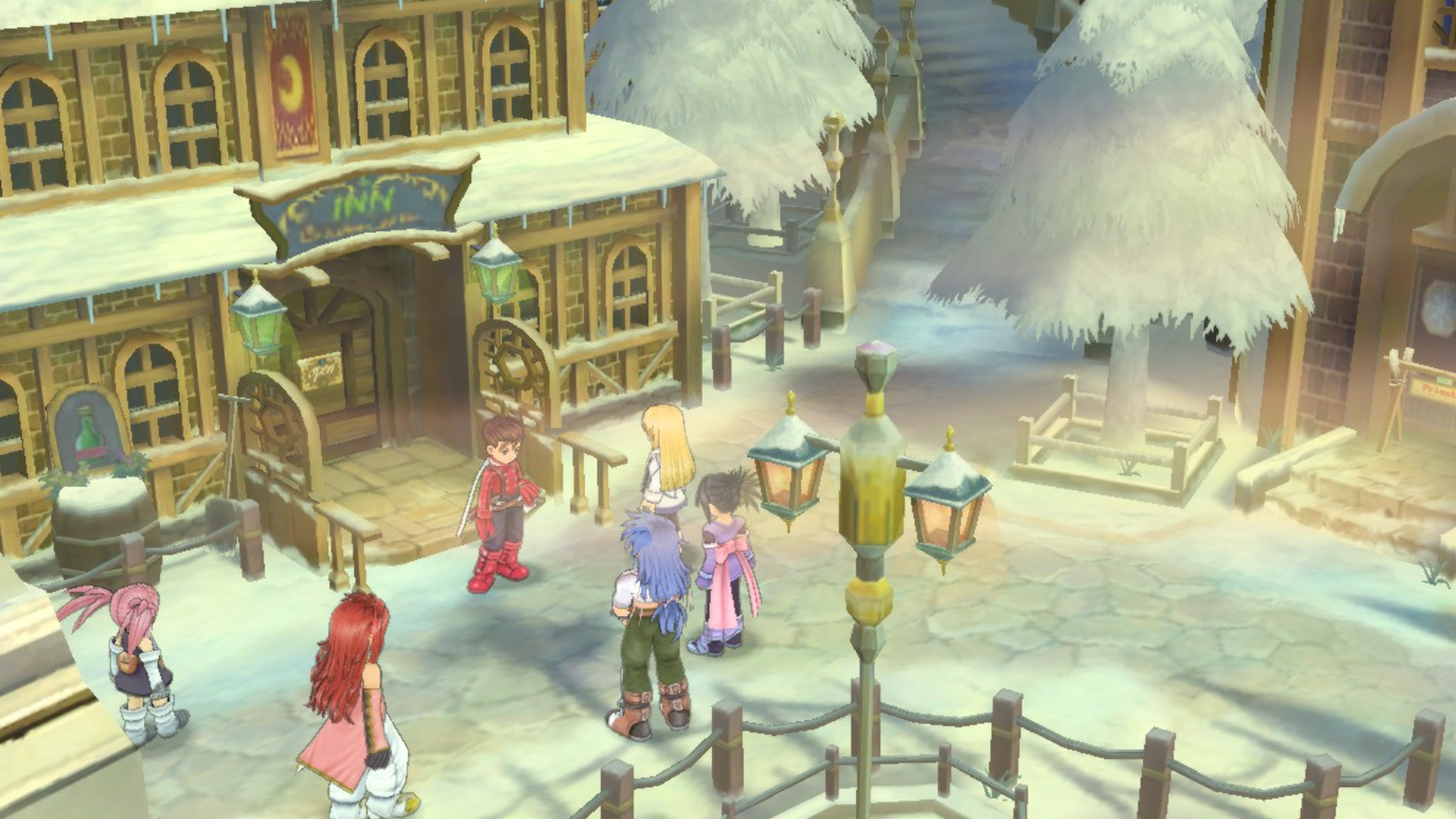
The state of Tales of Symphonia’s world is one of its most vital plot points, and not just in the way you think it is with the first-hour lore drop. The premise of Colette’s journey as the Chosen is that she needs to “regenerate the world,” reinvigorating the flow of mana so the world of Sylvarant can start properly flourishing again. However, this journey is just one of many, as the flow always starts to weaken again after a while.
The story’s big reveal is that the mana flow isn’t weakening due to the mere passage of time, but because someone else is literally yanking back in the other direction. Specifically, the Chosen individuals of Sylvarant’s twin realm, Tethe'alla, who undergo a similar journey whenever Sylvarant starts getting its mana in order to take it back. Both of these worlds have been in a tug-of-war for centuries, neither knowing of the other’s existence.
In short, the world-saving journey that the game originally began on was a complete farce, and it’s when the party learns of the twin worlds that the true face of the quest finally begins to reveal itself, not to mention their true antagonist pulling the strings.
1 Final Fantasy VII
Life Beyond Midgar

One of the reasons it’s important to travel around the world at least a little bit in your life is to get a sense of how different cultures and cities function. For example, when you first begin Final Fantasy VII, it wouldn’t be unreasonable to assume that the entire world is some manner of cyberpunk-fantasy dystopia in the same vein as the multi-layered city of Midgar.
When Cloud and company finally get out of Midgar at the end of the game’s first act, though, the world proper opens up, revealing a much more traditional fantasy setting. There are still small villages here and there, farms across the countryside, fishing communities, and other humble communities. Yeah, there are Shinra-owned Mako pipes marring the land, which spoils the vibe a bit, but at the very least, you realize that Shinra’s grip on the world isn’t as huge and inescapable as it purports, especially the closer you get to Wutai.
Additionally, while Barret’s rants about Mako imply that Shinra is sucking the planet’s natural energy dry, the revelations about the Ancients and the Lifestream make it clear just how much supernatural phenomena are still permeating this world, despite that initial cyberpunk hook.
 Next
Next
10 JRPGs Designed For Players Who Love Getting Lost
If you're the sort of player who loves getting completely lost in a gorgeous JRPG world, then you need to check out this list ASAP!



![ELDEN RING NIGHTREIGN: Deluxe Edition [FitGirl Repack]](https://i5.imageban.ru/out/2025/05/30/c2e3dcd3fc13fa43f3e4306eeea33a6f.jpg)
 English (US) ·