.png)
.png) 1 hour ago
2
1 hour ago
2
Before the video game industry experienced such massive capital growth, it was common for developers, even those specializing in a particular genre, to create diverse and unique projects.
You could be an expert in FPS titles and make a visual novel, or be versed in the art of RPGs and decide to create a strategy game, because decision-making was based on the belief in creating a good experience, not just financial considerations.
Although this culture has almost completely disappeared, its vestiges remain alive in our memories and on numerous digital distribution platforms, making it possible to travel back in time and discover what those years were like.
Therefore, if you wish to participate in this archaeological endeavor of uncovering the remains of long-forgotten projects, I invite you to explore this list of ten little-known open-world games from famous developers.
10 SimCopter
Developed by Maxis, from The Sims

I doubt you've ever wondered what Crazy Taxi would look like with a helicopter developed by The Sims' creators, given the unusual combination, but that's exactly what you find in SimCopter.
Before Maxis catapulted to stardom with its iconic social simulator, the company experimented with imitating all sorts of real-life activities through interactive media, and one of the most memorable involved piloting an aircraft in a vast, open environment.
Whether chasing criminals, solving traffic problems, or transporting patients, the game's excuses to explore its expansive 3D spaces were enough to keep the entertainment going, further enhanced by the game's diegetic interface.
The Sims' success was too great for them to even consider returning to a game like SimCopter, but those who experienced exploring the cities of SimCity 2000 in this unique way will never forget it.
9 ELEX
Developed by Piranha Bytes, from Gothic and Risen
 ELEX
ELEXI think we all have a certain set of games in our hearts that, despite acknowledging their profound shortcomings, we can't help but feel affection for their clunky premises, which is exactly how I feel about ELEX.
Piranha Bytes is a legendary developer, responsible for creating iconic RPG series like Gothic and Risen, but their transcendent quality diminished when they tried to apply the formula to a science fiction and fantasy setting.
Even so, exploring the planet of Magalan is quite captivating if you can overlook the title's technical and narrative limitations, mostly thanks to the verticality of its jetpack and the intriguing atmosphere.
ELEX doesn't have nearly the recognition of its older siblings, and frankly, that makes sense, but if you're looking for a basic ARPG that makes the hours fly by, it's a great alternative among the lesser-known adventures.
8 theHunter
Developed by Avalanche Studios, from Just Cause

The ability of certain companies to assemble products that generate opposite sensations is admirable, and Avalanche Studios, for creating both Just Cause and theHunter, is a prime example.
It's practically impossible to guess that the creators of one of the most explosive open-world action series of all time would be the same ones behind this patient, serene, and subtle hunting simulator, but reality is what it is.
Where both productions do coincide is in the realism with which Avalanche manages to depict a simulated world, this time through animal behavior, physics, and very demanding tracking mechanics, allowing you to become a true hunter once you master them.
It's an extremely specific type of game, so recommending it is an exclusive action for a niche group of players, but they will enjoy theHunter as if it were the desert's last ambrosia.
7 Omikron: The Nomad Soul
Developed by Quantic Dream, from Heavy Rain and Detroit: Become Human

If H.P. Lovecraft taught us anything, it's that some things are simply impossible for human beings to conceive, and I'd say not even in my wildest visions could I have imagined Quantic Dream developing Omikron: The Nomad Soul.
For a company that entered the collective imagination of an entire generation through narrative adventures with limited interaction, seeing their signature on an open world with first-person shooting and third-person exploration was mind-blowing.
The transitions between perspectives work brilliantly in an adventure with superb aesthetic taste and a tremendous soundtrack, all unfolding across a captivating world with its own mythology that truly showcases the studio's creativity.
Getting lost in the characters' dialogues and the environments' secrets is a genuine delight, which is why it truly pains me that the developer never continued exploring what they achieved with Omikron: The Nomad Soul.
6 Driver: San Francisco
Developed by Ubisoft Reflections, from Just Dance and Watch Dogs

Shooters, stealth games, Metroidvanias, turn-based titles, narrative adventures—you name it: if a genre exists, Ubisoft almost certainly has a project belonging to it, including their open-world racing game, Driver: San Francisco.
While the series is well-known, its popularity doesn't compare to franchises like Just Dance and Watch Dogs, which are handled by this specific division of the French company, but that doesn't detract from its quality in the slightest.
On the contrary, Driver: San Francisco is among the third generation of consoles' finest racing games, especially for its unique and incredible feature of transferring the driver's consciousness to control any vehicle in the city and complete missions.
With seamless transitions between open exploration and campaign missions, it's a sensational game that doesn't follow the typical Ubisoft formula, something sorely missed these days.
5 The Saboteur
Developed by Pandemic Studios, from Star Wars: Battlefront

I don't know why a developer known for creating sci-fi action-adventure games would make an open-world noir game based on third-person cover shooting, but we should all thank Pandemic Studios for making The Saboteur.
Going from Star Wars: Battlefront and Destroy All Humans! to a game that's more like Grand Theft Auto and Mafia couldn't have been easy, though the result of their audacity is among the century's most enjoyable and underrated gems.
Following the story of the disturbed Sean Devlin through a Paris consumed by World War II, presenting a great atmosphere with a deliberately limited color palette, is outstanding, as is almost every game that involves destroying Nazis.
Good story, fantastic setting, entertaining shooting mechanics, competent exploration on foot and by vehicle... The Saboteur has everything a good game in the genre should have, but with a much more appealing look.
4 Brutal Legend
Developed by Double Fine Productions, from Psychonauts
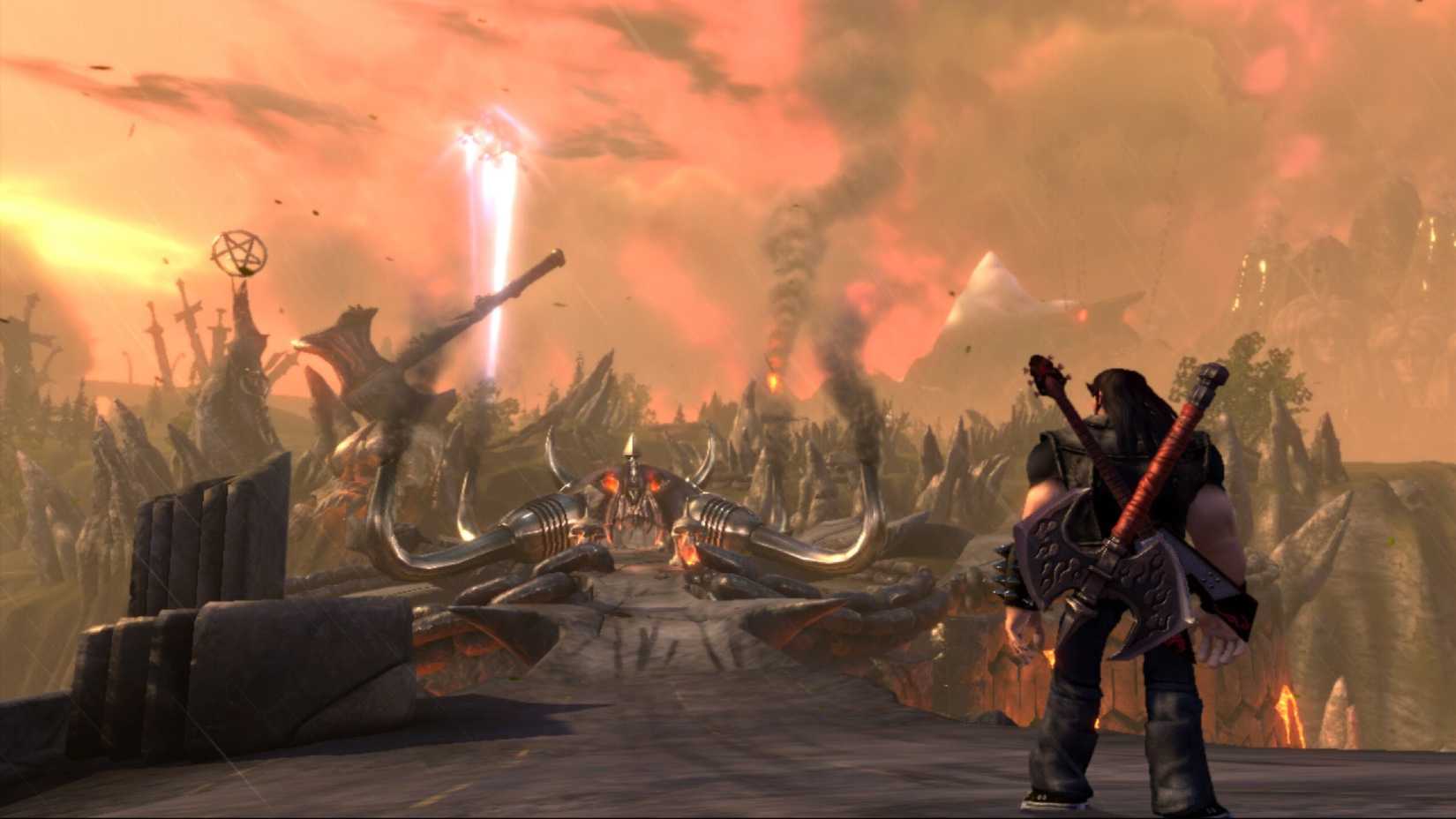
Brutal Legend is so frequently included on lists of underrated and obscure games that it will eventually cease to be so, which will be a victory for all of us who have been championing it for years.
Psychonauts remains the masterpiece of the prominent Double Fine Productions, though this fusion of hack and slash with real-time strategy within a vast world is every bit as good as any other game from the developer.
The transition from building defensive strongholds through resource management to grabbing your guitar and blasting everything in sight is unforgettable, creating a perfectly seamless cycle between these two dynamics.
For now, the time hasn't come to discuss Brutal Legend as a mainstream title, so it's essential to include it here, as in all articles of this kind, to ensure it remains in the players' minds.
3 Immortals Fenyx Rising
Developed by Ubisoft Quebec, from Assassin's Creed
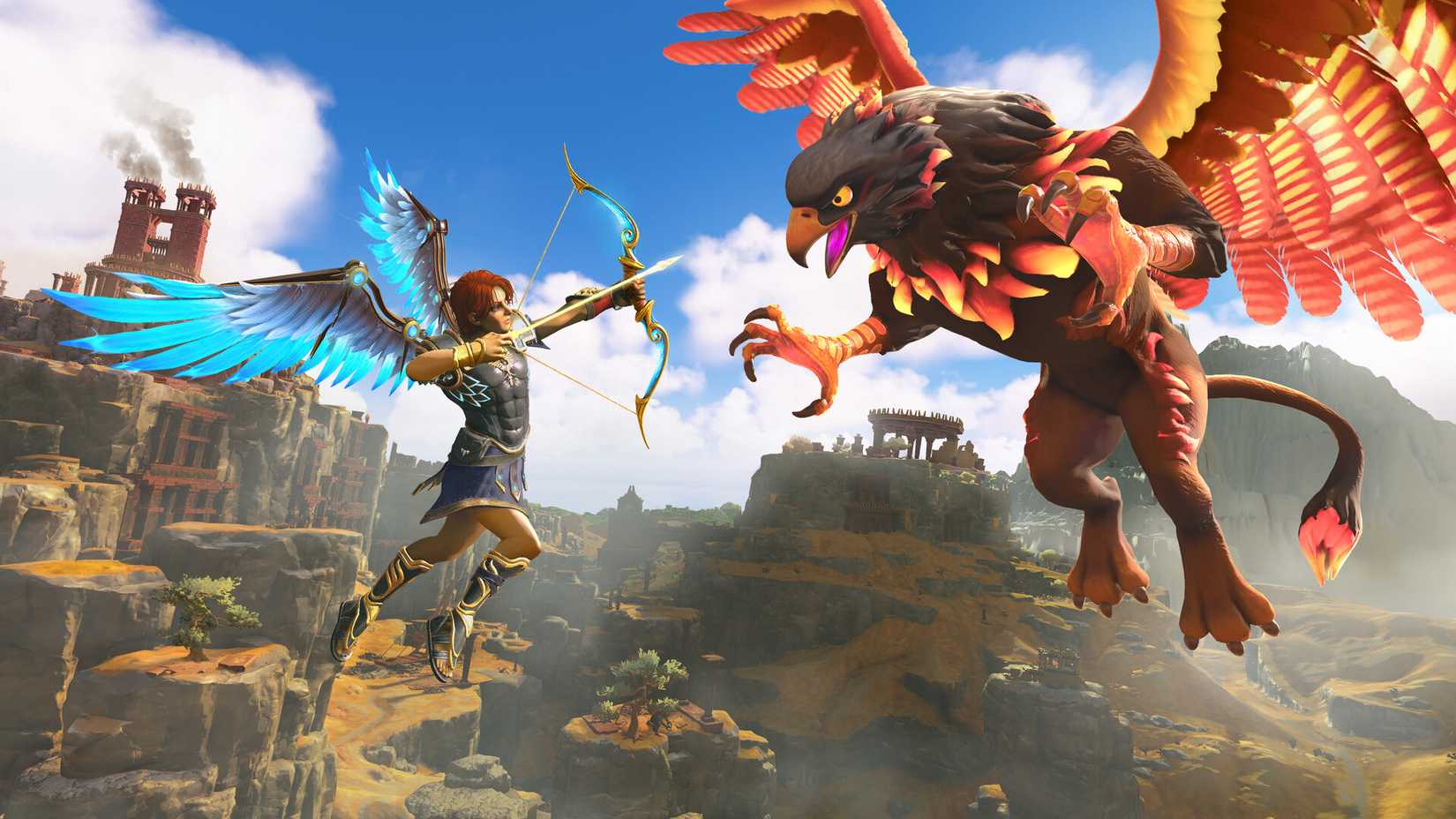
Given the company's size and its focus on covering every possible market, it was practically impossible not to mention Ubisoft more than once, but Immortals Fenyx Rising justifies its inclusion with its exceptional quality.
Unlike Assassin's Creed, and despite maintaining the studio's core open-world philosophies, this game has much more specific intentions and is less geared towards a mass audience, giving it a unique personality compared to the developer's recent creations.
That intriguing blend of Prince of Persia and The Legend of Zelda elements within a magnificent representation of Greek mythology seems to come out of nowhere, though it yields a striking result that motivates you to explore every nook and cranny and experiment with every possible element.
Immortals Fenyx Rising still suffers from several AAA pitfalls, but believe me when I say it feels like a beacon of light that we might one day look back on as one of the best games in Ubisoft's twilight years.
2 Mad Max
Developed by Avalanche Studios, from Just Cause

What you probably wouldn't have expected is Avalanche's reappearance in this article, but both they and I are devoted to open-world games, which is why the magnificent Mad Max exists and is here.
To be honest, I've rarely seen a post-apocalyptic title that combines so many universally praised features over the years and yet hasn't achieved even a fraction of the popularity it deserves based on its greatness.
It's the kind of game you either love or hate depending on your tastes, though upgrading your vehicle to roam its beautiful and immersive wasteland, engaging in lawless skirmishes with despicable bandits, is truly satisfying if you're among its target audience.
And, yes, perhaps the structure is repetitive and the Batman: Arkham-style combat isn't as well executed as it could be, but given its immersive capability, visual splendor, and spectacular action sequences, you can frankly overlook it.
1 RAGE
Developed by id Software, from Doom and Quake

Speaking of passion or hostility, and of post-apocalyptic titles whose ability to immerse you in their worlds is practically divine, RAGE replicates the FPS mastery that id Software has made its trademark with Doom and Quake, but with an open-world feel that brings a great deal of freshness.
Its gunplay, combined with the diversity of enemies and environments, is among the decade's best, refreshed every so often with driving sequences and high-speed shootouts in Borderlands' style that help create the feeling of being in a land without laws or morals.
The story is certainly bland, and you could almost skip it entirely without losing an ounce of the authentic RAGE experience, which is more about drowning in enemy blood with cinematic gunfights in an equally outstanding setting.
Thus, I can completely understand why some people abhor it, though I don't know a single fan of the studio who hasn't felt grateful to be able to enjoy their talent in a different ecosystem that enables incredible possibilities.
RAGE is far from a perfect game, but the personality it displays and the legacy it carries are indelible, and that's something I value enough to praise it despite its faults.







![ELDEN RING NIGHTREIGN: Deluxe Edition [FitGirl Repack]](https://i5.imageban.ru/out/2025/05/30/c2e3dcd3fc13fa43f3e4306eeea33a6f.jpg)
 English (US) ·