.png)
.png) 2 weeks ago
16
2 weeks ago
16
People complain a lot these days that games are too hand-holdy, that you don’t get to explore a game’s world at all before map markers and objectives start screaming in your ear to get on with the critical path. This is definitely a problem to a certain extent, but I wouldn’t call it a pervasive problem. You just need to look for the right games in the right genres if you prefer a more self-guided open-ended experience.
For example, while there are some Metroidvania games that can be a bit hand-holdy, many of them, and especially some of the best ones, instead opt to just give you a general idea of how the world functions and flows, and then leave you to your own devices to find your way. There may be some very vague objective markers on your map, or some sort of general idea of what you’re trying to accomplish, but if you want to actually get there and do whatever it is that needs doing, that’s on you to figure out.
10 Rogue Legacy
Every Bit of the Map Counts

You might think that, in intersecting with a genre like roguelikes, a Roguevania game like Rogue Legacy would be a lot more objective-overt than its contemporaries. Most roguelikes are very linear and straightforward by design and necessity, after all. However, that’s not the case; not only does the game only give you the barest minimum of objectives to follow, but unless you forgo a portion of every run’s profits, nothing is ever in the same place twice.
As with most roguelikes, Rogue Legacy’s level layout changes on each run, barring certain critical locales, though even those are only in a general area rather than a static spot. The only way to preserve layouts between runs is to pay the Architect, and that’ll cost you nearly half the gold you earn. Instead of that, the best course of action is to just become familiar with the intricacies of the castle, spotting signs of transitions between biomes and recurring hints of hidden items.
9 SteamWorld Dig 2
Topographical Research

You know why topographical research is so important in mining operations? Because if you just pick a spot and start digging downward, there’s a risk you could hit something dangerous or accidentally tumble into a cavern. It’s that kind of necessity of understanding the world around (and below) you that informs the map layout and gameplay of SteamWorld Dig 2.
SteamWorld Dig 2’s emphasis on mining and downward motion require you to be conscious of nearby stone and terrain composition. Yes, you can just keep digging in whatever direction your pickaxe guides you, but if you encounter stone you can’t mine yet, you’ll need to come back later with a better pickaxe or other necessary tools. It’s definitely not as simple as just digging down, because it is very possible to inadvertently bury yourself in a weird, out-of-the-way spot. The game is definitely less trap-prone than its predecessor, so there’s always a way out, but you have to know what your options for seeking that way out are.
8 Nine Sols
Signs are Your Friends

Nine Sols is a game that emphasizes agility and precision, both in its combat and exploration gameplay. Yi is an extremely mobile character, what with his abilities to bounce off of foes and climb certain kinds of walls. The cornerstone of the exploration side of things is whether or not you can internalize various environmental factors and make effective use of them when the time comes. Every piece of the environment is a sign, and reading signs can teach you a lot in life.
Aside from certain equipment upgrades like the grappling hook on the Mystic Nymph, most of Yi’s ability to explore is based around his movement skills, whether it’s climbing walls, clambering up ledges, and breaking down barriers. It’s knowing how to spot these distinctive elements that will guide you far more than an objective marker, as simply being on the lookout for a ledge in an unusual place will give you an impetus to reach it, so long as your acrobatic skills are sufficient to do so.
7 Ender Lilies: Quietus of the Knights
Remember Everything

Ender Lilies: Quietus of the Knights
Speaking of reading the environment, Metroidvania games are, by their nature, very large and labyrinthine. Odds are good that you will regularly encounter locales and environmental gimmicks that seem unhelpful or inactive during the early game, only to suddenly make a lot more sense with the acquisition of certain abilities later on. In Ender Lilies in particular, keeping a mental note of anything that seems unusual will guide you toward both progress and secrets.
Lily doesn’t have much in the way of movement capabilities in the beginning of the game, with major movement abilities only unlocked by defeating major bosses. Because the map is so big, you’ll encounter blockades that can only be cleared with near-endgame abilities fairly early on, and the game won’t tell you whether or not these blockades lead to new areas or just bonus stuff. As such, you just have to keep a mental (or literal) checklist of everything you can’t bypass as you explore. Once you get the right abilities, going back over that checklist and clearing things out is immensely satisfying.
6 Blasphemous
You Need Every Edge You Can Get
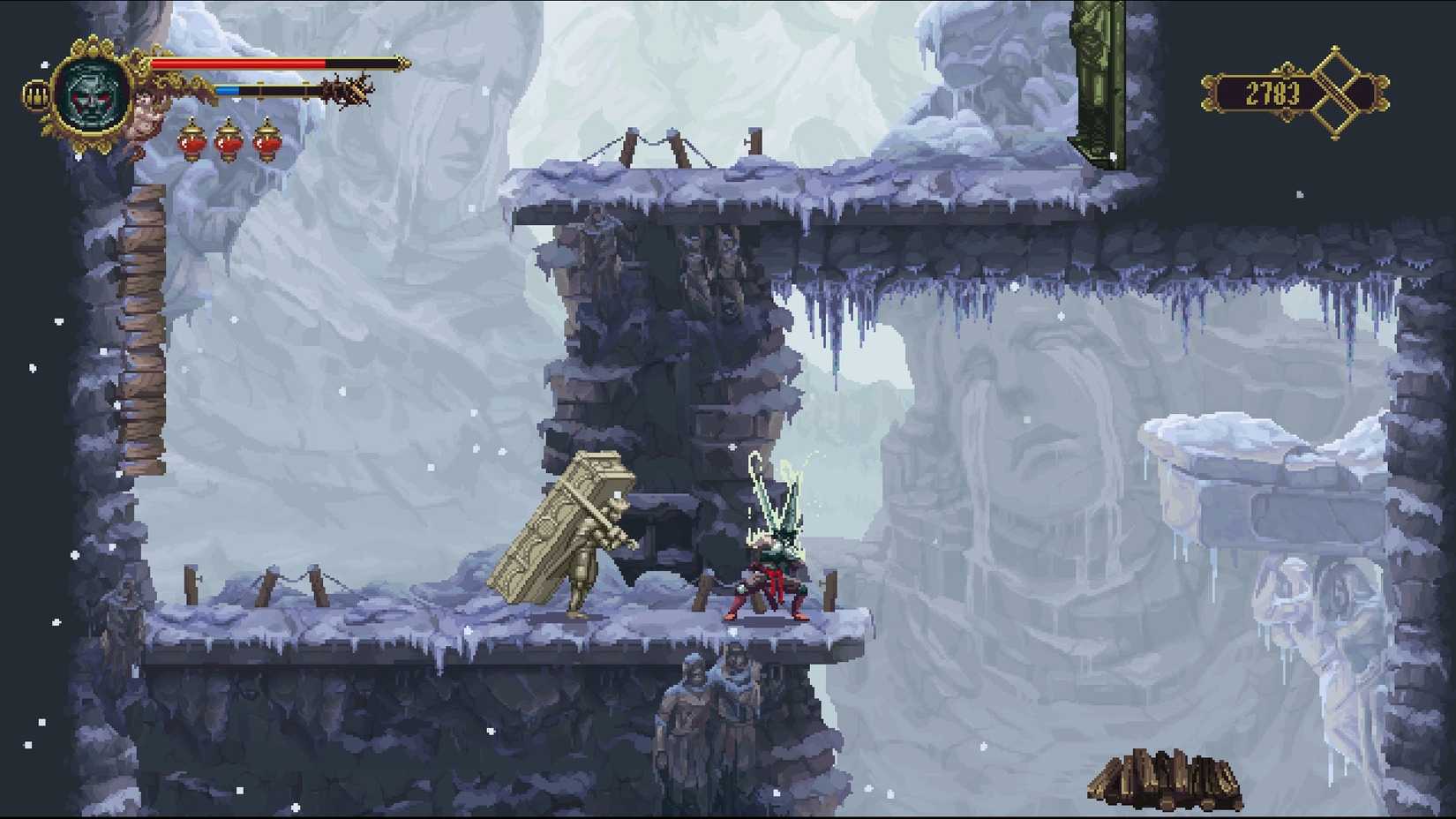
Blasphemous represents another offshoot of Metroidvania games, the Soulsvania, incorporating Soulslike elements like limited heals and just generally being bone-crunchingly difficult. It’s that difficulty in particular that encourages you to get as familiar with the game’s map and world as realistically possible, because trust me, you need every single minute edge you can possibly get in this extremely hostile setting.
While many of the game’s major areas do have a more or less linear progression, the game is a little more cagey about side paths and shortcuts. Even if you feel like you know the general direction you need to go to get to a boss, you still feel inclined to search the place out, even at your own risk. This is because searching thoroughly, as well as internalizing regular environmental elements like fake walls or hidden passageways, reveals shortcuts to save points, and the more shortcuts you have, the less agonizing your runbacks will be when you get bodied by a random enemy at a perfect midpoint between one save point and the next.
5 Axiom Verge
Even the Map Can’t Hold You

Part of the fun of a Metroidvania game is uncovering the map, extrapolating ideas of where you can go next based on where you have and haven’t been already. This can frequently manifest in the form of breaking through hidden walls and panels, though Axiom Verge takes things in a slightly different direction.
Axiom Verge encourages you to not only explore the map, but subvert it entirely, chiefly through two of its game-changing upgrades, the Address Disruptor and the Modified Lab Coat. The Address Disruptor allows you to glitch and alter the properties of certain kinds of blocks, moving them out of the way entirely, while the Modified Lab Coat allows you to phase directly through thin walls. With these two tools at your disposal, you start to notice particular quirks in the world layout, both more obvious ones like glitching blocks that can be modified with the Address Disruptor and one-block-thick walls that can be phased through. Normally, encountering a solid wall in a Metroidvania, even a thin one, would be a progress-stopper, but not in Axiom Verge.
4 Super Metroid
Start Memorizing those Blocks and Panels

Speaking of hidden blocks and panels, those particular map elements have been the bread and butter of the Metroid series for pretty much its entire history. It’s a simple means of giving you an idea of what upgrades and abilities you need and when in order to reach otherwise inaccessible areas. The best example of this, and especially one that doesn’t brush up against the objective markers used in later games, is Super Metroid.
As one of the archetypal Metroidvania games, Super Metroid makes extensive use of environmental blocks and panels to both guide and obscure you through critical and optional paths. If, for example, you encounter disappearing blocks that keep you from progressing on foot, you quickly realize you need to rely more on aerial movement abilities. This has the additional effect of gradually cluing you into the map design; if you see a little stretch of panels in front of a ledge, you start to get a little Spider Sense that they’re going to be disappearing panels or breakable blocks.
3 Castlevania: Symphony of the Night
A Single Platform Hides a Path
Castlevania: Symphony of the Night
In the same vein as both Axiom Verge and Super Metroid, Castlevania: Symphony of the Night gets you invested in its map mechanics by leaving hints to future traversal potential all over the place. The trick is that those hints aren’t always immediately parsable as hints when you first see them, so you need to do a little out-of-the-box thinking in order to get into new areas. And by “a little,” I mean “a lot,” because this game’s map only has the barest minimum of detail, with no objective markers in sight.
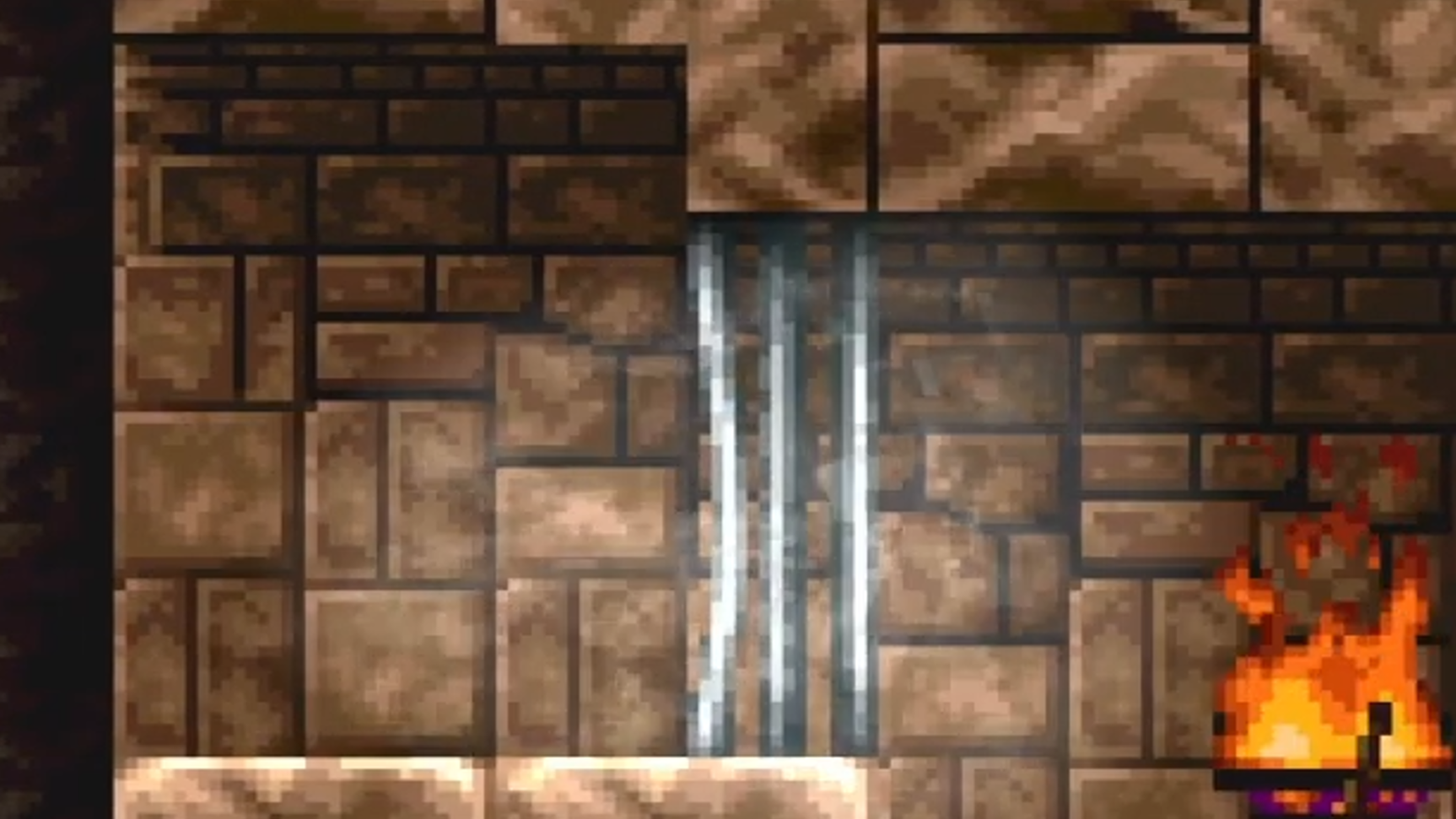
The best example of this is in the various steel grates you encounter throughout the castle. Traditional adventure game logic would dictate that these grates would need to be broken down somehow, but given the gothic setting, you’re probably not going to find a jackhammer. Rather than that, the answer lies in Alucard’s Mist Form ability, which lets him slip right through grates and other similarly slim passageways. Suddenly, these beats of weirdly impenetrable set dressing become a new kind of way forward.
2 Hollow Knight
Do It Your Dang Self

In the vast majority of Metroidvania games, or indeed, games in general, progress through a large, multilayered area is automatically charted via a map, usually viewable in the pause menu. One way, among others, that Hollow Knight differentiates itself from its contemporaries is in how it manages that map, and encourages you to find your own way through Hallownest.
Rather than a menu aspect, Hollow Knight’s mapping system exists diegetically, facilitated through maps purchased through Cornifer, a quill for charting your progress, and a compass for actually seeing where you are. Here’s the thing, though: Cornifer’s maps are always more educated guesses than actual surveys. They have outlines and incomplete areas, so they only provide the barest minimum of progress-charting. You need to manually explore and fill out the map yourself, including finding secret areas or passages to other biomes that Cornifer didn’t catch. The only direction toward progress that the game offers is icons of the Dreamer’s masks, but these are only added after you meet them in the City of Tears, and their mere positions tell you basically nothing.
1 Animal Well
Deliberately Minimalistic

As far as Metroidvanias go, Animal Well is about as minimalistic as one could be while still technically being a Metroidvania. While there is an in-game map, there are no objective markers, no dialogue, no overt storytelling, nothing. You don’t even know where you are or what you’re supposed to be doing there, and the game isn’t particularly inclined toward telling you. All you can do is explore and gradually get a sense for how this odd little realm works.
Just about every aspect of Animal Well’s design is deliberately obfuscated in order to create a more emergent, self-guided experience. Will a particular path lead you toward tangible progress or some side thing? There’s no way of knowing besides just checking it out! As you do check things out, though, and especially as you gradually assemble the game’s various upgrades and power-ups, you slowly start to see the proverbial wires behind the panel, the little notches and ledges where you can get about and break into new territory. It’s a game of observation as much as it’s a game of exploration.








![ELDEN RING NIGHTREIGN: Deluxe Edition [FitGirl Repack]](https://i5.imageban.ru/out/2025/05/30/c2e3dcd3fc13fa43f3e4306eeea33a6f.jpg)
 English (US) ·