.png)
.png) 6 months ago
51
6 months ago
51
Just about every genre of video game is built upon the backs of its predecessors, of course, but arguably, no genre more so than fighting games. Making a great fighting game is exceptionally difficult, requiring a very careful mix of mathematical balance, engaging mechanics, and attractive spectacle. It’s not the kind of game that can just happen in a vacuum, which is why nearly every fighting game has built upon the proverbial research notes of the big names that came before it.

Related
10 Best PS2 Fighting Games Of All Time, Ranked
The PlayStation 2 brought some incredible fighting games during its lifetime. This list breaks down the 10 best to grace the PS2 system.
Because fighting games are so hard to get right, developers have been experimenting and innovating for the better part of several decades, whether it’s in the gameplay or the graphics and presentation. If you consider yourself any kind of fan of fighting games or video game history overall, you owe it to yourself to experience the games that really revolutionized the genre, and trailblazed the way for what came next.
10 Virtua Fighter
The First Foray Into 3D

In 1993, all the biggest names in fighting games, from Street Fighter to Mortal Kombat, were exclusively in 2D. 3D graphics were still a very young technology at this point, and the task of rendering something as complex as a fighting game in 3D was particularly daunting. The first game to take a genuine crack at it was Sega’s Virtua Fighter.
Virtua Fighter is the first true 3D fighting game. Rather than using graphical tricks to create an illusion of 3D, the models were fully realized in 3D polygons, allowing players to move around on the stage in any direction. Compared to other fighting games, Virtua Fighter had a slightly larger commitment to realism; less fireballs and stretchy arms, more throws and kicks. That’s putting aside the characters’ ability to jump like they’re on the moon, of course.
While the original Virtua Fighter is primitive by today’s standards, it was just the test case that the industry needed to start really investing in 3D. I’m not just talking about fighting games, either; it was proof positive that any game of any genre could conceivably make the jump to 3D.
9 Super Smash Bros.
A Fighter for the Family

By the late 90s, fighting game norms were firmly established, and the FGC was skewing a bit older and a bit sweatier. It was a hard genre for newer, younger players to break into. Luckily, legendary developer Masahiro Sakurai was in the mood to innovate, and the result was the very first Super Smash Bros. for the Nintendo 64.
The original Smash was first conceptualized as a four-player free-for-all fighting game, something that new players could easily get into without memorizing an entire phonebook of combos and command inputs. Originally, it was going to have wholly original characters, but Sakurai decided the best way to get eyes on his project was to get Nintendo’s blessing to use its back catalog of characters. It was a long shot, but it paid off.
Smash’s success gave rise to an entire sub-genre of fighting games, the platform fighters. The greater emphasis on movement and damage accumulation over health has kept Smash a beloved family pastime for generations, and inspired various similar fighting games in the years since.
8 X-Men vs. Street Fighter
Setting Standards for Crossover Fighters

In the early 90s, Capcom secured a very lucrative partnership with Marvel Comics to produce a couple of fighting games based on the latter’s roster of superheroes and villains. X-Men: Children of the Atom and Marvel Super Heroes were both very well-received, which prompted Capcom to try something a little more ambitious in 1996: merge Marvel with its own roster of fighters. Thus, X-Men vs. Street Fighter was born.
As the title implies, the game takes the roster and mechanics of X-Men: Children of the Atom and mixes them with some fresh Street Fighter character sprites. Fittingly for its two-pronged nature, it was Capcom’s first tag-team fighting game, having you pick two characters to control and letting you tag between them mid-fight at will. The game also carried over some mechanics from its predecessors, such as Super Jumping and Aerial Raves.
The success of X-Men vs. Street Fighter led directly to the creation of Marvel Super Heroes vs. Street Fighter, which in turn led to the original Marvel vs. Capcom, one of the most beloved series in the history of fighting games.
7 Skullgirls
By Fighting Fans, For Fighting Fans

Due to their inherent complexity, fighting games were originally the sole territory of big-name developers and publishers who could afford the necessary resources to make one happen. That started to change in earnest in the 2010s, particularly with the release of Skullgirls, a wholly independent fighting game meant to compete with the big names.
The development of Skullgirls was a love letter to both fighting games and their associated culture. It was packed with in-depth mechanics pioneered in other major games like Marvel vs. Capcom, such as multi-character tagging teams and group super moves, though it also had individual story modes for every playable character. Granted, there weren’t many playable characters to start with, but more were gradually added as the game continued development after release.
Admittedly, Skullgirls has gone through some… tumultuous developmental and legal stuff that we won’t get into here, but even if the game’s current reputation is a bit divisive, it still represents something very important. It was a little-name game made for fighting fans first and foremost, and it secured a position of prominence in history, even appearing at EVO alongside the big names.
6 Guilty Gear Xrd
A Major Step in Presentation Standards

Guilty Gear is Arc System Works’ seminal fighting game franchise, quietly thriving in the shadows of bigger name franchises with a commitment to complex, competitive mechanics and wild, distinctive character designs. You could trace several major recurring fighting game elements to several entries in the series, but what I want to highlight in particular is more on the presentation side of things, courtesy of Guilty Gear Xrd.
Originally released in 2014, Guilty Gear Xrd is almost like a midpoint between 2D and 3D fighting games. While “2.5D” was well-established by this point, you lost a bit in the style department from having elaborate 3D models fighting on a 2D plane. Xrd solved this conundrum with a little bit of graphical witchcraft; the game was made in Unreal 3, with all the characters being fully-rendered 3D models. The trick was that the models used a very particular blend of shading and lighting that made them look like they were hand-drawn sprites, which helped to preserve the flashy anime aesthetic.

Related
10 Most Iconic Character Selection Menus
Games like Marvel vs. Capcom 2 and Mortal Kombat have some of the coolest character selection screens in gaming history.
This design style has become Arc System Works’ bread and butter, seeing use not just in subsequent Guilty Gear games, but in other titles like Dragon Ball FighterZ and Granblue Fantasy Versus.
5 Mortal Kombat
The First Major Divergence

By 1992, the runaway success of Street Fighter 2 had given Capcom an iron grip on the arcade fighting scene. If a game wasn’t Street Fighter, it was trying to be Street Fighter, either mechanically, visually, or both. However, one new game emerged from the ether in this period to challenge Capcom’s hold with a different direction, a spot of the ol’ ultraviolence. That game was Mortal Kombat.
Developed and published by the late Midway, Mortal Kombat was a major departure from everything thought to be sacrosanct in fighting games at the time. Digitized actors instead of pixelated character sprites, directional inputs instead of quarter-circles, and of course, the legendary Fatalities for putting a little bow on top of each match. The inputs for Fatalities were semi-hidden, which helped drive up arcade engagement as curious kids experimented to find what worked.
Mortal Kombat showed that there wasn’t one right way to make a fighting game. It’s also worth noting that the ultraviolence didn’t go over so great with parents, which is what led to the formation of the ESRB in 1994. Not the most fun thing to think about, but probably better for the overall industry in the long run.
4 Art of Fighting
Establishing A Critical Mechanic
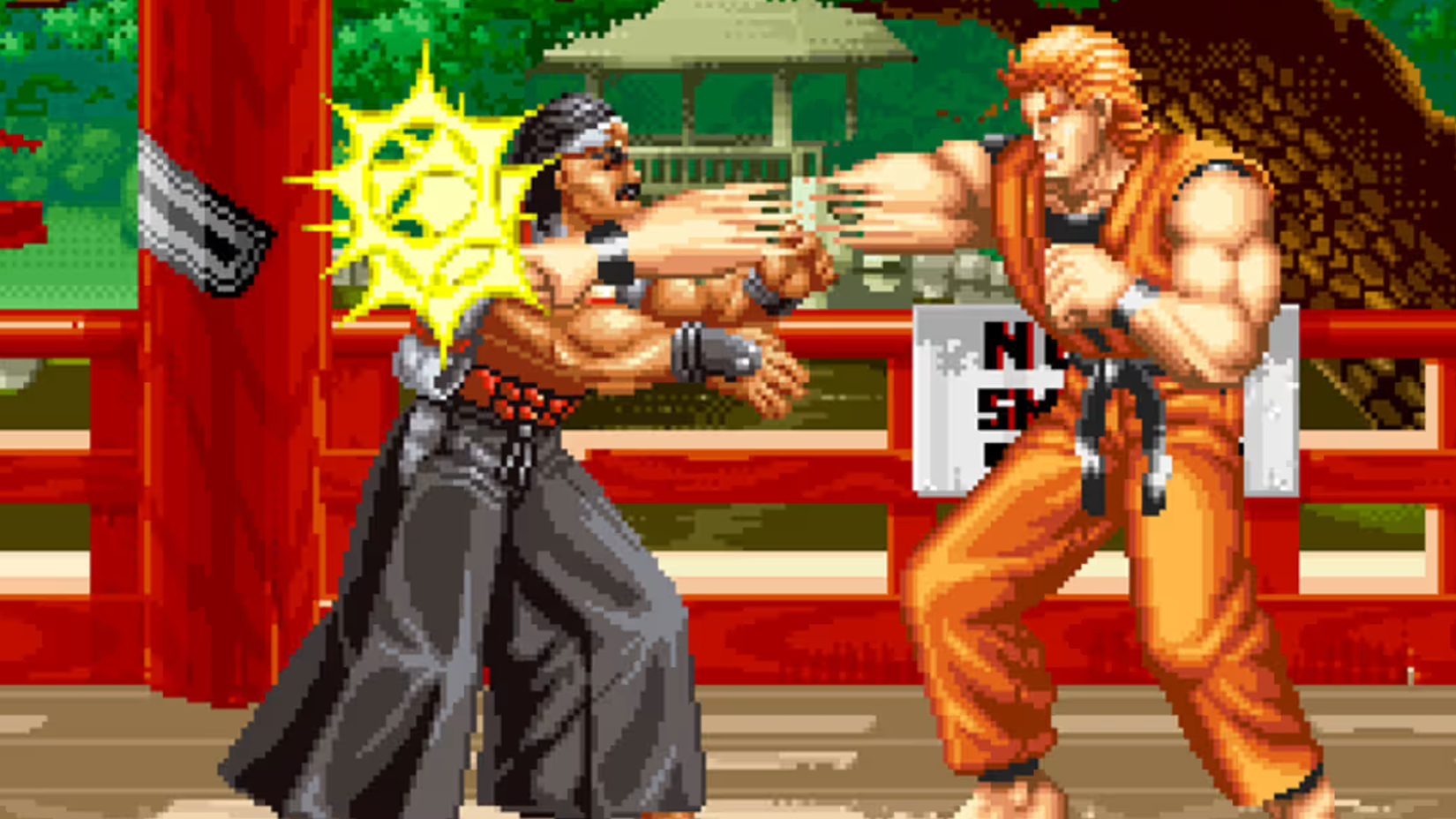
One of my favorite aspects of most fighting games is big, flashy special attacks. Super moves, hyper combos, overdrives; whatever you want to call them, I love them. While super moves and the meter required to perform them are standard in most traditional fighting games these days, we have one game in particular to thank for all of that: 1992’s Art of Fighting.
This Neo Geo classic was one of SNK’s biggest hits in the 90s, though ironically, it didn’t sell that well compared to Street Fighter 2. Even if the numbers suggest otherwise, fighting games wouldn’t look the same as they do today without Art of Fighting’s major innovations.
The first and foremost addition Art of Fighting made to the soup pot was its super meter, and its associated super moves. It wasn’t just your plain old flashy fireball, it was a fireball you had to work your way up to, something to really cap things off. Not only did Art of Fighting’s contribution help make fighting games flashier, it added the vital component of meter management to the meta.
3 Darkstalkers: The Night Warriors
Refining Capcom’s Formula

By the mid 90s, Street Fighter 2 was basically a solved game. It had received various updates and upgrades, but Capcom decided it was time to diversify a little bit. One of its most well-regarded attempts at this was the original Darkstalkers, released for arcades in 1994, a game that would end up providing some much-needed refinements to Capcom’s fighting formula.
Darkstalkers largely uses the same fighting system as Street Fighter 2 to depict its punch-ups between supernatural monsters, but with a few extra wrinkles thrown into the mix, some original and some cribbed from elsewhere. Following in Street Fighter 2 Turbo’s footsteps, for instance, the game added a special meter for powered-up special moves.
In addition to that, Darkstalkers introduced some bedrock elements like being able to block attacks while in the air, moving while crouched, and most importantly, the chain combo system, which allowed players to string together attacks of gradually greater intensity. These various refinements made Darkstalkers quite the hit in the mid-90s arcade scene, which helped lay the groundwork for Capcom’s subsequent releases like Street Fighter 3. Now if Capcom could only remember it exists and make us a new one…
2 Street Fighter 6
A New Level of Accessibility

As I’ve mentioned a couple of times, getting into fighting games requires a certain degree of commitment. You have to find a character that works for you, learn all the inputs, and just generally piece together a semblance of a proper playstyle. Fighting games throughout the ages experimented a bit with expediting this process through stuff like easy combos, but the game that really bridged the accessibility gap was Street Fighter 6.
2023’s Street Fighter 6 preserved most of the classic formula from its preceding entries, but in addition to the traditional style, it also introduced a new “modern” control scheme. This simplified the usual six-button setup down to just four buttons with directional inputs. It was much easier to wrap your head around and could be customized to an extent, but unlike some “easy” control styles in other fighting games, it still kept things engaging enough to preserve the fun factor.
In addition to its control scheme overhaul, Street Fighter 6 introduced one of the most fleshed-out single-player campaigns to be seen in a fighting game in a hot minute, complete with a full open world, customizable characters, and the ability to mix and match fighting styles.
1 Street Fighter 2
The Definitive Game-Changer
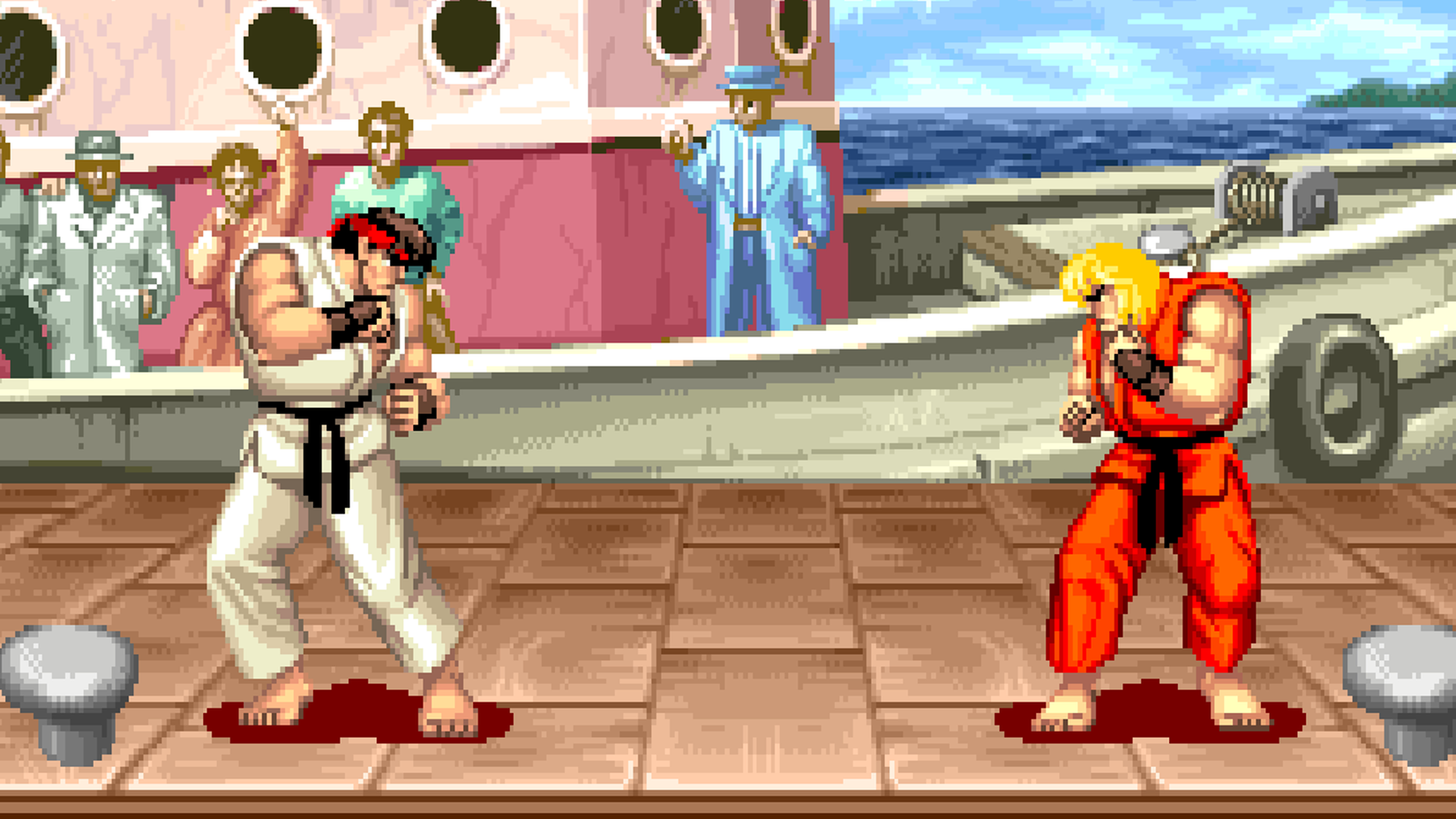
Considering how many times I’ve already mentioned it over the course of this list, you probably aren’t surprised to see Street Fighter 2 here at the end. It may be an obvious inclusion, but that’s only because it’s a definitive truth: fighting games, as we know them, wouldn’t be even half the tentpole genre they are if the original Street Fighter 2 in 1991 hadn’t propped it up.
Street Fighter 2 was a remarkable evolution over its immediate predecessor, adding both multiple playable characters and a litany of cool moves achievable via command inputs. More than that, though, Street Fighter 2 was what started bringing fighting games up to the breakneck, competitive speed they’re known for. This is thanks in large part to the creation of the first combo system, in which following up certain moves with others prevented opponents from getting their guard up. Legend has it this system was created by an accidental discovery on the devs’ part.
Street Fighter 2, as well as its subsequent updates like Turbo and Champion Edition, not only breathed life into the fledgling fighting game scene, but also helped reinvigorate the arcade industry, which was floundering a bit beforehand. I don’t think it’d be hyperbolic to thank Street Fighter 2 for the birth of the modern FGC.

Next
10 Best Fighting Games With High Replay Value
These 10 fighting games are the best to come back to and fight through solo or against friends time and time again.





![ELDEN RING NIGHTREIGN: Deluxe Edition [FitGirl Repack]](https://i5.imageban.ru/out/2025/05/30/c2e3dcd3fc13fa43f3e4306eeea33a6f.jpg)
 English (US) ·