.png)
.png) 4 hours ago
4
4 hours ago
4

Published Jul 18, 2026, 2:30 PM EDT
Đorđe Ivanović is a writer for DualShockers with a background as both a gaming writer and editor. He was previously a journalist and editor at Gamer Journalist and GameSkinny, and has also contributed to FantasyWarden and TheGamer, covering video games while occasionally wandering into board game territory.
Đorđe has been writing professionally since 2019 and covering games since 2022. His gaming journey spans decades, with much of his childhood devoted to Warcraft III and its many custom mini-games. Beyond RTS classics, he also has a soft spot for WWII shooters, mystery and puzzle games, indie roguelites, and RPGs that do not demand too much grinding.
Every now and then, you'll see major open-world games getting crowned as "the one that changed the genre." However, more often than not, smaller titles reinvent something or come up with genuinely interesting new ideas. But if they don't sell well enough and/or their marketing isn't good, their success stays unknown.
The games below did the unglamorous, hard work of proving that some new ideas could work, while later titles took the credit. Here are the games I believe deserve your second look.
10 Shenmue 1
The Town That Lived Without You

Before GTA III made open-world environments something millions of players admired, Shenmue had already created a living Japanese town where NPCs had their own daily schedules, shops opened and closed with the time of day, and the weather changed constantly. An authentic town living its life, whether or not you were looking at it.
This idea of a world running on its own, regardless of you, the player, was later popularized and became the backbone of games such as Yakuza and Red Dead Redemption 2. Shenmue's commercial failure has overshadowed its influence, but the whole open-world genre kept its blueprint.
9 Spider-Man 2 (2004)
Traversal Reinvented

This Spider-Man 2 game was remembered as one of the good movie games, but its main attraction was the newly introduced physics-based traversal system, which let you feel like real Spider-Man while roaming the open world. The web-swinging itself required you to have real momentum, and I can honestly say that mastering it felt better than completing most of the missions in the game's story.
This web-swinging mechanic, developed by Jamie Fristrom, influenced physics in later releases such as Just Cause and Sunset Overdrive, as well as in newer Spider-Man games. The game rarely gets remembered for this element, which is more important than we believe.
8 Just Cause 2
A Real Physics Playground

Jumping into Just Cause 2 is actually jumping into a James Bond-like action movie that gives you tons of opportunities to destroy enemies and their bases in the manner of your favorite action movie star. What I love about the game is that it simply drops you into an enormous open-world island without any beaten path to follow or tons of icons on your mini-map. You get a grappling hook, a parachute, some weapons, and absurd physics to throw yourself in and generate fun in any way you like.
This kind of thinking was revolutionary in the early 2010s, when the game was released and introduced exploration as its focus, a concept later adopted by games like The Legend of Zelda: Breath of the Wild. Just Cause 2 rarely enters the conversation when this system is discussed, despite proving years earlier that empty space plus great movement tools beats a map cluttered with busywork. No wonder the game is among the top PS3 open-world games.
7 Far Cry 2
A World That Fought Back
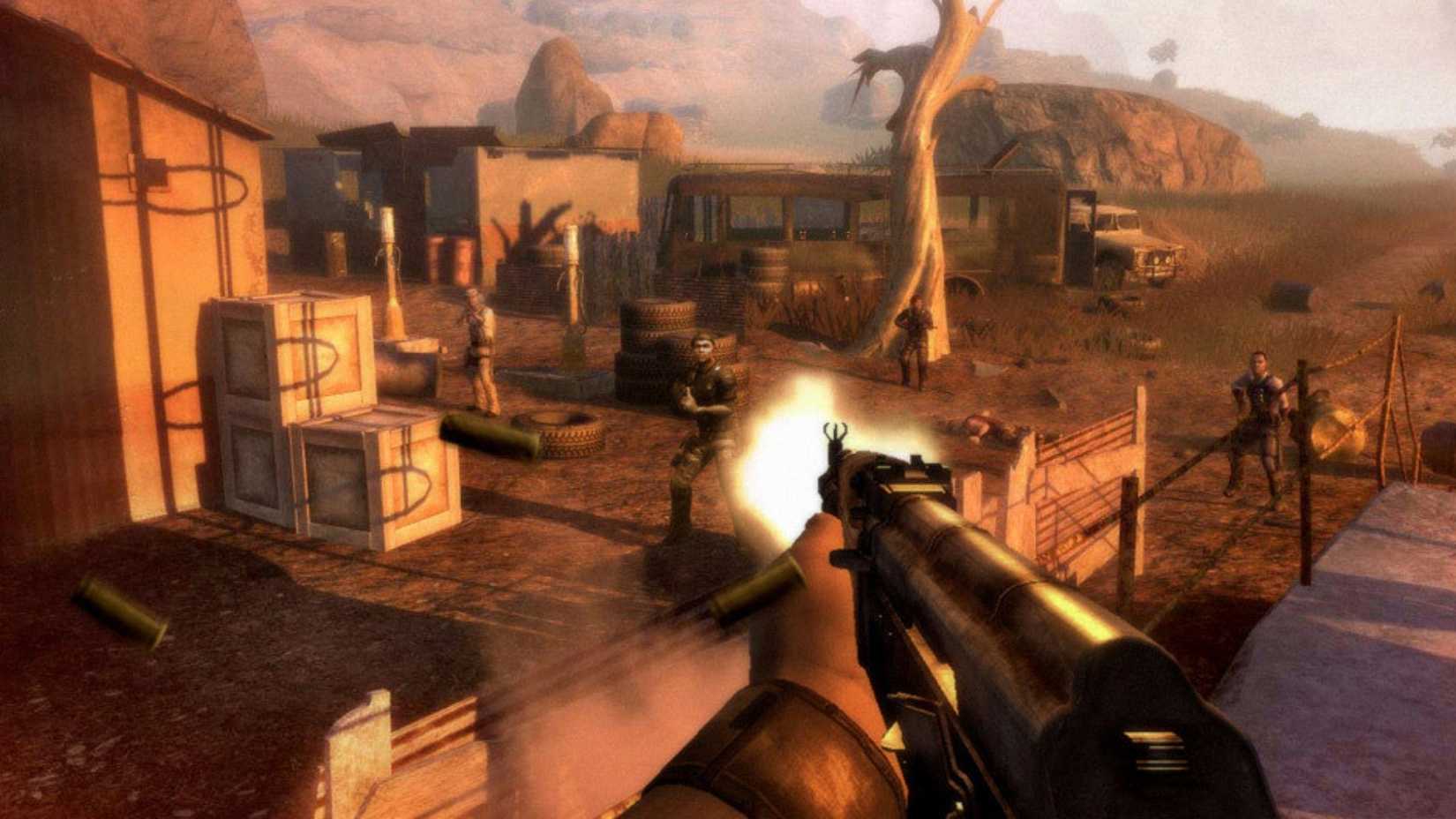
Even though Far Cry 2 was disliked by players upon its release, mainly for its punishing realism, the game brought some systems that were years ahead of the genre. For example, fire would realistically spread throughout the grass and engulf nearby trees or cars. Another interesting element the game introduced was the weapons degradation system, where your weapons would wear out over time and jam, forcing you to pick up fresh ones constantly. Also, the game's graphics were among the best in the era.
On top of that, enemies react dynamically to you and memorize your presence through the reputation system, which can make them fear you as your reputation grows. All of these ideas were the perfect groundwork for later Far Cry entries that got bigger praise and attention.
6 Crackdown
Practice Jumping to Jump Higher

Crackdown's orb-collecting and rooftop-hopping structure looks simple now, but at the time, it tackled an issue of open-world games that is yet to be fully resolved: making mobility itself a progression system. For example, to run faster and jump higher, you need to collect glowing orbs that you reach by running and jumping. A leveling-up system that feels very natural yet is rare in this genre.
Later games, like inFamous and Prototype, used the same way of thinking: you need to explore to get stronger, and you need to get stronger to explore more. However, this loop was started by Crackdown but remained forgotten because the franchise later disappointed gamers and pulled the original release down with it.
Exploration With No Hand to Hold

When Morrowind came out, what engulfed my friends and me was the fact that it offered no compass arrows, no quest markers, or any other assistance beyond written directions and open-world landmarks. It demanded our attention and memory in a way that no other game had at that time, which meant it somehow turned exploration into problem-solving tasks.
The Elder Scrolls sequels that came after abandoned this quest-taking system, but the whole "no waypoint" gaming subgenre has become popular in recent years, with titles like Elden Ring, The Last of Us, and Outer Wilds implementing it successfully. That is one of the reasons the game is still worth playing in the mid-2020s.
4 Mafia
Structure Before Chaos

The original Mafia game was released very close to GTA 3, but it took a different approach to the whole genre. Instead of giving you sandbox chaos, it gave you a tightly structured, story-first open world where the city existed to complement the mafia narrative. The exploring part was reserved for a separate Free Ride mode.
I loved the realistic elements, such as police chasing you for breaking speed limits, running red lights, or the mere fact that you took physical damage when you were in a car accident. All of which were missing from GTA 3. As I see it, this narrative-first approach to open-world design was what inspired later hits like Red Dead Redemption and newer GTA games. And even though Mafia didn't get the praise it deserved, there are still plenty of players around who remember how it all started.
3 Xenoblade Chronicles
Scale as Design Philosophy

What is amazing about Xenoblade Chronicles is that the game offered vast explorable ecosystems that were fully loadable on the Nintendo Wii console, a system that wasn't designed for that much rendering. Nevertheless, the game gave you great landscapes with visible landmarks you could walk to and visit without loading screens in between, giving you an enormous sense of scale.
This sense of landscape as spectacle was then popularized in games such as Horizon Zero Dawn, where you also encounter beautiful, almost endless landscapes whose views simply pull you in. That same effect was produced by Xenoblade Chronicles, but it missed the glory it brings with it.
2 Death Stranding
Making The Journey The Entire Game?
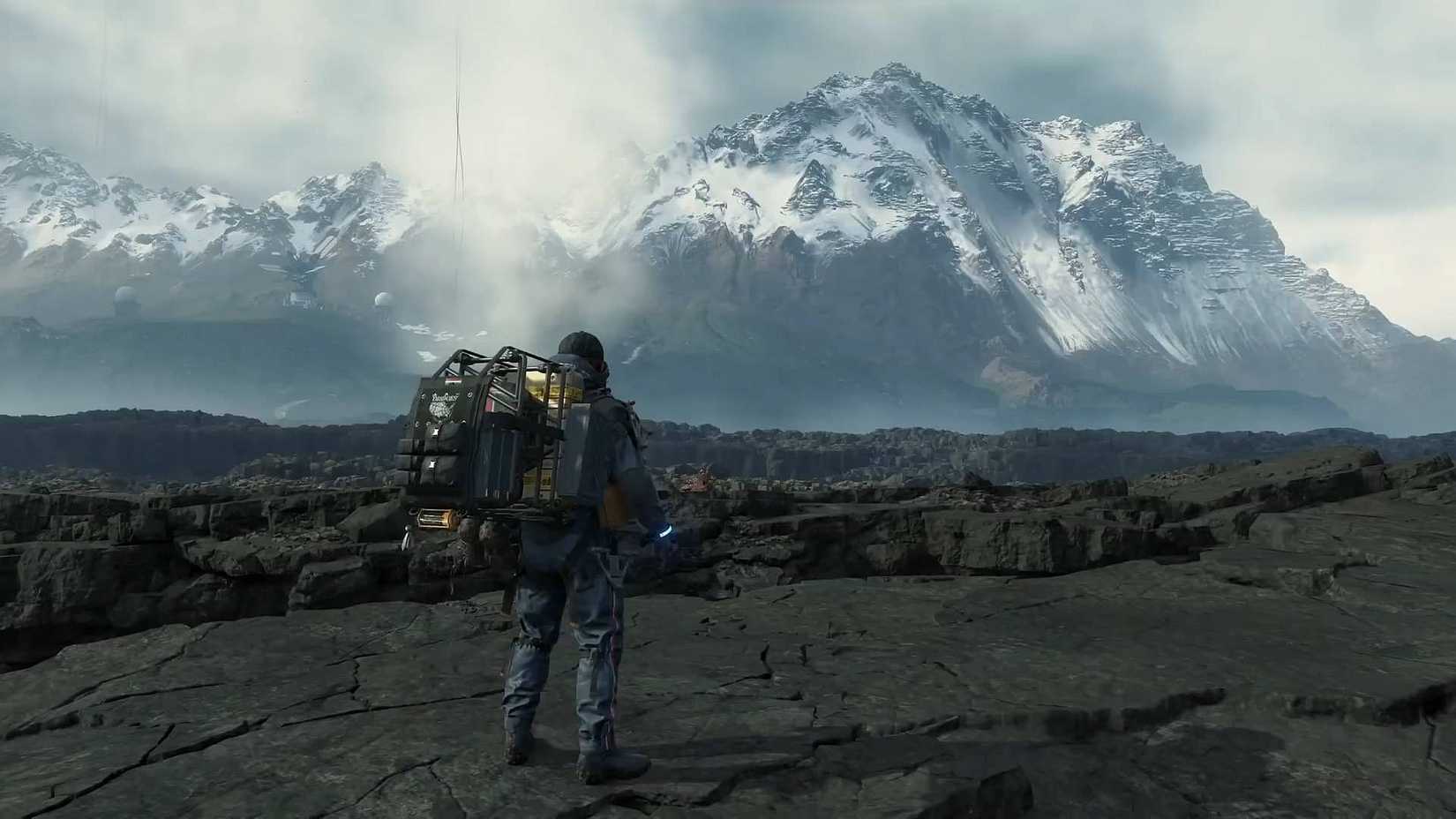
Death Stranding has reinvented the entire open-world genre with a single feature: carrying things somewhere difficult. I see this game's terrain not simply as scenery to run past, but as the primary obstacle that forces you to actually plan routes, balance loads, and feel every hill as a real backpacker would.
It has asynchronous multiplayer, which means that while you won't meet other players, you'll see and be able to use their structures, such as bridges, zip-lines, shelters, and ladders. For me, this gameplay element is quietly reinventing the whole single-player open-world experience, even though it was mocked as a "walking simulator" at launch.
1 Mercenaries: Playground of Destruction
Destroy Everything In Your Path

Mercenaries: Playground of Destruction
Interestingly, Mercenaries: Playground of Destruction actually offered you a playground for destruction, where you could destroy various structures in its open world by calling in airstrikes or artillery, or by striking them with your tank. This meant that the game treated destruction as a basic element of the gameplay, something that you should do as part of exploration.
This pioneering idea of an open world defined by what you can blow up rather than what you can walk into shaped later releases like Battlefield: Bad Company and Teardown. However, Mercenaries: Playground of Destruction is rarely cited as a game that brought anything new.




![ELDEN RING NIGHTREIGN: Deluxe Edition [FitGirl Repack]](https://i5.imageban.ru/out/2025/05/30/c2e3dcd3fc13fa43f3e4306eeea33a6f.jpg)
 English (US) ·