.png)
.png) 2 months ago
17
2 months ago
17


Published May 18, 2026, 1:56 PM EDT
Daniel Trock is a Writer at DualShockers specializing in PC games, lists, and reviews. He has been writing professionally since 2018 and covering games since 2020, with previous work spanning guides, news, lists, and reviews across multiple publications.
Before joining DualShockers, Daniel contributed guides to GamerJournalist and lists to TheGamer. He currently covers tech topics for SlashGear and BGR. He holds a Bachelor’s Degree in Psychology from Marist College and a Master of Fine Arts in Creative and Professional Writing from Western Connecticut State University.
Sign in to your DualShockers account
Some of my very earliest memories, gaming-related or otherwise, have Pokémon in them. Whether it’s playing the games, watching the first few episodes of the anime, or hugging an oversized Pikachu plushie, Pokémon was ever-present in my childhood. It wouldn’t be unreasonable to say I’ve grown up alongside this franchise, and while I’ve had my ups and downs with it, it has always maintained a very important place in my heart.
 Related
Every Mainline Pokemon Generation, Ranked By Story
While the Pokemon games are more known for their characters and mechanics, it doesn't mean there aren't some great stories in there.
With the games in particular, some Pokémon titles have had more of an impact on me than others. Obviously, I haven’t played every single Pokémon game out there, but of the ones I have played, some have had a distinct, formative impact on me, one that only comes into sharper contrast as I’ve gotten older. Say what you will about tying a part of your identity to an IP, but I think it would be disingenuous to act like Pokémon’s existence hasn’t amounted to anything more than cheap entertainment and merchandising.
10 Hey You, Pikachu!
I Miss My Talking Pikachu Plushie

For about as long as I’ve been into Pokémon, I’ve had an enduring desire to befriend every Pokémon in existence, even the gross and annoying ones. It was right there in the anime soundtrack: “you will always be my best friend.” The closest I ever got to that in reality was an electronic Pikachu plushie that would babble through a voice box, but in games, Hey You, Pikachu got me a little bit closer.
Both for its time and especially by today’s standards, Hey You, Pikachu’s voice-recognition system was… janky, to put it politely. Pikachu could parse maybe one-in-three things you said to it, and even if it heard you, it could just decide to ignore you. Even so, it was a moving, acting Pikachu that you could interact with in a semi-tangible capacity for adventures that had nothing to do with battling. It was a teensy little peek at what it would be like to live with a Pokémon partner, and since Nintendo’s never really done this concept again, it’s the only one you could ever get.
9 Pokémon GO

Something I’ve always found charming about the Pokémon setting is how much its humans adore Pokémon. They’re not just pets or tools for battling; humans and Pokémon compliment each other, forming the basis for a Pokémon-centric community that brings out the best in all involved parties. Perhaps it’s idealistic to think our world could ever be the same, even if Pokémon were real, but I feel like we got the briefest glimpse of that possibility when Pokémon GO first launched.
Pokémon GO didn’t just get people out of their houses to look for imaginary monsters, it united these people in common purpose and interest. Complete strangers met up in the streets, laughing and playing and sharing their love for Pokémon with each other. Some took it a little too far, like painting graffiti of one of the three trainer teams, but other players took efforts to clean it up and make a good image. I don’t play Pokémon GO anymore, but I still think its community is wonderful for what it’s created.
8 Pokémon Mystery Dungeon: Red/Blue Rescue Team
A New Kind of Adventure

Pokemon Mystery Dungeon: Red Rescue Team
Inversely to Pokémon GO, the original Pokémon Mystery Dungeons posited something we hadn’t really considered before: what is a world of Pokémon without the human element? The anime had dabbled a little with this with human-lite episodes like “Island of the Giant Pokémon,” but hadn’t really gone in-depth on it. Mystery Dungeon not only answered that question, but ironically, built itself around a distinctive human element, i.e. you, the player.
The game’s initial hook is that you’re a human who has been isekai’d into a Pokémon-centric world (where humans are still a thing, somehow), complete with a Pokémon body reflective of your personality. Everyone liked to talk about which Pokémon they’d want to be, but this game actually turned that into a tangible gameplay mechanic, letting you meet and bond with Pokémon on their own terms rather than the usual human-and-Pokémon dynamic. It’s a very interesting concept that we wouldn’t see outside the Mystery Dungeon games until Pokopia.
7 Pokémon Snap
In 3D for the First Time (in the West)

If you want to get technical about it, Hey You, Pikachu is the first 3D Pokémon game, having been released in Japan in 1998. However, we in the States didn’t get it until 2000, before which Pokémon Snap got to stake its claim on our Nintendo 64s in 1999. Honestly, I think that order is a little better, because Pokémon Snap was a fascinating way to see these kooky creatures in full 3D for the first time.
Compared to the modern 3D Pokémon games, the Pokémon you see in Pokémon Snap are obviously much more blocky and fuzzy due to their simpler, lower-resolution models. However, the thing about those older graphical standards is that they forced developers to take extra pains to really bring their creations to life, and that’s what they did. There’s a certain “casual liveliness” to the Pokémon in Snap that you don’t see in the mainline games, more fluid and less mechanical. They look like they’ve just been going about their days in the wild, rather than just waiting around for you to show up before they can start acting like living creatures. As a kid, that was absolutely magical.
6 Pokémon Stadium
Your Pokémon, Fully Realized

While Pokémon Snap beat Pokémon Stadium to the punch by a little less than a year, clinching the title of “first 3D in the west,” Pokémon Stadium had one major differentiating factor: the hardware component. Specifically, every new copy of Pokémon Stadium came with an N64 Transfer Pak, a little doodad you could latch onto your N64 controller and plug in a Pokémon Game Boy cartridge. This allowed you to copy your Pokémon from your Game Boy games and bring them to life for battles in Stadium, as well as play your Game Boy games on your TV screen.
 Related
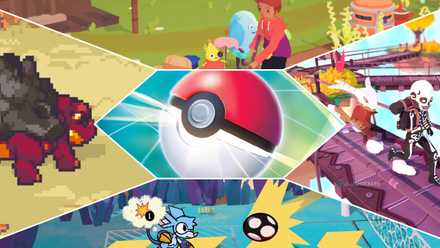
9 Best Indie Game Pokémon Alternatives
Gotta catch 'em all, even if the "'em" aren't necessarily Pokémon.
Besides being very convenient and innovative for its time, it added a very personal touch to what was otherwise a very straightforward Pokémon battling simulator game. These weren’t just any old Pokémon battling in 3D, they were your Pokémon, fully realized in 3D after a lengthy adventure in 2D. It was my Blastoise, my Mewtwo, no one else’s. Just being able to use your own lovingly-raised Pokémon to battle through the Stadium and Gym Leader challenges made it feel all the more endearing, and it's that same framework that's propped up newer games like Pokémon Champions.
5 Pokémon X & Y
A Proper 3D Adventure

While Pokémon spin-offs and other media had been noodling around with 3D for a good while, the mainline Pokémon games actually took a while to get there themselves. The DS games had 3D environments, which was cool, but the character and Pokémon models remained 2D sprites. It wouldn’t be until the release of Pokémon X and Y on the 3DS that the main series would finally go 3D.
Pokémon X and Y were one of the main reasons I even bothered to buy a first-wave 3DS, sitting on it for months with no other games to play. While its overall gameplay was functionally the same as the 2D games, just getting a combination of 3D environments and character models, not to mention characters who weren’t all squashed down, made the adventure feel like it was much larger in scope than usual. You weren’t just bumming around textured maps, you were walking through a tangible world (that still happened to follow a mostly-linear layout, but still). X and Y were also the games that gave us Pokémon-amie, the bonding and petting system that brought us closer to that Pokémon friendship I mentioned earlier, a feature I really wish could be spun off into its own game.
4 Pokémon Omega Ruby & Alpha Sapphire
Validation through Timeline Shenanigans

Pokemon Omega Ruby and Alpha Sapphire
Okay, I’m gonna lose some street cred for this one, but here it is: I didn’t play the Gen 3 games as a kid. I was going through my lame “Pokémon is for babies” phase and tried to convince myself I wasn’t into it anymore, so I skipped ‘em. I always regretted that after I got back in on Gen 4, but I never really had a good opportunity to rectify my mistake until the release of Omega Ruby and Alpha Sapphire on the 3DS.
Besides being a major overhaul in graphics, gameplay, and overall content density, ORAS helped me to understand what people liked about this particular generation of Pokémon so much, from the Mons themselves to standout characters like Maxie and Flannery. I’ll never forget the incredible Metagross v. Metagross duel I had with Steven Stone. Plus, for those who actually played the originals, the addition of the Delta Episode and its references to alternate timelines helped to kind of pull the burgeoning Pokémon multiverse together, which is cool in a cosmic sort of way.
3 Pokémon Crystal
The First Enhanced Version

The first Pokémon games were a duo primarily. Yeah, there was Yellow version, but beyond the Pikachu thing, it was functionally the same as Red and Blue; no real reason to buy it if you already played those. However, the second generation of Pokémon threw us a curveball. At first, it seemed like Gold and Silver would be a standalone pair, but then Crystal rolled onto the scene and changed the rules.
I distinctly remember believing Crystal was just a myth for how much everyone talked about it, yet how little was known about it. It was the first late-stage third game, a practice that would become normalized in the next two generations, featuring both major gameplay and graphical changes. It shared a lot of content with Gold and Silver, sure, but there was also enough there to warrant playing it separately. Heck, being one of the few kids to own either Gold or Silver and Crystal made you the envy of everyone on the playground. I know I felt envious.
2 Pokémon HeartGold & SoulSilver
A Monumental Overhaul

The first remakes of mainline Pokémon games were FireRed and LeafGreen, which were Game Boy Advance versions of the original Pokémon duo. Those games added a lot of improvements, but were still fairly similar to their sources. The remakes of the Gen 2 games on the other hand, Pokémon HeartGold and SoulSilver, were on another wavelength entirely. By this point, the franchise had been in full swing for over a decade, and those of us who were old enough to start getting nostalgic got to experience these classic titles in their full splendor.
While HeartGold and SoulSilver preserve most of the basic gameplay and story beats of their originals, they added a mound of new stuff, both new for the originals and new for Pokémon as a whole. Chief among these new features was the ability to have your Pokémon follow you anywhere in the world, which was previously exclusive to Yellow version and used in only a limited capacity in Diamond and Pearl. The bundled-in PokéWalker pedometer was also pretty nifty, almost like a prototypical version of Pokémon GO that encouraged players to hang out outside.
1 Pokémon Red & Blue
You Know Why

Yeah, you knew this was going to be here. Frankly, it’d be weird if it wasn’t. Pokémon Red and Blue were the games that started it all, the proverbial spark that lit the fire of the 90s PokéMania. Kids loved it, parents hated it, and merchandisers big and small made the maddest bank you’ve ever seen off of it. I love a variety of different Pokémon games, of course, but Red and Blue? Those are my games. Never cite the deep magic to me, because I was there when it was written.
It’s honestly remarkable how well the original games hold up in a vacuum. Yeah, they don’t have all the extra quality-of-life features or gameplay tweaks, but as a simple creature-collecting JRPG, they have a very distinctive secret sauce that even modern indie creature collector games just can’t quite seem to capture perfectly. They’ve got such a deviously simple core gameplay loop, absolutely anyone can get into it. If I still had my old Game Boy Color and, y’know, didn’t have a day job, I’d still be playing them constantly.
 Next
Next



![ELDEN RING NIGHTREIGN: Deluxe Edition [FitGirl Repack]](https://i5.imageban.ru/out/2025/05/30/c2e3dcd3fc13fa43f3e4306eeea33a6f.jpg)
 English (US) ·