.png)
.png) 6 months ago
85
6 months ago
85


Published Jan 29, 2026, 3:27 PM EST
Daniel has been playing games for entirely too many years, with his Steam library currently numbering nearly 750 games and counting. When he's not working or watching anime, he's either playing or thinking about games, constantly on the lookout for fascinating new gameplay styles and stories to experience. Daniel has previously written lists for TheGamer, as well as guides for GamerJournalist, and he currently covers tech topics on SlashGear.
Sign in to your DualShockers account
Out of all the sixth-generation game consoles, I think we can all agree that the PlayStation 2 had the hottest run in the era. It had some of the best games of the early 2000s with wide-reaching appeal across demographics and genres. Thanks to that acclaim, more than a few of those titles have been rescued from the proverbial scrap heap in the form of remasters, touching up graphics and gameplay and ensuring current gamers can still enjoy them.

Related
10 Best PS2 Games Ever Made, Ranked
From Resident Evil 4 to Shadow of the Colossus, these are the best games ever to release on PlayStation 2.
The downside of the PS2 having so many great games is that more than a few of those titles have gone by the wayside, left to languish inaccessibly to any who might be interested in them today. Some of them have managed ports or additions to virtual libraries, but these aren’t always the ideal ways to play these games, assuming the ports themselves are even still accessible. If I had it my way, these are the PS2 games that are most in need of the remaster treatment, preferably a multi-platform one.
Just to stress the point, we’re specifically talking about remasters with tangible improvements to gameplay and/or graphics. Ports do not count, especially if the port in question is not currently available for purchase.
10 God Hand
The Most High-Impact Character-Action Game
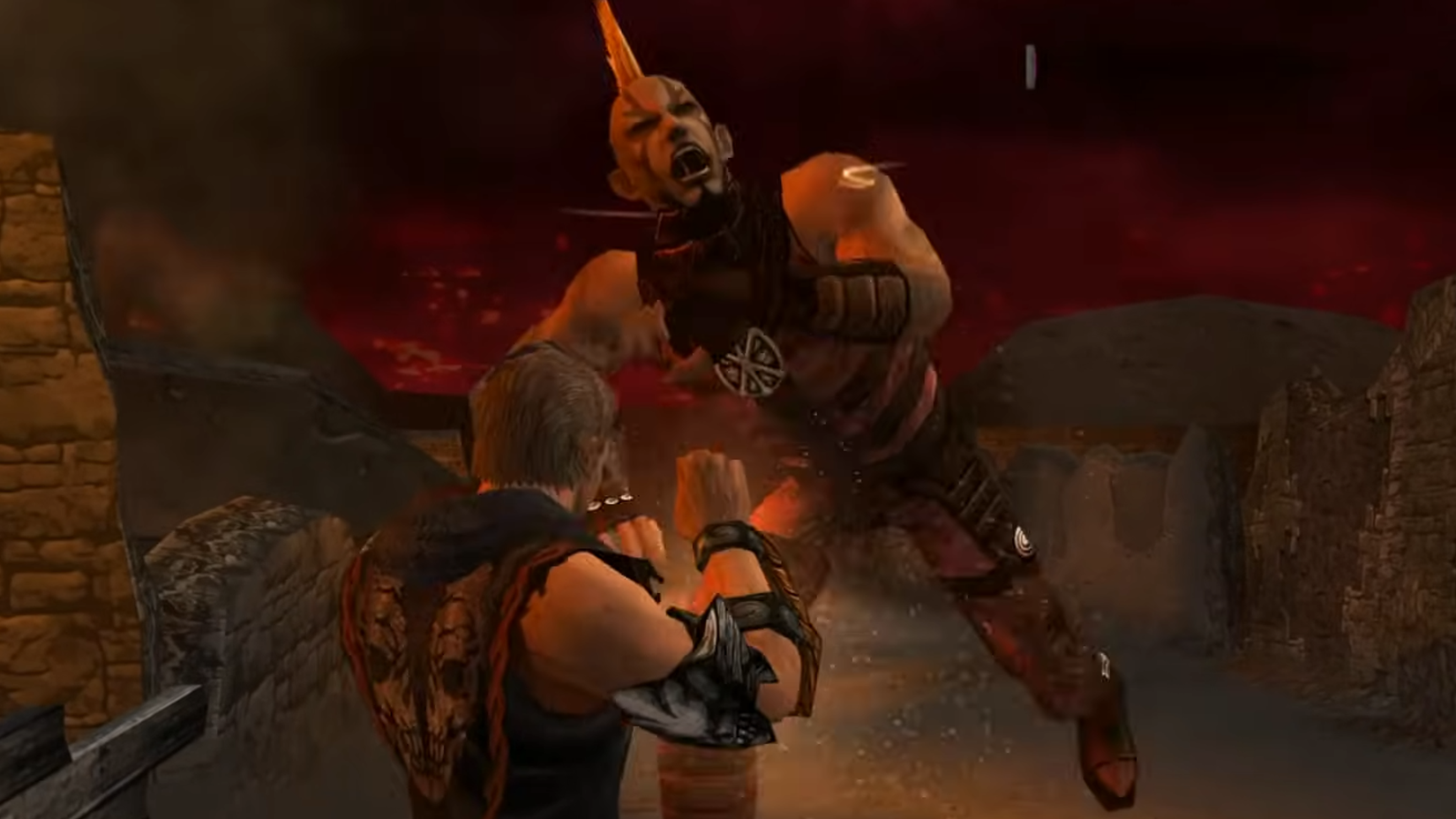
In the early-to-mid 2000s, Capcom subsidiary Clover Studio was focused on cranking out new and unusual action and adventure games like Viewtiful Joe and Okami. The studio would ultimately be dissolved in 2007, but not before producing one last game, a character-action game utterly unlike any other ever made before or after: God Hand.
God Hand is essentially what you get when Shinji Mikami is allowed to operate with little-to-no limitations, an action brawler made with the most hardcore enthusiasts in mind. The game follows a martial artist named Gene who, after having his arm lopped off, is blessed with the powers of the ancient God Hand to become a demon-busting superhuman. It has a similar over-the-shoulder perspective to games like Resident Evil 4, but it’s all in-your-face melee combat, punctuated by Gene’s ridiculous Roulette moves.
God Hand is a very weird game with a very high bar of entry, so, unsurprisingly, it didn’t sell that well. However, those who know and respect Mikami’s work regard it as a hidden gem, and it was long hoped it would get the remaster treatment during Platinum’s heyday. It didn’t, sadly, but maybe the reformation of Clover as Clovers might give us a chance.
9 Mega Man X: Command Mission
Turn Down the Encounter Rate, and We’re Golden

Mega Man X: Command Mission
The Mega Man franchise has dabbled at least a little in just about every genre you can think of. RPGs, in particular, are largely the territory of the Battle Network series. However, there was one other Mega Man RPG that often goes by the wayside, Mega Man X: Command Mission. It’s one of those games you either never forgot about or were completely unaware it existed.
Taking place at an indeterminate point in the Mega Man X timeline, X, Zero, and Axl are sent to an island city that’s under attack by a rebellious band of Maverick Reploids, picking up a few allies on the way as they both battle them and uncover what it is they’re actually after. It’s not the deepest story, but it does have some great characters, especially the original party members like Massimo and Cinnamon.
It’s a turn-based RPG with a big emphasis on unique character abilities, from X’s AoE charge shot to Zero’s input-based sword combos. The combat’s fun, and there’s some great boss fights; the only major overhaul a remaster would need is to turn down the infamously high random encounter rate. Seriously, every four steps with this game, like clockwork.
Robotic Rampage

Metal Arms: Glitch in the System
The sixth generation was the last one before online multiplayer really took center stage, which means split-screen deathmatch shooters were still very much in vogue. There were plenty of excellent PS2 multiplayer shooters, even if you could only have two players without a multitap, though a favorite amongst my childhood friends and I was Metal Arms: Glitch in the System.
Metal Arms is a third-person shooter in which the titular Glitch joins an army of Droids to wage war against the militant Milbots, with lasers and explosives flying all over the place in a series of gradually escalating levels. It’s a pretty fast-paced game, with Glitch’s double jump letting him hop all over the place and various rideable vehicles increasing your mayhem potential.
The game’s signature gimmick was the Control Tether, which allowed you to hack into and control Milbots to turn them against each other. This was a hoot both in single-player and the highly-replayable multiplayer, with the latter also taking place on large, multilayered maps, perfect for ambushes. I think a remaster with online multiplayer would do fantastic in the modern age, preserving that classic weekend deathmatch vibe.
7 Ape Escape 3
Transformation Makes Everything Better

Did you know Ape Escape is supposed to be one of PlayStation’s major mascot franchises? That’s why it got an entire dedicated segment in Astro Bot. You wouldn’t think so, though, considering there hasn’t been a new mainline game since 2005. Frankly, I think all three of the mainline games could use modern remasters, but if I had to pick one, and specifically from the PS2, it’d be Ape Escape 3.
Ape Escape 3 uses the same core gameplay loop as the first two games: you have a long, mildly nonlinear level to explore, full of mischievous monkeys that you need to capture with your net. Along the way, you solve environmental puzzles with various gadgets and occasionally get into a scrape with a powerful enemy or boss monkey. It’s colorful, it’s silly, and it’s lighthearted, a perfect game for younger players.
Where Ape Escape 3 differentiates itself, and this is why I love it, is in its Transformation mechanic. Using a special meter, your character can transform into a growing list of superpowered forms, from a knight with impenetrable defenses to a cowboy with dual pistols. It’s an extra layer of combat and puzzle-solving potential I appreciate, plus every transformation comes with its own catchy theme music.
6 Gitaroo Man
The First Soundtrack I Ever Imported

The fifth and sixth console generations were the prime age of rhythm games, with titles like Parappa the Rapper and Space Channel 5 busting a move before Guitar Hero oversaturated the market. During that particular age, Koei released a little rhythm game called Gitaroo Man, which still holds honors in my heart for one of the best gaming soundtracks ever.
Gitaroo Man uses a two-pronged, three-phased music battle system. You start a song by matching the trace line, strumming your guitar to build up health. In the Attack/Defense phase, you keep playing to damage your enemy, and when they attack, you hit the incoming face buttons to dodge it and preserve your health. If you make it to the last phase, you bring it on home with a thunderous solo. It’s got a bit of a learning curve to it, but when it all comes together, it’s incredibly satisfying.

Related
10 Weirdest PS2 Games Of All Time
The PlayStation 2 was home to some of the strangest games of its generation, if not all time.
Gitaroo Man did get a PSP port, Gitaroo Man Lives, which dialed down the difficulty a bit and added two new songs for co-op play. That was a great port, but unfortunately, much like the PS2, the PSP is dead and buried, so we still need a remaster to rescue this wonderfully weird rock opera from the junkyard.
5 Fatal Frame
What’s With Horror Franchises and Skipping Entries?

The Fatal Frame series of survival-horror games is gradually making a comeback, particularly with the remake of Fatal Frame 2: Crimson Butterfly. That’s nice and all, but in the same vein as Silent Hill 2 getting revived before the first game, why is the original Fatal Frame being left to languish while its sequels get preferential treatment? It ain’t right, I tell you.
The original Fatal Frame, released back in 2001, pioneered the concepts and vibes prevalent throughout the rest of the series. It follows an unfortunate young lady named Miku who visits an extremely haunted mansion in search of her sister Mafuyu, dodging ghosts and specters as she searches for clues to the mansion’s curse. Her sole weapon is the Camera Obscura, a supernatural camera that can capture ghosts, but only if they’re right in front of her and in center-frame.
Compared to its sequels, the original Fatal Frame had some awkward design choices that often accompany the first entry in any given series, horror especially. A remaster would sand down those sticking points while ensuring this important piece of the horror genre is properly preserved.
4 Def Jam: Fight for NY
Worth Enduring the Licensing Nightmare

I don’t claim to know the whole process that goes into licensing music and musicians for video games, but I can’t imagine it’s a simple one. It’s bad enough just trying to get rights for soundtrack stuff, but if the game itself is music-centric, it’s sheer pandemonium. If any game is worth surmounting that kind of nightmare for a remaster, though, I think it’s Def Jam: Fight for NY.
This underground fighting game assembles some of the biggest names in the mid-2000s hip-hop scene like Snoop Dogg, Ice-T, and Ghostface Killah, and has them beat the absolute snot out of each other. It was developed by Aki, who knows a thing or two about putting a wrestling game together, so it’s got a very intuitive, easy-to-pick-up fighting system combined with awesome, flashy special attacks.
The game is also noteworthy for its surprisingly fun single-player campaign, centered around a story in which your custom character becomes an underground fighting champion and goes toe-to-toe with Snoop Dogg. Seriously, the campaign’s last fight is against Snoop Dogg in a burning building. It’s awesome. Securing all of these rappers’ likenesses would be an undertaking, but I know there’s an audience for it.
3 Marvel: Ultimate Alliance
Speaking of Licensing Nightmares…
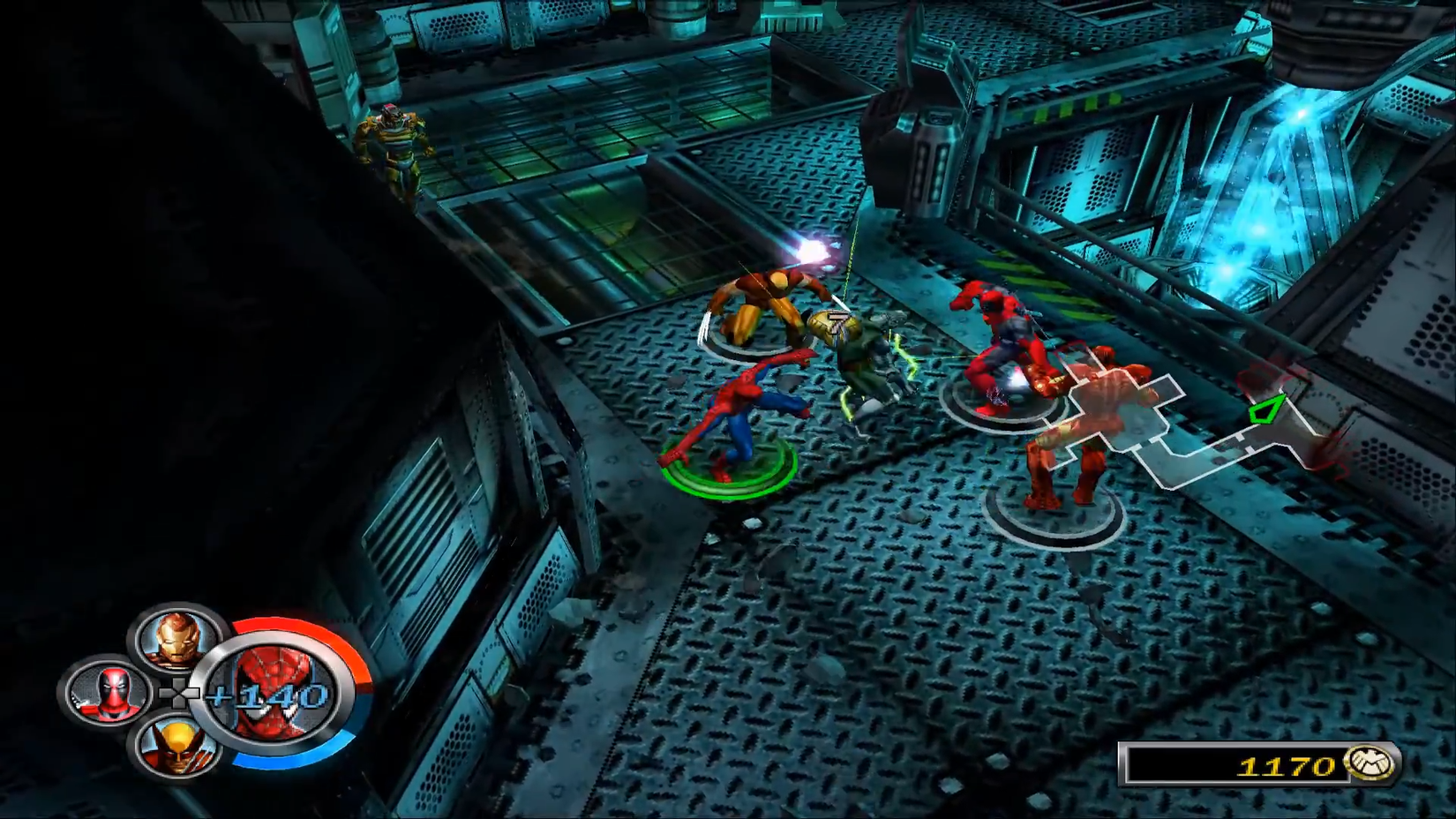
PlayStation may have a pretty strong grip on Marvel-related gaming matters these days, but back in the early 2000s, it was every hero for themselves. Marvel licensed its characters out to pretty much every developer and publisher that would have them, creating a tangled web of licensing that no game could escape from. This, presumably, is why we’ve never gotten a proper remaster of Marvel: Ultimate Alliance.
Marvel: Ultimate Alliance is a dungeon-crawling action RPG, in which you assemble a team of four Marvel heroes (or some villains) to battle baddies from across the comic spectrum and unravel a master plan perpetrated by Dr. Doom. It’s kind of like a simpler version of Diablo; less stats and character-building, more action and special attacks, though you can still level up and build out characters to an extent.
Ultimate Alliance got a very late-stage port to PS4, Xbox One, and PC via Steam in 2016, though this port was notoriously very buggy and low-quality. Even if you still wanted to play it, it got delisted in 2018 due to licensing kerfuffles with Activision. If we could get an actual remaster with actual improvements that won’t get sniped in two years, that’d be lovely, thanks.
2 Shin Megami Tensei: Digital Devil Saga
If Nocturne Can Have One, Why Not?

Shin Megami Tensei: Digital Devil Saga
While the Megami Tensei franchise dates all the way back to 1987, it was on the PS2 when it really started hitting the big time, especially in the west with games like Nocturne and Persona 3. During that era, there was another MegaTen spin-off that made a strong name for itself, Digital Devil Saga, but unlike Nocturne and Persona 3, it still remains trapped.
Like its parent franchise, Digital Devil Saga is a JRPG focused on battling demons with demonic might of your own, as well as MegaTen’s signature Press Turn system for targeting weaknesses. The difference from the likes of Nocturne or Persona is that your characters are the demons themselves, transforming into demonic form when battle starts and empowering their stats by devouring weakened foes.
The story of this game is admittedly a bit hard to parse, heavily steeped in themes of Hinduism and karma, but that just helps to make it more distinct from its contemporaries. It certainly shows, as the game was received very well in its time, and there’s plenty of demand for its return now that MegaTen is a more widely-known franchise.
1 Dragon Quest VIII: Journey of the Cursed King
Trapped on the PS2 and 3DS

While Dragon Quest is an institution over in Japan, the series never did quite the same numbers here in the States, at least for its earlier entries. However, that started to change with the release of the eighth mainline entry, Dragon Quest VIII: Journey of the Cursed King, which is largely regarded as not only one of the best games in the series, but one of the best JRPGs on the PS2, period.
As with most Dragon Quest games, VIII is a fairly straightforward hero’s tale, in which a silent dude and his bandit friend aid a king and his daughter who have been cursed by a mischievous sorcerer. The simplicity of the setting is what gives the game its charm, aided by an excellent localization with hilarious writing. Combat is also very traditional, though the Tension system allows characters to periodically enter powered-up states and unleash high-powered, situational techniques and spells.
Dragon Quest VIII received a port to the 3DS in 2015 in Japan, then in the U.S. in 2017. This port added a lot of new content, including new story events and more party members, though the graphical quality took a hit. Not that it matters, since the 3DS is also dead and buried, rendering this excellent game once again inaccessible. Hey, VII just got its full remake, maybe VIII’s next on the docket?


![ELDEN RING NIGHTREIGN: Deluxe Edition [FitGirl Repack]](https://i5.imageban.ru/out/2025/05/30/c2e3dcd3fc13fa43f3e4306eeea33a6f.jpg)
 English (US) ·