.png)
.png) 5 months ago
54
5 months ago
54


Published Feb 26, 2026, 3:43 PM EST
Daniel has been playing games for entirely too many years, with his Steam library currently numbering nearly 750 games and counting. When he's not working or watching anime, he's either playing or thinking about games, constantly on the lookout for fascinating new gameplay styles and stories to experience. Daniel has previously written lists for TheGamer, as well as guides for GamerJournalist, and he currently covers tech topics on SlashGear.
Sign in to your DualShockers account
I’ve heard people say that, compared to just a couple of console generations ago, games are generally easier than they used to be. That’s partially true, but it also goes a little deeper than that. These days, the proliferation of specific sub-genres like Soulslike and roguelike help to make it a little clearer as to when you’re supposed to expect a game to be difficult. Back in the sixth generation, when the PlayStation 2 reigned supreme, we had no such quantifiers. If a game was hard, it was just hard.
Related
Whether due to oddly-implemented game mechanics or simply a cutthroat design philosophy, there was something of a bell curve of game difficulty that peaked with the PS2. “Quality-of-life” wasn’t really a concept yet, so if a game was too hard, you didn’t have any other recourse besides sucking it up and trying harder. As a result of this, there are more than a few PS2 games that have amassed a reputation for being punishingly difficult, to the point that players would wear visible grooves into their controllers with their nails out of frustration. Or their teeth, on occasion.
10 Gitaroo Man
Almost as Hard as Actually Learning Guitar

You know what stinks about recommending obscure games to people? When the game in question is notably difficult, which makes it even harder to get the person you’re recommending it to past the initial trepidation stage. That, at least in part, is why I can’t seem to get anyone on board with my love of Gitaroo Man.
Gitaroo Man’s back-and-forth rhythm game formula isn’t that complicated at a glance. You follow the trace line with the joystick and tap a face button in time with the beat to lay down riffs, occasionally switching to tapping all four face buttons to dodge incoming enemy beats. Rather than the mechanics of it, the punishing part is in the timing and precision. If you nudge off the trace line just a little bit, or tap a dodge button just a bit too early, it’s a total miss, and either deal no damage or take maximum damage.
This is brutal enough on the early, slow-paced songs, but by the end of the game, you’ve got notes flying at you with borderline no rhythmic pattern whatsoever. Don’t even get me started on the post-game Master mode. I adore this game, but it does not make it easy for me.
9 Manhunt
Hope You’re Good at Pattern Recognition
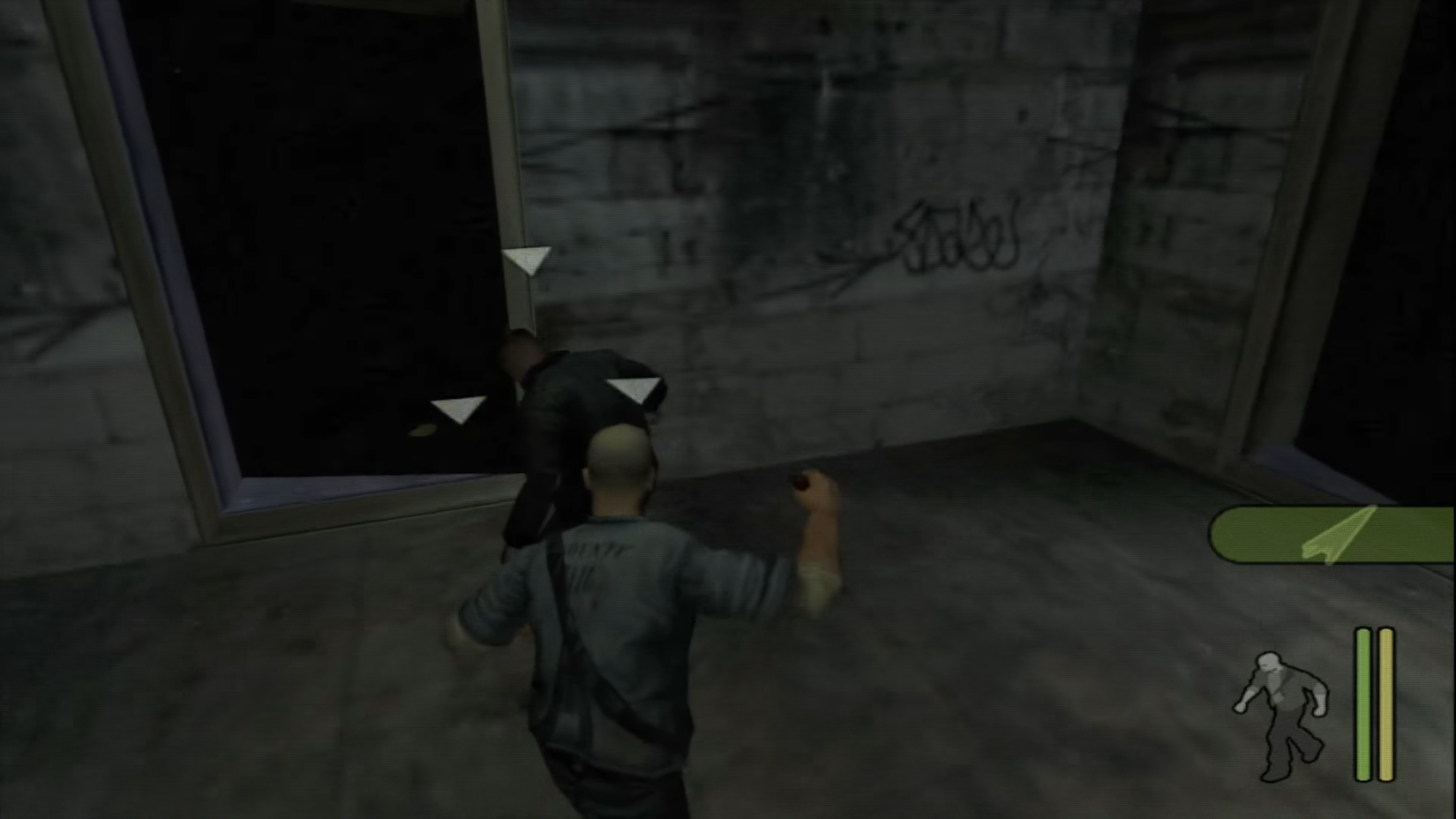
Stealth games are some of the hardest games out there, largely because they run on a particular logic that runs counter to that of most action games. They encourage subtlety, patience, and pattern-recognition, perhaps none moreso amongst the PS2 library than the infamous cult classic Manhunt.
Manhunt is a stealth action game where you’re not necessarily defenseless, but still encouraged to keep out of sight. You need to either lure enemies to your position or sneak up behind them, with both approaches culminating in a stealth execution. Enemies can’t see you in the dark, but that only applies if you enter dark areas undetected. Once you’re spotted, it can be very difficult to get un-spotted.
Manhunt only has two difficulty levels, and you’re kind of indirectly encouraged to play on the harder of the two, since you can’t score top marks on the easier setting. In the harder difficulty mode, you don’t have a radar, so you can only determine who’s around you from pure sight and sound. Enemies do move in particular patterns, so with enough do-overs, any stage can be beaten. Doesn’t mean those do-overs aren’t brutal, though.
8 Stuntman
“It’s a Pretty Standard Stunt.”

|
Reflections Interactive |
|
PS2 |
|
June 2002 |
I don’t claim to know anything in particular about stunt driving, but I think it’s a pretty safe assumption that it’s a dangerous, intensive line of work. I guess it makes thematic sense, then, that a game specifically about stunt driving like Stuntman would feel equally as intense.
Success in Stuntman is dictated by your ability to complete a series of driving stunts on closed courses, delivered to you through both visual and audio cues. It sounds very simple on paper, but there is absolutely no margin of error here. If you don’t perform a particular stunt to a game’s exact specifications, even if you miss a measurement by a hair, that’s an instant fail and restart.
This is not a game you can play while your friends are having a casual conversation in the same room. You need to be tuned in at all times to get the stunt cues, and you need to react immediately, as the cues will often come in a split-second before you need to act on them.
7 Siren
Multitask or Die
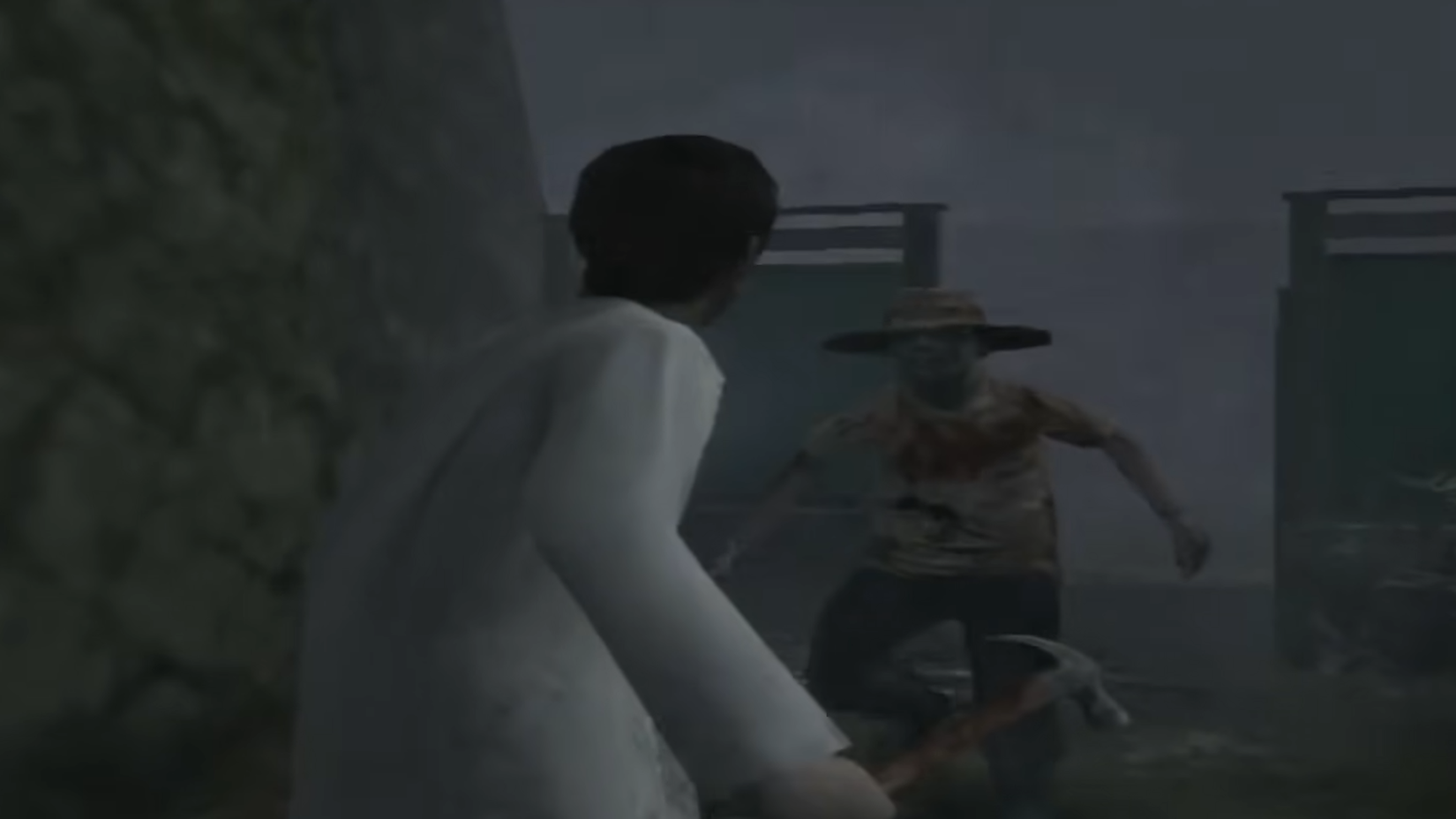
Broadly speaking, survival horror games fall into two major subgenres: stealth horror and action horror. In an action horror game like Resident Evil 4, you have ample means to defend yourself from assorted horrors, while in a stealth horror game, the priority is on avoiding conflict. The original Siren is a stealth horror game cranked up to the max, with game mechanics that exemplify this.
In Siren’s major gameplay segments, you’re often beset on multiple sides by incoming Shibito. You can technically defend yourself, but Shibito can’t be killed for good, always getting back up not long after being knocked down. Inversely, if you’re seen by a Shibito, they can beat you to death, shoot you, or grapple you, as well as alert other nearby Shibito to your presence. Basically, if you get spotted once, you’re pretty much doomed.
The game’s primary mechanic, Sight-Jacking, allows you to swap your screen up between your protagonist’s view and the views of nearby Shibito, providing a kind of indirect radar. This definitely helps you avoid lines of sight, but it requires some pretty hefty multitasking skills to keep all the different perspectives squared.
6 Maximo: Ghosts to Glory
A Worthy Successor to Ghosts ‘n Goblins

One of the most legendarily difficult games ever made was the original Ghosts ‘n Goblins, Capcom’s punishing medieval arcade platformer. That franchise has had its ups and downs throughout the years, though one of its lesser-known ebbs was its forgotten spin-off, Maximo: Ghosts to Glory.
Maximo is a fairly straightforward hack 'n slash game with some platforming elements. Like in its parent series, when Maximo takes damage, he loses his armor, gradually being whittled down to nothing but his undies. You do have a health bar to govern this, which is nice, but it’s segmented based on how many layers of armor you have. When you lose an armor layer, you lose a segment, and you can only get it back by finding another armor power-up.

Related
You have limited lives, and when they run out, you have to pay the Grim Reaper Death Coins for another go. Every time this happens, the price tag for a revive goes up, and if you can’t pay him off, it’s not just game over, it’s save over. Your whole save is deleted, and you have to start all over.
5 Contra: Shattered Soldier
Can You Keep Up?

Contra: Shattered Soldier
The classic run ‘n gun Contra games were never a bowl of cherries in the difficulty department, even back on the NES days, but they were mostly workable at least, especially if you had a co-op partner. Ironically, it was Contra: Shattered Soldier, a game that aimed to emulate the hallmarks of the classic entries, that pushed the envelope even further.
Shattered Soldier is a sidescrolling run ‘n gun game just like the classic Contras, albeit with the addition of the new swappable weapon and special shot systems, which give you a lot more flexibility in any given level. You’ll be glad you had these systems, because also, like the original Contra, Shattered Soldier is an arcade-style game that can only be beaten in one sitting, no saving allowed.
Additionally, the game has multiple endings, but the ending you get is largely determined by your skill in accurately shooting enemies and destructible objects. If you’re just spraying and praying, you’re not going to get a good ending. Maybe that’s less of a factor if all you care about is finishing the game, but if you’re a completionist, it’s grueling.
4 Shinobi
Being a Ninja is Hard Work

|
Overworks |
|
PS2 |
|
November 2002 |
The archetypal ninja is a ruthlessly-efficient assassin, the kind of dude who can drop into a room full of thugs and dissuade them all from being alive before any of them realize what happened. Of course, if you had to commit to that kind of work ethic 24/7, you’d probably get pretty burnt out. Imagine how Hotsuma feels in the 2002 Shinobi.
Shinobi is a 3D action-adventure game where you switch between swiftly navigating through linear levels and pummeling foes in designated arenas. Hotsuma’s sword is hungry for souls, and if you don’t feed it a steady diet from your victims, it’ll promptly eat his, so you need to kill enemies as quickly and decisively as possible, with little-to-no downtime.
It’s also worth noting that this game has no mid-level checkpoints. If you eat it out in the field, you’re starting the whole level over. The only exception to this is boss fights, which at least let you start from the beginning of the fight if you’re killed. No mid-boss checkpoints, but in the game’s defense, mid-boss checkpoints weren’t really a thing back in 2002.
3 Shin Megami Tensei: Nocturne
Matador Still Haunts My Nightmares

Shin Megami Tensei: Nocturne
JRPGs, by their nature, aren’t usually that difficult, at least compared to other major genres and subgenres. With the right equipment and enough grinding, just about any hurdle can be theoretically overcome. However, the mainline Shin Megami Tensei games, particularly the PS2’s Nocturne, are a bit of an outlier in that regard.
Nocturne was the first game in the series to introduce the Press Turn system, wherein striking enemy weaknesses would give you bonus turns and protecting your own weaknesses would rob enemies of their turns. Taking advantage of this system requires a very carefully-curated kit of skills and demon helpers, as well as a bit of sleuthing in any given fight to determine what your foes are weak against.
The hitch is that in any fight, random or boss, a precision strike to one of your allies' weaknesses or a critical hit can completely throw your strategies out of whack, as one good shot can be enough to instantly kill. Some bosses, like the infamous Matador, will buff themselves to dodge or resist your attacks, preventing you from getting a foothold in the fight while they wipe you out. It can be overcome, but it requires more experimentation and labbing than raw grinding.
2 God Hand
Shinji Mikami’s Wild Ride

One of the bedrock elements of the character-action subgenre of games is stringing together combos into elaborate dances of death and destruction. Legendary director Shinji Mikami understands this quite well and refined the approach throughout his career, though arguably, the game where he really got to take his blinds off and go hog wild was God Hand.
God Hand features a surprisingly in-depth combo assembly system, allowing you to both unlock new moves as you progress and string them into programmed combo sequences. Of course, since the game gives you this much freedom with your fighting style, it has no hangups about pummeling you within an inch of your life at every available opportunity. That’s literally how the game’s dynamic difficulty system works: the better you play, the harder it gets.
While the early-game enemies are content to fight solo, as you progress, they’ll start ganging up on you and attacking from behind or at a distance. Most of your regular moves are meant for direct engagement, so all you can do is dodge out of the way and try to rebuild your combo, at least until you can use one of your Roulette Moves to blast them from far away.
1 Devil May Cry 3
“Easy Mode is Now Selectable”

Devil May Cry 3: Dante's Awakening
Speaking of character-action games, Devil May Cry has long served as the poster child of the entire genre. Nobody knew how to dispatch demons swiftly and efficiently like Dante, after all, and nowhere was this clearer than in Devil May Cry 3. Of course, the game’s hype moments aren’t the only thing that gave it its enduring reputation; the difficulty also helped things along.
Unlike a lot of action games at the time, Devil May Cry 3 doesn’t give you much in the way of invincibility frames when Dante takes damage. If you just stand there gormlessly, most enemies can completely wipe out your health bar in a few quick swipes. You have to be constantly moving, constantly attacking, and constantly aware of everything around you so you don’t get sucker punched into oblivion.
You wouldn’t know if you’ve only played the re-released versions of the game, but it used to be even harder than it is now. In the original PS2 release, you couldn’t revive with Gold Orbs and you could only switch Styles at checkpoints. Apparently, the hard mode in the Japanese release was set as the normal mode in the western release, because… I guess Capcom assumed we wanted it that way?
Next






![ELDEN RING NIGHTREIGN: Deluxe Edition [FitGirl Repack]](https://i5.imageban.ru/out/2025/05/30/c2e3dcd3fc13fa43f3e4306eeea33a6f.jpg)
 English (US) ·