.png)
.png) 1 hour ago
2
1 hour ago
2
If you ask me, it isn't just the heroes that define a great JRPG, but also their villains. For a JRPG to stick with fans, you need more than just a go-getting protagonist who demonstrates what it means to be a hero. No, you need to give them a powerful emotional foil that establishes what our hero could become if the right circumstances aligned. In some cases, this means the villain ends up being far more compelling than the main character we play as for over 100+ hours.
This isn't to say that in these cases the JRPG hero is bad or uninteresting; that'd be far too subjective a claim for me to make. But it's this electricity whenever you see the villains in a scene that cements them as an immediate presence, and when they leave, you secretly wish they'd come back and monologue just a bit more.
To my surprise, several iconic villains from modern-day JRPGs mostly stem from the same console generation, that being the (arguably) underrated PS4.
That's why, for today, we'll be diving into the 10 best PS4 JRPG villains who ended up becoming far more compelling than the heroes of the game.
10 Persona 5 Royal
Maruki

Persona 5's original villain, Yaldaboath, was admittedly a fairly weak and curveball villain. Thankfully, Persona 5 Royal redeems itself by introducing Maruki as a foil to Joker and a surprise villain in the third semester.
Throughout the game, Maruki is our kind, empathetic school guidance counselor who bribes us with snacks to listen to him talk about his failed research experiment. As it turns out, this research is investigating cognitive science, the same powers we use as the Phantom Thieves to induce a change of heart in our adversaries.
Maruki suddenly departs just before the end of the game, only to reappear in the third semester. After unlocking his very own Persona, he's able to twist the world into one where no one experiences pain and can live inside the reality they choose. This stands in contrast to Persona 5's overall theme, which is that the only way to grow and face our traumas is to confront reality.
What makes Maruki a genuinely interesting villain is that even as our adversary, he is never unkind or cruel. If anything, he's a tragic idealist who hopes to heal his own pain by shaping reality so that everyone can reject reality and ignore their most painful losses. But in doing so, takes away their free will. That's why it's up to us to debunk Maruki's thesis to his face (with a few punches along the way) and reverse his control over the world.
9 Final Fantasy 7
Sephiroth
 Image Via Square Enix/Asahi
Sephiroth has always been a more iconic character than Cloud, just by virtue of his banger boss battle track. But the remakes, in particular, have gone to great lengths to make the character stand out as a more serious antagonistic threat. And as much as I like Cloud, he doesn't really have much of a personality outside of being a bit of a giant sword-wielding puppy dog. What makes him interesting is how the characters react to him, and the Remakes take this opportunity to finally give Cloud and Sephiroth the fated rivalry dynamic we were promised.
In the original game, Sephiroth is mostly unbothered by Cloud, treating him more like an unimportant flea until we finally strike him down. In the Remakes, Sephiroth goes to great lengths to torture Cloud, seemingly aware of his potential to interrupt his plans.
What also makes this version of Sephiroth more engaging this time around is that he seems keenly aware that in another timeline, Cloud actually killed him. In several scenes, Sephiroth also seems to delight in enforcing his control over Cloud now, adding to their twisted dynamic in this iteration of the story.
While we've yet to see where Sephiroth's story ends up in Revelations next year, there's no denying that this version of Sephiroth is far more interesting and serves as a greater foil to Cloud this time around.
8 Tales of Arise
Vholran Igniseri

Vholran, like a lot of great JRPG villains, is a mirror of who Alphen could become had circumstances been different. Both characters were Dahnan slaves, but where Alphen retained his empathy in spite of the abuse, Vholren was completely broken by the experience. To make matters worse, he would also later be abducted by the Renans, who would conduct cruel experiments to engineer him into a Sovereign.
As one might expect, Vholran's perspective becomes intensely nihilistic, and he starts to buy into a "might means right" view of the world. But make no mistake, Vholran is keenly self-aware of who he is and his position in the world, which thankfully keeps him from turning into your usual cartoon tyrant.
It also helps that we can understand where he's coming from. Vholran is deeply motivated to try and destroy the Great Spirit, and dismantle the cycle of oppression it perpetuates. Still, his methods are cruel, especially in contrast to Alphen's noble cause, which highlights why Alphen is special: in part, because he isn't like Vholran at all.
7 Dragon Quest XI S
Mordegon

The Dragon Quest series has never had the most morally complex villains in their stories, but that doesn't stop them from being entertaining nonetheless. While Dragon Quest XI S is no different, its main antagonist, Mordegon, has a few distinct features that help raise his profile to being one of the finest villains throughout the franchise.
Mordegon is a fallen priest who would betray the light, choosing to place his faith in a mysterious Dark God offering him a better path (and immense power to boot). Originally, Mordegon was Morcant, a party member of the ancient hero Erdwin's party, which fought the dark entity Calasmos. Just as Erdwin was about to strike the dark being down, it would sway Morcant to its side, resulting in the priest stabbing Erdwin before the party could claim victory.
This act made Morcant lose his humanity, giving birth to Mordegon. It's a pretty metal backstory if you ask me, and the game wastes no time in giving Mordegon even more substance than that. If Mordegon remained a villain hidden in the background, this would honestly be a bit disappointing. Thankfully, he makes several appearances throughout the game, serving as a grim reminder for our party. As we continue our journey to meet destiny, Mordegon further sinks into the dark, becoming an even more twisted creature.
6 Shin Megami Tensei V: Vengeance
Tao / Yoko

Shin Megami Tensei V: Vengeance
Shin Megami Tensei V: Vengeance is a more ideological JRPG than anything else. In this JRPG, your villains are direct opposites of one another. On one hand, you have Tao, who desires to preserve order and grant everyone happiness through divinity. In contrast, you have Yoko, a chaotic rebel who wants to overthrow all gods and create a world without rulers. Much to consider, indeed.
Like in other Team Atlus games, our protagonist, the Nahobino, is mostly silent, which means Tao and Yoko become our main driving forces within the game. As we play through the game, we start to see cracks within both characters' ideologies, revealing darker outcomes should you decide to follow their path exactly. Depending on your dialogue choices, you'll be locked into a certain path, and the other character will end up becoming the villain for your playthrough.
To this day, fans still bicker about which path is the de facto "best", which makes sense, given that the driving conflict of the game is framed entirely around the philosophical argument around freedom versus control. The fact that our main protagonist is a blank slate for us to self-insert our own bias into this debate and have it tested by Tao and Yoko makes them fantastic villains.
5 Valkyria Chronicles 4
Selvaria Bles

Selvaria Bles has been a villain throughout the Valkyria Chronicles franchise, starting from the first game, but in the series' fourth title, we get to spend more time with the character.
Since birth, Valkyria had been experimented on and stripped of any autonomy so she could be molded into the Empire's ultimate weapon. It's this conditioning imposed on her as a child that makes her struggle between her duty and also her humanity, which is roaring to be used.
Compared to VC4’s protagonists, who are largely defined by camaraderie and idealism, Selvaria carries the weight of systemic oppression and personal tragedy. At this point, fans are most likely aware of Selvaria, but VC4 adds more depth to her character, offering moments of her light introspection and showing her own emotional turmoil.
Of course, she's still a terrifying presence on the battlefield, which makes all of this characterisation for her transform her into a tragic and pitiable villain this time around.
4 Yakuza: Like A Dragon
Ryo Aoki

The Yakuza series is known for having several iconic villains in its roster, and Like A Dragon is no different.
Halfway through the game's main story, Ichiban and the group end up in the crossfire of Ryo Aoki, the governor of Tokyo and co-founder of the nonprofit Bleach Japan. At this point in the game, Aoki had earned a stellar reputation as a public servant and seemed primed to run for the Prime Minister role in the near future.
As we come to know, the true Aoki is in fact Masato Arakawa, the son of Ichiban's former patriarch, Masumi Arakawa. Growing up, Aoki was struck with illness and needed Ichiban to chauffeur him around. Despite Ichiban's kindness, Aoki would actually grow resentful due to his sickness, in addition to the social ostracization that came with his Yakuza background.
To have a clean slate, Aoki successfully faked his death and fled to America to receive the surgery needed to improve his health before returning to Japan under a new alias. Due to this upbringing, Aoki is fiercely protective of his own agency, and works towars ensuring he'll never end up weak again.
3 NieR: Automata
9S (Or The Machine Network)
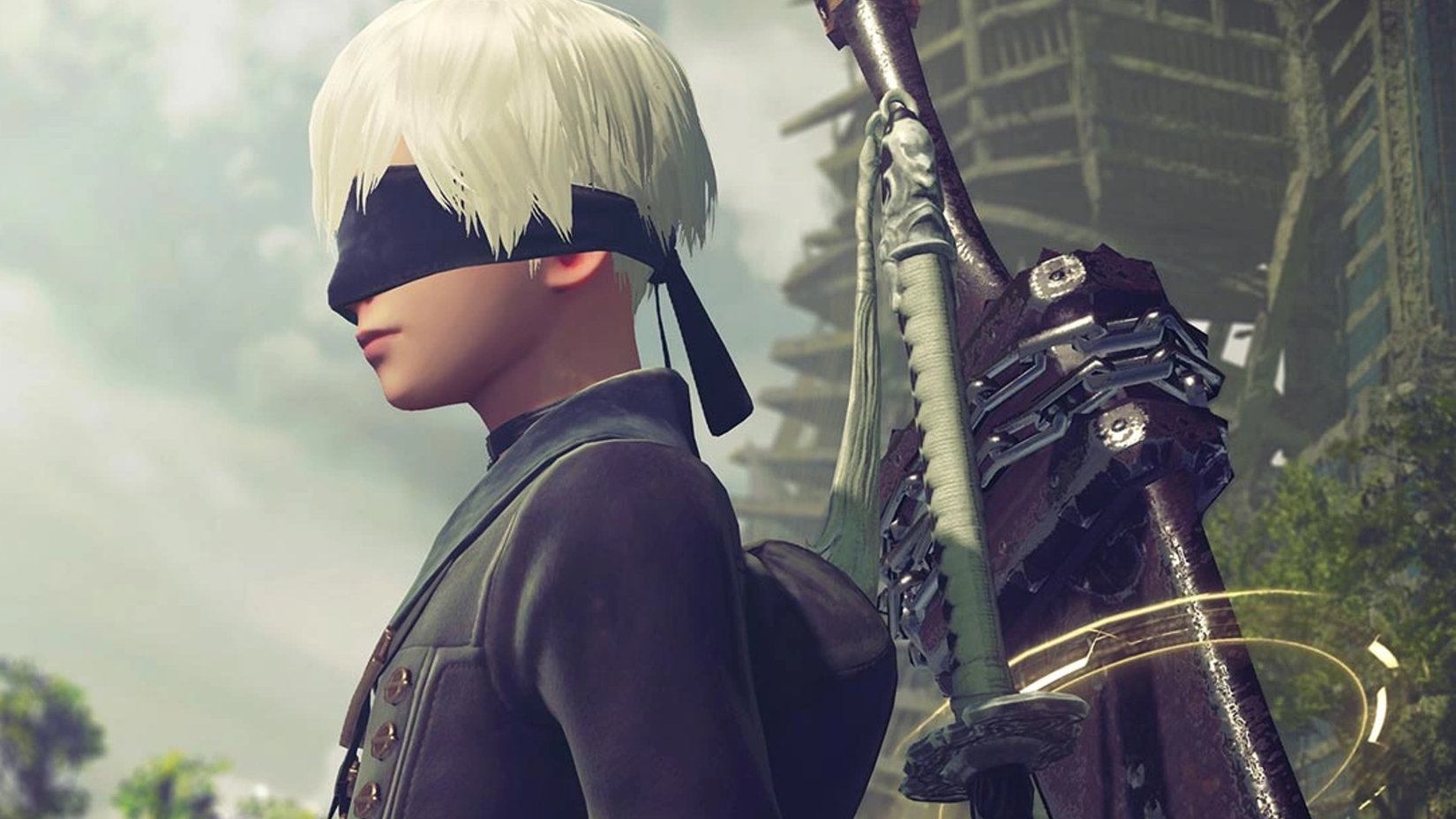
In NieR: Automata, we're introduced to 9S early in the game, who starts out as a deeply intelligent and empathetic companion. But over time, his sharp mind slowly slides down the path of nihilism, coupled with a slight obsessive streak, which goes on to mirror the Machine leader Eve.
Throughout the game, we learn that 2B has repeatedly killed 9S to safeguard him from the revelation that humanity is already extinct, and that he's devoting himself to an empty cause. This becomes an issue in the main timeline after 2B dies, no longer able to prevent 9S from committing to his tragic path.
It doesn't take long for 9S to quickly spiral into despair, as the more he learns about YoRHa, the machine's and 2B's role in his life, the less stable he becomes. Which is a mighty interesting twist to have the intelligent and curious android become so overcome with grief that it no longer follows its main purpose.
Eventually, his rage and corruption becomes too much, and our once beloved kind boy is now a grief-ridden manic villain who wants to punish reality for existing. I won't lie, I loved this twist, but having to put 9S down for his own good still felt like a major punch in the gut.
2 Kingdom Hearts 3
Xehanort (And The Thirteen Seekers of Darkness)
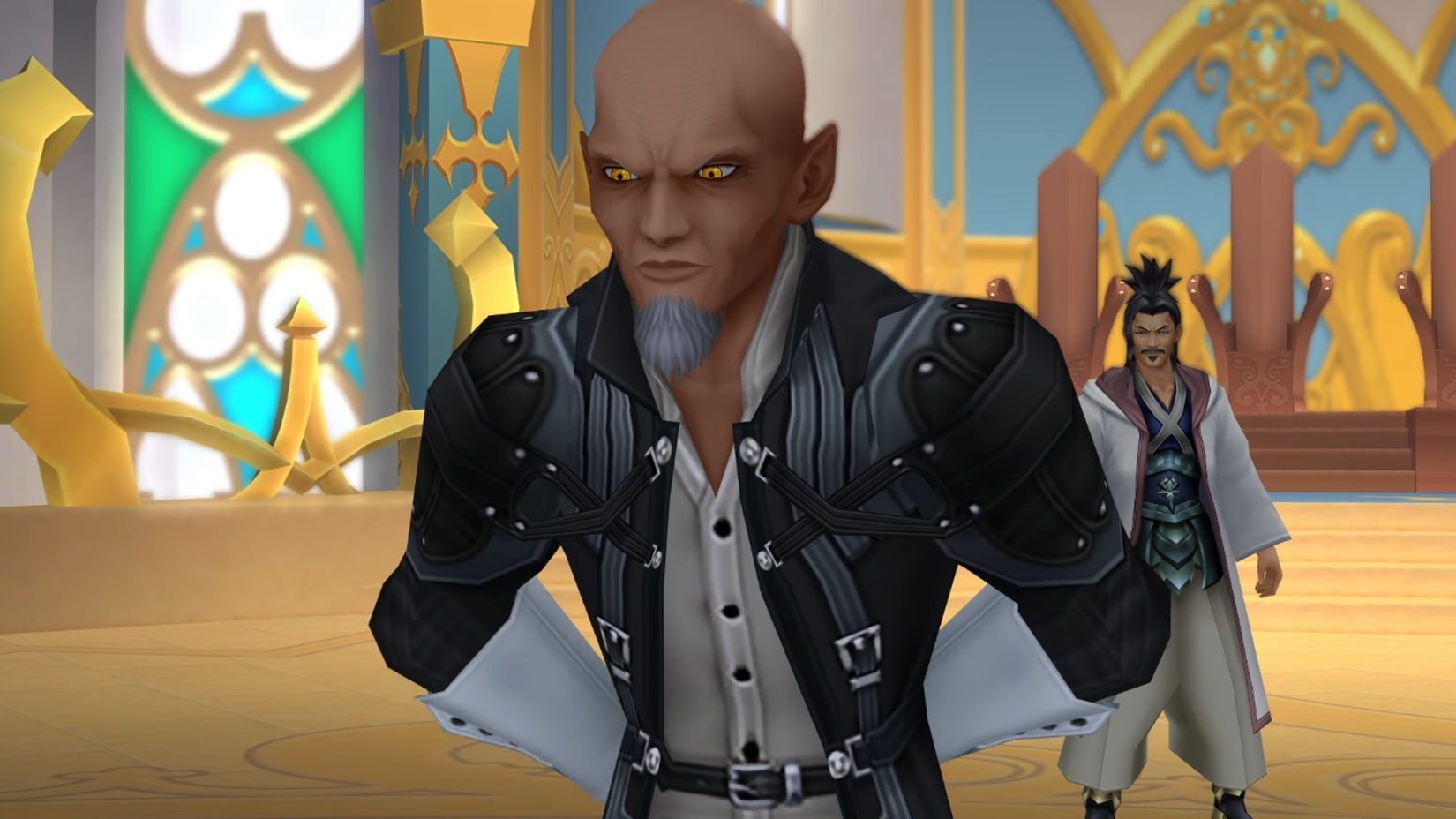
It took 17 years for Sora and the gang to finally face off with the main villain of the Kingdom Hearts franchise, and thankfully, the spectacle of these encounters didn't disappoint. Xehanort and his revived gang of darkness-empowered goons were a welcome addition to Kingdom Hearts 3, especially given that our heroes seemingly got the short-end of the stick when it came to characterization.
All the villains throughout the game have a clear philosophy and history with the game's heroes. All except Sora, funnily enough. Xehanort specifically believes himself to be a messianic figure destined to bring balance between light and dark by triggering another Keyblade War, and his followers echo this sentiment (minus Demyx and Xigbar). Sora, on the other hand, is strictly limited to being confused about everything, or aggressively cheerful to an off-putting degree. To some degree, I think even series creator Tetsuya Nomura noticed this and pivoted to giving Riku a lot of the stronger moments in the game as a result.
Even though we don't get a lot of time with Xehanort himself, his followers sharing his philosophy and exalting his existence set the scene for a grand show-off. Also, he has a killer final boss fight, which overshadows just about every shortcoming in the game, including Sora's weak characterization.
1 Final Fantasy 15
Ardyn Izunia

Say what you will about Final Fantasy 15 (believe me, I can say a lot), there's no denying its villain is among the best in the Final Fantasy franchise.
Ardyn Izunia starts as your classic Kefka villain archetype, in that it's obvious he's a clear, whimsical villain hiding sinister intentions. What makes him so distinct is that unlike Kefka, Noctis has a direct connection to Ardyn, and his motivations for evil. As it turns out, Ardyn was once a healer chosen by the crystal, but after absorbing the world's darkness into himself, he's quickly betrayed by his brother Somnus, and cast aside by Bahamut.
As you might have guessed, Somnus would end up being the first king of Lucis, revealing that not only is Noctis' bloodline hiding a dark secret, but Ardyn is also Noctis' many generations-old relative. This makes his strong vendetta against Noctis and what he represents as the promised next king of Lucis understandable.
Despite his playful persona, Ardyn's ultimate wish is to simply die, which has a double meaning, as the only way for him to be killed is if Noctis sacrifices himself, ending the Lucis line once and for all. Ardyn is one of the rare villains in the series whose master plan actually succeeds. He pushes Noctis to sacrifice himself, ending his brother's line of kings for good. This also severs Bahamut's influence over the world, freeing the world from his divine control.




![ELDEN RING NIGHTREIGN: Deluxe Edition [FitGirl Repack]](https://i5.imageban.ru/out/2025/05/30/c2e3dcd3fc13fa43f3e4306eeea33a6f.jpg)
 English (US) ·