.png)
.png) 1 day ago
7
1 day ago
7


Published Aug 4, 2026, 2:10 PM EDT
Daniel Trock is a Contributor at DualShockers specializing in PC games, lists, and reviews. He has been writing professionally since 2018 and covering games since 2020, with previous work spanning guides, news, lists, and reviews across multiple publications.
Before joining DualShockers, Daniel contributed guides to GamerJournalist and lists to TheGamer. He currently covers tech topics for SlashGear and BGR. He holds a Bachelor’s Degree in Psychology from Marist College and a Master of Fine Arts in Creative and Professional Writing from Western Connecticut State University.
Sign in to your DualShockers account
Spider-Man has a whole suite of spider-adjacent superpowers, from his proportional super strength to his spider-sense to his wall-crawling. However, his most iconic ability, rather ironically, was one that, in most depictions, he had to make up himself: his webbing, specifically his web-swinging. It’s the sight of Spider-Man swinging between the skyscrapers of New York City that makes him one of the most enduring icons of Marvel Comics as a whole, and any proper Spider-Man game absolutely needs to possess it as a mechanic.
Obviously, not every Spider-Man game has had the tech or design chops to get the swinging absolutely perfect, but at the very least, these particular Spider-Man games understand that, as his most iconic ability, the web-swing needs to be fun and punchy. It has to be something you want to do, so much so that, in the specific case of open-world games, you want to do it more than actually progressing the story.
10 Spider-Man (2000)
The “Woosh” Factor

The first 3D Spider-Man game, released on PS1 in 2000, was not an open-world game. Open-world games were barely even a thing back then, and goodness knows, the PS1 couldn’t facilitate an entire simulated NYC, which is the meta reason all the outdoor stages in this game are covered in street-level fog. That said, even if the swinging isn’t as major a mechanic in this game, it gets one thing decisively right: the “woosh” factor.
Every time Spider-Man web-swings in this game, it’s accompanied by the distinct sounds of his web shooters firing off, followed by a couple of hearty “woosh” sounds. He can only chain up to two swings at a time, which is usually fine for platforming, but during the city stages and certain larger indoor stages, you really get the stylistic punch of the web swing down pat. I like to think it was the “woosh” factor that helped to sew the seeds for the meatier web swinging that came next.
9 Spider-Man (2002)
“Go Web! Fly!”

Okay, I know I said Spider-Man had to make his own webbing before, and in most continuities, he did, but the well-known outlier is the Raimi movie trilogy, in which he has organic web shooters in his wrists. This started with the release of the first Spider-Man film in that trilogy, as well as the 2002 video game tie-in, though despite the physiological differences, the web swinging was gradually starting to take form.
The first movie game is still a level-based affair rather than an open-world game, but compared to the 2000 game, said levels, especially the outdoor ones, are much more open, giving you a lot more room to swing around in. You have much greater control over Spider-Man while he’s in the air, you can swing continuously, freely change your elevation between threads, and even perform a web brake to immediately change direction. Things were still kind of primitive at this point, but it was a big evolution over the simpler web swinging over the previous game, and a vital staging point for a franchise high spot.
8 Spider-Man 2 (2004)
The First to Really Nail It

By the early-to-mid 2000s, open world games were finally coming into vogue, which meant it was about time for Web-Head to get his proper debut in a simulated NYC. As it so happened, the second Raimi film had just come out in 2004, so the timing was perfect to start really getting into what made web swinging such an entertaining pastime.
The Spider-Man 2 tie-in game was highly lauded in its day, and still fondly remembered now, for its next-generation physics-based swinging mechanics. Where in the previous games, web swinging just sort of operated on its own laws of physics, in Spider-Man 2, web swinging required you to actually swing, directly targeting buildings at higher elevations, creating large arcs, and picking up momentum as you went. This was the first game to really nail what’s fun about being Spider-Man, deftly thwipping into the air and swinging between skyscrapers and narrow alleyways.
7 Ultimate Spider-Man
Venom Go Zoom

With Spider-Man 2 officially being the one to beat in regard to open-world Spider-Man games, anything that came after officially had the unenviable position of being a follow-up act. Luckily for 2005’s Ultimate Spider-Man, Spider-Man 2’s console version developer, Treyarch, was on the case once again, so as far as follow-up acts go, it was a pretty good one, and with a few twists of its own.
When playing as Spider-Man in this game, the swinging physics work very similarly to how they did in Spider-Man 2. You can only swing when there’s a point of higher elevation above you, which meant you had to try and build up as much speed as possible to clear longer distances in suburban areas like Peter’s neighborhood in Queens. It was still just as fun, just with a more cartoony aesthetic. The differentiating factor was when you got to play as Venom; Venom can’t web swing like Spidey can, but he can perform powerful, Hulk-like soaring leaps off of solid surfaces, as well as launch his tentacles out to pull and launch himself. It’s an interesting game in which you have two primary means of high-speed locomotion, and they’re very different from each other.
6 Spider-Man 3 (2007)
The Good Bit Remains

Speaking of Venom, 2007 saw the release of the third and final Raimi Spider-Man film, this one focusing on the black Symbiote suit and the less-than-stellar debut of the film’s version of Venom. Out of both the film and accompanying game trilogies, the third is probably the weakest one overall, but it wasn’t all bad. After all, it still had that quality web swinging.
There’s not much more to say about the Raimi trilogy games’ web swinging that I haven’t said already. Higher elevations, momentum-based swinging, you get it. Though, something nifty is that Treyarch carried over Venom’s Hulk jump from Ultimate Spider-Man, so you can perform a similar sailing jump from a flat surface and then switch right into a web swing, which helps to get things off the ground a little bit faster. Also, this game had an optional mode where you could play as the New Goblin and fly around on his little hoverboard thing, which made for a nice palette cleanser if you wanted something different from a third helping of web swinging.
5 Spider-Man: Web of Shadows
Building Momentum

Spider-Man: Web of Shadows
We’re not quite done with the Venom talk yet, because there was one more Symbiote-centric Spider-Man game. Well, two more, actually, but we’re starting with 2008’s Web of Shadows. While mostly being remembered for its somewhat-iffy moral choice system revolving around the use of the red and black suits, it also introduced several elements that would come to be standard in the web swinging playbook.
Even moreso than the Raimi tie-in games, Web of Shadows prioritized momentum in its swinging mechanics. It wasn’t just about getting a semi-realistic swing from a higher point, it was about gradually building up speed as you went, slinging and pinballing all over the city with consecutive perfect swings. The game also introduced a diving ability, where you could pick up speed while falling from high places, then fire off a web line and swing into it with a big starting kick to your momentum, not to mention launch yourself back into the air by releasing your swing at its apex.
4 The Amazing Spider-Man
Skateboard Not Included

The tie-in to 2012’s Amazing Spider-Man was the first major Spidey game not to be developed by Treyarch, though its chief developer, Beenox, was involved in some of the previous games. This did mean that it had to cobble together its own identity as far as swinging mechanics were concerned, and it made an odd choice, though unlike the film itself, this odd choice worked a little more in its favor.
Compared to most Spider-Man games, Amazing Spider-Man is immediately distinct because its default camera view is right behind Spidey’s back, as opposed to being a little more zoomed out. This particular setup, while a little claustrophobic, does help to properly convey the breakneck speeds Peter endures on an average day of web swinging. Mechanically, it works the same as usual, with an emphasis on building momentum and minding trajectories, though you can also quickly bounce and web-zip between walls and solid objects like trucks, which puts a fun spin on ground-level navigation.
3 Marvel’s Spider-Man
Swingin’ Through the Streets

Marvel's Spider-Man Remastered
2018’s Marvel’s Spider-Man was a major game-changer to Web-Head’s virtual escapades in just about every possible factor, not the least of which being his web swinging. This game took lessons from just about every previous Spider-Man game, and combined them all into one seamless system of thread-based transit.
Spidey can perform charged sailing jumps, run along walls at twice the speed of his normal wall crawl, and, of course, perform full momentum-based web swings anywhere there’s a higher point than him. In the event there are no higher points, though, he can also perform web-zips to tug himself through the air horizontally, which also makes for a nice all-purpose speed boost. You can even perform targeted web-zips to specific perches like building ledges and lampposts, which you can then quickly catapult yourself off of to preserve your momentum. Basically, once you master this system, and it’s not hard to master, you don’t have to stop for anything, and you probably won’t want to.
2 Marvel’s Spider-Man: Miles Morales
Stuntin’

Marvel's Spider-Man: Miles Morales
Marvel’s Spider-Man: Miles Morales is a spin-off of the first Insomniac Spider-Man game, which reuses a lot of gameplay and environmental assets. It goes without saying, then, that the web-swinging is still highly responsive and lots of fun. However, Miles is a different kind of Spider-Man from Peter. He’s not afraid to have a little fun with his commute, and if you had the ability to freely swing through the air, you’d probably do the same.
As an evolution of Peter’s tendency to twist and flip automatically while swinging in the first game, Miles’ adventure adds the ability to perform a variety of stunts and tricks on top of the established web swinging mechanics. Whether you’re diving from on high or leaping off a swing, you can quickly tap inputs on your joystick to make Miles perform flips, spins, stalls, and other assorted show-offy maneuvers. This is mostly just for the fun of it, though successfully performing tricks does earn you small quantities of XP, so it can be helpful for getting you over those level thresholds if you don’t feel like doing any more elaborate activities.
1 Marvel’s Spider-Man 2
Finally Using the Web Wings
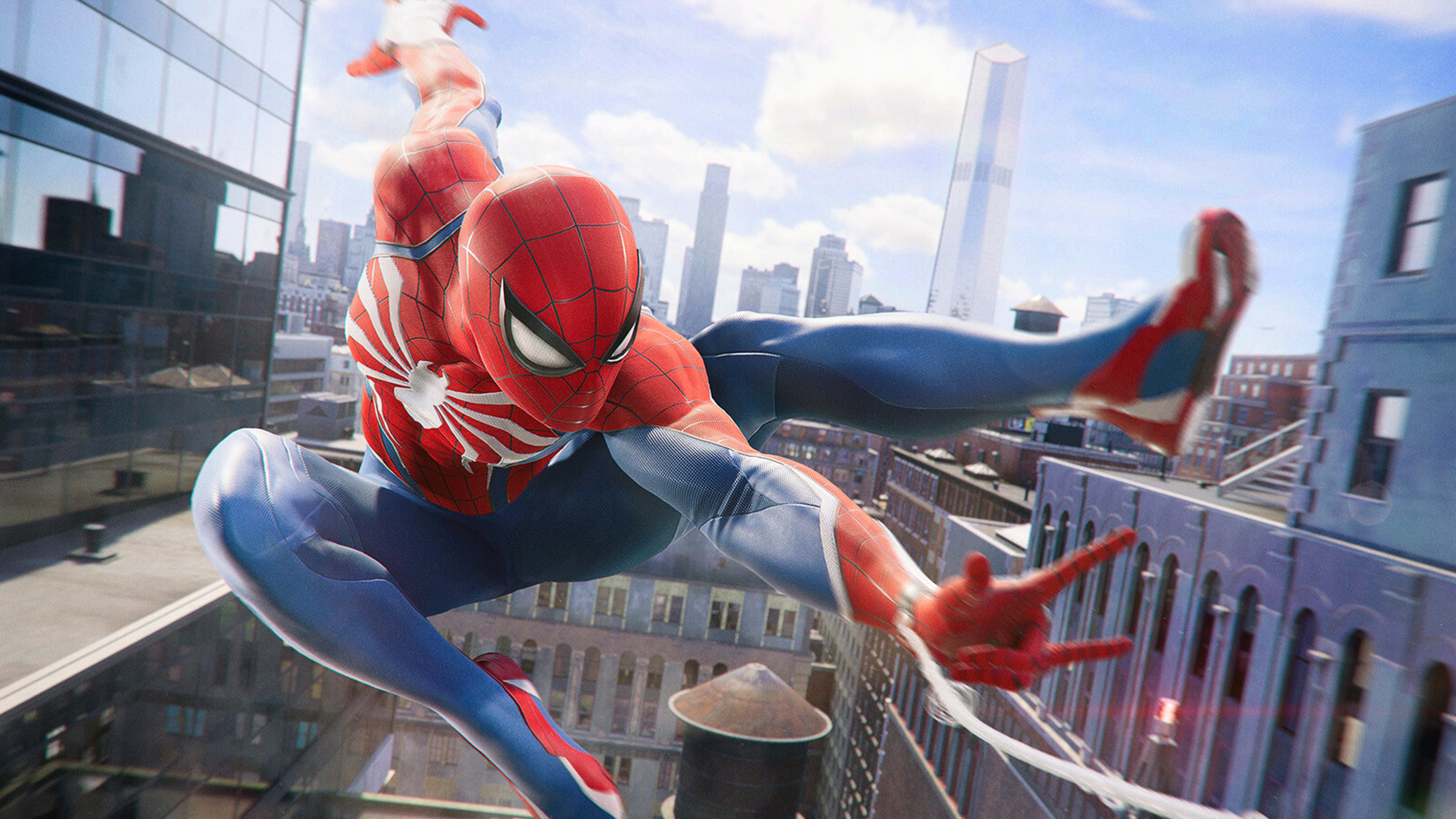
Something you don’t always see in all depictions of Spider-Man is the little under-arm web wings on his costume. They’re probably annoying to model, especially if he’s not actually using them, which I assume is why the suit in the Insomniac game doesn’t usually have them. The key word there is “usually,” because in Marvel’s Spider-Man 2, this was remedied alongside a suite of other new movement abilities.
Most of the previous two games’ web swinging mechanics carry over into this one, from building momentum to performing stunts. On top of that, both Peter and Miles receive a set of movement-centric abilities, usable outside of combat. These include the aforementioned web wings, which you can use to glide slowly downwards and catch air currents, as well as vertical and horizontal launching abilities you can use to pick up some air if there’s nowhere nearby to web swing or zip to. These abilities are thematically consistent as well; Miles performs them with his Venom Blasts, while Peter uses either the tech built into his suit or the goopy powers of the Symbiote suit.





![ELDEN RING NIGHTREIGN: Deluxe Edition [FitGirl Repack]](https://i5.imageban.ru/out/2025/05/30/c2e3dcd3fc13fa43f3e4306eeea33a6f.jpg)
 English (US) ·