.png)
 4 months ago
26
4 months ago
26

Published Mar 24, 2026, 10:00 AM EDT
Lee and Washington have worked together five times, and even their most mainstream collaboration has plenty to say
 Image: Universal/Everett Collection
Before they worked together on Inside Man, Denzel Washington had appeared in three previous Spike Lee movies. But Lee had never really directed a Denzel Washington movie, in part because that designation didn’t exist back in the early 1990s when they made Mo’ Better Blues and Malcolm X. Though Washington is an ultra-charismatic movie star, those projects with Lee weren’t principally vehicles for that charisma. They placed more emphasis on Lee’s vision — and on Washington’s top-tier versatility and complexity as a performer.
As Washington became a bigger star throughout the ‘90s, he started playing more cops, detectives, and military guys. During one 14-month period in the middle of the decade, Washington played three different types of lieutenant: Navy (Crimson Tide), Army (Courage Under Fire), and LAPD (Virtuosity). In the 2000s, he reteamed with his Crimson Tide director Tony Scott on a number of thrillers. Inside Man, released on March 24, 2006, felt like a departure for Lee in large part because it superficially resembled one of those Washington/Scott projects. But the director infuses his tightly wound crime-thriller with a distinctly New York sensibility that separates it from Denzel’s many similar performances.
 Image: Universal Pictures
In Inside Man, a wily bank robber (Clive Owen) takes hostages and faces off with New York City cop Keith Frazier (Washington), eventually attracting the attention of mysterious fixer Madeleine White (Jodie Foster). It’s not wildly different in premise from the Washington/Scott remake of The Taking of Pelham 123, and Inside Man does successfully disguise itself as a classic Denzel Washington movie — well enough for it to become one of Washington’s biggest-grossing films at the time, and Lee’s biggest hit to this day. Yet as well as Inside Man works as pure entertainment, it does ultimately make sense as one of Lee’s joints, too, even if it doesn’t come on quite as strong as pure, uncut Spike. Considering that the four movies Lee made without Washington between He Got Game and Inside Man include Bamboozled (a scathing but also extremely mannered satire of the TV industry), She Hate Me (a scattershot comedy-drama about a man hired to impregnate rich and powerful lesbians) and 25th Hour (the first major Hollywood movie to talk about 9/11 directly), the genre-friendly slickness of Inside Man seemed positively genteel.
In retrospect, though, it’s more of a peppy companion piece to 25th Hour than Lee capitulating to the need for a crowdpleaser. At one point, Frazier points out that the robbers must be stalling for time by demanding a getaway jet. He reasons that we’ve all seen Dog Day Afternoon, and anyone who has must understand that demanding a jet (as Al Pacino’s Sonny does, in a misguided panic) is doomed to fail. Lee loves Dog Day Afternoon — he even used the same pizza delivery guy in his own hostage movie as tribute — and though Inside Man doesn’t seek to recapture the same sense of socioeconomic desperation as that film, it does have a similar affection for the foibles of an ultra-diverse New York City. This thread runs through Lee’s work and forms a particularly powerful connection between Inside Man (one of his most fun movies) and 25th Hour (one of his flat-out best).
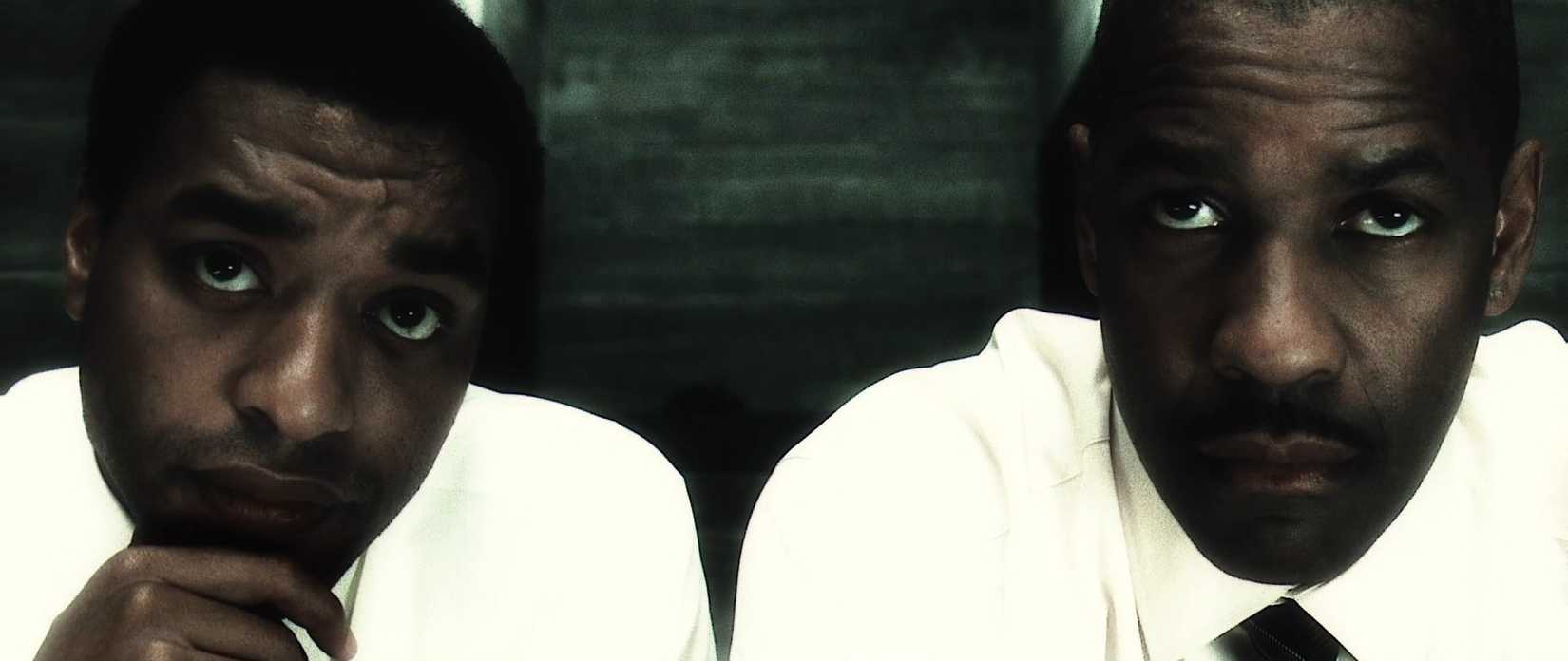 Image: Universal Pictures
One of the most famous and powerful sequences from 25th Hour has Edward Norton’s prison-bound character run through virtually every New York demographic he can think of and slag them all off with insults and slurs, misdirecting the anger he actually feels toward himself. Later, the movie circles back to those images, newly infused with a bittersweet longing for the city that Norton imagines leaving. The array of bank customers and criminals assembled by Inside Man feels like a continuation of that sentiment. Lee doesn’t fully romanticize the population’s unity, lightly recalling the animosity Norton unleashes: A Sikh bank clerk (Waris Ahluwalia) grouses that he’s constantly mistaken for an Arab and racially profiled following 9/11. A white cop has to be reminded not to use multiple racial slurs. An Armenian robber uses recordings of an Albanian to throw off the police. The moneyed fixer Madeleine is pointedly and repeatedly referred to as “Miss White.”
Racial tensions abound, but Inside Man isn’t really about those tensions, at least not in the same way as other Lee films. The robbers are eventually revealed to be exposing decades-ago wrongdoing by the bank’s founder, Arthur Case (Christopher Plummer), who has since attempted to cover his tracks with philanthropy. First and foremost, though, they’re getting rich, and admit as much. Lee seems to be making the point that New York is too full of hustle and bustle for evil acts to triumph, no matter what form or length of time their comeuppance takes. It’s a comforting message, even a borderline naive one, but less than five years after 9/11, it reflects a faith in the city’s resilience, further echoed in his recent Washington reunion Highest 2 Lowest.
 Image: Universal Pictures
For these later-period movies that aren’t as outwardly thorny as Lee’s most challenging work, Washington serves as a great unifier. Though he never sacrifices the sense of intelligence and authority he brings to law-enforcement roles, Frazier also sustains an irascible warmth as he deals with various cops, potential criminals, possible witnesses, and other New York oddballs. A series of flash-forward scenes where Frazier and his partner Bill Mitchell (Chiwetel Ejiofor) talk to various figures after the robbery showcase Washington’s NYC-perfect looseness, paired with a stylistic flourish: In a technique consistent with some of Lee’s earlier films, the footage has a high-contrast, bleached-out look. Ejiofor and Washington bantering with New Yorkers, along with a scene where Owen takes a kid to task for his ultraviolet videogame, are some of the least plot-necessary yet totally Spike-y moments in the film.
The containment of those scenes doesn’t make Inside Man feel compromised, though. Despite taking place largely in one city block, with plenty of scenes in a single downtown bank branch that doesn’t much resemble most New Yorkers’ day-to-day, Lee’s film captures New York in an era of cautious, unlikely optimism. He loves his city too much to envision a world where a wealthy suit can attempt to buy power without someone taking him out or shouting him down. (and to his city’s credit, that’s not generally what its residents vote for, either). The historical specifics of Inside Man may now feel like a period piece, but the spirit of it is perpetually ready for re-election.
Inside Man is currently streaming on Prime Video.








![ELDEN RING NIGHTREIGN: Deluxe Edition [FitGirl Repack]](https://i5.imageban.ru/out/2025/05/30/c2e3dcd3fc13fa43f3e4306eeea33a6f.jpg)
 English (US) ·