.png)
.png) 1 hour ago
2
1 hour ago
2

Published Jul 4, 2026, 5:30 PM EDT
Ewan is an experienced gamer with more than two decades of gaming under his belt, across consoles, handhelds, and PC. He's written for a variety of digital publications, including DualShockers, GameRant, The Mary Sue, and We Got This Covered.
Bethesda's Fallout 4 was an innovative entry in the Fallout franchise, though it wasn't without its detractors — its voiced protagonist system still divides fans to this day. Fallout 4 built on prior franchise successes to deliver a solid game that still enjoys a dedicated player base and a healthy modding community more than a decade on.
 Related
9 Reasons Fallout 4 Still Feels Like One of the Most Addictive Open-World RPGs Ever Made
While Fallout 4 has been out for a while, its open world still feels very addictive. Here are some of the main reasons why it keeps shining.
Some of the biggest changes in Fallout 4 came from how Bethesda approached its classic open-world design. Much loved by fans for its unique approach to open-world RPG settings, Bethesda took some risks when it came to design for Fallout 4, opting to try out something new. Some of these were fundamental changes, while others seemed more incidental, but together, they gave us the Fallout 4 we know and love today.
6 Extensive Radiant Quests
Endless Content with Factions That Actually Do Stuff

Some of us love them, some of us hate them, but Bethesda often uses "Radiant Quests," which are basically just endless procedurally generated quests that mean players can never run out of content. Fallout 4 uses them extensively, threading them into all the major factions' storylines and post-game content.
Each faction offers a selection of radiant quests that make sense for that faction. We're talking about settlement defense quests, settler kidnappings, Brotherhood tech requests, synth captures — all those quests you can keep doing over and over again, even after you've exhausted all the game's other content. They sort of make factions feel like they're actually doing something in the game world.
Many fans don't bother with these after the first few, since they can get a little repetitive — I know I don't. But the location design in Fallout 4 and its DLC all support these quests, with different types of locations commonly used across each faction's radiant quests. Like the looting/scrapping/crafting loop, radiant quests were intended to feed into Fallout 4's extensive systems-based gameplay, keeping players engaged even without hand-crafted content left to explore.
5 Companion Relationships
Companions Exist In and React to the World — and the World Reacts to Them

The Fallout franchise has always had memorable NPCs, and both Fallout 3 and Fallout: New Vegas had fan-favorite followers that will go down in video game history, but Fallout 4 kicked it up a notch — especially when it comes to personal relationships and reactivity. Fallout 4's companions are much more reactive, with their own likes and dislikes and a place in the world.
 Related
Each of the characters has a specific place in Fallout 4's world, and their response to events generally reflects that. Whether it's Preston Garvey and his infinitely meme-able "another settlement needs our help," super mutant Strong and his hilarious misunderstanding of basic human concepts, or everyone's favorite synth Nick Valentine, these companions are all rooted in their context — something reflected across the world in Fallout 4, as companions and other NPCs have interactions and comments directed towards one another.
Companions offer unique comments about specific locations, have commentary on different quests, and even have opinions on things like theft, moral choices, which quests to do, and which factions the player should align with. You can even romance some of them, turning them into a wasteland partner. This reactivity makes exploration feel a little less lonely, but, from a wider design perspective, it means Bethesda had to do a bit of extra thinking about quests and locations: What would Cait think of this? How would Strong react to that? What would Piper have to say here?
4 Legendary Enemies and Loot Drops
Powerful Weapons and Armor Can Be Anywhere

Previous Fallout franchise entries — as well as Elder Scrolls games — relied on hand-placed weapons and armors with special stats, abilities, and appearances to reward players for quests or exploration. Fallout 4 still has these, but Bethesda also introduced a procedural system to generate endless numbers of Legendary weapons and armors throughout normal gameplay. This is a good example of the studio's focus on systems-driven gameplay and procedural processes in Fallout 4's open-world design. In Fallout 4, random enemies can appear as "Legendary" variants instead, which drop randomized equipment with various modifiers and special effects.
It means powerful equipment can come from almost anywhere. It's pretty exciting when you encounter a Legendary enemy and find something game-changing on it. I've definitely found some crazy stuff in my time. Randomized drops encourage you to explore new locations, revisit old ones, and look for tougher enemies all over the map. It feeds into Fallout 4's wider exploration/looting/crafting gameplay loop by offering another reason to engage in the game's systems.
But lots of us found the variability, randomness, and lack of consistency more than a little frustrating. In some ways, the magic of Fallout was in its hand-crafted experiences, which procedural generation just can't match. Although I do enjoy finding some unexpected Legendary enemies on a simple loot run. It makes the world feel more dangerous and alive.
3 Survival Mode
Ties Together and Reveals Core Gameplay Loops

Survival Mode was a fan favorite from the moment it dropped, and it's easy to see why: it addressed a number of core complaints with the game that had been present since launch. It wasn't just a difficulty upgrade. It added features and mechanics like disease, hunger, and thirst, along with sleep requirements and ammunition weight. Two of its biggest changes were the removal of fast travel and limited saving.
Since its introduction, many fans have argued that it's the way the game was meant to be played. It's hard not to see the argument for this, since the changes made in Survival Mode really do tie the whole game and its design together. It feels like it naturally slots into the open world design: no fast travel means you have to naturally move from place to place, making the settlement building system feel useful and necessary. Settlement supply lines feel like a significant achievement instead of an afterthought. Disease, hunger, and thirst mechanics make the copious materials and consumable items found in the world genuinely necessary.
When I first played Survival Mode, I loved it. For me, it feels like it put what Bethesda was trying to do with Fallout 4 front and center: systems-driven exploration in an interconnected world where you need to think about logistics as well as quest progression. While it's not for everyone, Survival Mode definitely revealed the underlying mechanics and changes to design philosophy Bethesda was trying out in Fallout 4.
2 Settlement Building
Player-Built Hubs and Reasons to Engage the Core Gameplay Loop

Settlement building proved to be a surprisingly controversial feature among Fallout 4's fanbase, with some fans loving it and some hating it. Personally, I loved it — I literally spent hundreds of hours building out settlements across the Commonwealth and Far Harbor — but I get why it's not everyone's thing. Whether you loved it or hated it, though, it's undeniable that settlement building fundamentally changed how Bethesda approached their open world design in Fallout 4.
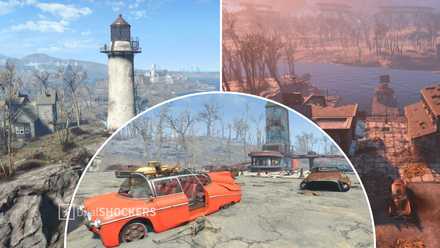
In earlier entries, there were all sorts of tiny settlements scattered across the map offering a safe place, maybe a short quest, and often, a vendor to pick up some essentials for the road. That's not to say Fallout 4 didn't have any of those, because it did. But the overall design focused more on a smaller number of larger settlements like Diamond City, Goodneighbor, or Vault 81. Even where these smaller settlements existed, they were often part of the player settlement-building system as well. Places like Graygarden, The Slog, Covenant, and even Bunker Hill, which played a big role in the final stages of the main quest.
 Related
13 Best Settlement Locations In Fallout 4, Ranked
There are several beautiful, massive, and useful settlements in Fallout 4, but here are some of the best that the game has to offer.
Settlements altered the Fallout 4 gameplay loop significantly and gave players a chance to leave permanent marks on the world. In Fallout 4, you're not just a wanderer moving from place to place; you can literally put down foundations and stake your claim to some prime wasteland real estate. The need to find resources to fuel your growing property portfolio fed into Fallout 4's scrapping, looting, and crafting economy, too, providing some very good reasons to get out and keep exploring the Commonwealth. Settlements even found their way into Fallout 76's CAMPs and Starfield's outposts, suggesting they're here to stay.
1 The Exploration/Looting/Crafting Loop
The Core Gameplay Loop Underpinning the Fallout 4 Open World
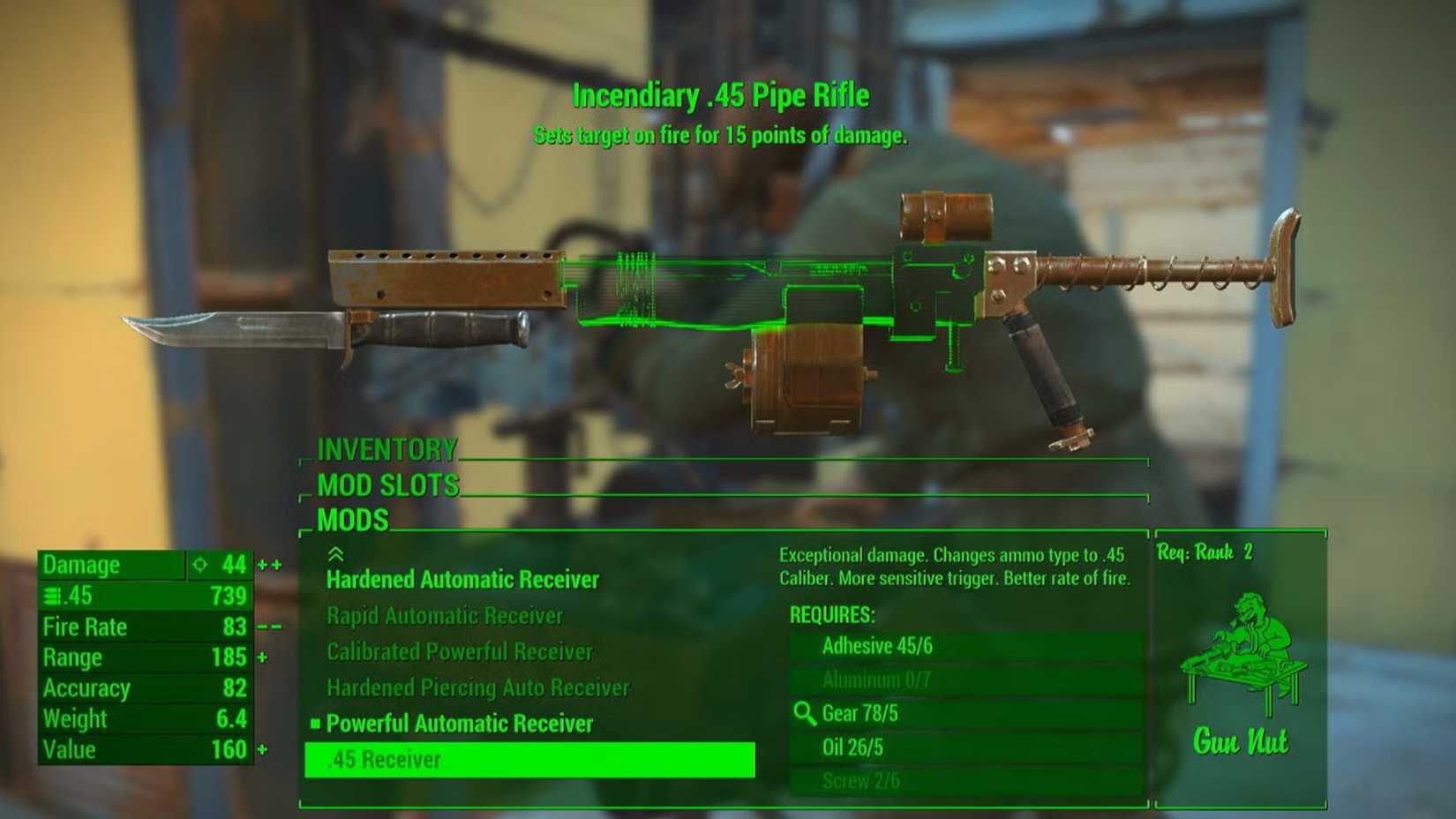
Although crafting and modding were present in other Fallout franchise entries, Fallout 4 was the first to put these systems at the heart of the game. Looting, scrapping, and crafting underpin the fundamental gameplay loop in Fallout 4. It's essential to Fallout 4's system-based gameplay. In Fallout 4, every miscellaneous item, weapon, and armor piece had a scrap value. You could break down random junk into crafting components to build stuff from rickety shacks to nuclear fusion reactors.
This change was reflected in Bethesda's open-world design for Fallout 4. Exploration became much more resource-driven, as players needed to find materials for armor or weapon upgrades, chem crafting, or settlement building. Weapon and armor modding meant you didn't have to always find a better weapon — you could make your favorite gun just that little bit more effective instead.
This allowed Bethesda to shift away from hand-placed content to focus on systems-led gameplay. This system fed into multiple aspects of the game, from pure exploration, the perk system, combat, the vendor economy, and settlement building. This new system underpinned the whole design of the game, from location placement to loot pools, enemy equipment, and more.
 Next
Next
10 Fallout 4 Locations That Feel More Like Horror Stories Than RPG Areas
Technically, Fallout 4 is an RPG, but certain locations in the Commonwealth are just as unsettling as a full-blown horror game.

Released November 10, 2015
ESRB M FOR MATURE: BLOOD AND GORE, INTENSE VIOLENCE, STRONG LANGUAGE, USE OF DRUGS
Engine Creation
Cross-Platform Play no
Cross Save no








![ELDEN RING NIGHTREIGN: Deluxe Edition [FitGirl Repack]](https://i5.imageban.ru/out/2025/05/30/c2e3dcd3fc13fa43f3e4306eeea33a6f.jpg)
 English (US) ·