.png)
 5 months ago
115
5 months ago
115

If Fire and Ash is the end for Cameron — and sure it feels like a finale — Hamnet proves Chloé Zhao could take on the franchise
 Graphic: Polygon | Source images: 20th Century Studios; Focus Features
Avatar: Fire and Ash left me thinking about Shakespeare. Not because James Cameron’s dialogue is up there with the Bard’s (sorry, Spider), but because it was full of the same harrowing drama as Hamnet, the least obvious Avatar comp of 2025.
An adaptation of one of the most beloved books of the decade, and now one of the year’s big Oscar contenders, Hamnet could not look any more different from Fire and Ash. Working with novelist Maggie O'Farrell, director Chloé Zhao charts how a couple’s loss blossoms into Shakespeare’s masterwork, Hamlet. Meanwhile, Fire and Ash is a fantastical sci-fi threequel full of talking whales and dragon-vs.-helicopter battles.
But in reaching for that spark of human truth, two directors found themselves in the same lane, and I’m now convinced the only person who could possibly take over for Big Jim, if the 71-year-old director moves on from Avatar 4, is Zhao. At the very least, a need for a series successor sounds likelier than it did a few years ago.
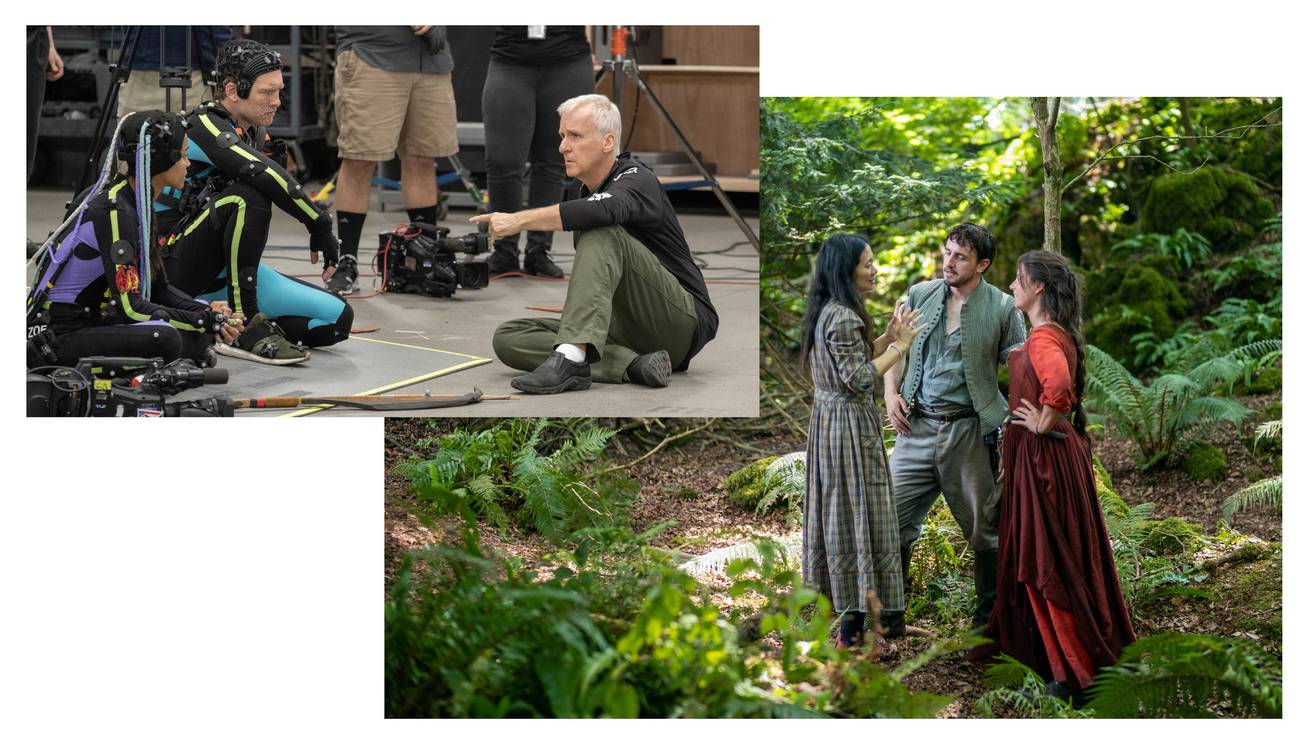 James Cameron directing Zoe Saldaña and Sam Worthington on Avatar: Fire and Ash; Chloé Zhao directing Paul Mescal and Jessie Buckley on HamnetGraphic: Polygon | Source images: 20th Century Studios; Focus Features
The existence of Avatar and its sequels looks more and more like a miracle as the Hollywood blockbuster machine calcifies into a low-risk, IP-driven operation. Cameron is one of a kind in the annals of movie history. He came up as a visual-driven special effects artist with a knack of action screenplays (as a writer only he's credited for Piranha II: The Spawning and Rambo: First Blood Part II). As the filmmaker proved himself financially viable to movie studios with hits like The Terminator, Aliens, and True Lies, his blank check stock rose to a point where he could march into 20th Century Fox with a pitch like “Romeo and Juliet but on the Titanic” and get a $120 million budget (which he would then proceed to blow and go over).
But Cameron has always delivered, no matter how much money he’s burnt on R&D, the production woes, the skeptical press predicting his eventual bombing out, or his follies diving to the bottom of the ocean as an amateur marine biologist. Even after dedicating a third of his life to the passion project of Avatar, he’s come out on top. Who else in the movie business has been allowed to go build a warehouse-sized wave tank in order to properly motion-capture ocean plunges? Not even Spielberg and Scorsese have that cred.
Unlike even George Lucas, one of the rare creatives to birth an entire fictional universe straight to screen, every dimension of James Cameron’s personality seems to have been amalgamated into what we see in the Avatar films. Lucas flooded Star Wars with his nostalgia of old serials. Cameron unloaded his complete psychology: There’s the science fiction/futurist perspective in the franchise’s setting, the fascination with nature and ocean life in the biomes of Pandora, the fetishtic appreciation of military tech (that he frankly shares with Hayao Miyazaki) in the RDA’s war machines, his own struggles with fatherhood playing out in the Jake Sully storyline, his career as an innovator in the effects space pushing CG physics realism in every corner of the making-of process, and probably a little sex stuff in there too, let’s be honest. It’s 100% the vision of one guy, despite now spawning three films, multiple video games, graphic novels, and a theme park. Cameron has cashed in 45 years of cred to make it happen.
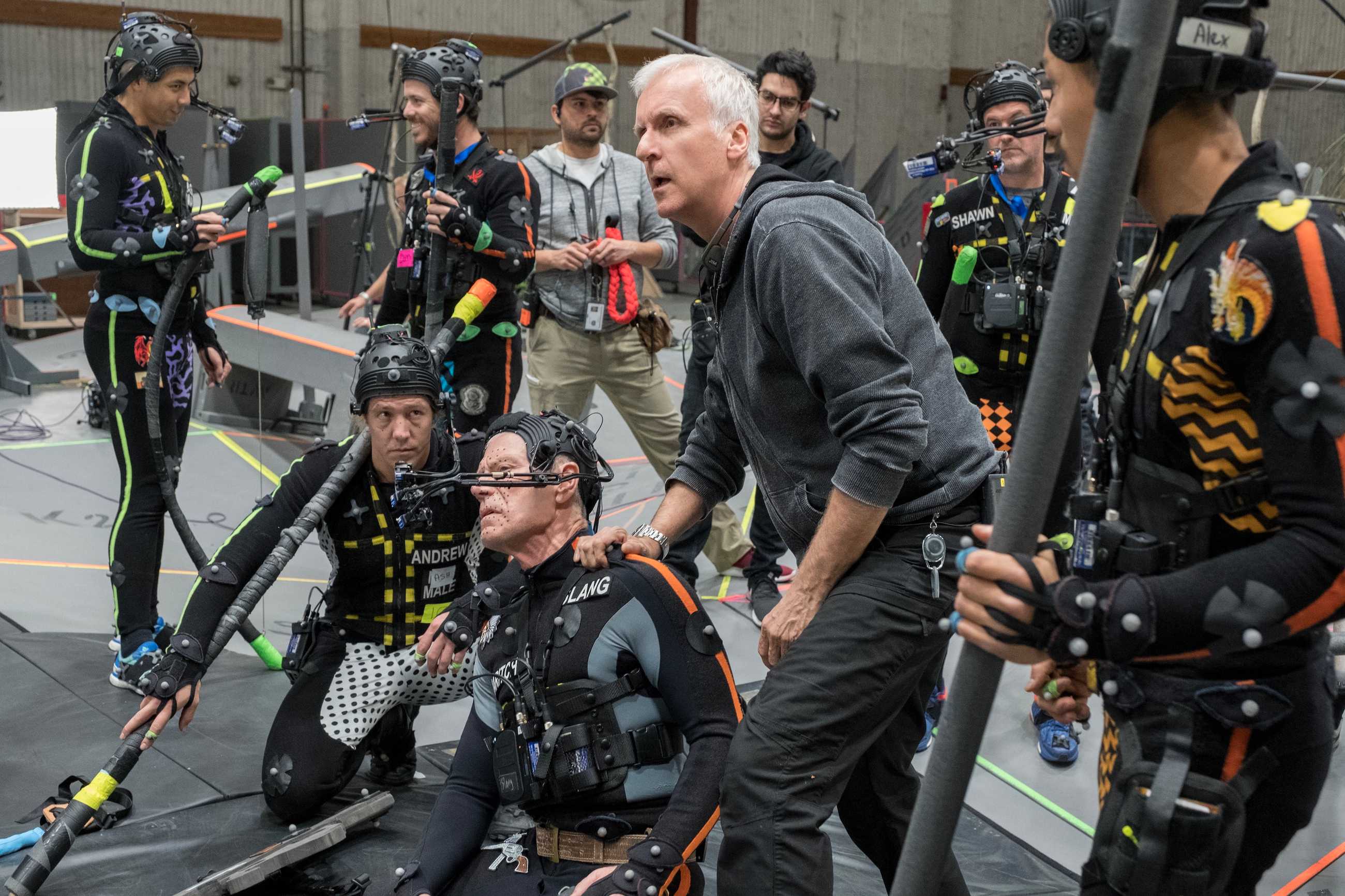 Photo: Mark Fellman/20th Century Studios
Cameron has not moved on from Avatar with the release of Fire and Ash, but he has hinted that he has more to do with his career than expand on the Sully family saga. There is more Avatar planned, as he mapped out an entire trilogy of films after 2009’s Avatar, and The Way of Water and Fire and Ash were actually a single story for the first movie split in half. (Walt Disney Pictures still has Avatar 4 set for release on Dec. 12, 2029.) But as Cameron told The Hollywood Reporter this month, he has “other stories to tell” both within and outside of Avatar.
“What won’t happen is, I won’t go down the rabbit hole of exclusively making only Avatar for multiple years,” he said. “I’m going to figure out another way that involves more collaboration. I’m not saying I’m going to step away as a director, but I’m going to pull back from being as hands-on with every tiny aspect of the process.”
I’m not sure anyone is in a professional position to truly “take over Avatar” if Cameron were to step away. As he detailed in Disney Plus’ Fire and Water: Making the Avatar Films, it takes a tremendous amount of dedication and fight to take material like Avatar as seriously as it needs to be taken, while Disney at the moment seems more interested in investing in generative AI output than the visions of blockbuster filmmakers. But if anyone could do it, my money is on Chloé Zhao. If you loved Fire and Ash but maybe wish the family drama hit harder, you need to see Hamnet.
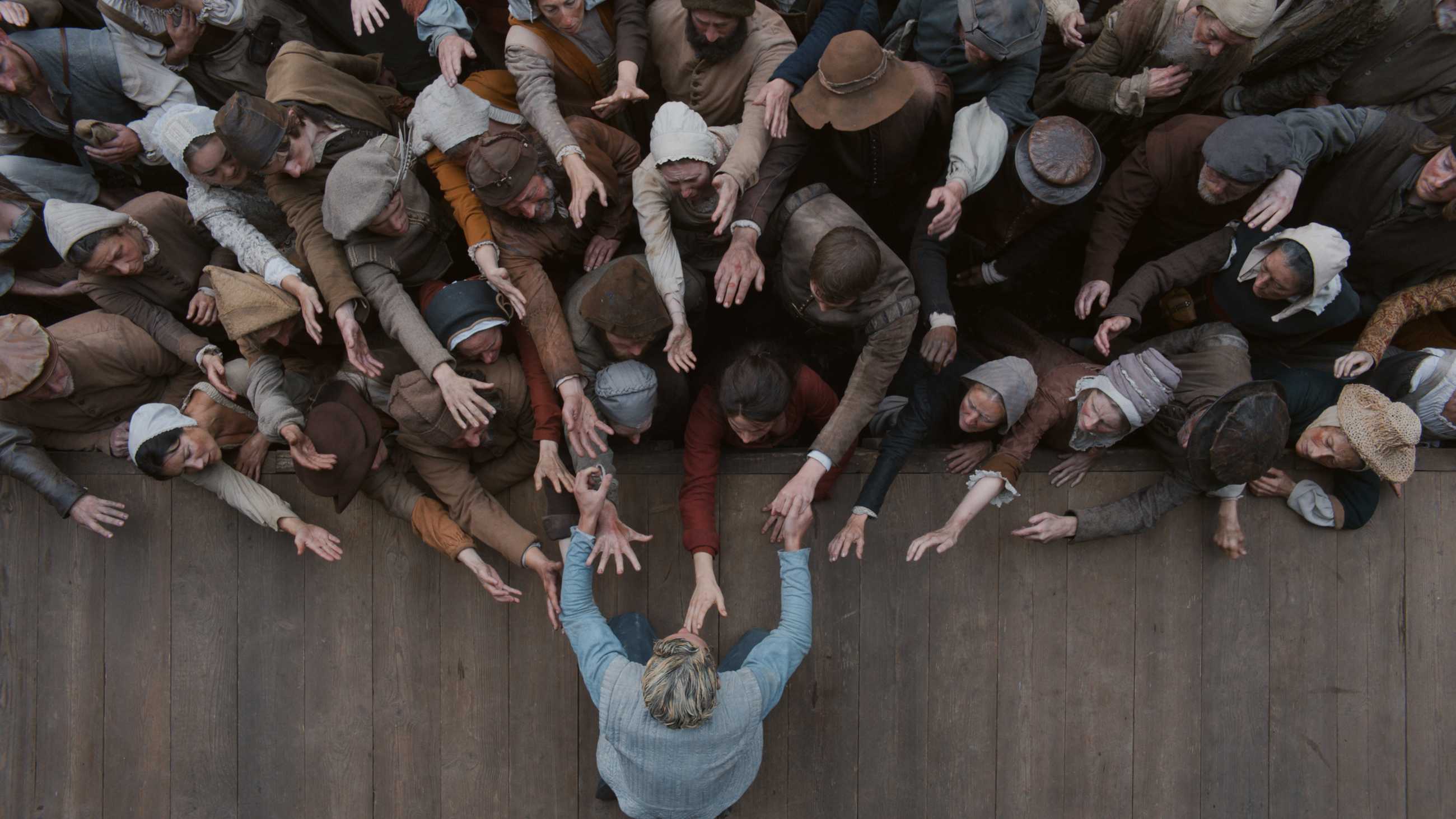 HamnetImage: Focus Features
Like Fire and Ash, but minus the blue skin, Zhao plays the performances in Hamnet to the rafters. We meet William Shakespeare (Paul Mescal) and the object of his affection, Agnes (Jessie Buckley), as lovers. They fall deeply in love, against his parents’ wishes, and start a family as he rises in stature in the playwriting world. When they lose a son to the bubonic plague — a sequence as violent and frightening as anything you will see in The Way of Water, which plays our heart strings with child death — the two become unmoored by grief. Buckley, in particular, is put through the ringer by Zhao’s microscopic close-ups. The pain is real, but their personal missions, to be strong parents, storytellers, humans, carries them to epiphany. The final scenes of Hamnet, set inside the Globe theater, are as exhilarating as any of Cameron’s 3D battles.
Chloé Zhao’s career has quietly built her career out of containing multitudes. She broke out with naturalistic indie films like Songs My Brothers Taught Me and The Rider, before Nomadland, an unshowy character portrait that swept the Oscars, earned her a Best Director trophy. Zhao probably could have claimed the title of “the next Terrence Malick,” but instead, she pivoted into blockbuster terrain with Marvel’s Eternals, bringing her eye for quiet longing into a cosmic superhero framework.
The turn was only a surprise if you never heard Zhao talk about her influences. Even in the early days she was open about growing up with genre stories, anime, and video games. That tension — between lyrical humanism and maximalist pop mythmaking — has only sharpened since. Though she’ll likely earn a second Oscar nomination for Hamnet, Zhao’s recent career milestones include directing Hulu’s Buffy the Vampire Slayer reboot and striking a deal with Kodansha to adapt manga. Her career refuses hierarchy: high-brow empathy and low-brow obsession feed the same creative engine. That’s a match for Cameron’s Avatar.
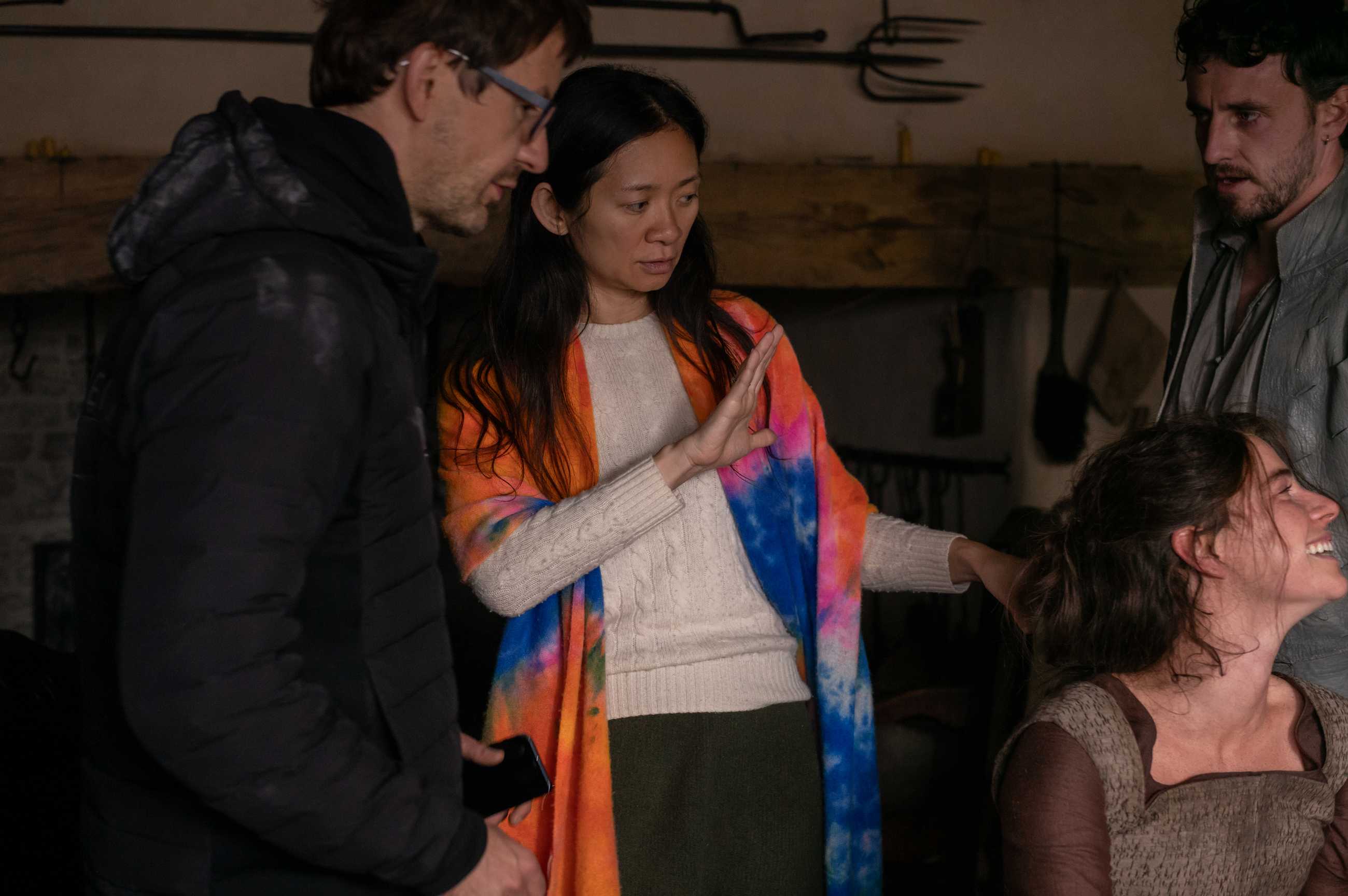 Chloé Zhao on the set of HamnetPhoto: Agata Grzybowska/Focus Features
The common link might be as simple as... a love for the pitch of anime and manga? As bunkmates, Cameron and Guillermo del Toro spent their fair share of time plowing through Japanese classics, which led Cameron to producing Alita: Battle Angel. Zhao’s fandom is well charted, but even material like Hamnet, the earnest romanticism and melodrama-straddling devastation, feels shaped by non-Western dramatic instincts. In a recent conversation with The New Yorker, Zhao drew a line between growing up reading manga and looking for metaphor in the stories she wants to tell.
In a way, my early education was always in myth, symbols, fantastical storytelling, allegorical storytelling [...] Manga is heavily influenced by Japanese Shintoism — believing that every object has a spirit. It gave me comfort to understand that we all contain within ourselves something other than what I see. That’s the kind of subtle spirituality I craved growing up, in a country where we didn’t have religion the way Americans do, or the rest of the world. Japan, since the Meiji Restoration, has been interacting with the West the way no other countries in Asia were doing at the time, so manga also reflects that. And then, thirdly, morality in manga very much exists in the gray area. It celebrates the shadows as much as the light. In American comics, sometimes that can be black-and-white, in terms of what’s good or evil.
You wouldn’t know it from watching the finished spectacle of Fire and Ash, but Cameron and Zhao also take similar approaches to directing their films. On The Rider and Nomadland, Zhao positioned seasoned actors around nonprofessionals to create a community of the real, and embraced documentary-like filmmaking tactics to capture the interior life of her scripted characters. Even on Eternals, Zhao matched the fantasy images of Celestials exploding out of the Earth and Deviants hunting down heroes in the jungle with landscapes and camerawork that would evoke a stronger sense of realism than your typical Russo Bros. soundstage epic.
Cameron, as detailed in a recent conversation with del Toro after a Director’s Guild screening of Fire and Ash, explained that he thinks about directing Avatar in nearly the same way, despite all of it being executed in motion-capture and post-production animation.
People often ask me, "Well, when are you going to do something small and intimate?" I said, "Well, I do. I do on all of these movies” [...] We completely bifurcate the normal film process into two sequential stages. So when you're shooting live action, you've got to get that great performance and you've got to stamp the entire image with all the lighting and all the production design and all the extras and all the other stuff onto that sensor. Camera moves and everything else. And I love all that stuff. I'm not saying I can't do it — I've done live action. I did Titanic, right?
But what I'm saying is, it's distracting to be thinking about the sun's on the move, the shadow's going to be there. We've got to bring the fill around. I've got 15 more minutes before the thing is going to get shadowed. I'm behind, I'm down too sad, blah, blah, blah. Thinking about the cameras and then explaining where I want the first camera, second camera, what the move is, what the move is relative to the script. Well, the attraction for me with performance capture is I do all that later. The actors aren't even around. They're on another movie.
It's like a quantum theory kind of thing. It's like I'm imagining an uncollapsed superposition where the camera could be there or it could be there. I don't have to worry about it right now because the observer comes along later. Right now, all I care about is the human truth of the performances. So I take my performance brain, my writer brain, my storytelling brain, and I give 100% of that to the actors. Then I give 100% of my geek techno brain to the cinematography, the camera moves, and all of the downstream processes [later on].
After nearly 20 years of development, Cameron has created a process where he plays both dramatist and documentarian. After all the performance is captured, after Kate Winslet holds her breath underwater for record-breaking times, he can go in during post-production and place his camera wherever he wants in a virtual space. The style is not for everyone; after explaining his pipeline to del Toro atthe DGA screening, the Frankenstein director retorted, “If somebody said to me, ‘You're going to have to direct that movie or we will shoot your family,’ I will ask them to start alphabetically and I would try to look for the door.”
The world may not need more Avatar, from James Cameron, Chloe Zhao, or any hack willing to make bank mining the IP for Disney, but the future of the franchise looks more like a blockbuster movie crossroads than a debate over the future of a single series. Who can make movies at this price point, at this level of difficulty, with a personal touch? Who can care enough about the state-of-the-art camerawork and the actors in front of them? Who can get this weird without losing the emotional foundation under their feet? Whoever they are, they’re the people we want making big movies to keep the theatrical experience alive.
Regardless of Eternals’ Rotten Tomatoes score, Hamnet has me rooting for Chloé Zhao. Minus actual Na’vi, the year’s verdant Shakespeare drama actually has everything I want out of an Avatar movie.




![ELDEN RING NIGHTREIGN: Deluxe Edition [FitGirl Repack]](https://i5.imageban.ru/out/2025/05/30/c2e3dcd3fc13fa43f3e4306eeea33a6f.jpg)

 English (US) ·