.png)
.png) 2 months ago
22
2 months ago
22
There is a specific kind of player who finishes the final boss of a JRPG, watches the credits roll, and immediately reloads the last save and starts asking what else the game has to offer. Superbosses exist for those people.
 Related
10 JRPGs Where the Side Content Ends Up Being Better Than the Main Story
10 JRPGs with outstanding side content you'd much rather complete than the game's main story.
In these games, the developers are saying, "You think you're done? You aren't done." JRPG Superbosses sit at the end of optional content chains, tucked away in post-game dungeons, hidden behind sidequests most players never complete. Some of them are fair. Some of them are deeply, almost philosophically unfair. All ten of the ones below are worth knowing about.
10 Culex — Super Mario RPG
The Final Fantasy Boss That Snuck Into a Mario Game
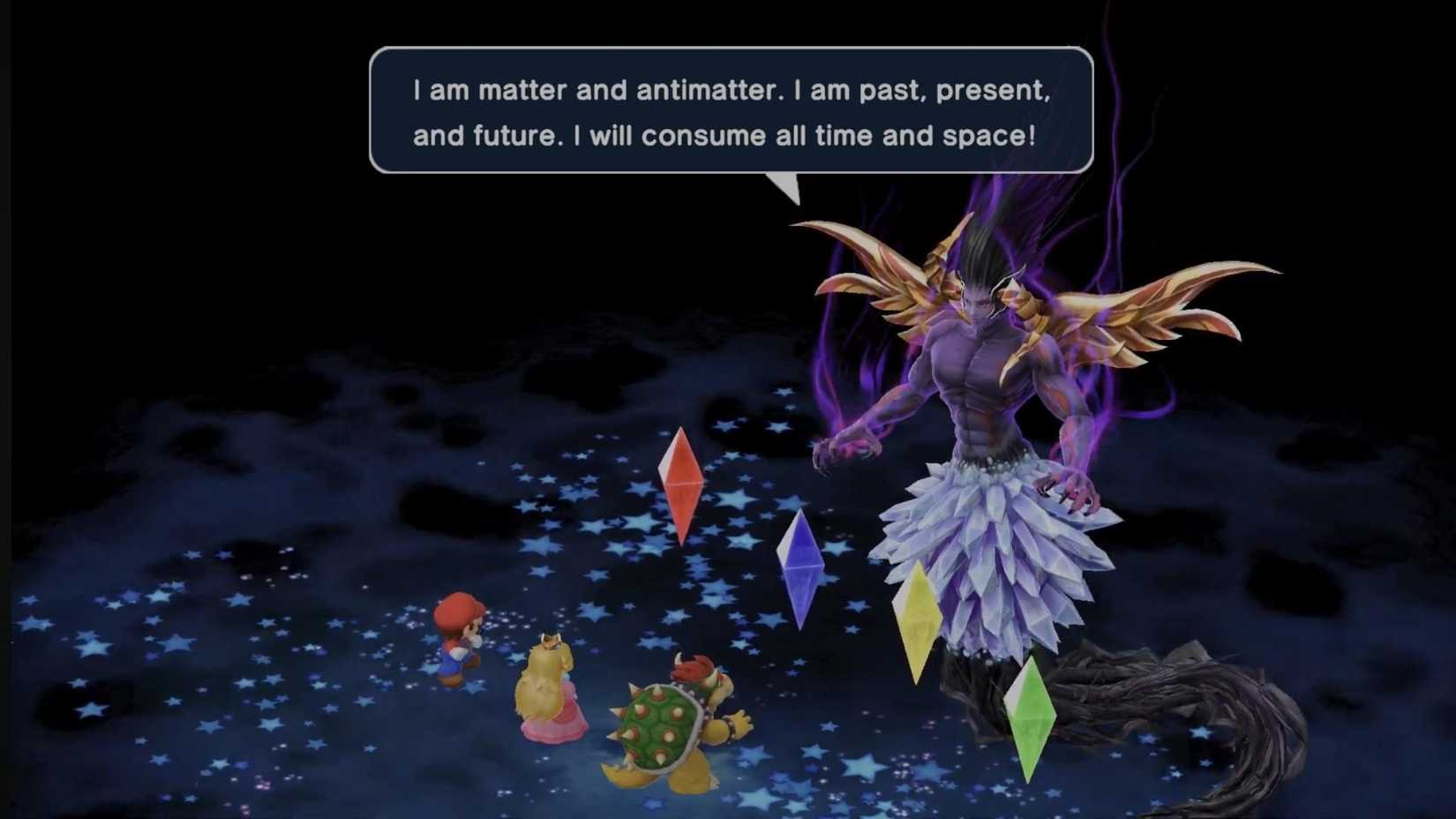
Culex is a being from a world called "Last Illusion" – not a subtle reference – who appears as a hidden optional boss behind a sealed door in Monstro Town. He exists entirely outside the logic of Super Mario RPG. While the rest of the game uses pre-rendered 3D models, Culex is crafted in the hand-drawn pixel art style of the SNES Final Fantasy games. His battle theme is an arrangement of Final Fantasy IV music. He has four elemental crystals fighting alongside him. He is, in every meaningful sense, a Final Fantasy boss who got lost and ended up in a Mario game, and the developers at Square clearly had a lot of fun with that.
He's also legitimately hard, with more combined HP than the game's main villain, Smithy. The Nintendo Switch remake builds on the original in a great way – Culex initially retains his 16-bit appearance even against the updated 3D visuals, but a post-game rematch gives him a full 3D model and rearranged music. Two versions of the same joke, and both of them land. He is one of the most charming superboss concepts in the genre.
9 Ozma — Final Fantasy IX
The Sidequest You Had to Do First
 YouTube via WillJV2
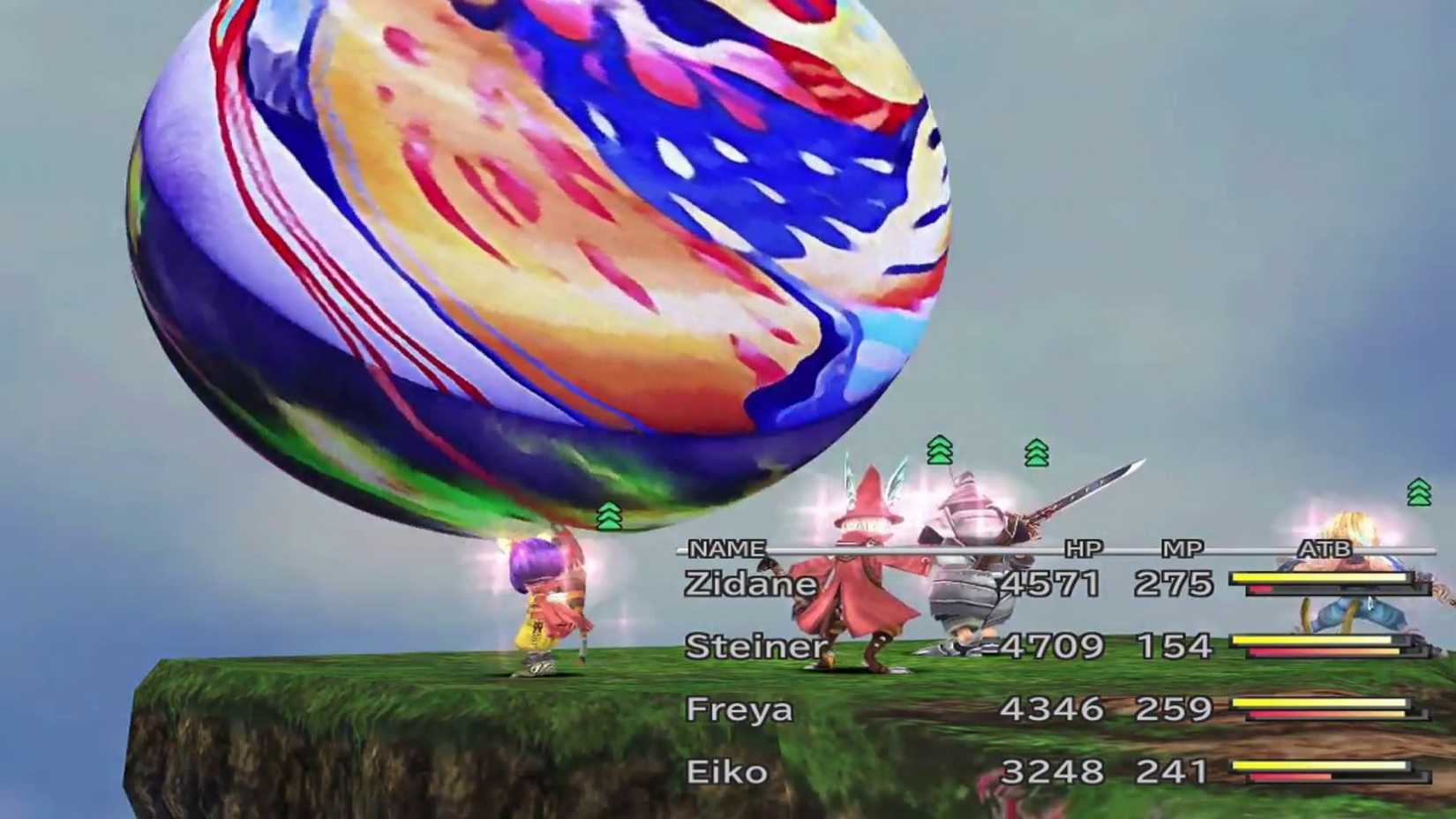
Ozma is fascinating partly because of what it is and partly because of how you get there. The generally accepted lore is that it's an ancient eidolon that has been completely forgotten – and in Final Fantasy IX's world, where memory and belief give eidolons their form, being forgotten means losing your shape entirely while keeping your power. What you fight is a perfect sphere, shifting and formless, radiating something ancient and wrong.
The cool part is how the game builds toward it. There's a chain of friendly monsters you can choose to help or ignore throughout your playthrough, and whether you've completed that chain changes the fight entirely – completing it makes Ozma vulnerable to physical attacks and weak to Shadow. Miss it and the fight is significantly harder. If you've somehow beaten Ozma before reaching Hades, the second hardest boss in the game, Hades reacts, but refuses to retreat – he's come too far. That kind of world-reactive design is rare, and it makes the whole encounter feel like it truly belongs to the world.
8 Sephiroth — Kingdom Hearts
The One That Still Gets Me
 YouTube via Mezzaluce
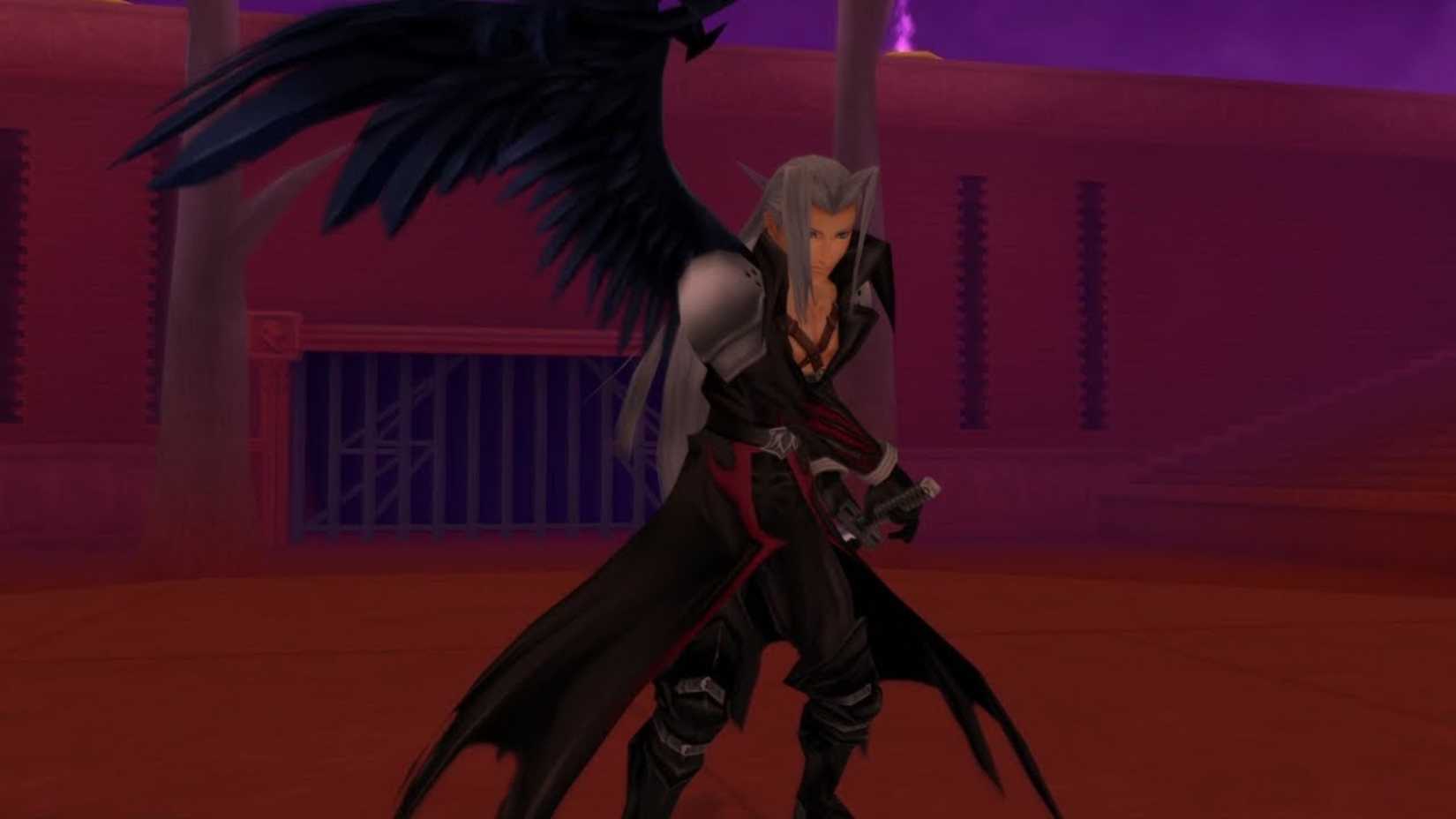
Is Sephiroth in Kingdom Hearts the most mechanically demanding superboss, now that we have the Final Mix version? No. Is he the most iconic? Almost certainly. You're a Disney-world-hopping child with a giant key for a weapon, and then a silver-haired man with a twelve-foot sword shows up with an invisible health bar, and the reaction from an entire generation of players once One-Winged Angel starts playing was exactly the same: "Oh no."
The moment you first see that pink bar start to appear is one of gaming's great small victories. Nothing about it makes canonical sense – what is Sephiroth doing here, why is he here, what does he want – and none of that matters at all. He is there because he's Sephiroth, and the "Oh WOW it's Sephiroth" to "Oh god it's Sephiroth" pipeline happened to almost everyone who played it. You don't need lore for that. You just need One-Winged Angel and the knowledge that you're about to have a terrible time.
7 Nokturnus — Dragon Quest VI
The One Who Tells You How Long It Took
 YouTube via Fionordequester
Dragon Quest VI: Realms of Revelation
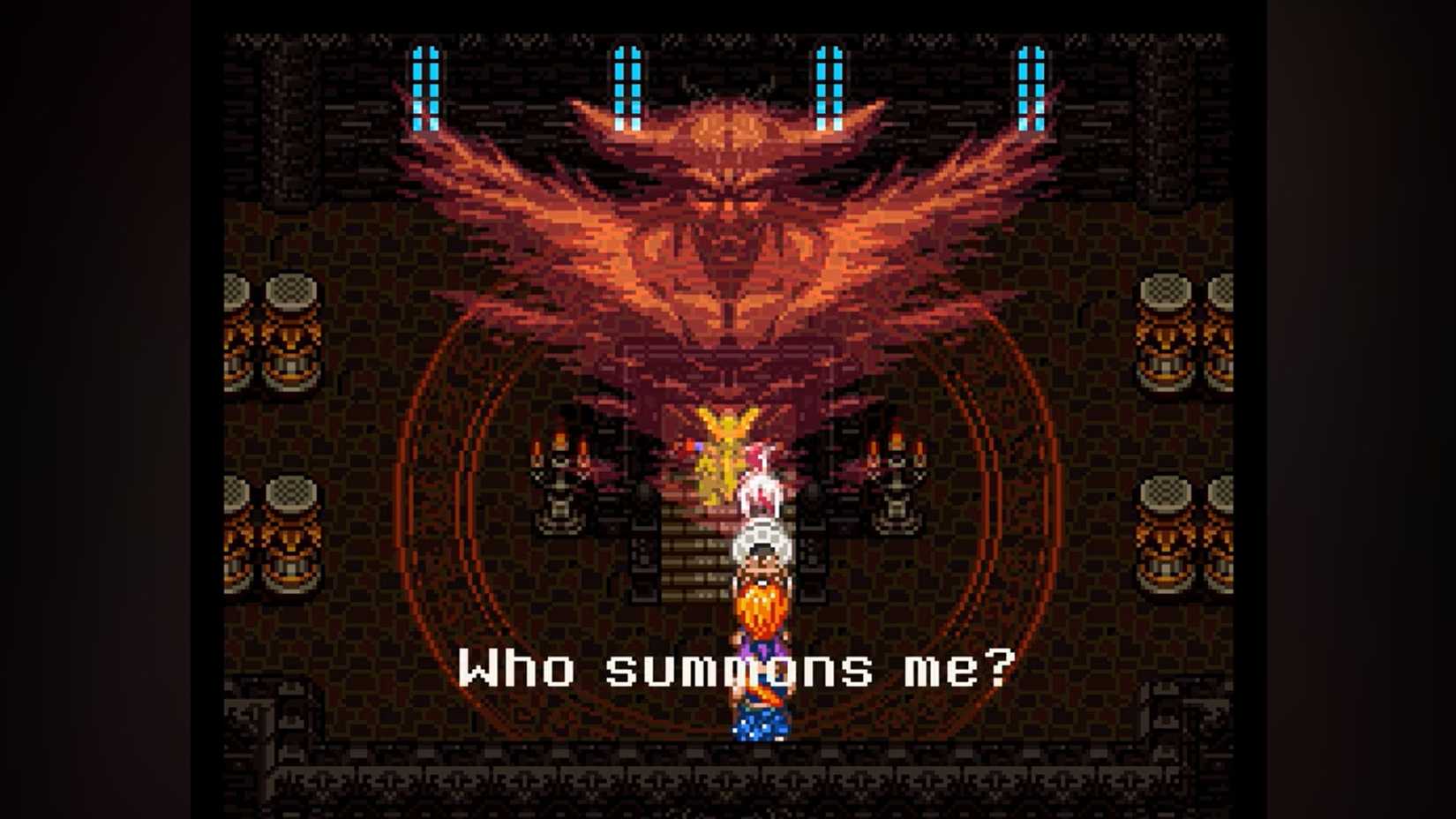
Nokturnus has a backstory that works as a cold open to the whole game. He's the demon the king of Castle Graceskull tried to summon to stop the main villain, Mortamor. Nokturnus refused to take orders from anyone and burned the castle to the ground. You experience this as a flashback when you find the ruins early in the game, and the context that this thing existed, that it was so powerful and so unbothered that it destroyed the people trying to use it and moved on, stays with you throughout the entire playthrough.
Post-game, you can complete the ritual that originally went wrong and fight him yourself. He has more HP than all three forms of Mortamor combined. And when you beat him, he tells you how many turns it took. If you manage it in twenty or fewer, an alternate ending unlocks where Nokturnus – impressed enough to bother – simply kills the final boss himself with a single blow. That is a magnificent design choice. A superboss that rewards you by having it do the finale for you.
 Related
6 Gabriel Unlimited — Star Ocean: The Second Story R
Three Forms of Escalating Misery
 YouTube via Alpha Weltall
Star Ocean: The Second Story R
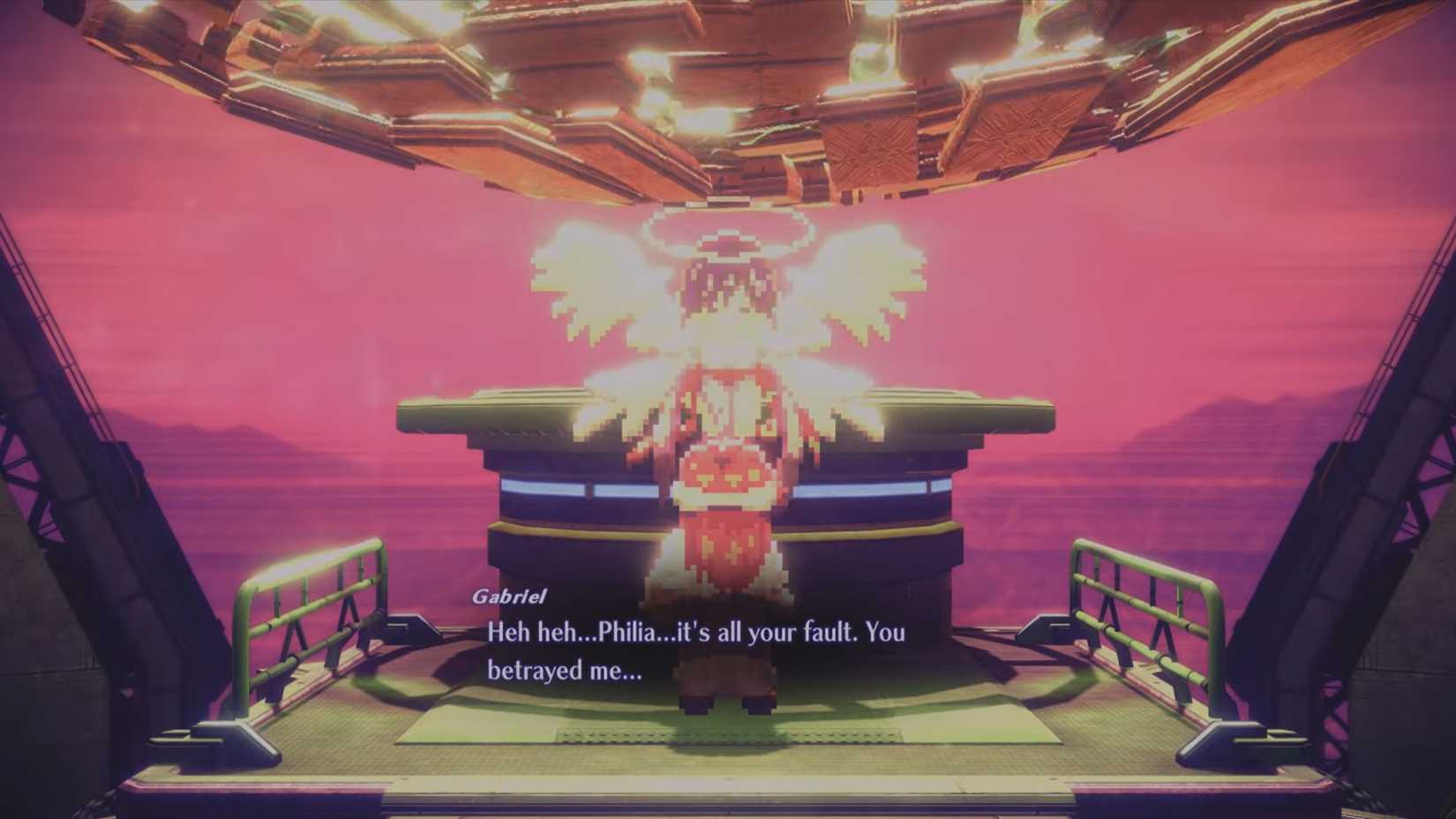
Gabriel leads the Ten Wise Men and is accordingly the strongest of them, but "Gabriel" in Star Ocean: The Second Story is somewhat of an understatement as a name, because there are effectively three versions of him and each one is worse than the last. Standard Gabriel is already formidable – 500,000 HP, fast spell casting, a tendency to spam Divine Wave at melee fighters until someone is dead. Get him to half health, and he reveals his true nature, gaining an ally named Philia and a new special art called Divine Comedy, a light elemental attack capable of dealing 9,999 damage to every party member.
Then there's Unlimited Gabriel, who kills Philia before the fight even starts, announces his intention to erase the universe, and comes at you with 1,500,000 HP and speed that outruns characters in bunny shoes.
The remake adds a Raid Boss version called Ultimate Gabriel that handicaps parties by disabling Bloody Equipment effects. Beating him grants an Ash Crystal for upgrading ultimate weapons and a Gabriel Jewel that lets you summon him as an Assault Character. He goes from end boss to optional weapon to recruitable asset, which is a satisfying arc for someone who wanted to destroy existence.
5 Warped Savior — Etrian Odyssey IV
A Dungeon That Earns Its Boss
 YouTube via Acea Ivalia
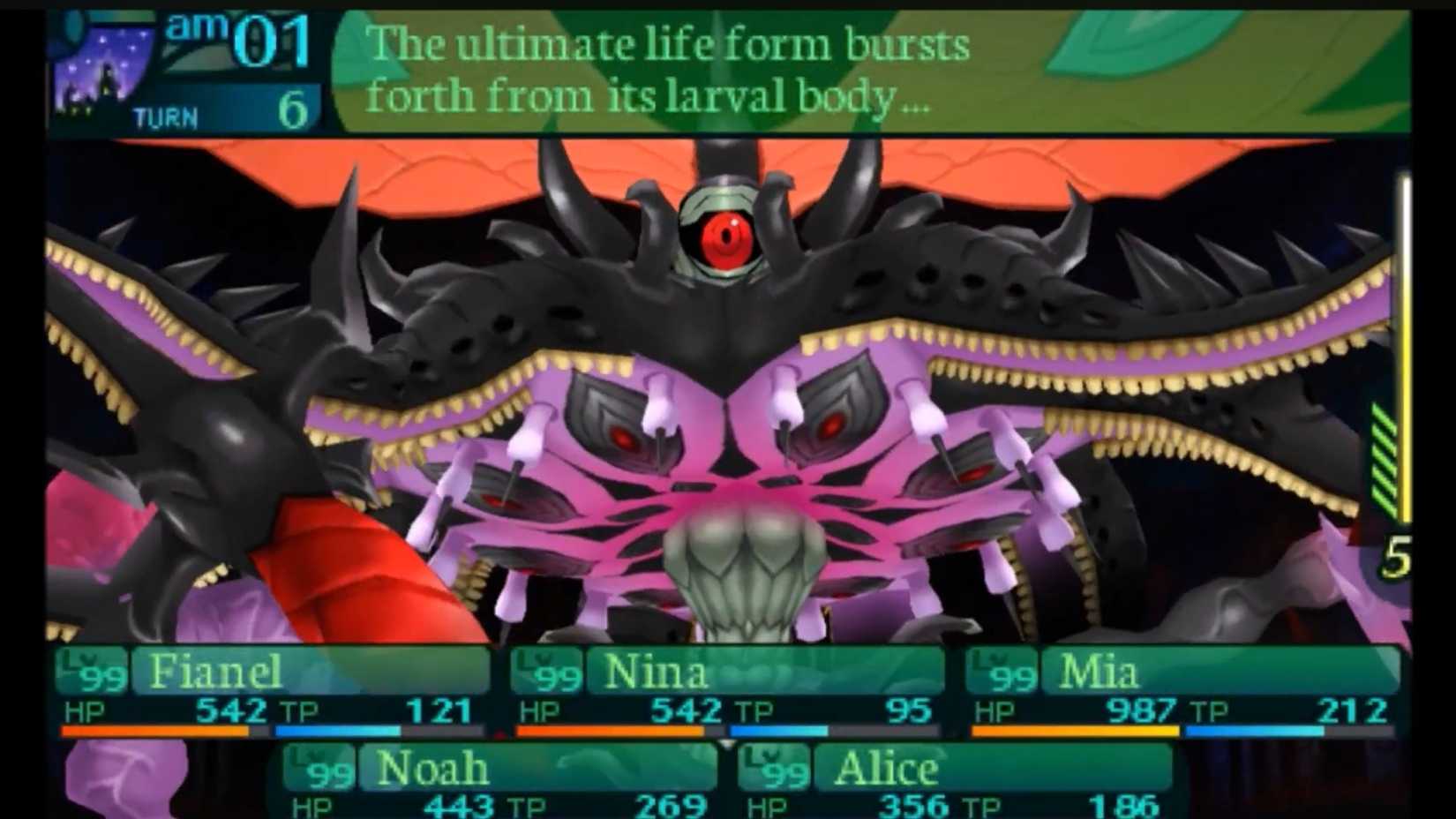
The Warped Savior is the kind of superboss that the dungeon leading up to it has to earn, and Etrian Odyssey IV earns it. The Hall of Darkness is genuinely unsettling to move through, the puzzle for preparing the chemical compound to weaken the boss is clever and environmental – you explore the floor to find five coloured injectors, find the research notes that tell you the correct order, and then put it together yourself – and the fight, once you get there, is built around having done that preparation. Skip the chemicals, and you're fighting something that will probably end up erasing you with ease.
The Insatiable Pupa phase has an eight-turn time limit and requires you to dispel a near-impenetrable defense buff on turn four or lose the race against its devastating Loosed Power attack. When it transforms into the Warped Savior, a new turn begins regardless of any unresolved actions. The whole encounter is structured like a puzzle that punishes improvisation and rewards players who came with a plan. Pure nightmare fuel is not an unreasonable description.
4 Demi-Fiend — Shin Megami Tensei: Digital Devil Saga
Not Even A Random Boss Theme
 YouTube via Buffmaister
Shin Megami Tensei: Digital Devil Saga
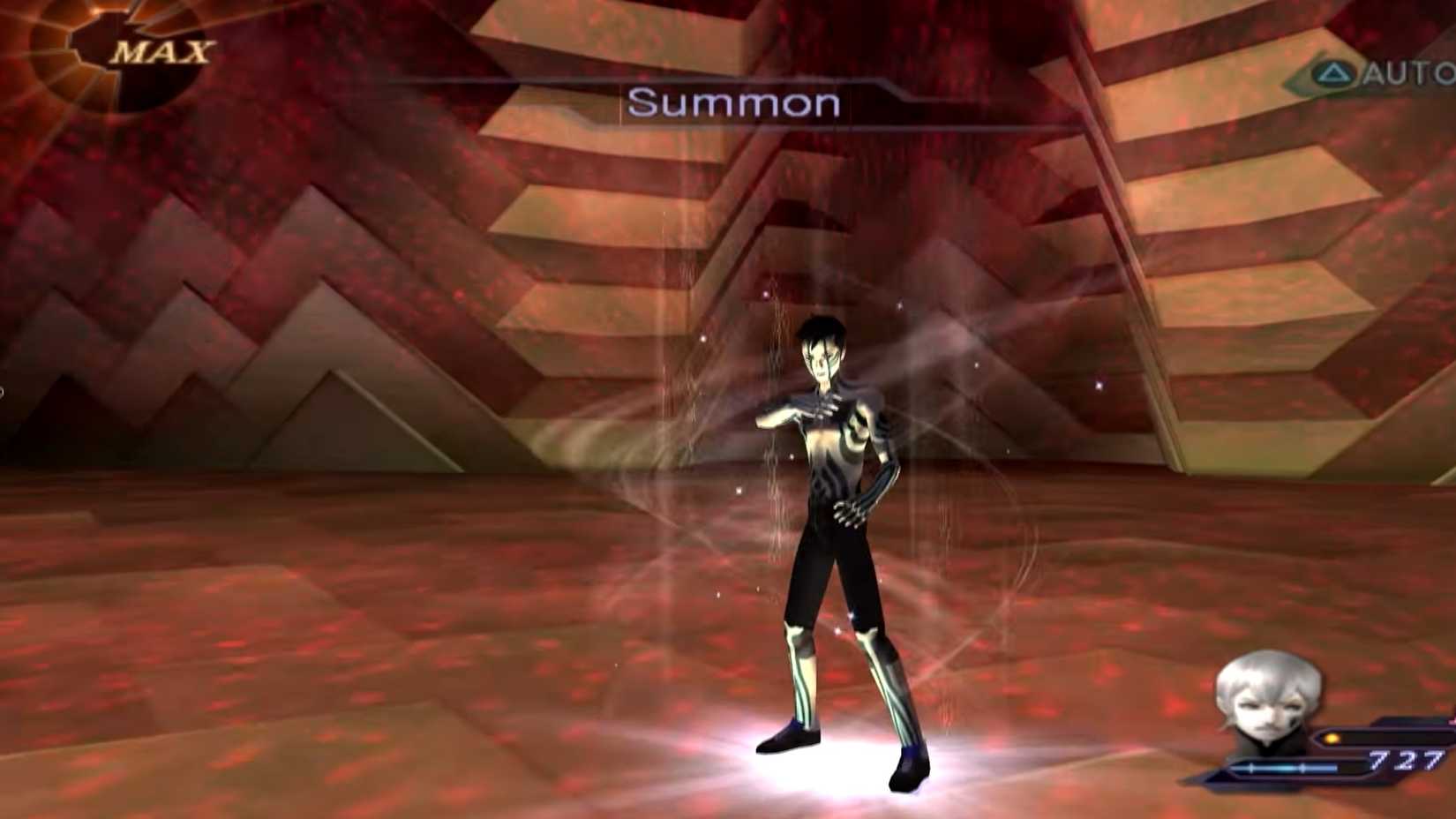
The protagonist of Nocturne, now a terrifying optional superboss in Digital Devil Saga, and the game signals exactly how seriously to take him before the fight even starts: his normal encounter theme plays. Not a boss theme. His random battle music. For him, this is just another random encounter.
To even have a chance at beating him, you need every character at level 99 with maxed stats – and even then it's a 50/50 at best, depending on RNG. If you try to give yourself any kind of elemental immunity, he immediately spams Gaea Rage, an Almighty-type attack that deals anywhere between 3,000 and 30,000 damage to your entire party and cannot be avoided. He brings six demons with him, one of which is Pixie – who keeps healing him with Mediarahan once he drops below a threshold.
The strategies that can beat him are incredibly specific, fragile, and still require luck. He is widely considered one of the hardest bosses in any JRPG ever made. His fighting your party with the moves he had as the protagonist of Nocturne – moves that were fairly average in that game – makes it even funnier and worse.
 Related
12 Hardest Final Bosses of All Time
Notoriously hellish and oh-so annoying.
3 Elizabeth — Persona 3
A Fight With Rules You Cannot Break
 YouTube via widya vello
Elizabeth's superboss fight in Persona 3 has a set of conditions attached to it that are more like a contract than a ruleset. The fight must be completed in fifty moves. You cannot block, drain, or repel any of her attacks. You cannot open with Armageddon. Break any of these rules, and she summons Pixie and hits you with a 9,999 damage Megidolaon. She is also scripted to use that same attack during phase transitions, which means your Endure and Enduring Soul have to be carefully preserved for the mandatory hits rather than burned on rule violations.
In a completely twisted way, I love her for exactly what she is: utter absurdity, made by developers who respected the player enough to also make it coherent absurdity. She's not fun in the way a well-designed action sequence is fun. She's fun in the way that surviving something rather unfair and then processing it afterwards is fun. There is a specific kind of satisfaction that only a fight like this provides.
2 True Vide, the Wicked — Octopath Traveler 2
The Final Phase Heals for 800,000 HP
 YouTube via chewythebigblackdog
True Vide starts the fight by reducing all four party members to 1 HP. That's the introduction. What follows is a multi-phase encounter with four adds, each with around 140,000 HP, each delivering a devastating dark attack when they die. When the main body dies, it absorbs your party and your backup four have to come out. The adds revive. A countdown begins from three, and if it reaches zero, you lose. The body has to die within three turns.
True Vide, the Wicked, is worse. The main body has 1,000,000 HP. It opens by sealing all eight divine skills, because your strategy apparently needed dismantling from the start. The adds reflect magic and physical attacks respectively, meaning you have to break them and hit them with the type they reflect. The final phase heals for 800,000 HP, goes berserk, takes four actions per turn, and has twenty-eight shields. Every buff you've built up gets erased regularly by Wave of Nothingness.
It is the kind of boss that makes you feel like the developers were having a genuinely good time designing it, and were not particularly concerned about yours, which is my favorite kind of superboss.
1 Erde Kaiser Sigma — Xenosaga Episode III
A Love Letter to Three Games and One Mega Man Boss
 YouTube via jetstream gaming
Xenosaga Episode III: Also Sprach Zarathustra
Erde Kaiser Sigma is the culmination of a sidequest that runs across all three Xenosaga games, built around the rivalry between your party's Professor and his arch-nemesis, the Dark Professor. You collect the previous three Erde Kaisers across the series to confront Dark Professor's ultimate creation, and the whole thing is a deliberate homage to two very specific things: the G Elementals boss from Xenogears, and Kaiser Sigma from Mega Man X. He even has a southern accent that is notably different from his previous country twang in Xenosaga II, which is a detail I respect enormously.
You can technically fight him as early as disc one. He is effectively impossible at that point. As the game progresses, you unlock tools that allow you to manipulate his AI and chip away at the stat check he represents, and working out how to tackle him earlier than intended becomes its own puzzle. Defeating him earns you his Knights of the Round equivalent. He has an exclusive boss theme. The whole encounter feels like a reward for people who did everything, remembered everything, and wanted one more reason to appreciate what the series built. That's exactly what a great superboss should be.
 Next:
Next:
10 JRPG Bosses Harder than the Final Boss
JRPGs have some of the most iconic fights in gaming and while most are manageable, there are always a few in each game that give gamers chills.



![ELDEN RING NIGHTREIGN: Deluxe Edition [FitGirl Repack]](https://i5.imageban.ru/out/2025/05/30/c2e3dcd3fc13fa43f3e4306eeea33a6f.jpg)
 English (US) ·