.png)
.png) 7 months ago
113
7 months ago
113

Sign in to your DualShockers account
While I can see the benefits of exploring a sprawling open world and the potential content it offers, more often than not, I prefer my JRPGs on the more linear side.
JRPGs are characteristically more linear than other RPG subgenres, both in exploration and narrative. There are still some secret nooks and crannies to be found, especially in older games with an overworld, but the progression is entirely on rails.
Related
10 JRPGs That Don't Feel At All Like Anime
Just because they’re RPGs inspired by Japanese culture doesn’t mean they automatically have anime aesthetics.
Even so, there are some extremely linear JRPGs, the kind where it is hard to even justify adding side content because the main path is always town, dungeon, town again, another dungeon, rinse and repeat (some don't even feature towns!).
So if, like me, you also prefer more linear games or are simply tired of open world bloat, here are my suggestions for the 8 best linear JRPGs.
8 Parasite Eve
From One Horror Shock To Another
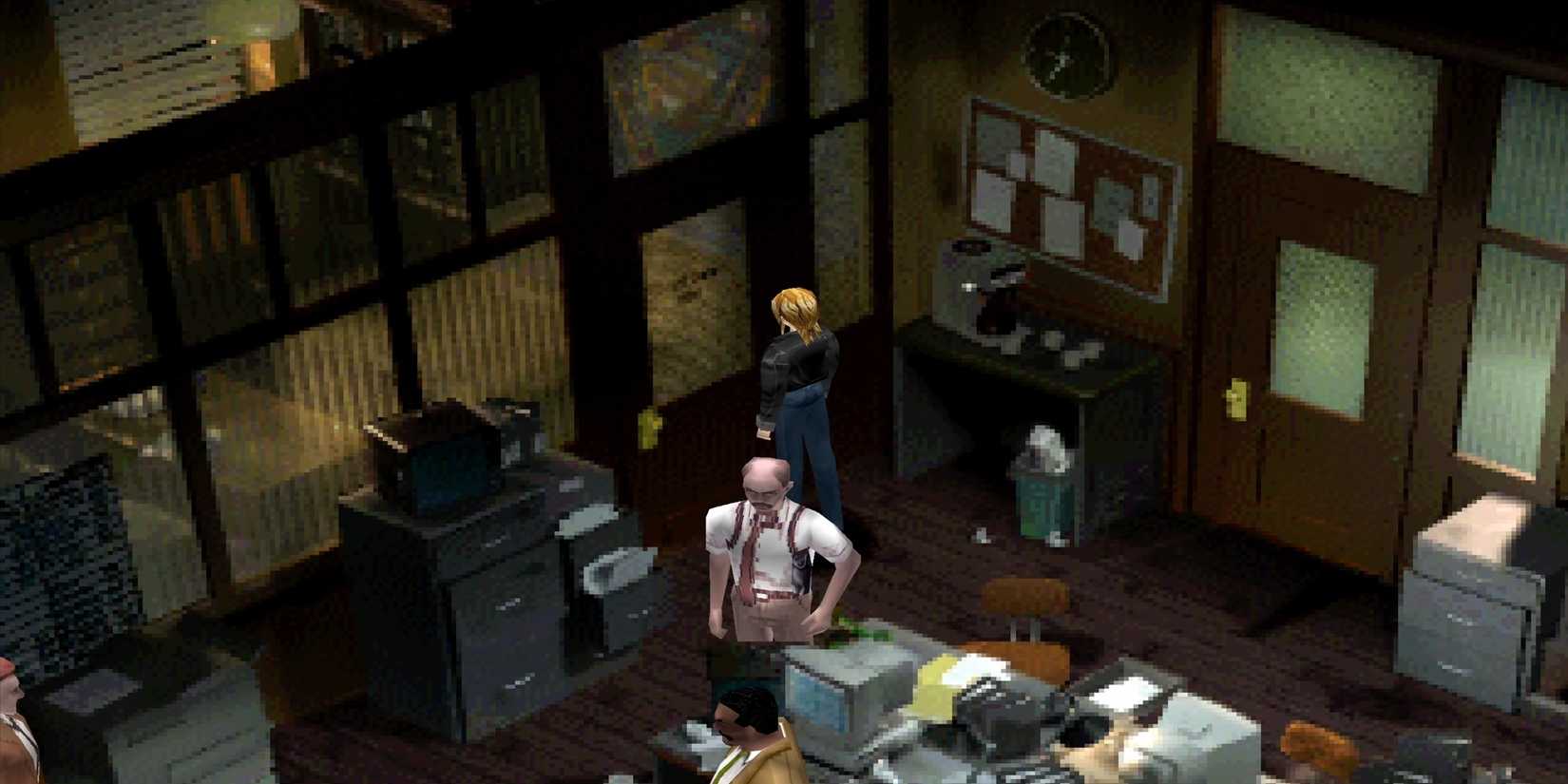
I was never much of a Resident Evil fan because I scare easily, so imagine my surprise when someone recommended Parasite Eve under the premise that it was an RPG, and suddenly I saw a grotesque rat mutation. My young heart nearly stopped right then and there.
Despite this horror-leaning JRPG tendency, Parasite Eve is still a fantastic game. And fittingly enough, it also features a strictly linear structure. We begin our journey at Carnegie Hall, and from there we only move forward. The game offers a few explorable rooms to collect items, but it is not a kind of freedom that lets us drift away from the main narrative to go around killing grotesque rats in Times Square.
The point here is that both gameplay and narrative are linear, and instead of simply holding the player's hand, they push us toward the intended direction. Parasite Eve is divided into days, functioning like the game's chapters. There are six in total — not counting the Chrysler Building, which is the least non-linear moment in the game but only accessible on a second playthrough.
At the end of each chapter, the game throws us straight into the next step. Parasite Eve may give the impression that we can explore New York City, but it is only an illusion, as we are forced to go to the marked locations to progress the story. No complaints here because I love a handholding JRPG now and then.
7 Breath of Fire: Dragon Quarter
Ahead Of Its Time
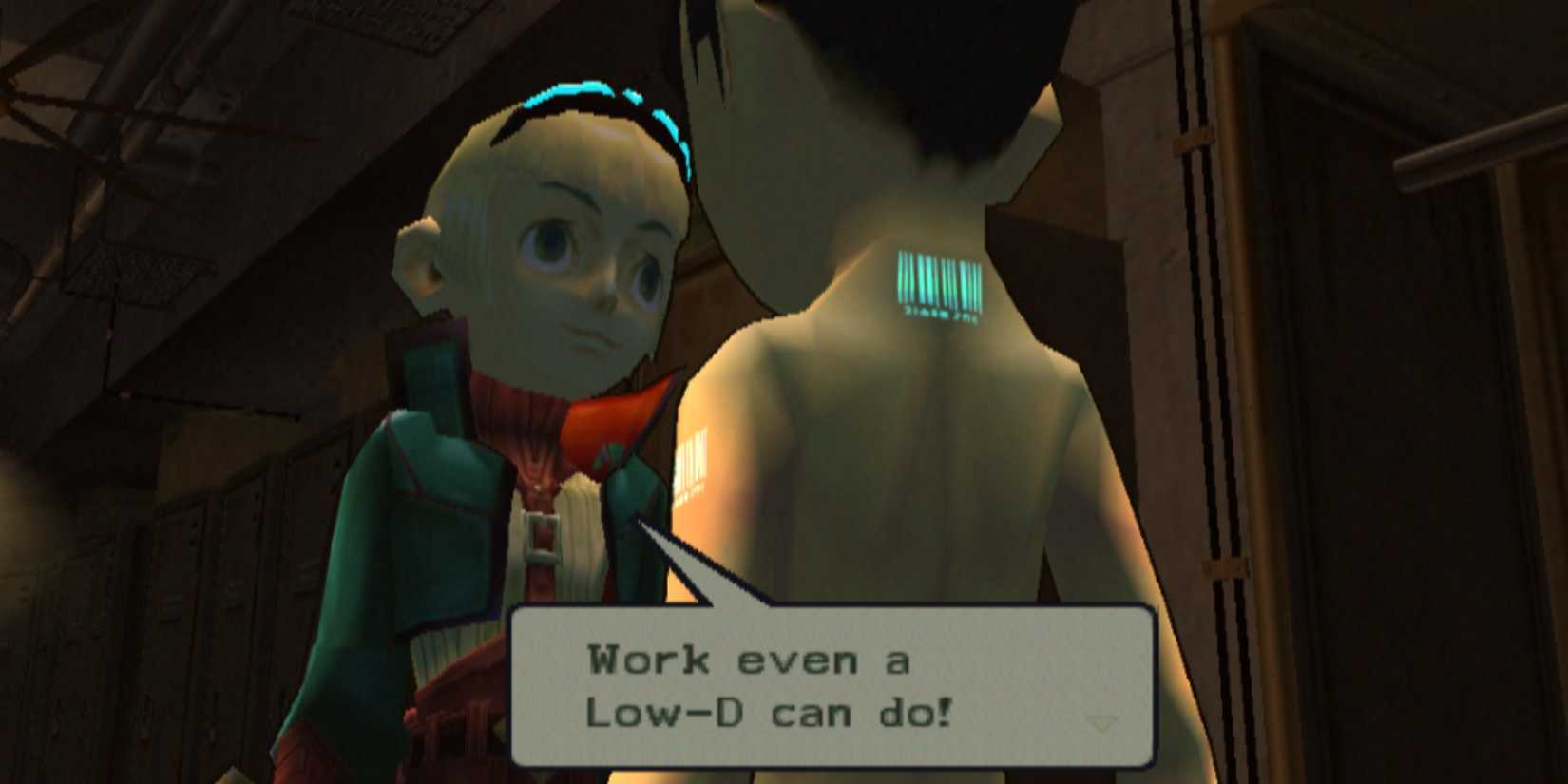
Call me a shameless fanboy, but I like Breath of Fire: Dragon Quarter. Today's topic is not to defend or explain why it is a game ahead of its time, whose suffocating atmosphere constantly puts us under pressure and danger at every turn. Today, we are talking about how Dragon Quarter is set in a dungeon that only allows us to move linearly forward.
There are exceptions in New Game Plus as our D-Ratio reaches a higher rank and new areas open up. But even then, the game never strays from its claustrophobic proposal of sending us down tight corridors packed with enemies that are way too strong for our current party.
Breath of Fire: Dragon Quarter takes place underground. Humanity fled the devastated surface and began living under a caste system. The noblest people inhabit the upper layers where the air is purer, while common folk stay below. Ryu is a Ranger, a soldier tasked with defeating laboratory-created monsters that serve as food for the people. One day, after crossing paths with Nina, Ryu rebels and tries to reach the surface.
This path from the deepest underground to the top is exactly that, just one path. Along the way, we find monsters, bosses, and new story beats, and we cannot stray from it at any point. There is one recreational moment where we build an ant colony, but that is about it. The only way to find extra areas is to replay in New Game Plus, yet even then, the JRPG remains rigorously linear.
Ah, Breath of Fire: Dragon Quarter, one day the world will acknowledge your excellence, no matter how linear your gameplay may be.
6 Final Fantasy XIII
Better Than You Remember

You all knew Final Fantasy XIII would be here, right? Final Fantasy X could also qualify, but Lightning's adventure is even more linear than Tidus's. Final Fantasy XIII has, appropriately, 13 chapters, and only in chapter 11 do we reach Gran Pulse, where the world finally opens up and lets us take on monster-hunting side missions.
But until we reach the world below, the game is notoriously known as a hallway simulator, with corridor after corridor, cutscenes, battles, more cutscenes, more corridors, and more cutscenes. I am not complaining because I think FFXIII is a technical marvel, still gorgeous to this day, and every cutscene looks ready for the silver screen. But I understand why some players felt disillusioned.
Also, FFXIII is not literally a one-corridor game. In several zones, we can walk from one side to the other and find hidden items. But I think the biggest complaint is just how extreme the linearity is. There are no towns, no NPC interactions, or even shopkeepers and inns. We can overhear NPC conversations but not talk to them directly, and all of our facilities are at the save points.
It is in these areas that Final Fantasy XIII's linearity stands in stark contrast to older titles. They removed so many elements that made an RPG feel alive that everything became heavily scripted. Square seemed to take the feedback to heart because both FFX-2 and Lightning Returns are far less linear. Still, that doesn't mean Final Fantasy XIII is a bad game just because it is linear.

Related
8 Most Revolutionary JRPGs Every Fan Needs to Experience
These are games for those who want to dig deeper into the genre.
5 Mega Man X: Command Mission
The True Mega Man RPG

Mega Man X: Command Mission is a highly competent turn-based RPG for the PS2. It features many well-known Reploids, like X and Zero, while also introducing new ones, all using a level, skill, and equipment system drawn straight from the franchise.
Command Mission follows a structure similar to Parasite Eve. The game is divided into 10 chapters, and whenever one ends, we are thrown into the next mission. Central Tower works as our base where we can chat with folks and buy items. But once we talk to our boss, we only have one destination: the next stage and the continuation of the chapters.
The JRPG even lets us revisit old stages, but there is nothing new in them. You can grind levels, pick up items you missed, or farm enemy drops, some of which happen to carry the best weapons in the game. However, in terms of exploration or meaningful side content, there is nothing fresh to uncover.
That is why Command Mission is considered a linear JRPG. Each stage has a map guiding us to the next objective, and we follow it, going from corridor to corridor, room to room, until we reach the boss. Once we defeat them, the chapter ends, and we return to base, where we can jump straight into the next chapter.
4 Grandia II
The Illusion of Discovery

One thing you may have heard is that Grandia feels like a carefree adventure where Justin and his gang of kids just want to explore the world, but end up caught in a cataclysmic event that might destroy everything, because that is JRPGs for you.
Grandia II, however, tones down that sense of adventure because of its central story. In the game, Ryudo, a geohound (a type of mercenary), accepts a mission to escort Elena. Everything goes wrong, and Ryudo is dragged into a crisis between good and evil, but the point is that since the game forces you toward your destination, you are simply walking until you get there.
Ryudo's adventure is still amazing, and although the game is not grotesquely linear, the biggest offender is that its dungeons lack the whimsical exploration feel. While exploring a new area, treasure chests are basically thrown at your feet, right in front of you. You do not even need to leave the beaten path or take a wrong turn.
This fake sense of exploration appears in many JRPGs, but we hardly notice because our dopamine spikes with every new treasure we find. Grandia 2 also has almost no extra content, such as sidequests, except for a single secret dungeon near the end. It is a perfect game for those who want to enjoy a good story and one of the best turn-based combat systems with real-time elements.
3 The Last Story
Not Final This Time
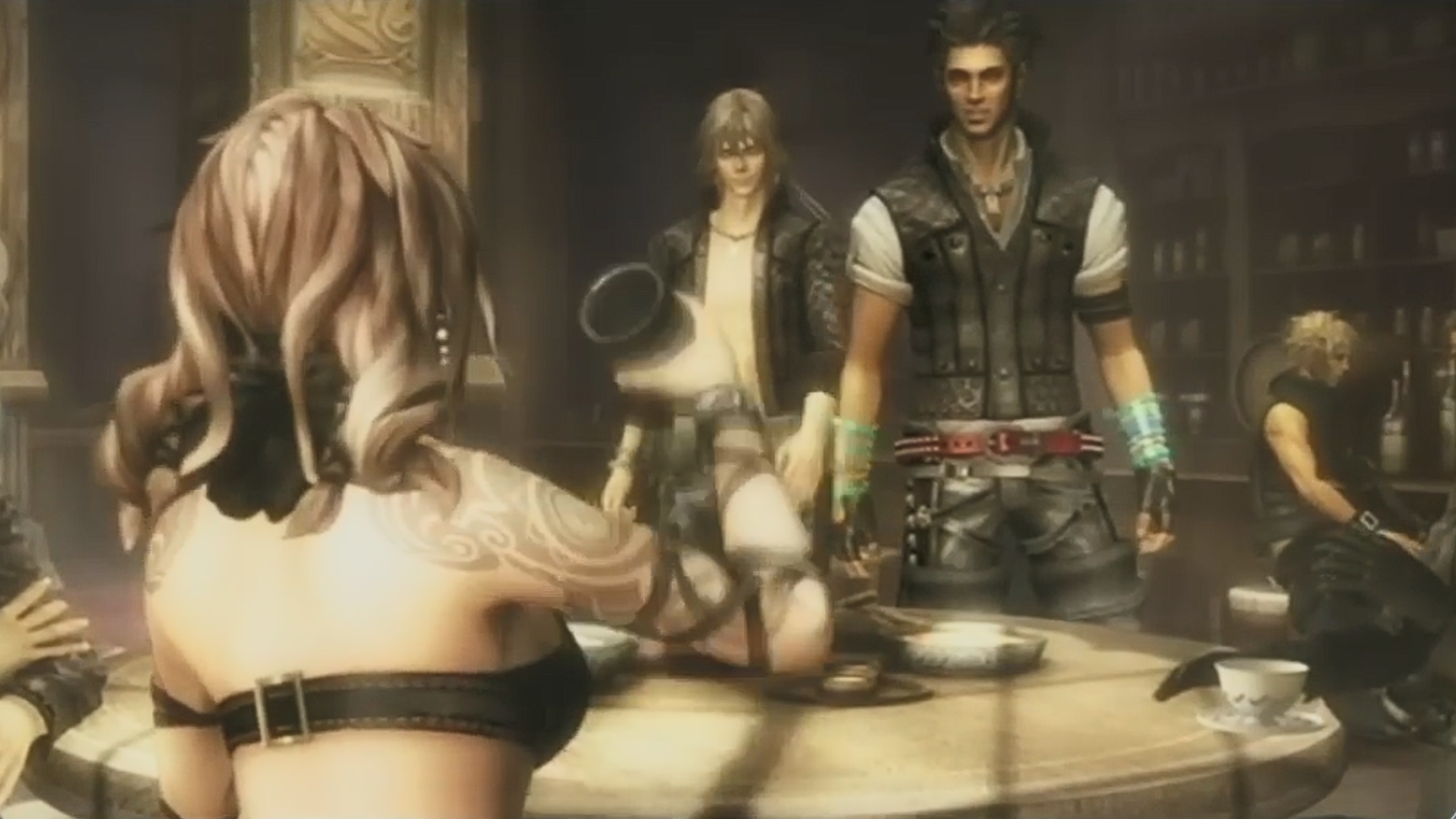
After Hironobu Sakaguchi left Square, he founded Mistwalker, where he began producing JRPGs on demand for other consoles. One of these games was The Last Story for the Nintendo Wii. I like Final Fantasy, RPGs, and Sakaguchi, so it was the perfect combo. I bought a Wii and an overpriced physical copy of the game and dove right into Lazulis.
The Last Story is a narrative-driven game and executes this aspect extremely well. From the first mission, the characters already show personality, charm, and multiple layers. As soon as we leave the first dungeon, we reach a city that works as a hub for other activities, like finding items on the ground or participating in an endless coliseum.
Once we push forward with the campaign, The Last Story settles into an episodic structure, jumping from plot point to plot point. There is a moment when the story splits into two distinct phases, the only one with more freedom, but both lead to the same outcome and the continuation of the narrative.
The further we progress, the more linear the JRPG becomes, preventing us from revisiting previous areas or simply sending us back to the main city, which is also the only city and offers little. In the end, I had fun, witnessed a great story, and met genuine characters, but I admit that the ever-increasing linearity here was a bit shocking even for me.
2 Child of Light
Ubisoft's JRPG

I wanted to include Child of Light here because this JRPG-inspired game falls into a gray area when it comes to how linear it is. Structurally speaking, it is indeed linear, especially since this confirmation comes straight from Patrick Plourde, the director of Child of Light. Patrick said the initial idea was to have the ending change based on the player's choices in sidequests, even if the experience remained linear. This was scrapped in the final release, but the sentiment remains.
I believe Patrick had this opinion about linearity simply because he was the creative director of Watch Dogs 2 and Far Cry 3, two extremely open-ended games considered borderline sandbox, the epitome of creative freedom in an open world. From his perspective, a game like Child of Light, which even offers extra content and could have featured alternate endings, is still considered linear because you follow one path, despite the potential for replayability.
Child of Light is an amazing RPG with turn-based combat that incorporates real-time elements, rhymed dialogues, and a whimsical yet heavy narrative. I decided to include it because I found Patrick's view on linearity interesting, since by that logic, all JRPGs would be strictly linear even if they contain secrets or an overworld to explore. Ultimately, it is in the nonlinearity and endless possibilities that WRPGs and CRPGs shine, as well as what most clearly separates them from JRPGs.
1 Trails in the Sky 1st Chapter
Go Play Trails
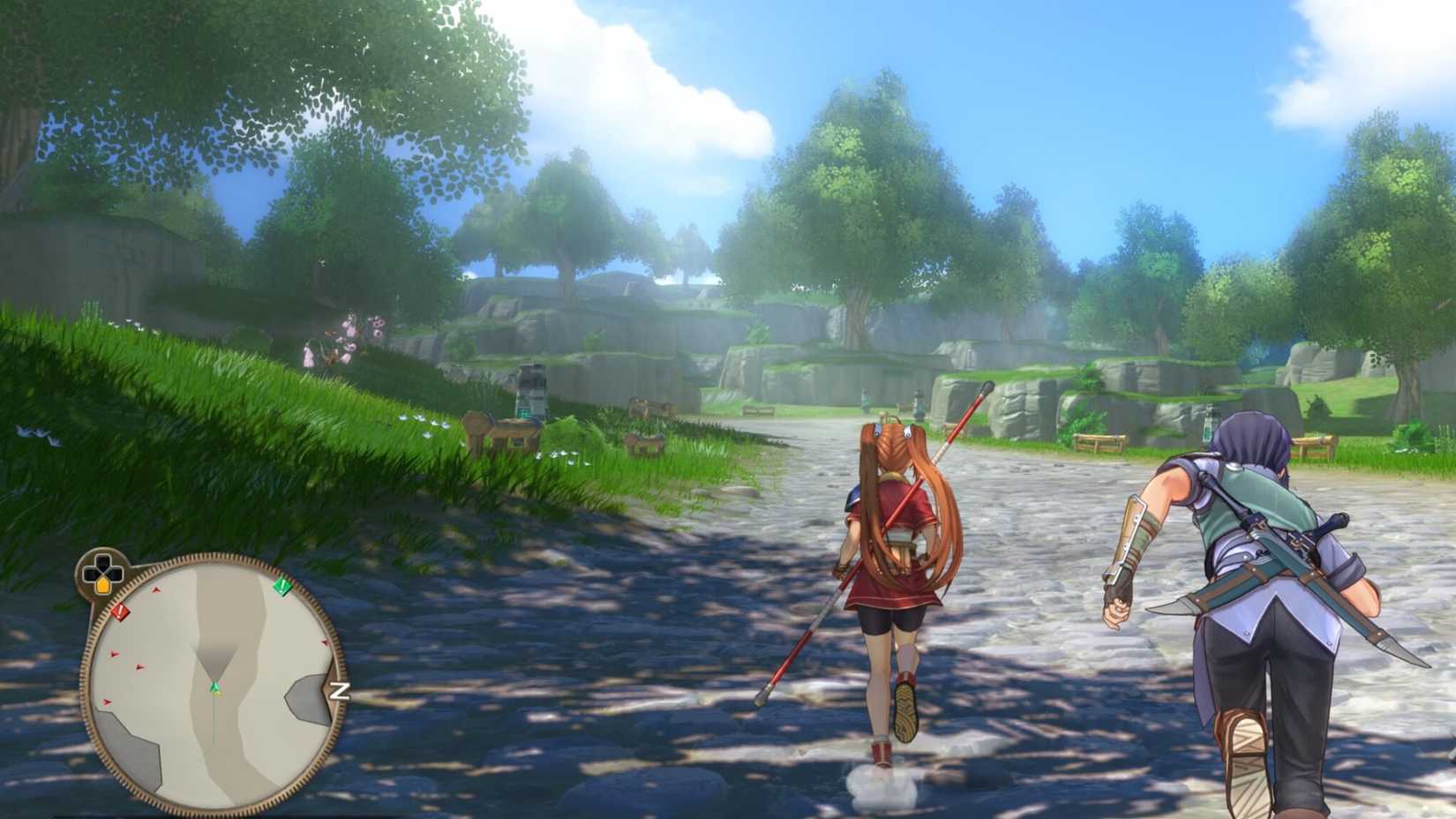
Just because a JRPG is linear does not mean we cannot witness the evolution of its world. Trails in the Sky 1st Chapter is the greatest proof that it is possible to follow an on-rails journey while still observing the consequences of our actions, giving us the feeling that we truly make a difference in the story.
After Estelle and Joshua become bracers, they set out on an adventure across the entire kingdom of Liberl, visiting its regions and towns. Each chapter takes place in a different region, and once we arrive there, we cannot return. The narrative stays self-contained in that region until we finish the main quest, which essentially consists of going from point to point, solving conflicts.
But the biggest standout of Trails is its unparalleled world-building. When speaking with NPCs, they react to events in the main story. Triggered a major cutscene? Talk to the NPCs again, and their dialogues change. This repeats constantly until the end, with some NPCs even reacting to sidequests. The level of detail and care Nihon Falcom put into the Trails' script is enviable and should serve as a benchmark for many RPGs.
So even though we are constantly being guided by the hand in Trails in the Sky 1st Chapter, which might make us miss many collectibles if we are not using a walkthrough, we still get that wonderful feeling of constant progress and the impact of our presence. All that to say is: go play Trails, it is one of the best JRPG series out there today.

Next
8 Best JRPGs With Time Travel
Time travel is a finicky theme to get right, but when a JRPG nails it, the results are marvelous.



![ELDEN RING NIGHTREIGN: Deluxe Edition [FitGirl Repack]](https://i5.imageban.ru/out/2025/05/30/c2e3dcd3fc13fa43f3e4306eeea33a6f.jpg)
 English (US) ·