.png)
 4 months ago
50
4 months ago
50

Published 29 minutes ago
Chris Perkins talks designing one of D&D 5e's greatest books
 Image: Wizards of the Coast
In my living room there is a framed drawing depicting a party of adventurers. An armored warrior is kneeling in the snow, examining a ritual circle made of blood. A mighty goliath is carrying away a passed-out wizard in his arms, while in the background two elves confabulate suspiciously. It's one of my favorite scenes (drawn by one of the players) from my experience running one of the best fifth edition D&D campaigns, Rime of the Frostmaiden.
The Icewind Dale: Rime of the Frostmaiden adventure book was designed to feel hostile: cold, isolating, and unforgiving. According to lead writer Chris Perkins, “all the warmth in the adventure should come from the party.” It’s a simple and effective contrast which gave birth to one of the best products in D&D’s fifth edition line.
In 2018, Wizards of the Coast wanted the D&D team to develop an adventure set in Icewind Dale to tie into a video game in development at the time. That game, Dark Alliance, is also set in the region. “That never happens,” Perkins told Polygon on a video call, remembering his warnings to the company about video games usually getting delayed. The adventure ended up coming out in 2020, while Dark Alliance was released one year later.
“I immersed myself in the setting of Icewind Dale, just trying to figure out a story or a way to bring the cold isolation of the most northerly realm in the Forgotten Realms to life,” Perkins said. “I took notes about cold things, and tried to come up with a theme. Having been born in Canada, I know something about cold, so I didn't have to reach too deep.” The theme that kept coming back to Perkins was that all the warmth in the adventure had to come from the player characters, and all the external forces around them were trying to crush that warmth. That dynamic is felt throughout the adventure.
 Original art for Rime of the Frostmaiden illustrated by Robson Michel.Image: Wizards of the Coast
This massive, 320-page adventure module stands out from other D&D books because it focuses on fleshing out a number of locations that can be visited in any order rather than taking a more linear approach. In Frostmaiden, the story emerges from the environment and how the players interact with it (while maintaining a strong central narrative). In comparison, other famous D&D fifth edition modules like Curse of Strahd and Waterdeep: Dragon Heist are more focused on ongoing quests that drive the narrative and flow of play. Rime of the Frostmaiden is instead far more “location-driven.”
“The early idea was to create a sandbox-style adventure that gave you a place and all of these toys that you, as the DM, can play with — all of these locations — and you probably will never get to them all unless you replay the adventure over and over again,” he said.
“Sandbox” is a word that gets thrown around a lot in TTRPG design, but it’s not easy to actually make a good sandbox campaign. That's different from a campaign setting supplement, which gives you a world and the people who live in it, but you often need to develop a story for it. Frostmaiden’s structure makes it especially appealing for DMs like me who want the flexibility of weaving their own story into the preset narrative without necessarily abandoning it.
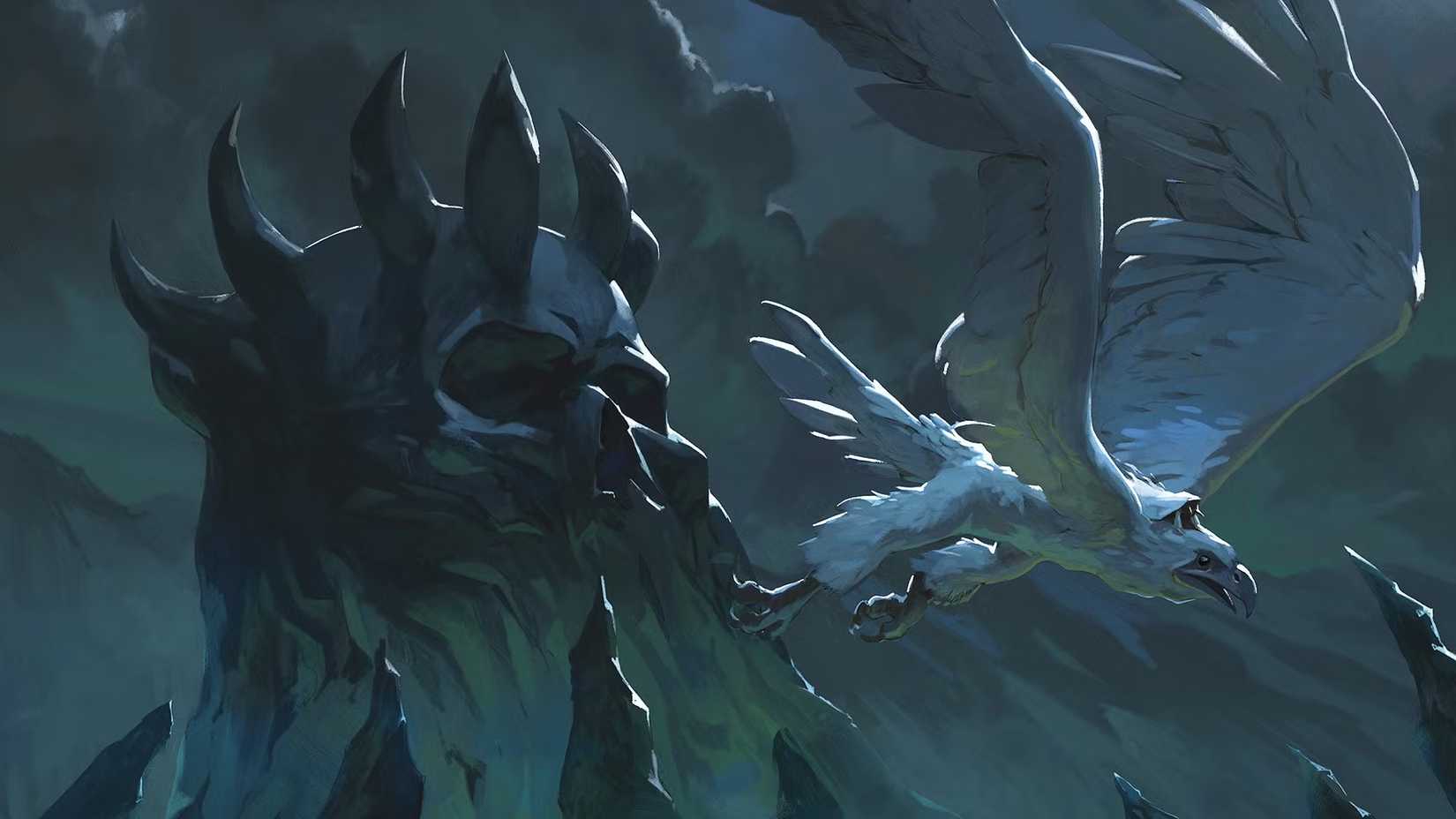 Image: Wizards of the Coast/Eric René Christensen
Curse of Strahd is another 5e book Perkins remembers fondly. In the afterword to Rime, he wrote that Icewind Dale reminds him of a Domain of Dread (the demiplanes locked in the Shadowfell, including Barovia, where Curse of Strahd is set). What lessons did he learn from writing Strahd that he applied to Rime of the Frostmaiden?
“One of the interesting things about Icewind Dale is that it’s a confined setting,” Perkins said. In Curse of Strahd, players are trapped inside Barovia, as a wall of impenetrable mists surrounds the small realm, forcing the party to remain confined in this play space. That same sensibility carried over into Iceland Dale. It’s the northernmost region of the Forgotten Realms, isolated by a mountain barrier to the south, an icy sea to the north and west, and glaciers to the east. This allowed the adventure to lean into the theme of survival horror and isolation. “You know what happens to people who are living in a confined space where they really are trapped,” Perkins said in reference to some of his inspirations for the module: John Carpenter’s The Thing and H.P. Lovecraft’s At the Mountains of Madness.
He also highlighted the need to make such a bleak environment a place that the players like spending time in. The biggest challenge was coming up with things in Icewind Dale that make the players excited and happy to be there, even though it's a pretty miserable place to be in. And that was something Perkins had to solve in Curse of Strahd, “finding little flickers of light and happiness in an otherwise very bleak land.” In Icewind Dale, Perkins added things like a goofy plot where a gnome dresses up like a goblin and embeds himself into goblin society. “It's completely ludicrous, but it was done deliberately to offset the very oppressive darkness, gloom, cold, and isolation to have this quirky, stupid thing happening that the players might find fun,” Perkins said.
 Image: Wizards of the Coast
I can relate to that, as the gnome in question, Spellix Romwod (going by the alias of chief Yarb-Gnock), was a highlight in my own campaign. The magic of Rime of the Frostmaiden is exactly that: It’s set in a confined space, but it doesn’t feel oppressive or claustrophobic since there are plenty of things to do, see, and explore. The depth and richness of the product really stand out, and you can find a lot of inspiration even in a small paragraph of text. Everywhere you look, there is something to engage with. This might be because of the number of writers involved: a whopping 11, not counting Perkins himself. Meanwhile, Curse of Strahd only credits four writers.
Perkins said that early in development for Rime of the Frostmaiden, he drew from his experience when he started at Wizards as editor of Dungeon magazine, working with freelance writers. For this project, he hired freelance designers he’d never worked with before. “I broke up small parts of the adventure and handed them out to people because I didn't want to put too much on their shoulders with their first D&D official project,” he explained. “But the pieces that they were given, when they came in, felt very different from the things that I would write, so it gave the product a more varied quality. And then, I stitched them together with my own so that they would have a unified style and voice.”
What he did not expect, however, was that the contributions from the other writers would end up influencing his own work. “I was getting inspired by some of the ideas that they had, and that would make me go back and add more sprinkles of that thing into the other parts of the adventure,” Perkins said. “They were inspiring me to throw more stuff in. What you're seeing is the many voices coming in, and all of them having an influence on the adventure as a whole, even the parts that they didn't see or touch themselves, just by the nature of how their work affected mine.” This ended up making the final product bigger than the standard, triggering discussions on a possible price increase, which luckily did not happen. “I didn’t have to cut anything, even if I usually love doing that. This is a case where I felt everything belonged.”
And I have to agree. Every time I sit down at my gaming table to play another D&D session, I look up at that drawing from Rime of the Frostmaiden. The memories we made playing that fantastic module still hold onto that same warmth that Perkins mentioned, burning like a campfire in the frozen tundra of Icewind Dale.



![ELDEN RING NIGHTREIGN: Deluxe Edition [FitGirl Repack]](https://i5.imageban.ru/out/2025/05/30/c2e3dcd3fc13fa43f3e4306eeea33a6f.jpg)

 English (US) ·