.png)
.png) 4 months ago
96
4 months ago
96


Elena Chapella (She/Her) is a current Writer for DualShockers, formerly an award-winning journalist for local news stations and newspapers in central Indiana.
Elena is passionate about writing, playing Dungeons & Dragons with her friends, and, of course, playing video games.
When she's not writing, Elena is actually a high school teacher by day. She teaches students essential life skills for adulthood, including job readiness, financial literacy, and college preparation.
Sign in to your DualShockers account
There are so many details in Silent Hill f, it's practically dizzying. The Silent Hill franchise is known for subtle, subtextual horror hidden in plain sight, and their latest entry is no exception to that. In fact, context in this case makes the horror so much better.
However, since the game takes place in 1960s Japan and is heavily cultural to the region, there are a lot of nuances that western audiences would miss. Unless they've been to Japan (either studying abroad, living there, familial ties, or whatever other reason), speak the language, or even practice Shintoism or Buddhism, there are a lot of subtleties that are easily overlooked.

Related
Silent Hill f: Who is Mayumi Suzutani?
When playing Silent Hill f, you'll see mention of a girl named Mayumi Suzutani, and she holds much more significance in the plot than you think.
Of course, there are some details that made their way worldwide that are easy to follow (such as the Red String of Fate depicted on save files, or how the red spider lilies all throughout the game represent death and rebirth), but there are countless other nuances that westerners just wouldn't get if they aren't familiar with Japan, its history, or Japanese culture too much.
I studied abroad in Japan, and I still continue to study Japanese — of course, I'm not Japanese nor do I live in Japan, so I'm not a native expert, but there are plenty of details that I managed to catch based on my experiences in Japan. It makes the game so much more enjoyable for me, and I hope these new contexts make the game all the more amazing for my fellow western audiences as well.
This article will contain spoilers for Silent Hill f, its happenings, and endings.
10 The Bride Doll
An Easter Egg and Foreshadowing

One of the most notable Easter Eggs in the game comes from the very beginning, with our opening song: Mayoi Uta (literally translates to "Lost Song"). Players end up learning the translation of the lyrics when the credits roll, but even then, the song is cut up and edited at the start, so Japanese speakers are still surprised by the full song at the end. The most they'd know is that it's about the struggles of being a woman, which many players already anticipated being a theme going into the game.
However, the melody of this song is borrowed from an already-existing folk song, Hanayome Ningyou (which translates to The Bride Doll), which describes a reluctant bride crying on her wedding day. Full of doubt and sorrow, the song only seems to paint a bleak picture for our bride, telling her to dry her tears lest she ruin her shiromuku (the traditional white kimono worn on weddings).
Not only is this an incredible pull that grounds the story in reality a lot more, but it also provides valuable foreshadowing of what kind of situation Hinako has found herself in. The game focuses quite a bit on the fear of marriage/losing yourself in a marriage and the cycle of abuse, so it's honestly a perfect fit to include a song like this as a foundation.
To help really drive this home for westerners, it's like we got a messed-up version of Mendelssohn's Wedding March.
9 Arranged Marriages Were Supposed to Die Out
Shimizu Kanta Represents Post-War Traditionalism

I actually cannot take credit for finding this one out, as that correlation belongs to u/Obvious_Necessary671 on Reddit, who offered a lot of insight about Japanese culture in this game in a Q&A style. One of the questions they answered pertained to arranged marriages, and how exactly that worked in Japan — in reality, there's a lot more subtle information that paints a more detailed picture.
Arranged marriages in Japan (called "omiai") are still around today, but they're not as common as they used to be. In fact, they were supposed to die out after World War II, when in 1946, the post-war Constitution abolished the system of family heads arranging marriages.
t ended up being revised in 1947 to allow either the husband or wife to take the last name, even — yet, in a 1999 article from the Japan Times, Mizuho Fukushima, a member of the House of Councilors and a lawyer specializing in family law, told them: "The Census Registration Law, which placed the lineal family as one unit of registration in the prewar era, was revised to make the nuclear family one unit. However, because the revision 'did not go far enough' to make registration on an individual basis, the prewar ie notion remained in the hearts of the Japanese, and the legacy carries on today."
This prewar notion of the ie (meaning home) is the exact system of belief that Shimizu Kanta, Hinako's father, believes in. He's literally so caught up in tradition and conformity, it makes Hinako's entire situation feel all the more suffocating. Plus, there are plenty of themes of the fear of conformity, and this only adds to it.
Omiai is still practiced today, but with a lot more freedom than what was offered back in the day. However, marrying for love is much more common, and it's thanks to women like Hinako who fought back.
8 Kokeshi Dolls Are Symbolic
Even the Broken Ones

When I had first played the game, I had mistaken the kokeshi dolls we found in the Shimizu Residence (the Silent Hill 4: The Room reference in particular) for being track and field batons, and several others in the west make this same mistake. It's a natural assumption, but the kokeshi dolls provide so much more information.
Kokeshi dolls are supposed to protect children, with their power coming from them sitting upright. However, the ones we see on the ground, knocked over, are painted to look like her mother, while a giant one watching our every move with a bulging yellow eye is painted to look like her father. The one that looks like her father is practically crushing all the ones that look like her mother, showing a depiction of abuse and domination that was critiqued the whole game.

Related
Plus, all of these kokeshi dolls are knocked onto their side, taking away the protective power that they're known to have. With this, we're able to see what Hinako thinks of her parents: incompetent and unable to properly protect their own children from abuse at their own hands.
It's a subtle insight into Hinako's mind that makes the game seem that much more tragic.
7 The Monsters Are Connected to Yokai
Society was Born from Folklore

The monsters in Silent Hill games always have a ton of meaning and symbolism, and Silent Hill f is no exception to that. In fact, the monsters in this game seem to take some inspiration from yokai, which are essentially demons from Japanese folklore – and folklore is the foundation of cultures around the world.
When I interviewed NeoBards, the development team, I asked them if any stories in folklore or any particular yokai inspired them – and one example that was brought up was the irohihi (the pervert monster that licks you in the fog world). The director, Al Yang, had mentioned a yokai that has a potbelly and is eternally hungry as one inspiration (it's likely he's talking about the gaki), but that's not all. A hihi is another type yokai that seems to make up the irohihi, being a baboon yokai known for violence. Even the name, irohihi, is a play on words – specifically, it sounds like エロ爺 (erojiji), which means perverted old man.
However, this isn't the only monster that has this level of detail – the ayakakashi seem to have some inspiration from ayakashi, which are yokai of vengeful, drowned spirits that will now try their hardest to get others to drown with them.
In fact, if you go through every single monster in the game, you'll find some type of yokai element in there that only adds to the metaphor and storyline.
6 There's More to Inari and the Tsukumogami
The Gods Have Rich Lore
The two main deities that we see fighting over Hinako in this game are the Fox God Inari and the old Tsukumogami, yet many players on the western end of the world wouldn't fully grasp the weight of their folklore and their place in Shintoism.
Inari, for example, is actually genderless and appears in all kinds of forms; however, most prominently, Inari takes on the form of a woman. The fact that developers made Inari take on a more masculine form in Silent Hill f doesn't feel like a coincidence, but rather a deliberate choice to reinforce tradition and gender roles; or he may not even be the real Inari at all. Inari is an incredibly benevolent deity, so the events in this game are out of character, unless you consider that it's not the same character.
The Tsukumogami, on the other hand, isn't even a god at all — but rather, it's what happens when objects are improperly discarded in Japanese folklore. They take on a life of their own until they can finish their business and be properly put to rest, and that seems to be exactly what happened with the celluloid doll.
Considering Ebisugaoka has its own distinct faith that seems to combine the worship of these two deities, it helps show just how isolated Hinako truly is, and just how hung up on tradition everyone in town truly is.
5 Hinako's Name Isn't the Only One with Meaning
Everyone's Name Reveals Something
 Side note: put Hinako in white during a playthrough, it will add a whole new (bridal) connotation, and add way more to her bullying.
While I can dissect the kanji (Chinese characters) in Japanese names to figure out their meanings, u/CadavreExquisite on Reddit already did that, and I was able to confirm that these translations are accurate. First and most obviously, we learn that the name 雛子 (Hinako) means "baby bird," but her last name, 深水 (Shimizu) means "deep water" – a baby bird that found herself in some deep waters, clearly. It could also have to do with cleansing with water, which we see, but considering the game is Hinako's inner turmoil, a baby bird in deep water seems more fitting.
However, everyone's name has a distinct meaning that adds to their character. One hilarious example is Fox Mask's real name, Kotoyuki Tsuneki. While we learn in documents the name 寿幸 (Kotoyuki) was made by simply taking a kanji from each parent (which ends up meaning "everlasting happiness" when combined), the last name 常喜 (Tsuneki) is just the word kitsune, which is Japanese for fox, flipped. However, his last name in that order means "finding joy in the ordinary," which references how he'll find everlasting happiness marrying an ordinary girl.
Related
Then, of course, there's Hinako's friends. 修 (Shu), for example, means master (it's used for the kanji for master's degree), but it's also used in a lot of compound words (words with multiple kanji in a row) that have to do with repairing, fixing, or mending things. Considering how he seems to try to "fix" Hinako, that's also not a coincidence.
The name 凜子 (Rinko) means "cold; strict" and "child," which reinforces how she was at school — an academic powerhouse and model student, but lacking in interpersonal skills. As a high school teacher, I see many students like Rinko, and teaching them how to navigate social situations is perhaps one of the most challenging parts of the job.
Finally, 咲子 (Sakuko) means "blooming" and "child," which u/CadavreExquisite seemed to think that it has to do with her being immature – a late bloomer, if you will, which makes sense – but I personally think it has something to do with how she's the first in the game to have flowers bloom from her skin.
4 The Hokora Offerings Are ... Odd
Shintoism Cares About Purity

There is a ton of Shintoism and Buddhism integrated throughout the game, but there was one detail that stood out to many of us who know a little bit of the basics of Shintoism: purity is important, so cleanliness and life are part of that purity.
Throughout the game, we can place different offerings at a hokora, which range from various treats, beautiful combs, tea, tofu ... and a dried carcass.
Because of that, a dried carcass is an offering that doesn't make sense, as death is seen as impure — that is, until you think about it in the context of this game. Specifically, the dried carcass is of a bird, and Hinako's name is well-established to mean "baby bird." With this connection, we're able to see a bit more into Hinako's mind, how she feels like she's offering parts of herself up to the gods — to marriage.
And considering how she views marriage as death, it's definitely not a coincidence.
3 The Antlers on the Altar Aren't Standard
Normally, It's a Branch

Many westerners were unaware of how exactly Japanese weddings would play out, so when they get to the cutscene of Kotoyuki and Hinako offering up deer antlers to an altar (which turns Hinako into the Shiromuku), they won't notice anything out of the ordinary.
However, deer antlers aren't typically offered in Shinto weddings. Normally, shrine maidens would give the couple a tamagushi (玉串), which consists of wood from a sakaki tree, as well as all the other adornments we see from the game (such as folded paper streams and cloth). Tamagushi are symbolic of sincere hearts and spirits, which is the exact kind of thing you would want to offer to the gods and your future spouse.
Deer antlers, on the other hand, are symbolic of death. There's a ton of death imagery in this game, because in Hinako's mind, marriage is the death of a woman, and so her turning into the Shiromuku immediately after making this offering doesn't just mean that she had been made into a bride and married, but the death of Shimizu Hinako.
2 The Dates in the Shimizu Residence Correlate
Additional, Subtle Storytelling

There is a really old calendar system in Japan called Rokuyo — and basically, it tells you your luck based on the day. Even within a day, there are certain parts of the day that are lucky and unlucky. Think of it like a weather forecast, but as to how good of a day you're going to have.
However, if you start to plug in the various dates in the Shimizu Residence into this Rokuyo calendar, you'll notice some additional details that just make this game such a polished gem.

Related
Silent Hill f: 10 Easter Eggs You Missed
There are so many little details that are easy to miss in Silent Hill f if you don't have a keen eye — in true Silent Hill fashion.
Specifically, if you plug in April 7th, 1961, Hinako's wedding date, into the calendar, you'll see that it's a tomobiki day, which is one of the luckiest days of the week, and ideal for important events — such as weddings. However, it may seem all fine and dandy, but that is until you break down the date to simply 4/7.
Both 4 and 7 are unlucky numbers, as the pronunciation for death ("shi") can be used in either number ("shi" for 4, and "shichi" for 7). It's a lucky day for everyone, but a day of death for Hinako.
1 The Dark Shrine Details a Wedding Ceremony
All the Way Down to Three Sips

When I studied abroad in Japan, I passed by a traditional wedding procession — specifically, I saw the sanshin-no-gi (参進の儀), where shrine maidens lead the wedding party (including the bride and groom) to the shrine entrance, playing gagaku music identical to what we hear in the game. So when I saw this same procession recreated in the game, it all clicked for me that everything playing out in the Otherworld (which, no longer a coincidence, it's called the Dark Shrine) is a wedding ceremony.
This isn't metaphorical, either; some of the events in the Dark Shrine are straight-up wedding rituals. One couple uploaded a video of their traditional Japanese Shinto wedding on YouTube, and immediately, the resemblances are striking.
Another cutscene depicts Hinako and Kotoyuki each taking turns taking sips from different cups that vary in size. This is identical to the wedding ritual sansankudo (三三九度), where both the bride and groom take turns taking three sips of sake from three different cups that get progressively bigger as they progress, representing past, present, and future. Oh, if there wasn't enough rule of three, the shrine maidens have to pour the sake into the cup three times before the couple can take a sip.
Of course, there's the cutscene where they exchange rings, which wasn't implemented into Shinto weddings until the 1950s after influence from the West. Plus, shrines wanted to appeal to younger generations that seem to lean towards a Western-style wedding rather than a traditional Shinto one.
If you go through the entirety of the Dark Shrine, you'll realise that every single thing is relevant to a Shinto wedding, and all the different rituals that go into one. It's jaw-dropping and stunning, just like this entire game — and it makes me love it so much more.

NEXT
Interview: NeoBards Talks Silent Hill f Development, Team Origins and Next Steps
NeoBards, the team behind Silent Hill f, spoke to DualShockers about the development and the strength of the studio itself.
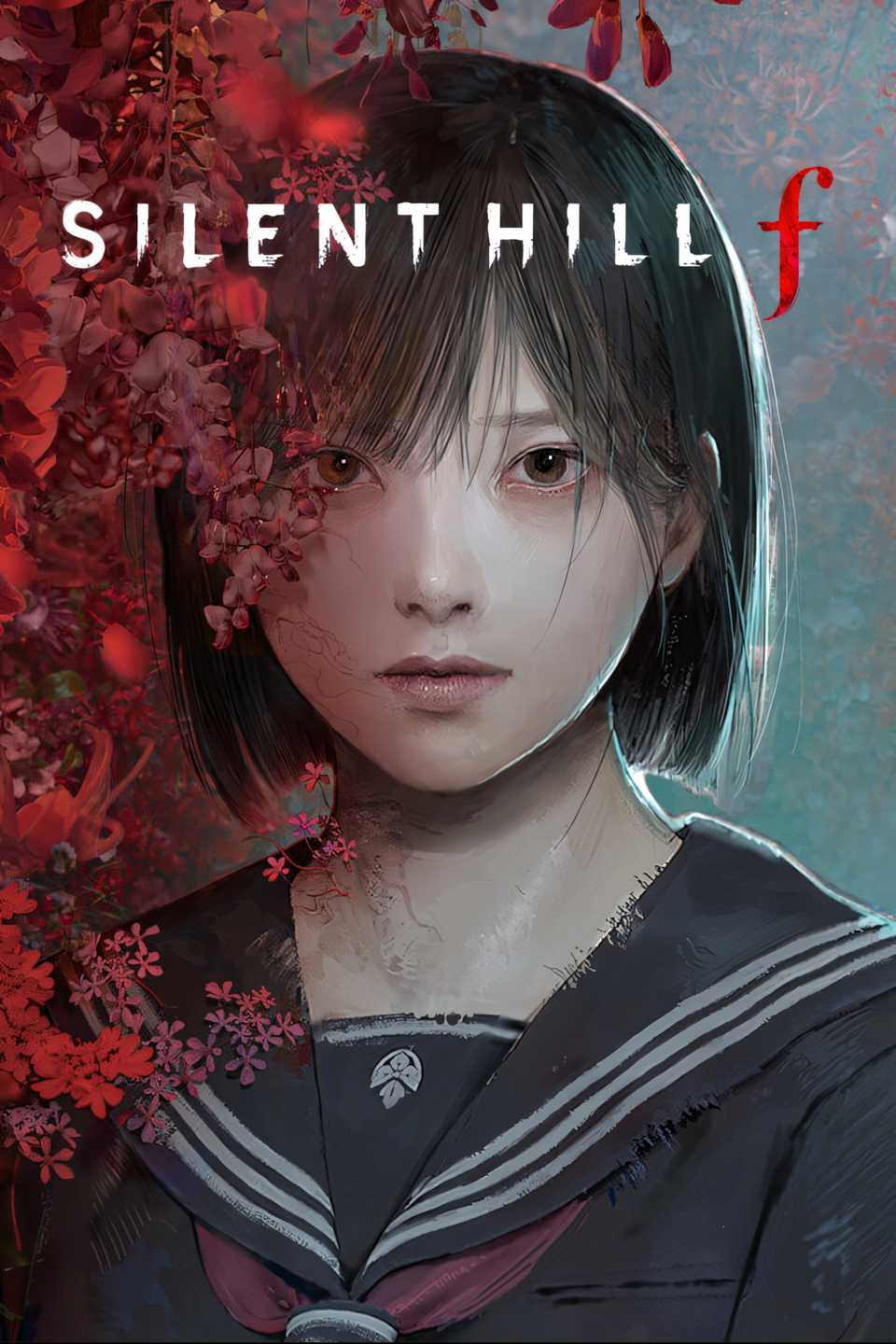
Released September 25, 2025
ESRB Mature 17+ / Blood and Gore, Intense Violence, Partial Nudity
Developer(s) Neobards Entertainment




![ELDEN RING NIGHTREIGN: Deluxe Edition [FitGirl Repack]](https://i5.imageban.ru/out/2025/05/30/c2e3dcd3fc13fa43f3e4306eeea33a6f.jpg)

 English (US) ·