.png)
.png) 5 months ago
121
5 months ago
121


Published Feb 15, 2026, 8:00 AM EST
Covering the video games industry since 2017, with experience in news, articles, lists, and reviews (and I blame The Legend of Zelda: Majora's Mask for that).
If you are a fan of RPGs and want a third-person version: Tayná Garcia is a Brazilian journalist (but you can call her Tay) who ended up working with video games after finishing Zelda: Majora's Mask when she was a kid. With more than eight years of experience in the segment, she has been an assistant editor at Jovem Nerd in the past and is currently a contributor at DualShockers and a writer for gaming magazines for Editora Europa. Oh, and she may like Hideo Kojima a bit too much.
I believe that at this point, it is no secret to anyone that nostalgia sells in any kind of media – and quite a lot. However, I also feel that something not discussed as often as it should be is how game preservation is arguably one of the most important pillars of this industry.
When looking back, we see extremely important games that shaped the gaming industry and different genres, but are now often inaccessible to current generations. Whether it is because they got trapped on discontinued consoles or simply suffer from dated gameplay to the point of feeling unpalatable by today’s standards, it deprives new players of the chance to experience them as they should.
And this is exactly why I don’t view remakes and remasters with a cynical eye – as long as the goal is to make a classic accessible rather than keeping it locked behind inaccessible hardware.
Related
That is why, as soon as Edgar Allan Poe’s Interactive Horror: 1995 Edition was announced as a restoration of the classic The Dark Eye, I was very thrilled. Seeing a true cult horror gem from the 1990s return to relevance to reach a wider audience is exactly the kind of preservation I believe in.
And indeed, after spending some time with it and watching the credits roll, the new version proved to be a vital testament to why game preservation matters – though it manages to prove that for both the right and the wrong reasons.
A Macabre Relic From the Past

Before we dive into the specifics of Edgar Allan Poe’s Interactive Horror: 1995 Edition as a modern release, we need to go back in time for some context.
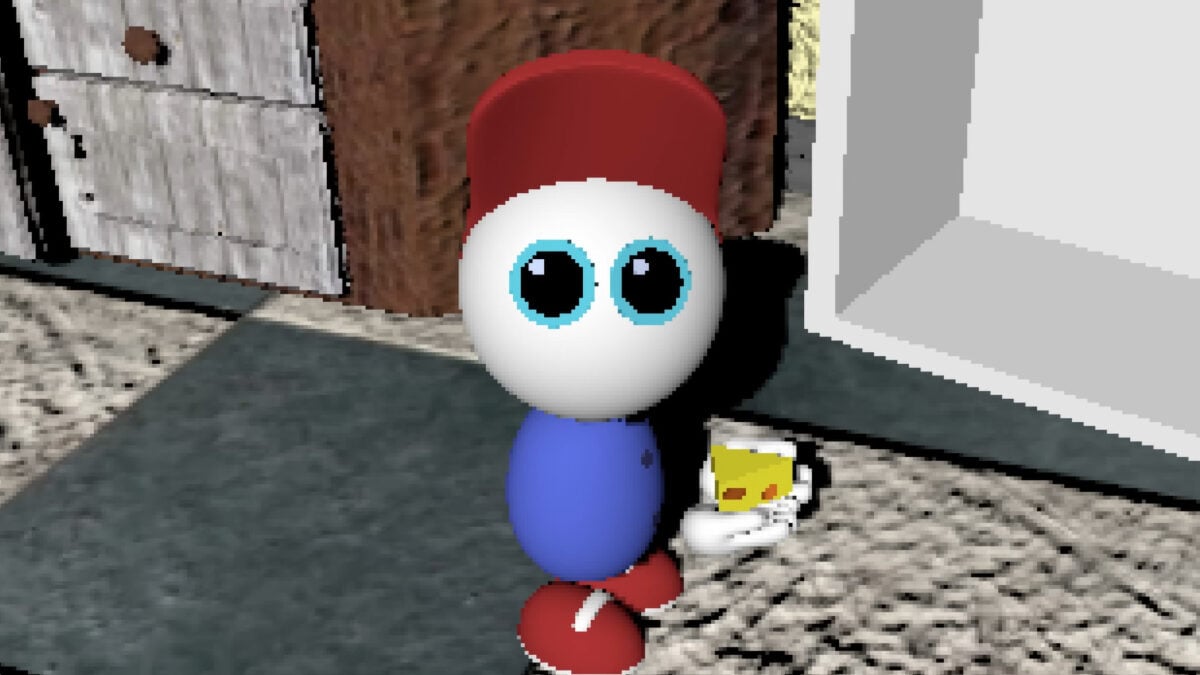
This version is a restoration of The Dark Eye, a point-and-click title that focuses on psychological horror, and it was originally released in 1995. It is loosely inspired by the work of the legendary Edgar Allan Poe, reinterpreting some of his most macabre tales, such as The Fall of the House of Usher, The Cask of Amontillado, and more.
As soon as Edgar Allan Poe’s Interactive Horror: 1995 Edition was announced as a restoration of the classic The Dark Eye, I was very thrilled. Seeing a true cult horror gem from the 1990s return to relevance to reach a wider audience is exactly the kind of preservation I believe in.
And upon its original release back in the day, the game quickly became a benchmark for experimental point-and-click titles, sharing the same surreal era that birthed cult classics like Harvester and Bad Mojo.
Despite its historical importance, it remains a deep cut known mostly by those obsessed with retro horror like myself. Seeing it back in the spotlight with a new coat of paint is an indisputable win for the genre's history, and the 1995 Edition deserves credit just for existing.
Preserving Atmospheric Terror

In terms of gameplay, this is a stripped-down point-and-click experience. You won't find an inventory system here; instead, you guide yourself through scenarios one step at a time, interacting with specific objects to trigger events.

With that idea, the game is a pure exercise in atmospheric psychological horror. You play as a young man visiting his uncle, a painter obsessed with some pretty disturbing artwork that he’s always creating. And, as soon as you step inside the house, it begins to feel alive, blurring the line between reality and nightmare.
Your role is to explore the place and interact with your uncle, other guests, and different objects, which eventually pulls you into nightmares told from different perspectives. In terms of content, everything remains intact in the 1995 Edition, which is a big win! The developers clearly intended to respect and conserve the original vision, and in that regard, they succeeded.
The Problem With Preservation Without Polish

By choosing to "respect the original," the restoration hits the mark in a nostalgic sense. Playing it today truly feels like stepping back into the 1990s – the story, the haunting soundtrack, and even the legendary narration by William S. Burroughs are all preserved perfectly. And all that was missing for me was the CRT television to make the experience feel even more complete.
However, I found myself longing for the modern tweaks expected from a 2026 restoration. If the goal is to make a classic accessible to a new generation, quality-of-life improvements are pretty much mandatory, and that’s where the new version failed me a bit.
At some points, it feels like replaying the original title (if you ignore the slightly improved visuals), especially due to how it runs: dialogues take too long to trigger, I noticed some stuttering at the end of chapters, and the loading screens remain intact and identical to the original.
I found myself longing for the modern tweaks expected from a 2026 restoration. If the goal is to make a classic accessible to a new generation, quality-of-life improvements are pretty much mandatory, and that’s where the new version failed me a bit.
I also ran into some trouble with the save system – an issue that was a recurring nightmare for gamers in the '80s and '90s, and I definitely felt their pain here. Since progress is saved by chapters and the game forces you to navigate them through the original 1995 interface, it severely lacks clarity. At one point, I accidentally clicked the wrong chapter and had to replay a significant portion of the game. Furthermore, the total lack of subtitles (even in its original English) is a massive oversight for accessibility in this day and age.

In the end, my feelings toward Edgar Allan Poe’s Interactive Horror: 1995 Edition are more mixed than initially expected. There is joy in reuniting with a cult horror gem so dear to me, but there’s also the frustration of knowing it deserved a more careful, modern treatment. This new restoration truly makes you feel like you have traveled back in time, but for both the right and the wrong reasons. It is worth the ride, but it is not as smooth as one would expect.

Systems

Released February 15, 2026
Developer(s) Inscape, GMEDIA
Publisher(s) GMEDIA
Number of Players Single-player
Steam Deck Compatibility Unknown

Pros & Cons
- Brings a rare, cult horror gem for a new audience
- Perfectly preserves the original experience
- Suffers from technical issues like stuttering and dated, slow dialogue triggers
- Features a confusing, archaic interface
- The total absence of subtitles is a major oversight for a 2026 (re)release
Next


![ELDEN RING NIGHTREIGN: Deluxe Edition [FitGirl Repack]](https://i5.imageban.ru/out/2025/05/30/c2e3dcd3fc13fa43f3e4306eeea33a6f.jpg)
 English (US) ·