.png)
 5 months ago
37
5 months ago
37

Published Feb 17, 2026, 2:24 PM EST
Rivals is having its Vendetta moment
 Image: NetEase Games
Elsa Bloodstone appeared in Marvel Rivals last week, introduced in the season 6.5 update, and stirred up quite the storm. The general consensus about the gunslinging monster hunter is that she's completely busted, deals too much damage, recovers too much health, and is just Bad For The Game. Elsa isn't the issue, though, at least not entirely. The problem is a more fundamental issue with how she fits into the rest of the roster — and, more broadly, with how Marvel Rivals plays.
Some parts of Elsa's kit are a little busted, admittedly. Giving her a shotgun with rifle-like accuracy, no pellet spread, and limited drop-off damage at a distance — three critical hits to eliminate at 30 meters, two at 15 meters — is kind of a weird choice on the part of developer NetEase Games, even more so in light of its recent nerf to Blade's shotgun. And her ultimate's hitbox is all kinds of ridiculous.
But videos circulating about chaining combos and hitting 1,000 damage in the practice range are just silly, the same concept as attacking a punching bag and feeling shocked when it doesn't fight back. Yes, Elsa can pull off destructive combo chains, but no one stands still when they're being attacked. She has to be in melee range for most of her combos anyway, and by the time she's that close, more than one teammate should be targeting her. Even when Elsa's generating frequent overhealth, it's still easy to overwhelm her.
Overwatch is facing a similar situation with Vendetta, one of the new heroes introduced before this month’s overhaul. She plays like no other damage dealer in the game and, in the right hands, is a total nightmare to face, capable of demolishing an entire team alone. But she has plenty of weaknesses. Most folks just haven't figured them out yet.
The problem is twofold. NetEase intentionally discouraged people from specializing in certain roles or thinking about team combination in favor of just playing casually. There's nothing wrong with just having fun, but adding a character who needs counters to stop her from demolishing everyone when you've spent over a year not wanting people to think about counters, is patently unfair. Of course people in unranked matches aren't targeting Elsa even when she's mowing down their Duelists and Strategists. They've never had to play like that before.
The other issue is how NetEase has quietly been changing the game, experimenting with shorter cooldowns and better mobility since Marvel Rivals season 5, which introduced Gambit and Rogue. Gambit's better healing abilities might require careful management, but his two mobility skills have two charges each and short cooldown timers. He can rush in to save an embattled teammate and even deal a bit of damage, then rush out again before anyone can react. (For context, Invisible Woman's only mobility skill is a floaty double jump with a seven-second cooldown timer.) Rogue's block is highly effective, and she can reuse it after just two seconds. Plus she generates overhealth for herself, and the rhythm of her overhealth skill and blocking means that a good Rogue player can keep going for quite a while.
Then there's Deadpool, introduced at the start of season 6. He scoots around at speed with his katana's secondary fire skill and can use it several times consecutively, so long as it connects with an opponent. Vanguard Deadpool's shield is on a long cooldown timer, but even when it's inactive, he can still escape from damage and throw the opposing team into chaos with his high mobility.
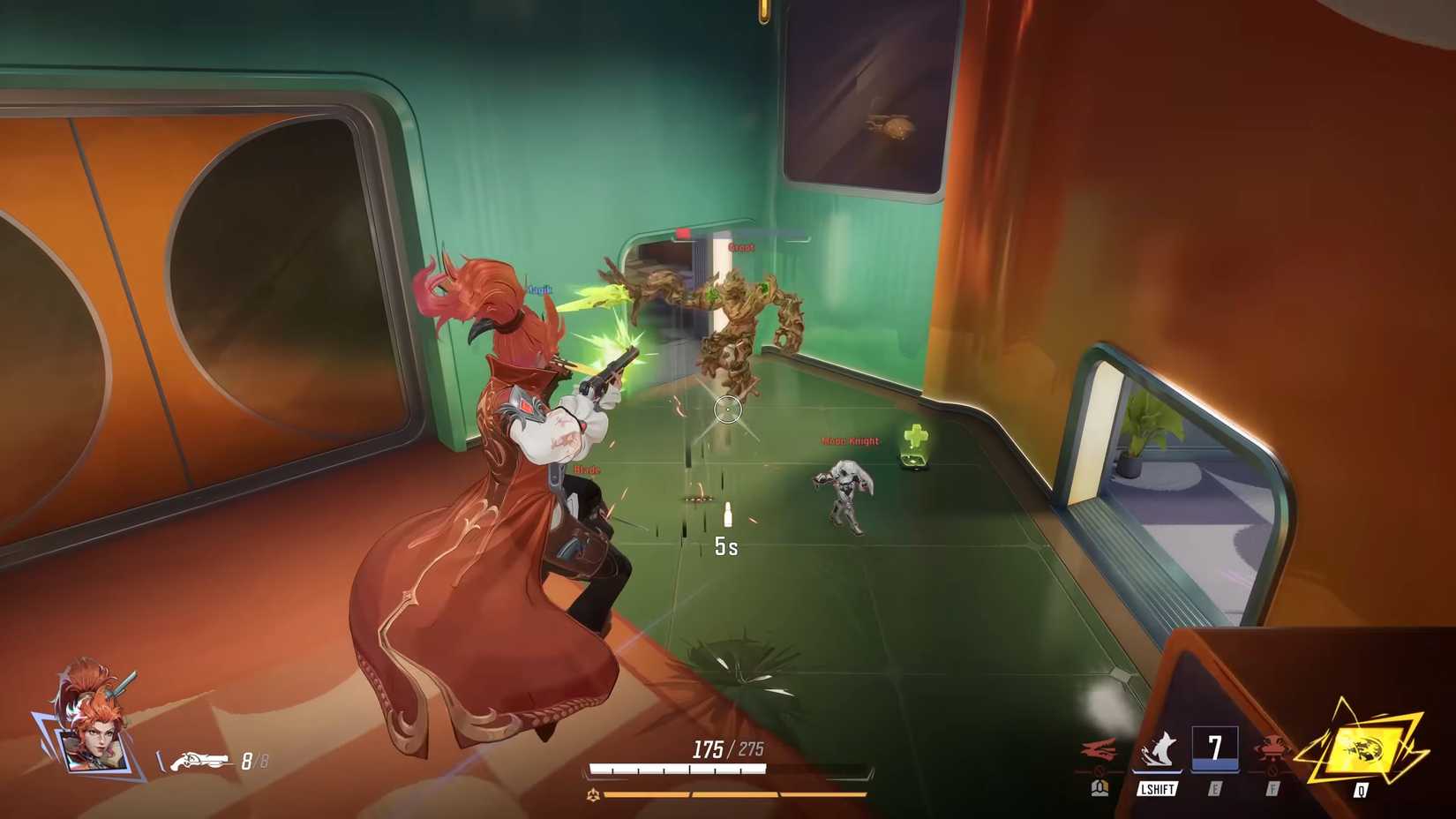 Image: NetEase Games
This is not how most Marvel Rivals characters work. Vanguards like Magneto and Hulk have shields with lengthy timers and few ways to protect themselves while waiting. Dive tanks deal with long gaps of downtime waiting for their mobility skills to reactivate as well, and some, such as Captain America, are easy targets while they're in midair. Even melee damage dealers (Magik, Psylocke, Black Panther) have to rely on their primary fire most of the time, with few reliable ways to disengage when things get dire. In other words, most characters aren't designed to deal with the kind of speed at which Elsa, with her rapid two-second cooldowns and two mobility skills, moves.
Rivals has been, until recently, a game where your primary fire attack was more important than your skills, and your skills were something to pull out in a pinch to finish enemies off or escape when absolutely necessary (and hope you didn't have to escape in a hurry again). Rotations and time management had almost no place in learning how to play a character, and combo opportunities were limited. It seems like NetEase is looking to slowly change that, which is, in theory, a good thing. The last two seasons' new characters are some of the game's best. But the devs evidently didn't reckon with how much of a balance disaster throwing this change is, throwing four heroes with dramatically different playstyles in a roster of 40+ heroes who are absolutely not designed to play that way.
Maybe Elsa needs a few nerfs, and maybe NetEase will patch them in soon. It won't fix the bigger issue that led to this situation, though. If the vision for Marvel Rivals' future is a faster game that leans more heavily on combos, then NetEase needs to put in the work and revamp every hero who came before.






![ELDEN RING NIGHTREIGN: Deluxe Edition [FitGirl Repack]](https://i5.imageban.ru/out/2025/05/30/c2e3dcd3fc13fa43f3e4306eeea33a6f.jpg)
 English (US) ·