.png)
.png) 3 months ago
48
3 months ago
48

Published Mar 19, 2026, 1:47 PM EDT
Jaime Tugayev is the News Editor for DualShockers with over a decade of experience, and a much longer love for fantasy, shooters and strategy games.
It sounds like something out of a cheap soap opera plot or a true crime podcast episode, but unfortunately, it is the tale of Red Storm Entertainment and Ubisoft.
According to GamesIndustry.biz, Ubisoft is pulling the plug on game development over at Red Storm Entertainment. The move will put 105 people out of a job, with Ubisoft offering severance packages and follow-on support.
Things haven't been looking good for a while at the American studio, headquartered in North Carolina. Ubisoft cancelled two of its most recent projects cancelled in 2022 and 2024, and it has now fallen in the crosshairs of Ubisoft's new 'global savings plan', per the source. The news follows two previous waves of layoffs in as many years.
For fans of Tom Clancy's work and his legacy in video games, the fall of Red Storm Entertainment marks the end of an era. Ubisoft is still keeping the name alive in the surviving franchises, but what's left is a far cry from the groundbreaking work done by the functionally defunct studio.
The Rise and Fall of a Revolutionary Studio

Back in 1996, the heads of Virtus Corporation and legendary novelist Tom Clancy decided to form Red Storm Entertainment following an earlier collaboration for a submarine simulator, Tom Clancy's SSN.
The new studio name was an obvious callback to the book Red Storm Rising, and much like that work, it was quick to make a name for itself.
After an abortive start with Tom Clancy's Politika, a strategy game where you vie for control of a newly independent Russia, the studio released Dominant Species in 1998. This was one of the first real-time strategy games to successfully make the jump to 3D graphics.
The innovative streak continued that same year with Tom Clancy's Rainbow Six, which quickly propelled Red Storm Entertainment to legendary status. In a decade marked by the mayhem of DOOM, Rainbow Six went in a completely opposite direction. Gameplay was slow, punishing, and sometimes hostile to the player. Thus, the tactical shooter was born.
For fans of Tom Clancy's work and his legacy in video games, the fall of Red Storm Entertainment marks the end of an era.
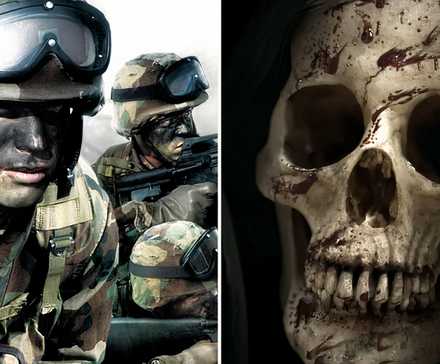
The next few years saw Rainbow Six: Rogue Spear and a handful of strategy games come out, but it was 2001's Tom Clancy's Ghost Recon that shook up the industry once more. The game captured Clancy's work at his finest, putting elite troopers in the middle of a high-stakes war that pushed the world to the brink of destruction.
This was my first Tom Clancy game experience. The family computer was in the shop due to a faulty CPU, but a friend had just bought Ghost Recon. His father would only let him play on the computer when he was home, so we waited until then to get a little whiff of the game before running home in time for dinner. It was worth every second of it.
By the time Ghost Recon had come out, Red Storm Entertainment had been acquired by Ubisoft. It's hard to tell where exactly it went wrong from there.
Related
Ubisoft's Treatment of Ghost Recon is Exactly Why the Company is Struggling
Ghost Recon was all about experimenting, and neglecting it may lead to death by playing it safe.
The first Ghost Recon and Rainbow Six games developed fully under the Ubisoft umbrella remained rooted in Clancy's original vision, albeit with more flashy technology and more fluid gameplay mechanics.
The change made the franchises more friendly, though at the time we did not know the cost. I played Rainbow Six Lockdown until the PlayStation 2 disc wore itself out. After a few months, it would freeze around the fifth mission or so. Rather than give up, I would just replay the early maps and start over.
The last hit by Red Storm Entertainment came out in 2012. Tom Clancy's Ghost Recon: Future Soldier fully embraced the third-person perspective, but it also leaned hard on the geopolitical entanglements that made Tom Clancy famous.
Over a Decade of Radio Silence

In October 2013, Tom Clancy passed away at age 66. It feels like the spirit of Red Storm Entertainment went away to be with its founder then.
Ubisoft pivoted the studio to try to capitalize on the virtual-reality gaming boom. The three projects released during this time (Werewolves Within, Star Trek: Bridge Crew, and Assassin's Creed Nexus VR) were reviewed fairly, but it was nothing close to the groundbreaking releases around the turn of the century.
The studio was set to release Splinter Cell and The Division spin-offs, but those were eventually canned. It would be the last we'd hear of game development by Red Storm Entertainment.
By the time Ghost Recon had come out, Red Storm Entertainment had been acquired by Ubisoft. It's hard to tell where exactly it went wrong from there.
The slow death of Red Storm Entertainment is yet another black mark against large publishers sucking the life out of thriving studios acquired during spending sprees. The difference between this and, say, the Blue Point and Sony affair, is that it took over two decades for things to unravel.
Ubisoft has kept Rainbow Six and Ghost Recon alive after stripping them from their creators, but the games are now unrecognizable. Rainbow Six Siege has become an alternative for sweaty people who are a tiny bit too smart to just play Counter-Strike, while Ghost Recon has been dealing with a decade-long identity crisis.
Without Red Storm Entertainment, we wouldn't be here raving about games like Ready or Not, Escape From Tarkov, or Gray Zone Warfare. A tactical shooter like Six Days in Fallujah would never have seen the light of day had the concept not been invented and validated by Rainbow Six.
Red Storm Entertainment's light has gone out just as we are experiencing a new golden age of tactical shooters. For that, we are forever grateful. I just wish you'd be here to take part in what you helped usher in. Over and out.

Next
Ubisoft Is Betting The House On Three Popular Games Amidst Financial Crisis
Shorter content may be part of the game plan for Ubisoft's new Tencent-backed subsidiary.

Released August 21, 1998
ESRB T
Multiplayer Local Co-Op



![ELDEN RING NIGHTREIGN: Deluxe Edition [FitGirl Repack]](https://i5.imageban.ru/out/2025/05/30/c2e3dcd3fc13fa43f3e4306eeea33a6f.jpg)

 English (US) ·