.png)
 2 hours ago
2
2 hours ago
2
Billy West’s voice has spanned multiple generations. In the late 1980s, he was a regular on The Howard Stern Show, and at the same time, he began a career in voice acting. By 1991 he was already the star of two hit cartoons on Nickelodeon, playing the titular character in Doug and Stimpy from The Ren & Stimpy Show. From there his career exploded in the 1990s, taking on dozens of original and legacy characters, including playing Bugs Bunny and Elmer Fudd in the original Space Jam.
In the year 1999, he took the role that he is now the most associated with, Fry on Futurama, where West also voices Dr. Zoidberg, Professor Farnsworth, and Zapp Brannigan. Even after playing literally hundreds of other characters on dozens of other cartoon shows, over the past quarter century — and with all of Futurama’s cancellations and revivals — Fry continues to matter the most to West. The reason why is that Fry is pretty much him.
“I made a quick and deliberate choice to try and sound like I sounded when I was 25, which was all whiny and nasally and complain-y," West tells Polygon. "I was all over the place back then, but my heart was in the right place, which is exactly what Fry is.”
Making use of his own voice has been something of a lifelong struggle for West, now 74. As a child he lived with an abusive father, and for years he turned to drugs and alcohol to numb the resulting pain. But over the pandemic, West began a project that helped him find his own voice even more than Futurama did, by writing his memoir, a deeply raw, personal autobiography about his life, career, and his struggles along the way. The book, named Voice-A-Versa: Finding My Voice(s) Behind the Mic, releases on July 14. Here, West talks about what it was like writing it, and answers some questions about his most famous characters.
Polygon: What made you want to write your memoir?
Billy West: It was the pandemic, because I wasn't going to sit there and do nothing for two years and I just decided to start writing. I'm 74 and I have lived a lot of things in my life. Nobody wants to read about how great your life is going — that's just boring. But I did want to talk about stuff from the beginning. A lot of it is just horrendous and I wanted people to know where the heck I came from.
Do you mind sharing a little bit of what that looks like?
Well, I took my first beating in utero. That was my introduction to the world and it didn't get much better after that. I had a psycho father — drunk, crazy. There was no word for autistic or neurodivergent back in the 1950s and my father just thought I was stupid and I was the whipping boy on top of that. I was subjected to a lot of violence as a kid and I retreated into my own world because I didn't have much to deal with in the real world, so I just delved into whatever gifts I had, which were drawing and music.
Back in those days, television was black-and-white. There were only three channels and it would go off at 11 o'clock at night. All my friends in the entire world lived in a little box in the living room and that's where I would retreat to. It was mostly animation, but comedians as well. Some of the old comedians had a profound effect on me.
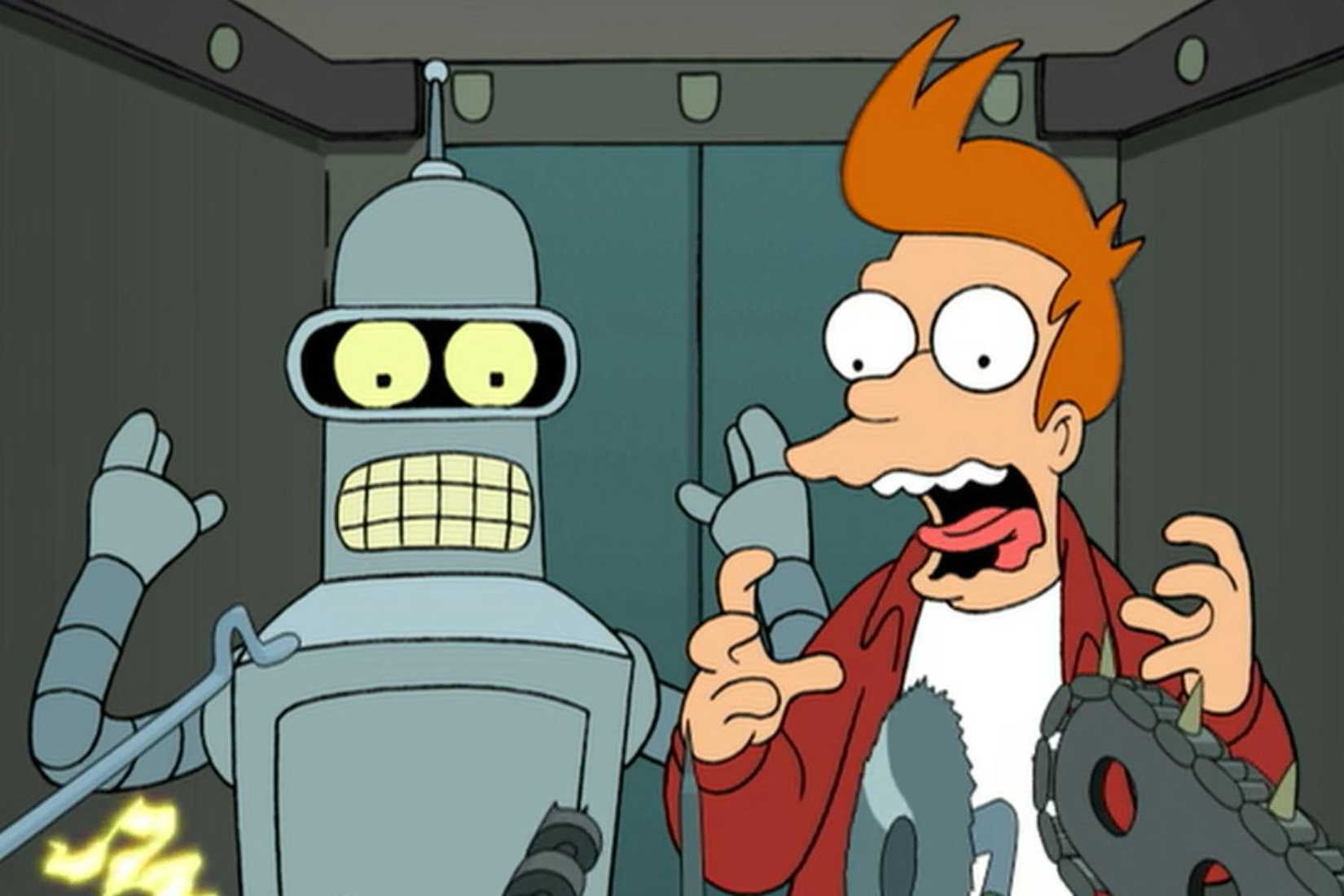 Image: Fox
Do you mind sharing some of your favorites?
Like the Three Stooges. When I discovered them, I stopped going to church — I found my saints. Guys like Sid Caesar, Jonathan Winters, they were my heroes because I would look at these guys and I would say, "How could something this beautiful exist?" because my frame of reference was my father.
Do you think your need to escape back then informed your later career choices?
Yeah, I became an escapist. As soon as I got out of high school, I was in a band playing music. I played in bands for years and I made a living doing it. I supported myself. That was a form of escape. Of course, I was drinking and drugging too, which is a real escape. I was in a state of arrested development. I wasn't much more mature than the child that I started out as.
 Image: Nickelodeon
You’re known for your characters, so were you comfortable getting so personal when you began writing the book?
Yes because, no matter what you project, nobody knows who you are, really. They know who you are as far as show business is concerned, but nobody knew the stuff that happened to me. And I knew for a fact that there were thousands more people that had it way worse than I did and my hope was, if I got to talk about stuff that happened to me candidly, honestly, raw, that there'd be somebody sitting there going, "He's telling my story and this guy made it out to the other side of the tunnel, so maybe there's a chance for me.”
Was writing the book cathartic for you?
It always is because you have to relive everything and your point of view changes the more you learn about life. Then you go back and you examine what happened, and there's always some other aspect about yourself that you overlooked.
 Fox Television
Do you mind sharing a realization you had about yourself?
The biggest one was that there were gifts that I was given that I had no awareness of. I was always sick. My throat was always messed up and, for some reason, I always had trouble speaking. Maybe it was psychosomatic because when I would go to speak, my father would just smack me down. I had to carry a jar of hot water around with salt in it so I could gargle before I talked to my friends because my voice would disappear. It would just go away.
Trying to avoid that situation, I learned that if I spoke above my voice, not only did I have the ability to just shed that situation, but I had all this power that I didn't realize I had. I had this chest that projected and the stomach — all the ingredients that it takes to be a voice announcer or something. I found out that my voice could do all these crazy things. It was like finding a lamp with a genie in it. It was a magical experience.
How did you find your way to voice acting?
I was in bands and I remember being on stage and if I broke a string or an amp blew up, we didn't have roadies, so I would just go on the microphone and I'd start doing bits and voices, just to keep the audience from leaving. Then in 1980 and '81 it was the beginning of the stand-up comedy boom in Boston, which was a big town for comedy.
But the jury was out as to whether I was a comic or not. When I tried to write things that I thought were funny, they would fall flat. But if I just opened my mouth and let shit fall out of it, people would go, "That's pure. That's pure, man," but then I couldn't replicate it.
 Image: Warner Bros. Pictures
Then I got into radio. I won a contest at a local FM station. The contest was if you could sound like Mel Blanc, so I called and I did like, 20 different characters in like, six seconds. The host was like, “We got a live one” — I remember them saying that on the air. And that was the beginning of it. They invited me to come in and cut some promos.
That's how that all got started. I also had a drinking and drug problem and didn't get a handle on that until a couple years later. I wrecked a car one night and I didn't go to court for it. The next time I got stopped they said, "You know, you're going in for this DUI you never answered for." I went to the Charles Street Jail, a 150-year-old pissy, smelly bastille in the ass-end of Boston. It was the first week that I was sober as an adult. I did a lot of thinking, then I went back to work and it was like I was a whole different person.
I set my sights on going to a different market like New York. I told the station owner, "I'm thinking I want to move on. I've gone as far as I can go in Boston, doing what I do." And he sort of finessed a meeting with Howard Stern.
 Image: Nickelodeon
At some point you were starring in Doug and The Ren & Stimpy Show while still appearing on The Howard Stern Show every week. What was that like?
I'd come in [to The Howard Stern Show] three days a week, then I would go downtown and do Doug, which was done out of New York. Then I would fly once a week to L.A. to go do Ren & Stimpy. Then I'd get back on a plane and come back. I was just on the run. I was in the sky half the time.
I’ve always wondered, how did Stimpy end up with the voice of Larry Fine from the Three Stooges?
Well, I always loved the Stooges and I was just fascinated by Larry. Everybody could do Moe and Curly, but nobody gave a damn about Larry and I was fascinated by the little that he said. I decided that there was something I was going to do with that voice one of these days and I had a chance to show it off in a cartoon called Beanie and Cecil in 1988. John Kricfalusi was animating [on that show] and he heard me screwing around with that voice and he kept it in mind for when he created Ren & Stimpy. [For Stimpy], he wanted me to do that voice only more childlike, more brain-dead.

How did Futurama come about?
It was announced that Matt Groening was doing a new show,. I was in awe of the guy, and there was an audition. They were looking for certain voices for characters. I went into that audition and there were 150 people in that room. I saw Ryan Styles and I said, "Oh, Jesus, what am I even doing here?" But I went in and I did my interpretations of the characters that they told me about, Farnsworth and Zoidberg. Then at the last minute they pulled out a picture of Fry. They already cast it, but Matt said, "I'm just curious, what would you do for this?"
I made a quick decision. I had to pull something out of my ass because I didn't have anything ready. I said, I'm going use something that I never have before, my own voice, because I was convinced that nobody can imitate you when you're doing your own voice.







![ELDEN RING NIGHTREIGN: Deluxe Edition [FitGirl Repack]](https://i5.imageban.ru/out/2025/05/30/c2e3dcd3fc13fa43f3e4306eeea33a6f.jpg)
 English (US) ·