.png)
.png) 6 months ago
58
6 months ago
58
Horror games, other than scaring the life out of players, are known for pushing the boundaries of gaming as a whole, with many games influencing modern titles even to this day (such as the Over-the-Shoulder-Camera introduced in Resident Evil 4).
However, there are some unique mechanics that don't really get used in horror games, if at all. Not only is it a bummer, but also a lot of untapped potential that would lead to genuinely exciting experiences.
Related
10 Hardest Horror Games to Platinum
Hunting trophies for your favourite horror games? Just remember some are way harder than others to get the coveted Platinum.
While many game mechanics aren't exclusive to specific genres, they tend to stay in their own lane like they are. With all the genre hybrids that are floating around, especially in horror, there's a lot of opportunity that ends up being overlooked.
Of all the various game mechanics that exist in the hearts and minds of developers everywhere, these are the ones that we hope to see in horror gaming more.
10 Vehicle Usage
Maybe Even Combat

Pacific Drive was a game that really demonstrated what a good year 2024 was for horror fans. It came into the genre with a unique concept: your car is your lifeline, and it's entirely up to you to take care of it in order to stay alive.
Cars aren't used too often in horror games, and if they are, it's mostly in cutscenes where a horrific accident happens later on (think of every single vehicle Leon S. Kennedy was behind the wheel of and promptly crashed in the Resident Evil games, or the beginning of The Last of Us when you're trying to flee town). Not many give players control over the ride, other than maybe a quick time event.
Pacific Drive showed how horror can still be effective with a vehicle, especially with the added resource management in order to properly repair your car or refuel it. Of course, it doesn't have to be this in-depth and intricate, but having a car adds many new ideas for gameplay, especially from a survival horror standpoint.
Car combat is honestly optional to me, this isn't Cyberpunk 2077 after all — but it would be really nice if we actually got to drive from point A to point B in horror games more often.
9 Dialogue Variations
Truth, Doubt, or Lie?

Besides the entries released by Supermassive, there are practically no horror games that give players various action and dialogue options, resulting in different pathways and outcomes. Typically, this mechanic is reserved more for RPGs, but they have proven to be packed with tension and drama in the horror genre.
It doesn't have to follow the exact Until Dawn formula, but can be something more akin to L.A. Noire to show various degrees of trust in what someone is saying. Think of games like Pathologic where you're investigating a town and its residents, with each choice leading you down a unique path that's distinct to your approach.
Not only does this add a layer of realism, it also shows how different players would react to different situations, which is always entertaining to watch. Plus, with more curious players who would want to see other outcomes, this adds a ton of replay value.
8 Torches Instead of Flashlights
Use the Dark Souls 2 Method

Horror games love dim, dark lighting, leaving players to navigate only guided by a flashlight or lantern. However, torches aren't used as often, especially with how much that can be done with fire.
In Dark Souls 2, your torch is not only a source of light, but it's also used as a weapon to ward off enemies. You can attack with the torch, using creatures' primal fear of fire to your advantage, and it was really cool to see.

Related
10 Horror Games Better to Watch Than Play
Sometimes, it's better to just pull up a Let's Play on YouTube.
However, horror games still tend to prefer the undying flashlight over a torch; sure, it makes sense with several modern titles, but there are countless other instances where a torch would be just as fitting, even in a modern setting (such as Resident Evil: Village).
Not only is it moody and adds to a horror game's atmosphere, but the ability to also be a weapon adds so much more to what would be an already terrifying experience.
7 The A-Life System
S.T.A.L.K.E.R. Was an Excellent Example

Good AI can really make or break a game, and S.T.A.L.K.E.R.: Shadow of Chernobyl is an excellent example of how smart AI really enhances the experience. Specifically, S.T.A.L.K.E.R. is known for its groundbreaking A-Life System, which no other game has been able to properly replicate since.
The A-Life System revolves around NPCs actually living a life outside the game's code, with many characters still operating and active, even when you're sleeping. This can lead to you being actually hunted down and ambushed, with NPCs working together in ways that you don't see even in modern titles.
Now imagine if more horror games adapted the A-Life System in this way. Not only would this be absolutely terrifying for players, but it opens up other mechanics that will play into this realism, such as being able to barricade yourself indoors for protection.
Plus, if this is ever combined with stalking enemies (examples of this are Mr. X from the Resident Evil 2 Remake and the Xenomorph in Alien: Isolation), this will create a horrifying encounter unlike anything we had ever seen before.
6 Base-Building
Protect Yourself From Enemies

While base-building tends to linger in open world games like Fallout, that hasn't stopped horror titles from adapting it and making it their own, such as Don't Starve, the survival game with just as much mystery as hostility.
I'm not going to lie, base-building is one of my favorite video game mechanics due to just how satisfying and fun it is, so I'm definitely biased in wanting more of this in my favorite video game genre. That said, would it not be tons of fun (and even a smidge relaxing) to incorporate base-building in more games, especially survival horror?
A lot of survival horror games lean into that pure survival element that die-hard fans crave like candy, so naturally, having a base of operations would make sense to maintain your chances of survival.
It doesn't have to be anything substantial, either — the base building could be something as simple as your car, as it is in Pacific Drive. Then again, it's up to the developers to figure out if something like this would fit into their vision. I just hope more take it up.
5 Couch Co-Op
Needed More in Gaming Overall, Honestly
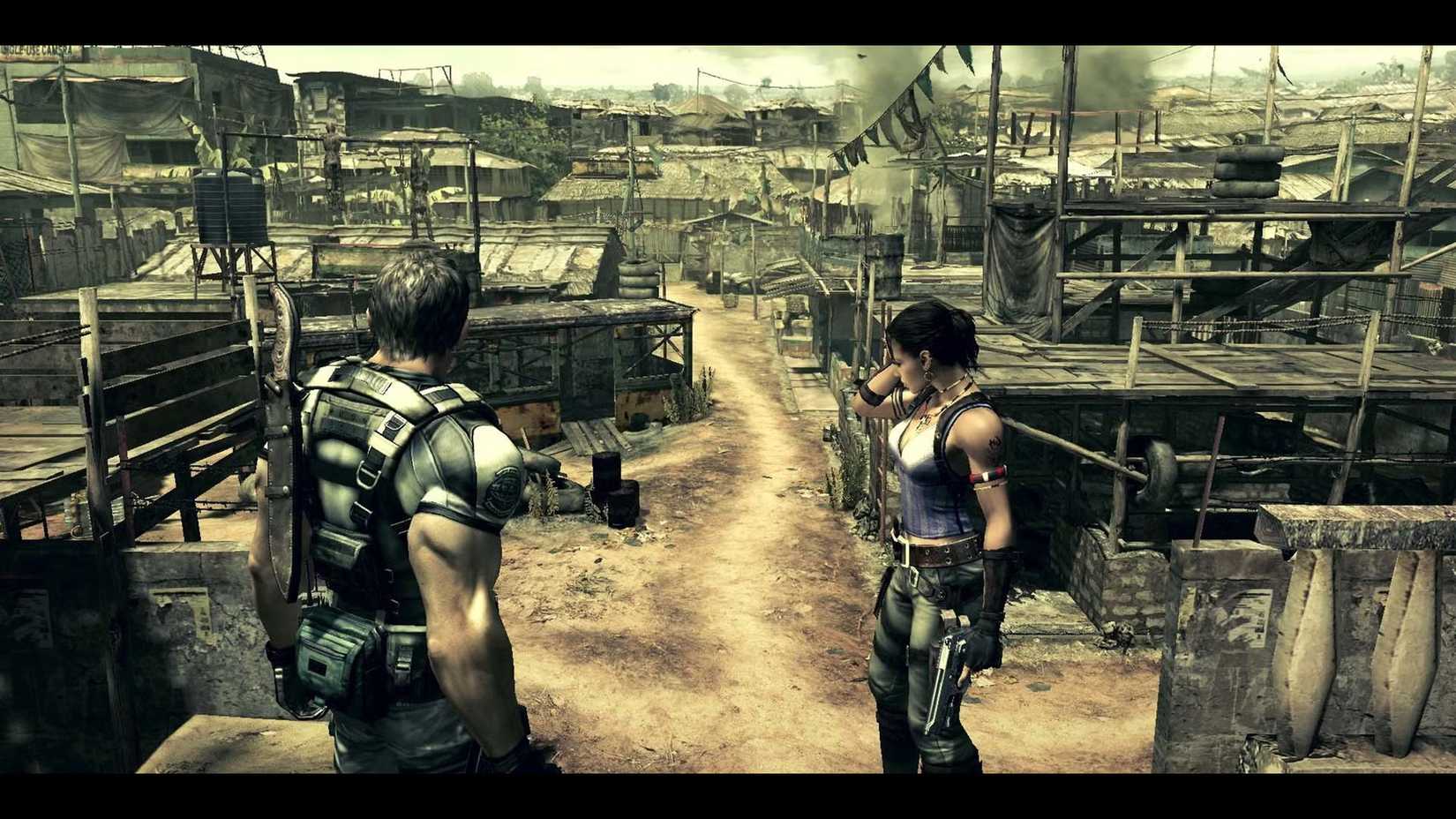
Couch co-op isn't too common in favor of online multiplayer (at least for non-Nintendo games), which makes the few games that do have it all the more special. Both Resident Evil 5 and Resident Evil 6, for example, have couch co-op, and it's absolutely a thrill for both parties involved. Say what you will about either game; playing them with friends (or, in my case, my fiancé) is just too much fun to ignore.
There are plenty of multiplayer horror games, but as expected, it's online; not many offer a couch co-op option, which is a real bummer if you're wanting to share a gaming experience with someone.
Related
10 Best Maritime Horror Games
Perhaps nothing is scarier than the vast unknown of the ocean, and these horror games expertly exploit that.
It doesn't have to be a full-on split-screen with both parties playing the same thing at the same time, either, there are several games that have a unique approach to couch co-op. While it's not horror, Super Mario Galaxy has Player 2 helping collect any star bits that were previously missed, allowing Player 1 to just focus on the game while Player 2 acts as a helper.
Other couch co-op experiences can work similarly, with one player in charge of one task or being helpful while another player does a good portion of heavy lifting. Either way, we'd like to see more of it.
Think Silent Hill 2 and its Endings

When it comes to hidden choices that have a significant outcome in your game, Silent Hill 2 is the best example of this, with the Silent Hill 2 Remake recreating these hidden pathways perfectly. The way that it works is that the players' actions (or lack thereof) tally in the game's code, with players unlocking different endings depending on which pathway had the most points.
Not only does this encourage players to really get into the mindset of the character that they're playing, but it also gives them all the more reason to try the game again, play it differently, and get a different ending. It would basically be a whole new game all over again.
Many players expected to see this become a staple in the Silent Hill franchise – or in psychological horror overall – but surprisingly, you don't see it too much.
It's not patented the way the Nemesis System was, so it really makes us wonder why we don't see it around too much. It adds so much richness and depth to the game's story, even encouraging a little bit of roleplay, which makes the fear factor all the stronger.
3 Environmental Interaction
For Weapons, Hazards, Anything

Many survival/action, RPG and FPS games have various environmental hazards that force the player to think fast and adapt on their feet – but in the horror genre, you don't find it too often outside The Last of Us (even then, the environment itself is limited) and Silent Hill: Downpour, where you're able to pick up chairs and throw them at enemies to buy you some time to run. Obviously, there are others, but you'll have to dig.
Honestly, apart from being realistic, that is a perfect reaction in a horror setting if you don't have weapons: grab the thing closest to you and improvise, especially if it's to save your life.
Baldur's Gate 3, for example, has coded flammable materials, allowing you to create environmental hazards yourself – but not many horror games implement improvised weapons in the same way. Heck, even in Resident Evil 2, you're able to board up windows to prevent monsters from breaking in, but you can't use those wooden boards to smack a zombie.
While I understand it has everything to do with what developers have the ability (or more realistically, the time) to code this, it's a genuine waste that we don't see this too much.
2 An Honor/Karma System
Good vs Evil at its Core

There are plenty of games where you're actually the bad guy the entire time, but there are fewer games where you have to actively go out of your way and choose to be the bad guy. In these games, there's an honor/karma system in place that tracks your ability to be good or evil, and it has massive consequences with a ton of collateral – Mass Effect and Red Dead Redemption are shining examples of this.
However, in horror games? If you're the bad guy, you're simply the bad guy. I have yet to find a horror game where you have to actively be evil, and honestly, it's a huge shame.

Related
10 Horror Games With Insanely Complicated Lore
Sometimes, it's harder to deal with the story of a game than the scares.
Can you imagine playing one of those horror games where you're the bad guy, but you have to make an effort to choose to be evil yourself? Many psychological horror games tend to dive into the psyche and be a commentary on human behavior – and honestly, an honor system would be absolutely perfect to drive this point home.
Just saying, if James Sunderland was measured on the honor system, he'd be seeing a wolf by the end of the game.
1 Meters for Various Issues
Sanity, Viruses, Etc.
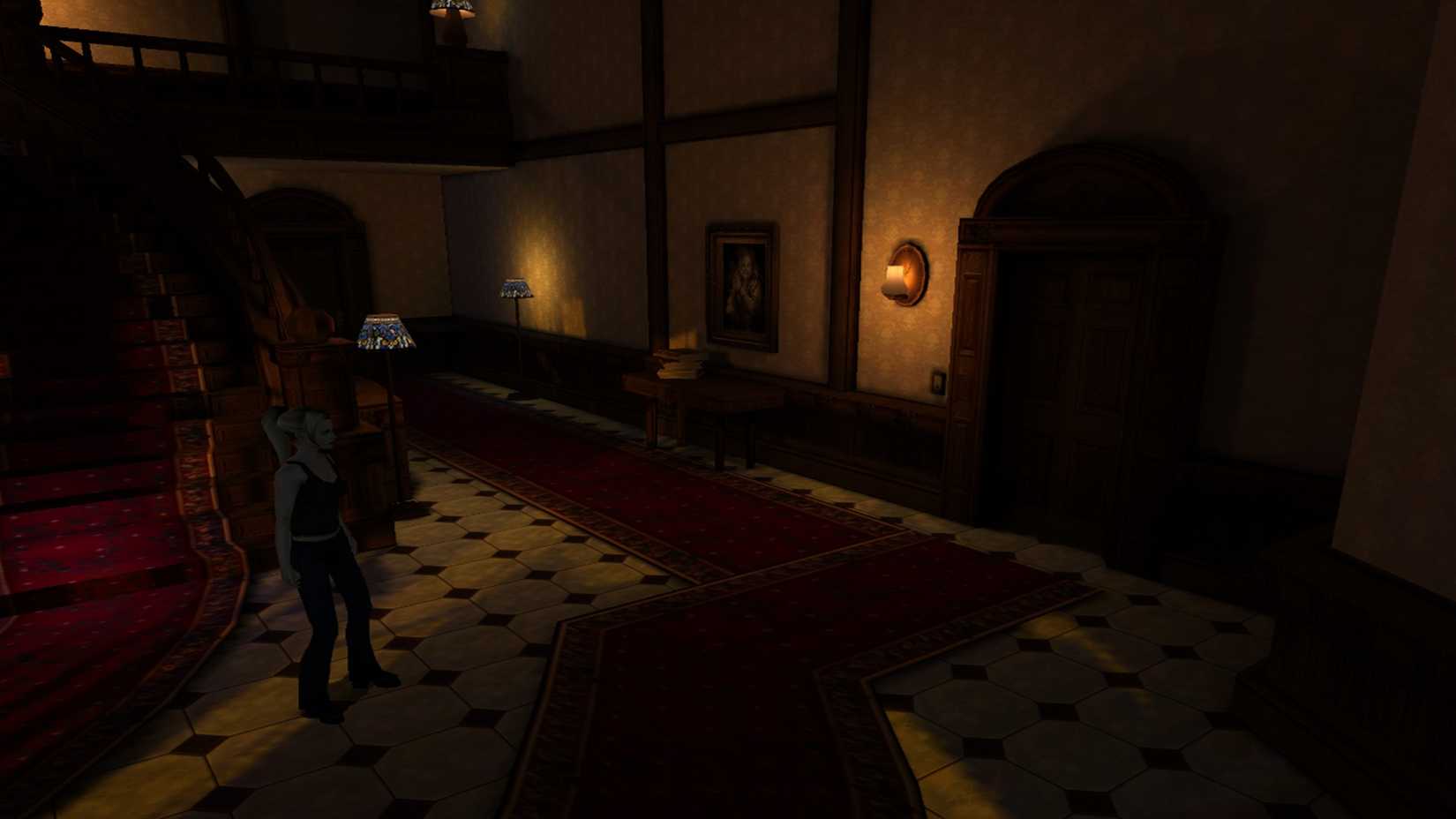
Eternal Darkness: Sanity's Requiem introduced the sanity meter, and it ended up taking gaming by storm. However, I'm getting a feeling that horror developers are starting to include it without really understanding why it was so beloved in the first place – Silent Hill f's sanity meter comes to mind, which is disappointingly lackluster in comparison. It provides nothing else for the scares, as it only does damage if you take any.
However, it's not just sanity meters I'd like to see more of in horror games, but various meters that are connected to their respective games overall. Resident Evil: Outbreak comes to mind, which had a Virus meter to track your infection if you ended up being bitten by a zombie. Not only did this add a ton to the tension, but it also just makes sense for the game's world.
Similarly, if other games were to implement their own meters that were relevant to their own world and happenings, it would add so much more to the immersion (and overall gameplay experience). Of course, these meters and what they measure would depend on the game and what makes sense in its world and themes, but there is so much potential here that's frequently overlooked.
Or, if a horror game were to simply employ a sanity meter, it would use it properly this time.

NEXT
I'm Tired of Horror Always Being Snubbed at The Game Awards
While fear is subjective, the quality of horror games shouldn't be overlooked during awards season as often as it is.






![ELDEN RING NIGHTREIGN: Deluxe Edition [FitGirl Repack]](https://i5.imageban.ru/out/2025/05/30/c2e3dcd3fc13fa43f3e4306eeea33a6f.jpg)
 English (US) ·