.png)
.png) 2 months ago
25
2 months ago
25


Published May 12, 2026, 8:00 AM EDT
Tay Garcia is a Staff Writer at DualShockers and a Brazilian journalist who has been covering games professionally since 2017. Her work spans news, reviews, previews, lists, guides, and features, with a particular focus on horror, retro games, theories, puzzle games, Metroidvanias, Soulslikes, and story-driven titles.
Before joining DualShockers, Tay worked as an assistant editor and contributed to Jovem Nerd, one of Brazil’s largest pop culture outlets, as well as Editora Europa, a major Brazilian publisher known for gaming and technology magazines. She has also worked as a streamer, YouTube creator, and podcaster. Tay holds a B.A. in Journalism, has postgraduate training in Social Media, and is certified in professional video game journalism. She was also a member of Podcast UP, which won the Cubo de Ouro Award for Best Podcast in Brazil in 2021.
Sign in to your DualShockers account
Vengeance is a dish best served raw – while that isn’t exactly the popular saying, it is the core idea we see practiced across countless films and series, particularly in Asian cinema. From the psychological scarring of Park Chan-wook’s Vengeance Trilogy to the stylized bloodbaths of Quentin Tarantino’s Kill Bill, pop culture has a long-standing fascination with the revenge theme. And these stories are usually about getting even at any cost, featuring high levels of raw violence, the heavy toll of trauma, and a front-row seat to how thin the line of humanity truly is.
They are purposely designed to make us uncomfortable by mixing all of these elements, and curiously, this ties back to one of my favorite debates in the industry: can video games do the same?
 Related
7 Best Rhythm Shooters, Ranked
The rhythm shooter genre is an untapped genre that deserves more recognition.
I’ve always been drawn to titles that want to provoke us or trigger sentiments we aren’t exactly prepared (or want) to feel. I strongly believe games are an art form as deep as film, literature, or painting, capable of awakening a vast spectrum of different emotions. However, I feel most gamers aren't quite used to this idea, since the most frequent complaint you hear when a game makes someone uneasy is that it “isn’t fun,” completely ignoring that maybe being fun wasn’t the intention at all!
I’m saying all of this because I want to draw your attention to Better Than Dead, which is another excellent example of that idea: it is a game that can be stressful, haunting, and incredibly brutal – all adjectives that might be negative in another context, but here, they are a massive compliment.
Recording the Architecture of Trauma
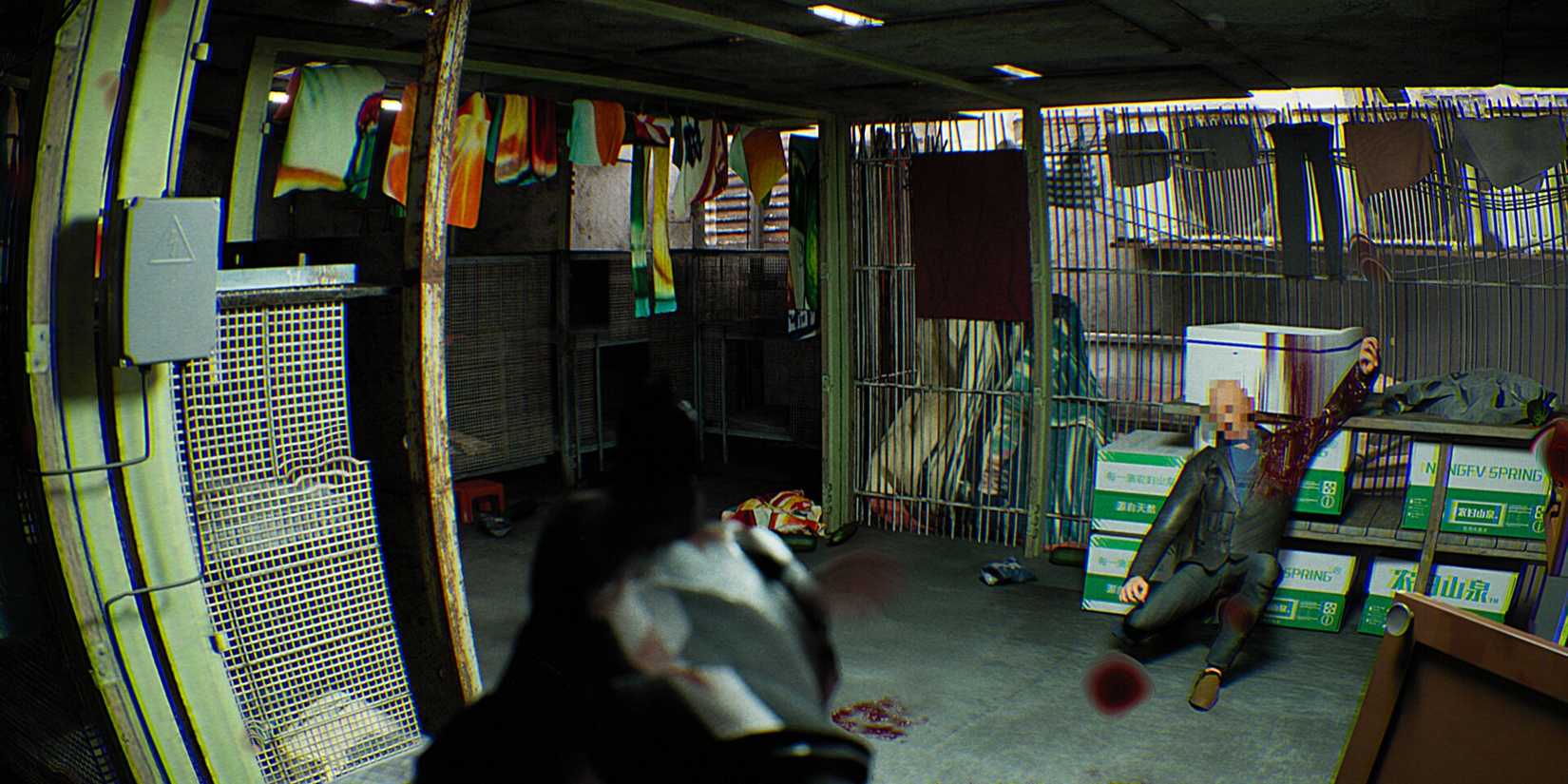
In simple terms, Better Than Dead is a fast, brutal first-person shooter with no tutorial and zero time to breathe. It presents a realistic body-cam aesthetic with a gritty vengeance story – and while that might sound like a project focused on mindless action, everything here serves a deeper, more complex purpose, and I was lucky to experience this firsthand after being invited by the studio, Monte Gallo, to play the game before its Early Access launch.
Before exploring the rest of this iceberg, it’s essential to understand the narrative. Without a single dedicated cutscene or dialogue, the game simply drops you into a terrifying scenario: a room where the protagonist has clearly been held captive for an unknown amount of time. You pick up the pieces of the story as you go, but all you need to know is that you play as a young woman who was a victim of human trafficking. Now, having finally managed to escape her captors, her only remaining thought is unfiltered vengeance, at any cost.
Better Than Dead is a game that can be stressful, haunting, and incredibly brutal – all adjectives that might be negative in another context, but here, they are a massive compliment.
And it truly is every bit as heavy as it sounds, mainly because the game relies on an oppressive atmosphere rather than traditional storytelling to deliver its message. You must literally invade locations that are still active crime scenes, serving as the backdrop for the atrocities committed by the game’s villains. There were moments where I literally had to pause and take a deep breath before continuing, simply because what you see is thrown in your face in such a raw, unflinching way, and this is where the graphics and camera work come into play.
The body-cam aesthetic isn't just a visual trend, but serves a narrative purpose: the protagonist is actually recording every second of her journey to expose the monsters who kidnapped her and thousands of other women. So what you see is literally what she’s recording – a premise that becomes more disturbing through Better Than Dead’s realistic lens, since everything seems and feels so real.
Also, something important to note is that, to shock the player while maintaining respect for the sensitive themes involved, nudity and faces are all blurred, ensuring the focus remains fixed on the cycle of violence and the raw brutality of the situation.
Hesitation Kills
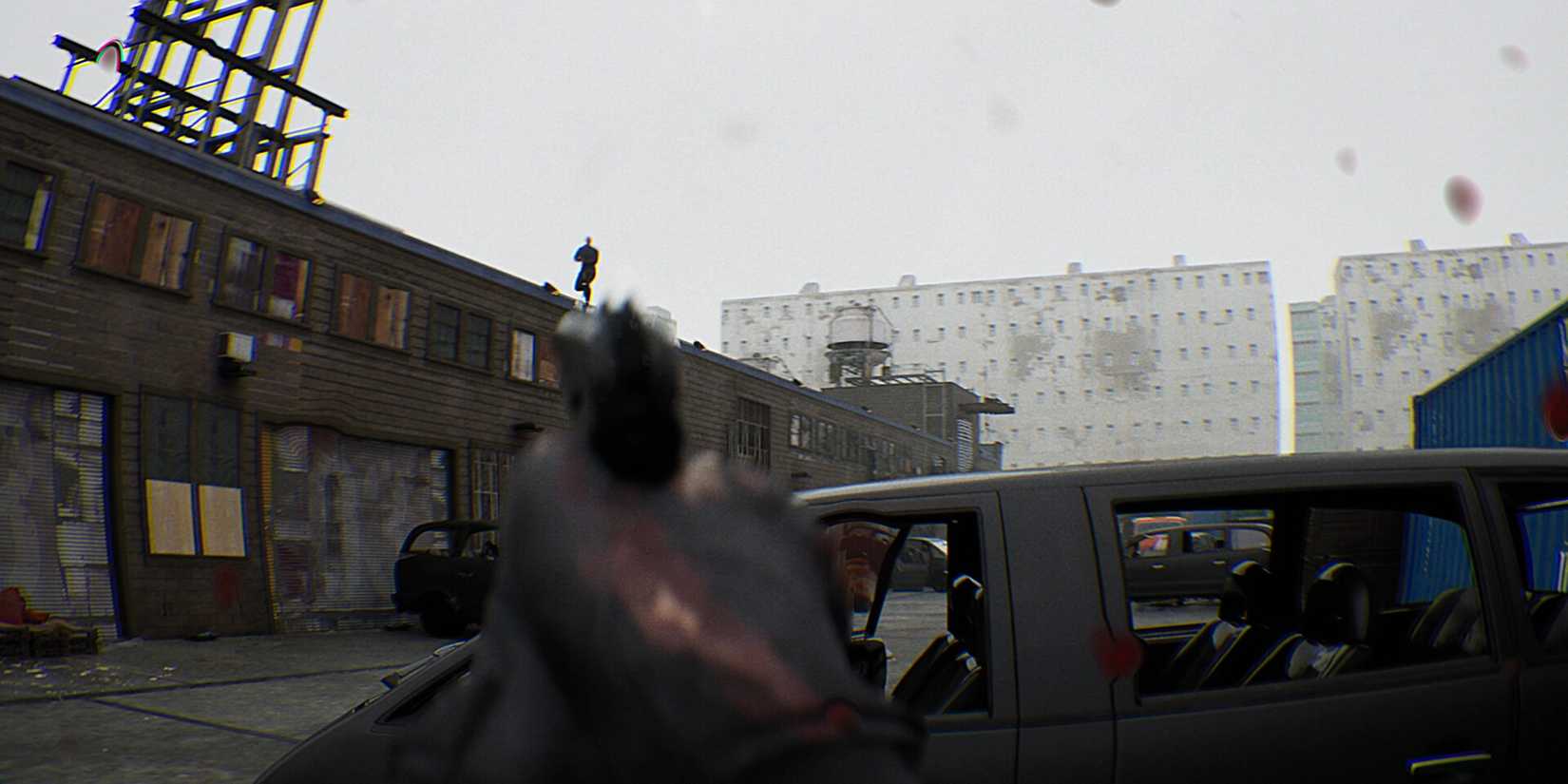
None of this atmosphere would hold up if the gameplay didn’t walk hand-in-hand with the narrative, presenting the same “raw” feeling. Basically, the mechanics in Better Than Dead are specifically designed to keep you on edge at all times, meaning it is really challenging and requires a bit of patience.
The game is structured into closed, relatively short levels with some direct objectives, such as kill the boss, rescue a victim, or escape the place. At the end of each mission, you get a performance summary, such as tracking your time, how many bad guys you killed, and how many innocents were caught in the crossfire, culminating in a rank. And these stages are merciless! If you die, you go straight back to the beginning of the level, echoing the punishing loop of titles like Sifu.
Basically, the mechanics in Better Than Dead are specifically designed to keep you on edge at all times, meaning it is really challenging and requires a bit of patience.
With that in mind, the core gameplay is deceptively simple. You have some basic movements like run, crunch, slide (briefly, but still), and that’s pretty much it. To face the villains, you rely on a single pistol, and here’s the twist: you have unlimited ammunition. But hold your horses! Don’t let that fool you into thinking that having bullets at your disposal means that it will be easy, since your commands are made to balance that – they are intentionally limited because you aren't controlling a professional hitman, remember? You control a young woman who is just incredibly angry and traumatized, so no steady hands here.
And you can literally feel this in the controls. There is no reticle on the screen, and aiming requires intense concentration because the camera is shaky, reflecting her psychological state all the time. This balances out the infinite ammo, resulting in a challenging gameplay experience with a steep learning curve, especially since the health bar is quite unforgiving. A single hit splatters blood across the lens and alters your movement, making it breathtakingly difficult to run or aim. So, in the end, you must be nearly perfect on every stage.
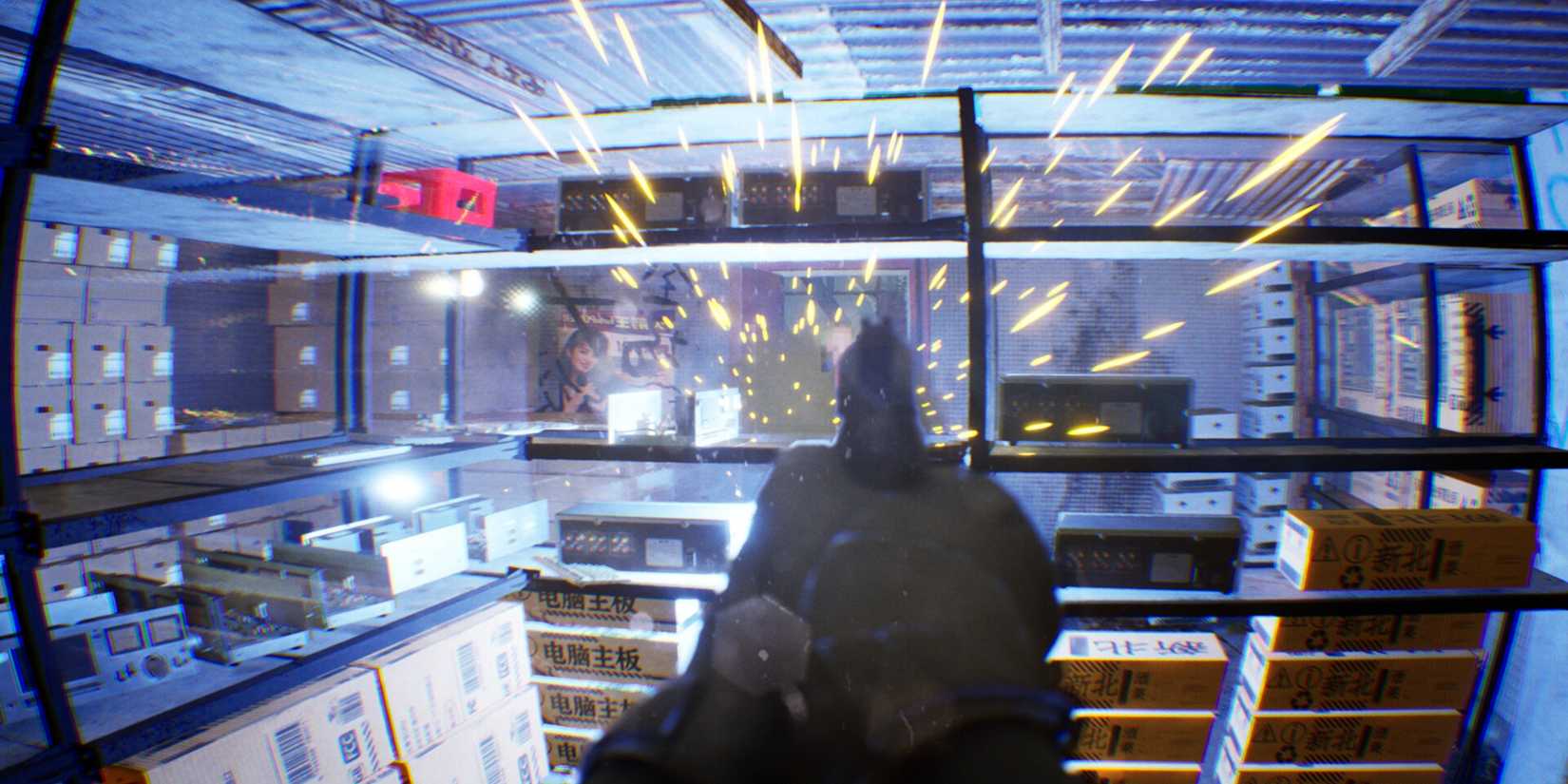
This high level of challenge ends up ensuring that the real heart of the gunplay is the bullet time mechanic, which works similarly to Max Payne, slowing down time for a few precious seconds of control (though you’ll be sliding forward rather than performing cinematic leaps). And trust me, this mechanic is a lifesaver and makes all the difference in your playthrough, being crucial to striking multiple enemies in a single room.
There’s also a semi-invisible system called simply “luck” (and it’s tied to the “To Hell” difficulty, which was the only option available in this Early Access build). It works like this: if you lose focus and kill innocents, your luck drops, meaning you'll be hit more frequently, lose your accuracy bonuses, and find yourself unable to use bullet time. So, losing “luck” makes things way more difficult, adding another layer of pressure there.
 Related
10 FPS Games That Reward Exploration
There's plenty of goodies to be found if you just look through your scope.
When you weigh all of this, you’re left with gameplay that undeniably prioritizes action, yet constantly demands that you feel the protagonist's rage and adrenaline. This connection draws you even deeper into a plot filled with heavy themes, an experience that feels particularly visceral if you are a woman.
Don’t let that fool you into thinking that having bullets at your disposal means that it will be easy, since your commands are made to balance that – they are intentionally limited because you aren't controlling a professional hitman, remember? You control a young woman who is just incredibly angry and traumatized, so no steady hands here.
One aspect I found fascinating is how the game seems to reward a very specific kind of behavior while you play. When you hit a game over, the screen displays tips that encourage you to be more aggressive and never hesitate – one message literally says, “Stay aggressive. Hesitation kills.” And I noticed that, almost naturally, I began to behave this way. Simply put, if I played more aggressively, running like crazy toward enemies to trigger bullet time, I would get hit less often and finished the stages much faster. However, if I tried to be cautious and take cover, the game punished me by making enemies land their shots with more ease. I’m not sure whether this is purely psychological or a deliberate piece of game design, but either way, it worked!
Sharp Knives and Rough Edges
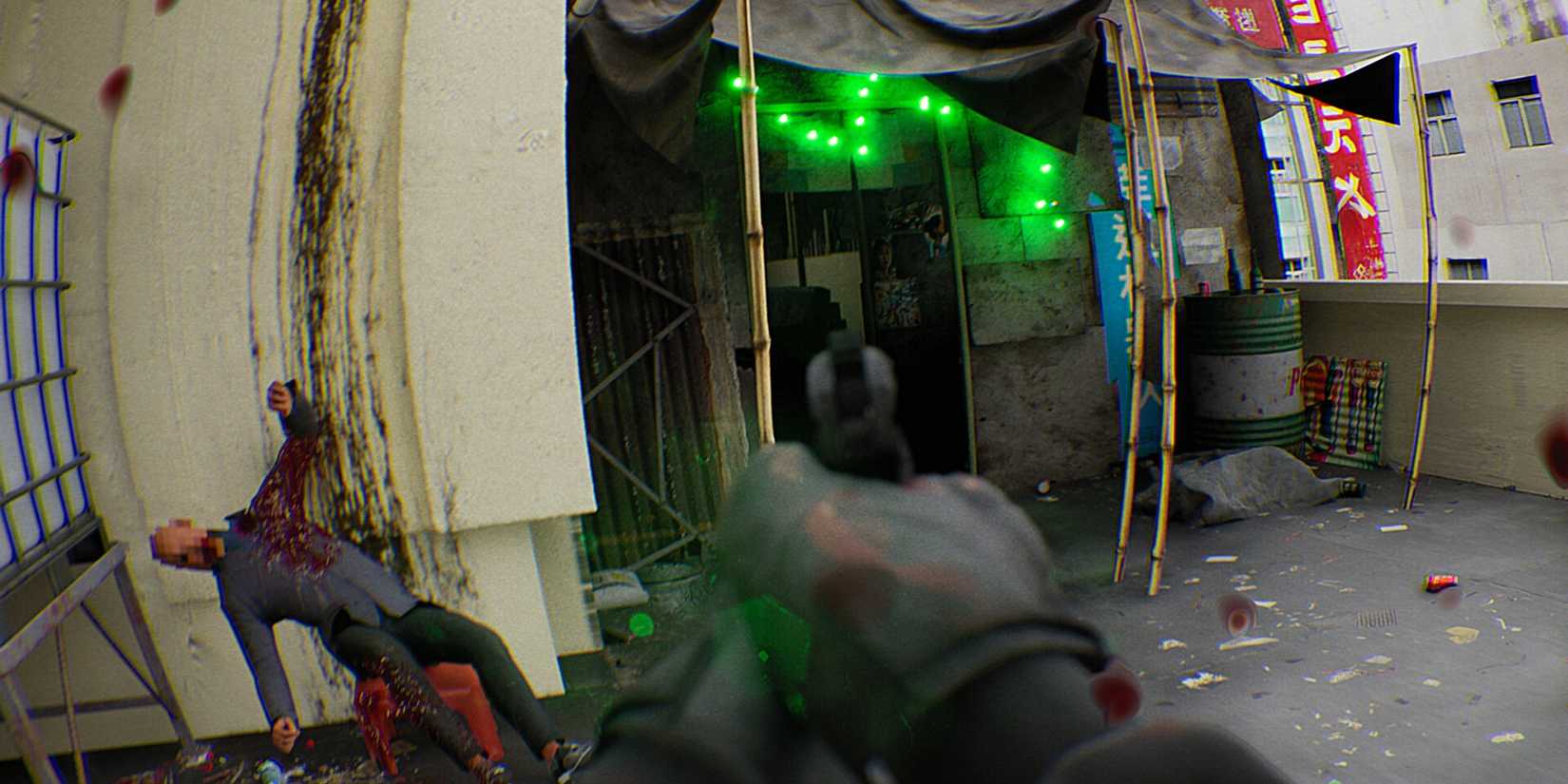
Better Than Dead also has some interesting details to pay attention to, such as its heavy atmosphere being further intensified by the sound design. Gunshots sound dry and piercing, like a sharp knife, which keeps the tension at a constant high. Also, visually, the care put into the visceral details is quite impressive, with smoke pouring from the pistol, and the environments being highly destructible, with sparks and paper flying everywhere as you charge in.
However, I would have loved to see this same care applied to some technical details, as I encountered invisible walls on car windows and gaps in railings that blocked my shots unfairly, limiting my strategies during combat. There were also some physics bugs with enemy corpses – not that these pieces of sh*t deserve any respect, but the issues are there. Furthermore, there were instances where I got “clipped” inside the geometry by simply trying to crouch and use the environment to my advantage, which was a bit of a bummer.
 Related
10 Best AA Shooters You Need To Play
Big budgets are nice, but really, all we want are big guns and bigger explosions.
These were all clear reminders that the game is launching now in Early Access, so bumping into some of these details is actually normal, as they are a deeper level of polish that will likely be addressed and fixed by the developers in the future. Regardless of these rough edges, the game is undoubtedly on the right path, which is the most important thing to consider from this initial release.
A Vengeance Worth Witnessing

Better Than Dead is a fascinating, disturbing project that succeeds in moving you without saying a single word. Just using bullets, basically. And it manages to achieve incredible depth with blurred faces and practically no dialogue, relying entirely on raw imagery and unforgiving mechanics. That’s no easy feat.
Regardless of these rough edges, the game is undoubtedly on the right path, which is the most important thing to consider from this initial release.
It is a game designed to stay with you, challenging the notion of what fun should look like in a medium capable of such weight. However, you must be willing to embrace its harsh proposal, as uncomfortable as that may be. For those who want a different kind of project, one bold enough to keep you thinking long after the screen goes dark, this is a compelling pick! And there is immense potential for this Early Access to become even better and bolder by its final release.
In the end, playing it feels like participating in a vengeance story directed by Park Chan-wook, which is cruel, visceral, and unflinching in its exposure of just how monstrous some humans can truly be.

Systems

Released May 12, 2026
Developer(s) Monte Gallo
Publisher(s) MicroProse Software
Number of Players Single-player
Steam Deck Compatibility Playable

 Next
Next
10 Best Linear Shooters for Players Tired of Open World Bloat
A narrow corridor is fine when you're shooting in a straight line.




![ELDEN RING NIGHTREIGN: Deluxe Edition [FitGirl Repack]](https://i5.imageban.ru/out/2025/05/30/c2e3dcd3fc13fa43f3e4306eeea33a6f.jpg)
 English (US) ·