.png)
 2 months ago
19
2 months ago
19

Published May 25, 2026, 10:01 AM EDT
A forced tie-in with Baldur's Gate 3 made working on Descent into Avernus even more hellish
 Illustration: Tyler Jacobson/ Wizards of the Coast
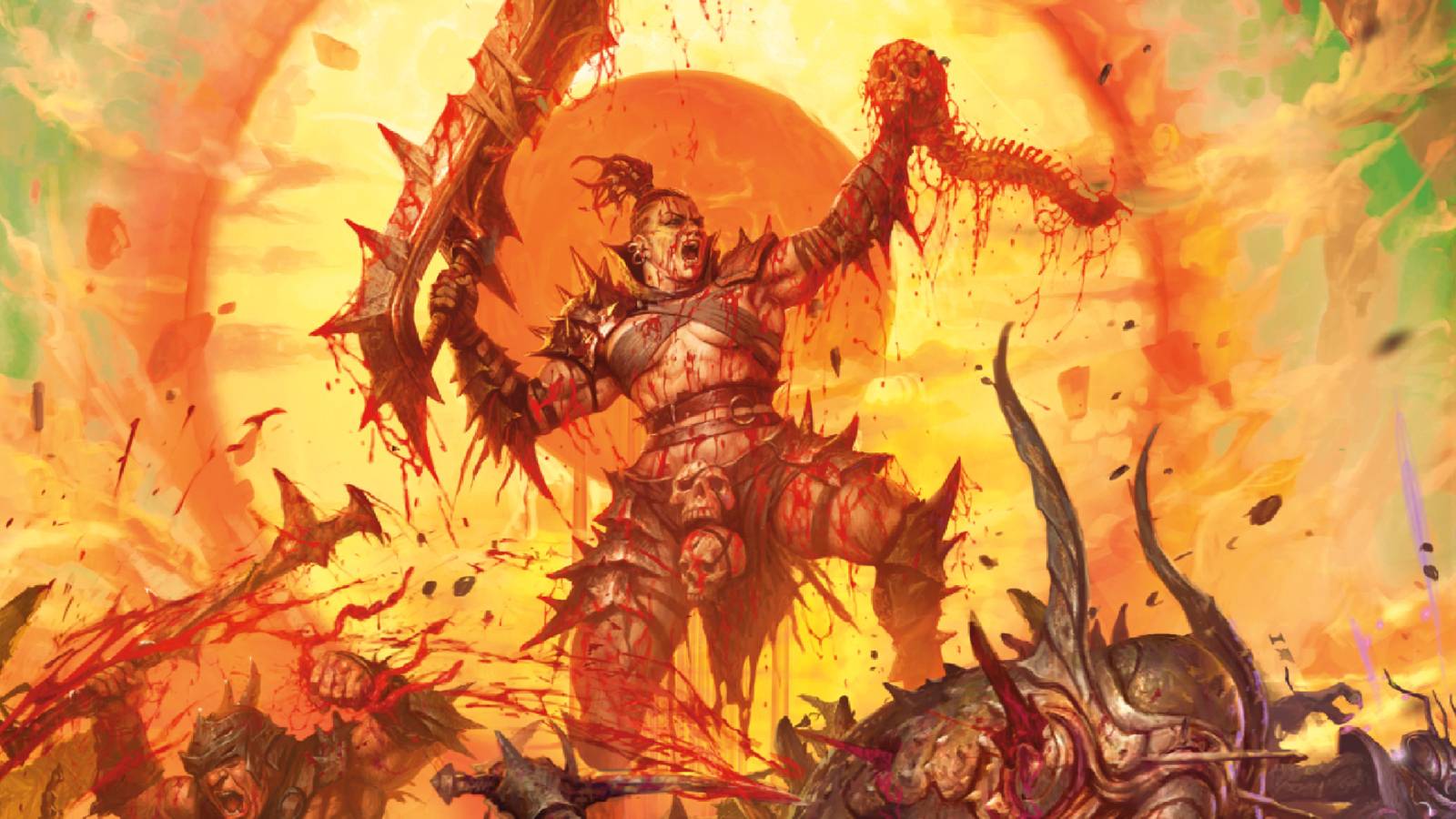
In 2019, Dungeons & Dragons brought its players to Hell — and not figuratively. Baldur’s Gate: Descent into Avernus is an adventure-campaign set in Avernus, the first layer of the underworld. In D&D, it’s presented as a plane of existence dominated and shaped by devils, a race of extraplanar beings of lawful evil alignment. The module is popular among players, despite having a controversial genesis that hindered its development, according to its designers. It also features one of the coolest swords in D&D history: the Sword of Zariel.
The D&D cosmology has a unique charm because it mixes moral and religious inspirations with fantasy, gamified elements. Hell, the Abyss (the chaotic evil-aligned plane), and the various Heavens are not just other worlds players can visit if they have the means to travel between planes. They are also the destinations of mortal souls according to their deeds in life. The Nine Hells of Baator are where wretched souls end up if they struck bargains with devils or or were particularly lawful and evil in life. Each layer is ruled by a powerful archdevil, but they all bow to the might and cunning of Asmodeus, Lord of the Nine.
This plane serves as the battlefield for the Blood War, an ages-old, endless conflict between devils and their chaotic counterpart, demons. It’s also the only layer ruled by a fallen angel: Zariel, who once led a crusade against the Hells only to be defeated and corrupted by Asmodeus. The fall from grace, redemption, and difficult moral choices were established early as the core themes around which Descent into Avernus was designed.
 Illustration: Aleksi Briclot/Wizards of the Coast
Former D&D head creative Chris Perkins remembers how Zariel had a key role in the development of the adventure. “When it was decided that we were going to go to Avernus, we knew that the Lord of Avernus, Zariel, would be a central figure, possibly even the main villain of the adventure,” Perkins told Polygon in a video interview. “So, what's Zariel actually about? She has an angelic form, which is unusual among the Lords of the Nine, who mostly look straight up diabolical. If the adventure is going to take place in her realm, a lot of what the characters are going to experience is going to be like an aspect of her.”
Duality turned out to be Zariel’s main feature, which would influence both the adventure and the way that players experience it. “There's still that sort of divine spark in her, that possibility that she could turn things around,” Perkins said. “And so that became a motif for the entire adventure. The idea that you're in literally the worst place in the entire cosmos, but it's not all bad. There's something there worth saving.”
“My concern was, and I have been proven right time and again, that every time you try to tie a TTRPG product to a video game, you are courting disaster."
Perkins did not work extensively on the adventure since he was busy at the time with the D&D Essentials Kit, Explorer’s Guide to Wildemount, and Icewind Dale: Rime of the Frostmaiden. Instead, the project was handed to Adam Lee, an experienced designer and worldbuilder who had worked extensively on Magic: The Gathering before moving to D&D at the early stages of 5e. Lee contributed to most of the popular adventures of that time: if your characters ever die terribly in Curse of Strahd’s Old Bonegrinder area (as many did), then you can blame Lee for it. Descent into Avernus was his first role as story lead for an adventure.
“Descent into Avernus was the first time, I think ever, that Dungeons & Dragons had done a really serious delve into the Nine Hells,” Lee said in a video interview with Polygon. “A lot of what came before was sourcebook stuff, a couple of paragraphs on Avernus, a couple on Nessus, and so on. So, after talking with the team, that's what I pitched: let’s really dive in.”
 Illustration: Chris Rallis/Wizards of the Coast
However, that early concept was destined to clash with something looming on the horizon: a little game you may have heard about called Baldur’s Gate 3. Wizards of the Coast wanted the module to tie in with the game and launch at the same time. Both Perkins and Lee agreed this wasn’t the best idea.
“My concern was, and I have been proven right time and again, that every time you try to tie a TTRPG product to a video game, you are courting disaster,” Perkins said. “Because a video game will never come out when they say it will. So we were told that Baldur's Gate 3 was coming out in 2019, and we want this adventure’s release to coincide with it. Wonderful marketing thing. I was immediately skeptical and said as much. Ultimately, the adventure came out — and no video game.” (After three years in early access, BG3 came out in 2023).
Lee’s initial concept had to be retrofitted to tie with the story of the game, which takes place in the eponymous city. Descent into Avernus, instead, was supposed to begin in Elturel, a city that gets dragged to Hell. “Initially, it was just going to be Avernus,” Lee said. “You start during the festival in Elturel, a quick sequence of events happens, and all of a sudden you are in Avernus. But then the higher-ups said that it would be great to connect this with Baldur’s Gate 3, and we had to backtrack and retrofit the adventure to actually include Baldur's Gate with some kind of hook. So there was a scramble to figure that all out.”
 Image: Larian Studios via Polygon
In the published adventure, players start in Baldur’s Gate 10 days after Elturel’s mysterious disappearance. They get involved in the shady activities of a new faction worshiping the Dead Three: Bhaal, Bane, and Myrkul (who play a major role in BG3). Players are then encouraged to investigate the fate of Elturel, landing in Avernus. While that initial part is not necessarily bad to play, it took space away from the original concept of the adventure. “It was one of those things where you're pulling the thread on the sweater and the sweater starts unraveling,” Lee said.
Still, it could have been worse. Elturel is not too far from Baldur’s Gate in the Forgotten Realms geography, at least. I can’t imagine what would have happened if the original concept of the adventure had taken place in Kara-Tur or the Dalelands. “It was a pain point because it didn't seem like those two things went well together,” Perkins said. “But we had shared some documents with Larian about what we were thinking about with this story. And they were excited to build some Hell elements into their plot line, which turned out to be fertile ground for them.”
 Image: Larian Studios via Polygon
Indeed, giving a good depiction of Hell was the adventure’s biggest challenge. “There is no good part of Hell,” Lee said. “Even if you're the highest level devil, a pit fiend, or you've got all the power you could want, it's always miserable. That's just the nature of the place: there’s no relief.” There is, however, a chance at redemption, at least as far as Zariel and the players are concerned. The central part of the adventure revolves around finding Zariel’s powerful sword, which acts as a big McGuffin. In the end, players can use the sword to redeem Zariel, but they can also destroy her, take the mantle of ruler of Avernus, or share the throne with her.
Ultimately, none of these choices are devoid of consequences. “The other theme of Descent into Avernus is that the hardest path is the righteous path,” Lee said. “If you are going to play this adventure choosing to be righteous, if you don't want to slip, then it's going to be very hard. But if you want to take some shortcuts and get some freebies, if you want gifts, power, the illusion of delights, there’s plenty of bargains to be made.” The designers really nailed the representation of D&D devils: unlike demons, their primary instinct is not to rend you to pieces. They want to make a deal. But players who think they can cheat the system are in for a bad surprise.
At the end of the adventure, if you're successful, the whole city will rise back up, but your souls might be too heavy to rise with it. “You've made too many deals,” Lee said. “And so now you are really more a part of Avernus than the material plane. That’s what happens when you sell your soul.”
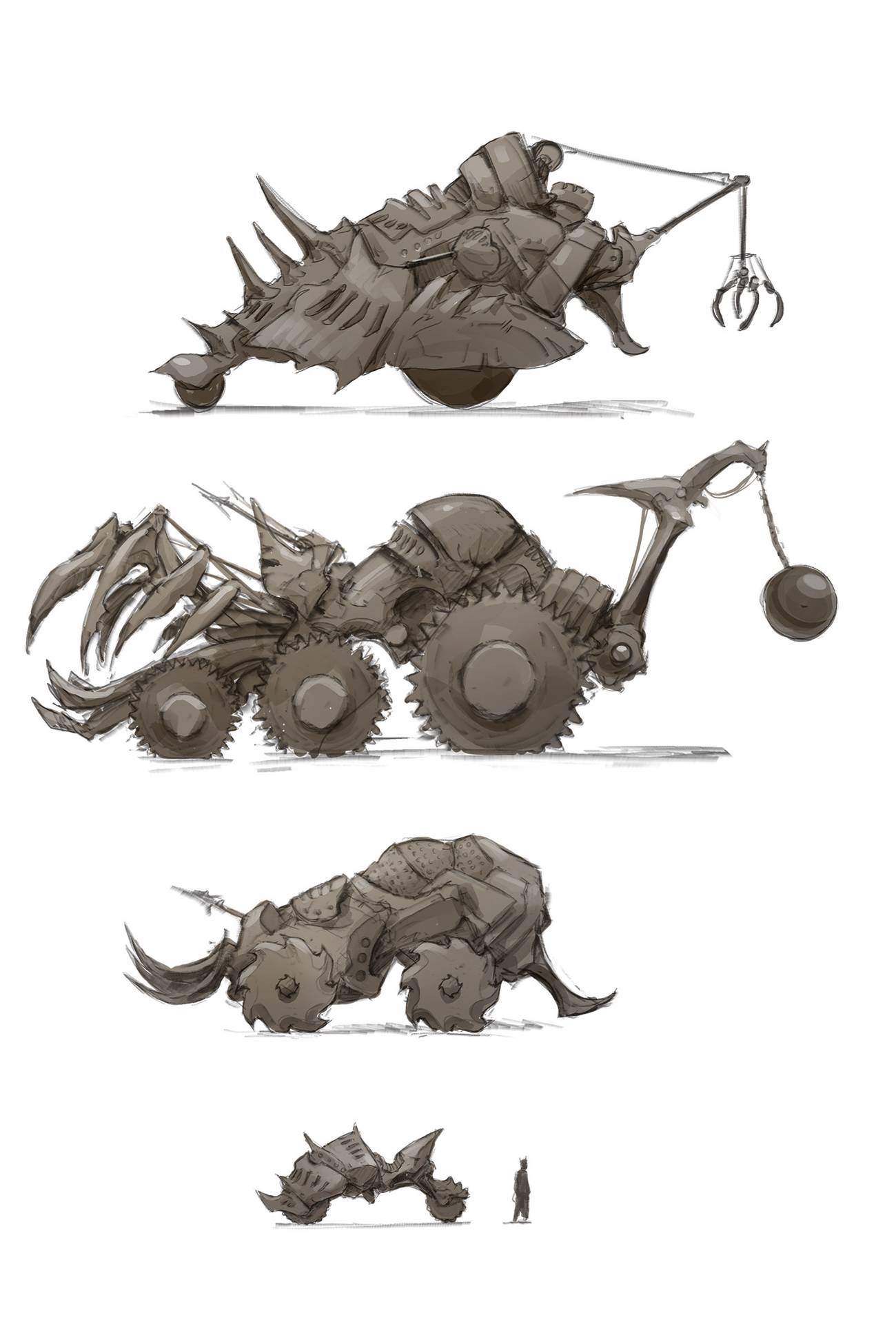 The four types of Infernal War Machines players will have access to in Baldur’s Gate: Descent Into Avernus. Top to bottom there’s the Scavenger, the Demon Grinder, the Tormenter, and the Devil’s Ride. The largest is the size of a garbage truck, while the smallest is no bigger than a motorcycle.Wizards of the Coast
Moral choices are often part of a good D&D adventure — that’s why alignments exist and why the game’s cosmology is also rooted in morality. But Descent into Avernus is the only 5e adventure that makes this a cornerstone of its design. “I really wanted to convey the metaphysical dilemma of Hell and what devils are,” Lee said. “You're playing with your soul and I wanted to actually make that matter in the game.”
The Sword of Zariel plays a key role in that respect, too. “How can I gamify a transcendent moment?” Lee said, talking about the moment when players acquire the sword. “There was a section that unfortunately was cut, done by M.T. Black. It was a mini-adventure where the characters went through different moral challenges to see if they were worthy of the sword. It showed that you had to be consistent throughout the adventure to redeem an Archdevil; it couldn’t just be easy. And the way to do that is through the things that redeem us as human beings, all the wonderful things about being alive and sentient.”
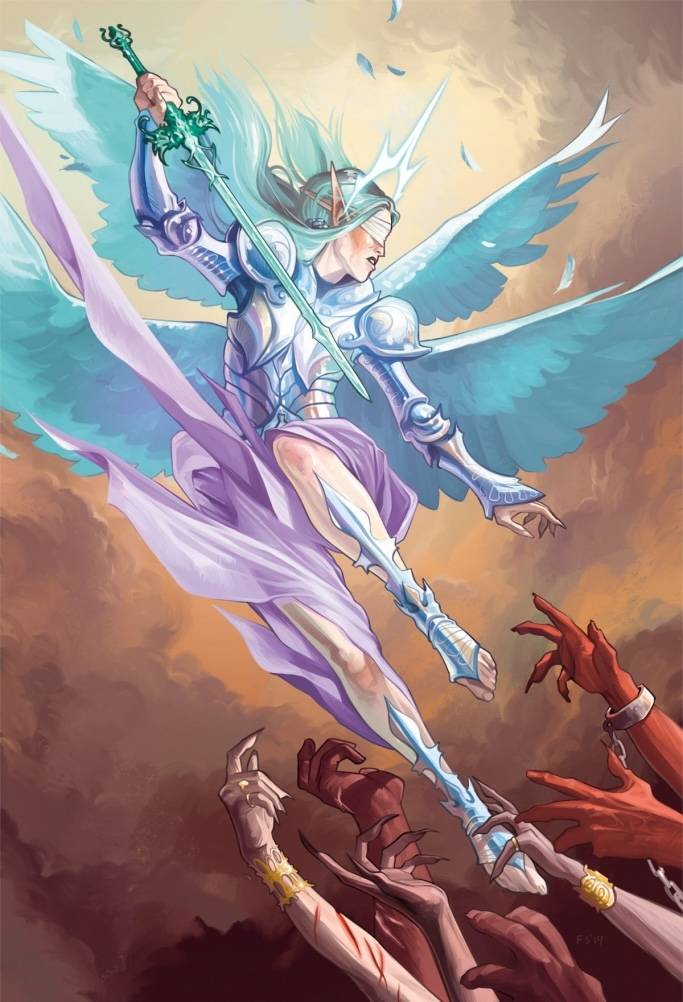 Zariel in her prime angelic form wielding the Sword of Zariel.Image: Wizards of the Coast
Despite having to change their initial project, Lee and the rest of the team managed to deliver their message: Hell is not a place to be trifled with. But on top of the moral quandaries and the metaphysical soul-searching, Descent into Avernus is just a fun adventure to play, with a variety of elements that can appeal to different players. “It has all sorts of activities in it that would engage players of all types,” Perkins said. “I myself as a DM have plundered this adventure quite extensively.”
On top of having one of the coolest swords in D&D history, Descent into Avernus represents the duality that’s always been part of the game. “Some people tell me that they went through Hell, partied, kicked ass, rode war machines, and smashed each other up,” Lee said. “Others tell me that they really got into the moral quandary of it all — healing Zariel and restoring Elturel — and what an amazing experience that was. And that's D&D, you know? It's the full spectrum from the sublime to the ridiculous.”



![ELDEN RING NIGHTREIGN: Deluxe Edition [FitGirl Repack]](https://i5.imageban.ru/out/2025/05/30/c2e3dcd3fc13fa43f3e4306eeea33a6f.jpg)
 English (US) ·