.png)
 2 months ago
22
2 months ago
22

Published May 30, 2026, 7:30 AM EDT
The movie that got snubbed by the Oscars in 2015 is getting the boot from Netflix in 2026
 Image: Warner Animation Group
More than a decade later, I still remember how disappointed I was when the nominees for Best Animated Feature Film were announced for the 87th Academy Awards. The nominated films were Big Hero 6, The Boxtrolls, How to Train Your Dragon 2, Song of the Sea and The Tale of the Princess Kaguya. They were all fine movies, but missing from the list was the funniest, sharpest, most visually innovative animated film from 2014. Now, that very same movie is facing yet another indignity (getting the boot from Netflix's streaming library), making now the best time to watch (or rewatch) this modern animated masterpiece.
Even before it came out, The Lego Movie was dismissed by many as little more than a big-budget Lego commercial. In truth, it was the Lego company in Denmark that needed the most convincing a movie adaptation of its beloved product was a good idea. The concept for a Lego movie began with Warner Brothers producer Dan Lin, who was inspired by seeing his five-year-old son play with just two Lego bricks clicked together, pretending it was an airplane. Lin thought “Wow, what a creative toy — there should be a movie,” he told The Hollywood Reporter in 2015. Lin then hired Hotel Transylvania screenwriters Dan and Kevin Hageman to develop a script for an action-adventure story taking place in a Lego world.
When Lin brought the concept to Lego in Denmark, there was skepticism from the company, which was already very successful, and cautious about the gamble of a big Hollywood movie. Jill Wilfert, Lego’s vp licensing and entertainment, was ultimately convinced by the prospect of bringing “the values of the brand to life.”
Phil Lord and Christopher Miller were then hired to direct the film and also rewrote the script. (The duo would go on to produce the Spider-Verse movies and direct Project Hail Mary, but at the time they were best known for directing Cloudy with a Chance of Meatballs.) And while Warner Brothers and Lego knew The Lego Movie could be more than just a cash grab for Lego-branded merch, that stigma stayed with the public until the film was released on February 7, 2014. The film received near-universal acclaim from critics, with SFGate’s Peter Hartlaub saying, “The movie is a wonderful surprise, cleverly written and executed brick by brick with a visual panache.” Audiences loved it too, as it would go on to make $470 million off a $65 million budget.
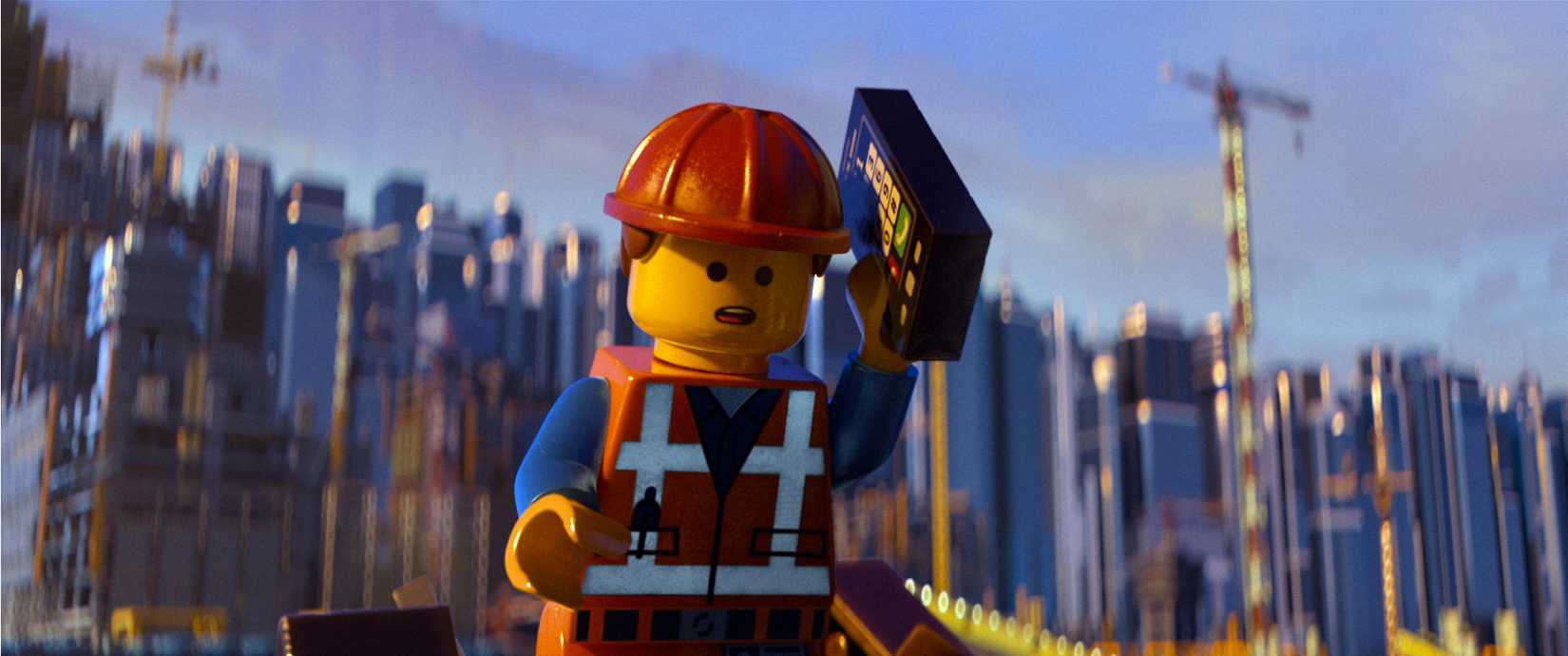 Image: Warner Bros/Everett Collection
Rather than just a 100-minute Lego commercial, The Lego Movie tells a thoughtful story about the nature of creativity with Emmet Brickowski (Chris Pratt), a run-of-the-mill “nothing” Lego minifigure who saves the universe by embracing his imagination. Later in the movie, it's revealed that the whole story is being told by a child (Jadon Sand) playing with Lego, and by telling that story through the eyes of a child, the movie is imbued with brilliantly-utilized child logic. For example, Emmet’s double-decker couch is the kind of thing a kid would find cool, while adults would point out the obvious gaps in logic behind it.
The movie found a way to make mainstream products profound and that wasn’t just for Lego. Something as ordinary as Krazy Glue is a critical metaphor in the film, as the kid’s dad (Will Ferrell), an adult Lego collector, plans to use Krazy Glue to secure his creations and deter his kid from playing with them. In the context of the kid’s Lego story, the “Kragle” (AKA Krazy Glue) is the villain’s big, world-ending weapon. So while Lego represents creativity, Krazy Glue represents the opposite.
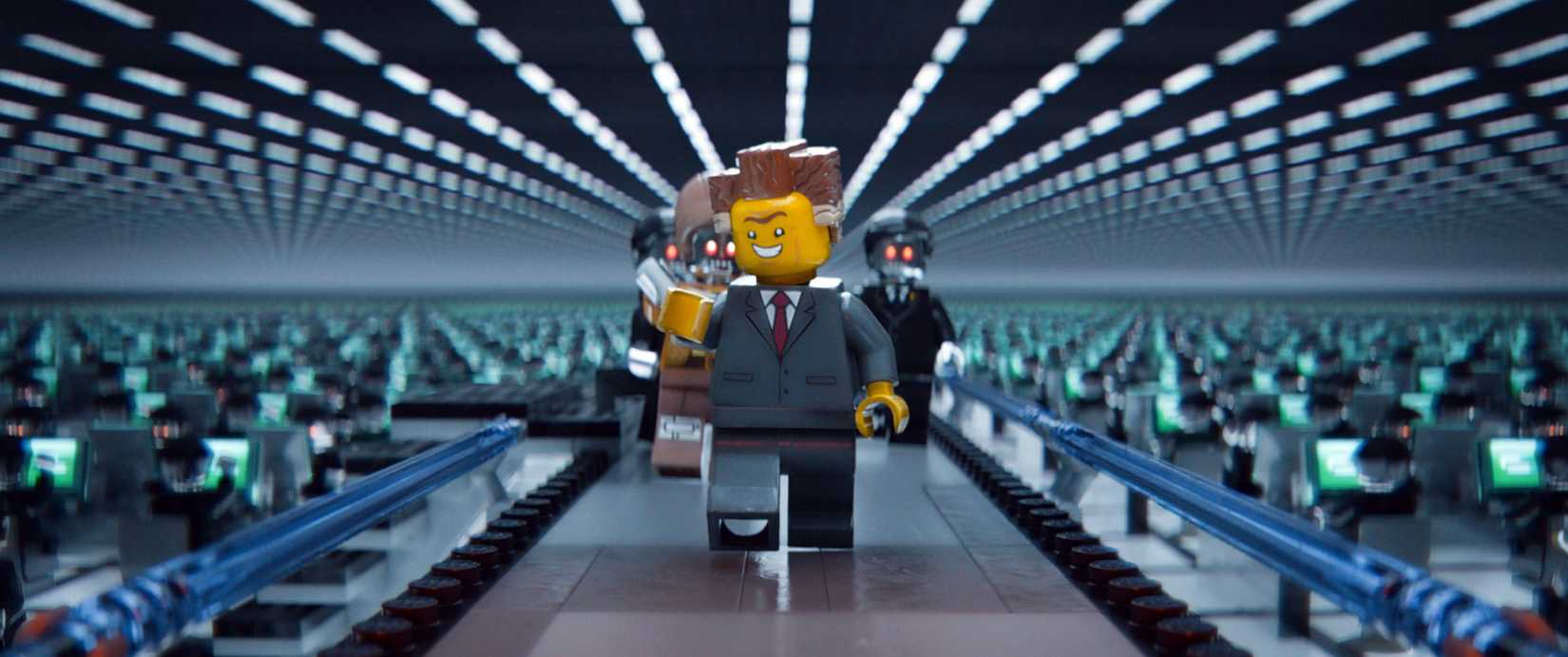 Image: Warner Bros/Everett Collection
As smart as the story and its messages are, and as funny and irreverent as the characters are, the most innovative thing about the movie is the way it looks.
Aside from the live-action segments featuring the kid and his dad, the main story is told in a reality made entirely of Lego, providing an immersive experience where the 1.5-inch Lego minifigure characters are shot and framed like human actors in a regular movie would be. The result is that the audience really gets to see the world from the tiny perspective of a Lego figure. And by constructing an energetic chase plotline where Emmet is on the run, Lord and Miller found a clever way to include a vast array of environments, like a crowded city, a desolate Western setting, and a bright, colorful land full of clouds and rainbows.
The most stunning of those environments is the ocean, which is shown during a sequence where Emmet and his fellow heroes get stranded after their submarine explodes. When seen from above, the water isn’t made of liquid. Instead it's represented by millions of blue and white Lego pieces that are constantly shifting and changing with the waves in a stop-motion like effect. That ocean was achieved by Lord and Miller embracing the limitations and peculiarities of Lego. Had the ocean been rendered like the CGI ocean in Finding Nemo, I doubt anyone would have called them out for a shortcut, but by making every bit of that ocean represented by solid bricks, they accomplished something entirely unique and visually stunning, especially when seen on the big screen for the first time.
Embracing the limitations of Lego was done at every level, from the monumental set pieces like the ocean, to the minute details of the characters. For example, when the characters in the movie walk, their legs don't bend. Instead the legs just swing back and forth just like they do on Lego minifigures. The characters also have incredibly limited facial expressions, especially Emmet, who was given the most basic Lego face. This further enhanced the stop-motion look of the movie, despite it being done entirely with CGI.
“It's gotta be real bricks,” Lord told SlashFilm in a 2014 interview. “We can't make up a bunch of pretend pieces. We can't bend the characters at the elbow or do them like squish cheeks or whatever. That made for a much more fun challenge and much more expressive animation.” Later in the interview, he said, “there's something about taking something really simple and trying to animate it with as much emotion as possible that is really appealing and seemed to be at the core of what was inspiring us about Lego in the first place.”
By committing themselves to the limitations of Lego, Lord and Miller achieved a visual experience unlike anything we’ve seen before. They also paired it with a sweet, inspiring story and utterly hilarious characters, which is why I was so pissed when it was snubbed for an Oscar back in 2015 and why, every time it's returned to the big screen, I’ve rushed to the theater. This weekend though, catch The Lego Movie on Netflix before it leaves because it truly is a masterpiece (emphasis on the “piece”).





![ELDEN RING NIGHTREIGN: Deluxe Edition [FitGirl Repack]](https://i5.imageban.ru/out/2025/05/30/c2e3dcd3fc13fa43f3e4306eeea33a6f.jpg)
 English (US) ·