.png)
.png) 7 months ago
100
7 months ago
100

Sign in to your DualShockers account
It's no secret that I'm a massive Silent Hill fan, with Silent Hill f being my latest and greatest obsession since its release. Recently, I had the privilege of interviewing NeoBards, the studio behind Silent Hill f, to learn more about what went into its creation.
Not only this, but we chatted a bit about NeoBards itself, including how it came to be and where they want to go next. For a young and relatively new studio, not only was it enlightening to learn, but also inspiring to aspiring developers, no matter where they began.

Related
Silent Hill f: 10 Easter Eggs You Missed
There are so many little details that are easy to miss in Silent Hill f if you don't have a keen eye — in true Silent Hill fashion.
With employees having been in the gaming industry for decades, many pathways and ideas came together to bring something new, fresh and exciting for horror fans. You wouldn't believe that Silent Hill f was the team's first horror game, especially with its quality, but that's the power of experience.
If anything, this just makes me all the more excited for what NeoBards has in store next.
A few spoilers for Silent Hill f are mentioned throughout this interview, so be warned.
Meet the Interviewees
Jean-Marc Morel

Hey, I'm Jean-Marc and the CEO of NeoBards. I've been programming and making games for a long time. I worked for Infogrames and the Alone in the Dark series a long time ago. I went to the US, LA, for Activision for 15 years. I ran the Activision Shanghai studio for Call of Duty Online. In the meantime, I also worked with these guys in Taiwan when they were making games for Activision. And then I left Activision and moved to Taiwan, and we created NeoBards together.
Wonder Lin

My name is Wonder. I've been in the industry for more than 20 years. I'm the COO and the Head of Business Development at NeoBards; I'm one of the co-founders.
Albert Lee (Interpreted by Gary Liao and George Chen)

I'm Albert, I will be speaking Chinese and let our interpreters help me. I'm the Senior Producer of NeoBards. I've been in the gaming industry for more than two decades. My last title at NeoBards is Resident Evil: Resistance. I'm also the producer of Silent Hill f.
Al Yang

My name is Al. I'm the Game Director for Silent Hill F and also the Studio Creative Director for NeoBards. I've been in the game industry for, oh goodness, what year is this? The year of our Lord 2025. So about 19 years now. Oh gosh, that hurts to say that. I started off in music, actually; I started off as a sound engineer and then writing music for games in Taiwan. That was where my experience started. And then I went back to the US and was there for a while, starting with QA (Quality Assurance).
From there, I worked up to design, which is my real passion. Afterwards, I spent some time with THQ, who sent me to China for a few years, went back to the US for a few years, and worked on PlayStation All-Stars at that point in time. I went to Germany for a few years. And then one of my old coworkers found me and then brought me to Taiwan to help work on Final Fantasy XV Pocket Edition as design director. I was the game director for that. And then ... NeoBards came along, and my first project was with Albert; it was Resident Evil: Resistance. And then, in-between, some smaller side projects, like Dynasty Warriors Mobile, finally ending with Silent Hill f.
[Elena Chapela for DualShockers] Tell me a little bit about NeoBards! How did you get involved?
[Wonder] NeoBards is only eight years old, but the team has been together, making the games together. So that's why we say NeoBards is not eight years old. The company is young, but actually the soul of the team is quite solid and old. We have a very solid foundation.
[Jean-Marc] So 20 years together as a team.
[Wonder, with a laugh] Al and Albert are still young.
[Jean-Marc] Yeah, I met those guys in 2006. That's when we started, we worked on Kung-Fu Panda for Activision at the time.
[Al] Like Wonder said, these guys over here have been working together for a super long time. I'm the newcomer to the group — for about eight years, I would say, which is still a good chunk of time. But we have another one of our lead producers at the studio, a guy called Steven, and I used to work with him in China. And when I was in Germany, one day he sent me a message, and he was like, hey man, do you want to come back to Taiwan and work with us? I'm like, "Oh no, I'm good. Unless you have, like, Silent Hill or like, Street Fighter, or like Resident Evil or Final Fantasy, I'm okay." And then the next message I got from him was like, "Hey, so, you have time for a call?"
That's how they got me back. I was just supposed to come back and help on that project (Final Fantasy) because they needed a director for it. And then after we'd finished, I was going to take off and then Jean-Marc and Wonder here, they're starting up NeoBards, and they were like, "Hey man, do you want to stick around?" I was actually going to head back to the US at that point in time. [So] I'm like, "Oh, thank you so much for having me. The project's really fun, but like, unless you have, like, Street Fighter or Silent Hill or Resident Evil or Final Fantasy, I want to kind of work on this other stuff." And then Jean-Marc's like, "Well, you're never going to believe this, but you like Resident Evil?"
Eight years later, here we are.
[Wonder] Albert at the beginning, he was a programmer. NeoBards has quite [a lot of] producers, their background is programming, and Albert is one of them. They understood the tech very well before they began to manage teams and develop games.
[Albert] I entered the game industry in 2000. I met Jean-Marc and Wonder soon after, so we've been working together for around 20 years. We made a lot of games for Activision, including Kung-Fu Panda, Shrek 4Ever After, Skylanders, etc. So we've known each other for ages. It's been a pleasure to work together with them at NeoBards.
[Wonder] So NeoBards is a company with like 250-ish employees with offices in two cities. One is here in Taipei, Taiwan. The other is in Suzhou, China. So, with around 250 members, we can usually work on two to three projects [at a time].
We also have worked on remastered games for Capcom because we've been working together for so long, with a very close relationship, and we were familiar with the RE Engine. So that's why every time they have any project that requires greater support, they call us. That's why you can see Mega Man, Devil May Cry or Resident Evil [being] brought back by us to the current generation.
So we're quite good at the tech, and also I think the solid team helps us efficiently make games that work very smoothly. That's why our partners confidently give us the missions that they want to achieve. Some of the IPs, they want to find a new way to present them to fans while also trying to reach new gamers. Resident Evil and Silent Hill f are also missions that we got from our partners. So there are different ways we work with different partners. They give us a ton of experiences...the journey is also very fun.
[Al] Just going off of what Wonder said. As you know, NeoBards is an external developer. So we work primarily with other publishers and developers on their major IPs. And I think what's interesting, like as Wonder pointed out about NeoBards is we have a very, very strong tech base working with proprietary engines. So out of all the developers in the world, besides Capcom, internally, we are the only external publisher that uses their proprietary engine, the RE Engine. So no one else externally uses this besides us, which is why we keep getting projects with them.
It started off actually a long time ago, the team worked on Resident Evil 4 HD Edition. That was on the PS4. But then they also did Devil May Cry 1, 2, 3 collection for the PS4. And the interesting thing is it's not just about porting or remastering these things. It's also adding brand-new features, [and] retrofitting. So for Onimusha, we actually added in analog control and brand new dialogue. It wasn't voiced before, so that was all recorded.
We also recently did, as Wonder pointed out, Dead Rising Deluxe Remaster, which is also in the RE Engine and is a brand new; kind of like from the ground up, pulling the classic Dead Rising into a more modern environment. So a lot of varied stuff on the porting remaster side, but at the same time, we also have another division. The team members are fluid, they move back and forth based on what projects that they're interested in and what they're needed for.
Going back to Silent Hill f in the very beginning, when Okamoto-san and Konami came to us, they basically had a very basic script, three pieces of concept art, Ryukishi07-sensei's name, and then like, a general idea of what they wanted, and that was it. Our job at that point was, "Okay, how can we actually build a game out of these ideas?" So all the discussion, again, came from our side into how to actually turn these ideas into a game. So that was also a very interesting experience.

Related
Silent Hill f: 10 Best Omamori Charms
You can equip different omamori charms to help you throughout encounters in Silent Hill f. These are the best ones.
Highlighted Questions About Silent Hill f
Were there any particular folklore inspirations for Silent Hill F? We could see a lot with like, Shinto religion and mythology, and some Yokai even, but were there any stories that stand out in particular?
[Al] Hmm, I think so. Ryukishi07-sensei, and he's mentioned this several times before, he draws a lot of inspiration from this kind of stuff. As you know, every Silent Hill monster is unique because what it represents directly is tied back to Hinako. So there are some Yokai designs that have some inspiration in our design. So if you look at the stalker monster with the tongue and whatnot and the pot-belly, there are hungry demons in Shinto folklore, like Japanese folklore, that kind of have that same kind of vibe, that design.
And that's also thanks to Kera-san, which is our concept artist. She is a brand-new artist because we wanted to go in a new direction, very Japanese direction, and she was also handpicked by Ito-san. He was part of that process. So she did take some inspiration from that, because it does have to feel Japanese at the end of the day for everything, especially with the monster designs, but there's not too much like, direct like, "We're gonna take this and we're just gonna do our version of it."
Again, because all the monsters, all the designs are based on Hinako's fears, they have to link up with that more than being inspired by folklore. And as you know, with Sakuko, there is that very clear kind Shinto inspiration there. So there are these links, there are some thought patterns or some philosophy that is Shinto and you can kind of tell about this through Ryukishi07-san's writing. But we try not to directly take stuff. It always has to link back to Hinako. It always has to link back to her story. That is the most important thing, rather than trying to just like, you know, pull from folklore, pull from philosophy or religion directly.

Related
Silent Hill f: All Endings Explained
Beat Silent Hill f and need a little clarification about what just happened? We've got you covered.
How did the team navigate the fine line between new originality and keeping Team Silent's original visions?
[Al] This one is tough. This is very interesting because, as you know, Silent Hill is ... in fan terms, you have the Team Silent kind of era. You have the Post Team Silent era and, if I'm bold enough to say, I think this point we're in, after the drought, we're in kind of like the resurrection or kind of like the rebirth era right now. Just good stuff is coming out of every single title.
So Team Silent was something because we knew they were so revered in the community. It was actually something that you had to look at in the very, very beginning. But the important thing, though, is that I think, in the post-Team Silent era, a lot of the titles are trying to forge their own path in a unique way.
But what Team Silent did immaculately is the vibes or just the atmosphere in general. I think fans love these little details too. So you have the vibes and the atmosphere in one [through] four, which are just very bleak, very intense; it's this very somber experience that is really hard to replicate. I think they really nailed it. And that's something we really focused on, because we knew that we're not Team Silent. We're not going to be able to write or create a game that hits their exact style. Neither should we emulate it, but we should kind of go out in our own directions.
So this is something that NeoBards really, really pushed hard for. And then Okamoto-san was also all on board for that, as you can see with this series. Each one is really pushing the atmosphere, the vibes that made the classic Silent Hill, Team Silent era games so different from everybody else. And that's one of the main things we focused on, which is, well, Silent Hill is very different to people based on where in the series you came in.
If you came in from Harry's story, and then you have those supernatural elements, very strong supernatural elements. And then with two, though, it's less about that very strong kind of supernatural element. You're traveling through one man's hell.
But the one thing they all have in common is that creeping dread, that atmosphere, that fear of the unknown. And fog, lots of fog, everyone loves fog. And then, so when we're developing this, even though we're set in a brand-new location, we're set in a brand-new timeframe, we're not going to be able to hit the story beats of these games, but for sure we can match the vibes. Because to us, that's what Silent Hill is, atmosphere-wise.
That leads into another question of mine, since you brought up the supernatural element. Just how much of Silent Hill f is genuinely supernatural and how much of it is the White Claudia?
[Al, grinning] You know I can't answer; that was a very clever segue, Elena.
But as you know, with the Silent Hill series, with other horror games, things are, it's like, what you see is what you get; this is actually what happened. But with Silent Hill, I think what makes this series so special, and it's another really big thing, is the unreliable narrator. So what exactly is happening and which ending is the real ending? I think this has been a debate about Silent Hill, too, for a very long time.
Again, because you've been looking through this a lot, it always comes down to: what is real to the player? What is the interpretation of the player? There are a lot of things that can be done, and we actually spent a lot of time working with Ryukishi07-sensei to make sure of this.
[In] every ending, the information you get every time you play through the game [changes] based on the information you have. As you know, every time you play through the game, you unwrap a little bit more of the layers, the same cutscene, even if it doesn't change with that added information, you look at it in a completely different way. The context has changed. And that's something we really appreciate that [fans] picked up on.
For us, Silent Hill is not about just hitting you in the face with information or context. It's kind of like, [you] get even one sentence, this entire cutscene has different context. And that is the way we approached the storytelling and the endings. Also, based on the [New Game+], you might get Fox Wets Its Tail first. You might get another ending first, but whatever ending you get first, actually changes the context of the other, in the order you get. So it's actually a little bit of an interesting thing for the players.
But because of that unreliable narrator, you're not exactly sure how much is real or not. And the dialogue is chosen very carefully. So at that point, it's, again, up to the players to be like, "based on the information I have on this run, what do I think is real, what just happened, but also based on information that I got on this ending, how much of the previous ending or the previous run is real to me?"
And then there's some concrete evidence based on the Journals and whatnot. Without falling into the trap, that's all about the player determining for themselves what is real or not. Just like how we can't say that there's a definitive ending, even though there's an ending, I think a lot of players are calling it the True Ending. Again, in Silent Hill fashion, I think it's up to the player to decide which ending is the one that resonates with them the most.

Related
How Silent Hill f Connects With The Series' Canon
Many players can easily miss the connection between Silent Hill f and the rest of the series, but it didn't slip past me.
There were a lot of staples that were approached in a new and unique way. Like the radios being old conversations or things that were said to Hinako that are replaying in her head. But it is clearly a different approach to the radio versus enemy proximity. How did you guys come up with remixing these staples in this way and yet keeping it organic?
[Al] That's a really good question. That's a great question. This is the first radio question I have ever gotten, so thank you for that.
The radio has always been a staple, even post Team Silent era. It's always been there. And I still remember in the first one, after Cybil leaves the diner, and you pick up that radio and that noise comes on, you're like, "what is this?" And then the monster comes crashing through. The radio has always been focused on the enemy's proximity, and that's part of the creepiness. You're like, "I know there's an enemy around me, but I'm not quite sure where it is." And that adds a lot of tension.
That's something we actually tried because of the staple. We tried this in Silent Hill f also in the very beginning. But thematic-wise, and then story-wise, if you play through the narrative, it didn't quite make a lot of sense. We could force it onto Hinako, but it didn't actually make a lot of sense for her to have this thing.
Oh, actually, another one is like, you can hit enemies, you can kick enemies while they're down. That's a very classic thing you could do in previous titles. And we tried that also. And thematically, again, older Silent Hills did this, and it made sense in terms of their protagonists and their mindset and their world. But for us, it didn't make much sense to have Hinako be able to do this constantly.
But we wanted to keep the radio in as an homage to classic Silent Hill titles, but do it a little bit differently. Part of what we did, because there are other games where there's information that comes to the radio every once in a while ... that's something which is like the bleeding of information. The bleeding of reality and fiction was also a staple of what the radio used to do. Instead of using it as an enemy proximity detector, we want to use that kind of as context to what's going on in Hinako's experience. And that's why we have different radio broadcasts with different types of information based on the run you're in.
So that was where that idea came out. It was still rooted in classic Silent Hill, but used in a slightly different way because it needed to fit the current setting.
That's just one of the many details that this game has. This game has a ton of details. It's like detail central. How did the team think of all of these little details and think of layering it in such a way to where it can just be peeled and picked apart and dissected?
[Al] This was, this one's tough. I don't know if Albert remembers this too, because it's just the script, and you're like, like, "okay, how are we going to do this?"
But [we started] off with one of our development pillars. So usually, and you've probably heard this from a lot of other interviews before, it is like, usually when you go off to develop a game, there are a lot of pillars you kind of focus on that don't change, just like key vision, driving tenets. And one of ours was that it has to feel like a Silent Hill game, but at the same time, it has to feel like a Ryukishi07 game. And, as you know, he works in a slightly different interactive medium, which is the visual novel with a looping structure most of the time, and the way it presents information to you is very different.
We're like, "Okay, how do we replicate this but in a more interactive fashion [for] a survival action horror game?" So that was something we set out to do. But because of that, we knew the endings were pretty much set. As you develop, things change. The central theme of each of the endings did not change from the very beginning. When Konami came to us, it was just like, okay, big script, these are the endings. And we're like, "Okay, how do we make this feel like his work, but also bring something fresh to players?"
As you mentioned with the details, Silent Hill fans, or just horror game fans, in essence, are just very, very big on details. Because those are the little things that just add so much spice to the world. Traditionally, it's just like you play it to some point and then something happens, and it just branches out like that. But because we really wanted to do something [unique], because Ryukishi07-sensei was very, very, very, very detailed in his writing, with a lot of background information that adds a lot of context.
But it's one of those things where it's like, if I just tell you this in the cutscene, it doesn't feel very Silent Hill, because of the unreliable narrator. So we wanted to peel back the layers, and that's why we decided not to do kind of the standard branching path like this, but to do kind of a circular path, like visual novels. But because of that, we spent a lot of time figuring out exactly how to set these endings because, as you know, slightly controversial choice, but the first ending is always locked. Without doing that, you cannot have the ending structure or the detail structure where you kind of slowly pick apart things. And that was something that, after going through Ryukishi07's works, we discussed with Konami to make this, for me, very brave decision in storytelling, and Okamoto-san and Ryukishi07 were okay with it.
So I think that was really, for us, very strong creatively. But at the same time, we were kind of worried how the classic Silent Hill fans would react to that.
[Albert] I'll add something about our thought process, about how we think about coming up with these details. I think one crucial component is that we work in collaboration with a lot of people. There's Ryukishi07-sensei, there's Kera, there's people from Konami, concept artists, and of course, our own internal team. In our team, there's the high-level designers, and designers that work on the details of every layer. Because we have a lot of passion for this IP, there are a lot of thoughts and ideas from the team in the development process.
We are also a very open team; any idea that we think is good, we examine it, and see how we can incorporate it or look into it and put it into our games. It's constant brainstorming. We pick out the best idea in each round [of brainstorming], and we decide to implement that into the games.
For example, an idea from the trailer team got implemented into the finalized game. So this whole constant brainstorming is a great process and a good opportunity to incorporate more ideas.

Related
Silent Hill f: All Weapons, Ranked
Silent Hill f completely redid how combat is done in the series, sticking to melee action for up-close and personal fears. Which weapons are best?
What was the idea that got into the final game?
[Albert] So at the beginning, the game was not complete yet when the trailer [dropped]. There is one scene in the trailer where tentacles grow from human skin; it's not really in the game, but we decided to derive from it and put it in the game. We incorporated that idea, merged that idea with the flowers, and there are a lot of similar cases like these. This is just one of them.
Looking at the game's reception, were there any misconceptions floating around about the game that you guys want to clear up?
[Al] That's a good question. That's a really good question. I think, once you release something like this out into the public, it kind of becomes less of your child, and it's kind of like everybody's child at that point. We spent a lot of time talking about that leading up to the game, but now that it's out, I think for us, the work speaks for itself and it takes on a life of its own. So, from my end, actually, there's not really anything.
I think a lot of creators like to walk back on things, but I think this is the fun part about making a creative project and putting it out there. It takes on a life of its own. It means different things to different people. A lot of fans pick up details that sometimes were not intentional, or accidental, but it takes on a life of their own in that case too. So I think it's better for us also to not really clarify any of this stuff, but to really have the interpretation be open and to kind of let the fans discuss to themselves [what it means]. Because I think that's where true artistry comes out, is having it being discussed and having people disagree on the same things or on different things because there's a lot; it's open to interpretation.
For us, that was the goal. That's the goal of Silent Hill in general, which is people's interpretations and having that kind of loose, kind of not so very malleable uh kind of like a definition and a narrative.
Related
Silent Hill f: 10 Easter Eggs You Missed
There are so many little details that are easy to miss in Silent Hill f if you don't have a keen eye — in true Silent Hill fashion.
On the contrary, is there anything that nobody's noticed yet that you're itching to share?
[Al] There's definitely things that people haven't found yet that we put in there on purpose, and more links to specific pieces of lore. But all I can tell people is that, you know, is to keep playing, they might find these little details here and there. We're seeing new stuff every week. We're like, "oh, so they found this, someone found this and now they're discussing it."
But something we did on purpose is that you have different levels of information, different levels of like, hiddenness for things. Like, people are still finding things in [the original] Silent Hill 2 to this day. And I think this is another one of the Team Silent Hill things we wanted to do.
If you just like, shotgun everything, you play the game and take everything at face value, you're done. But what makes a game like Silent Hill 2 so great is that, 20 odd years later, people are still finding details and things out about it because they are not just very well hidden, but they're very well integrated into the world narrative-wise. So that's something we also, as we were building the game, wanted to do.
So for us, we hope that, in 20 years time, people will be like, "hey, I played Silent Hill f after like 15 years for the first time and I just noticed this. I've never noticed that before. What does that actually mean?"
So there are still a lot of things that haven't been found, but we hope they're not found too quickly also.
This one kind of ties into those interpretations, because Silent Hill f was a game that deeply resonated with me. I wrote a whole feature about it, but I had a childhood that was similar to Hinako's and had to confront my inner teen and my inner teen's fears of marriage very similarly to Hinako because I'm engaged now. So I had to confront a lot of those fears that Teenage Me had bottled up, and I felt that connection with this game very deeply. It's a very raw horror, the fear of marriage. How did you guys manage to approach that?
[Al] So I think what makes good stories, not just good horror stories, is relatability. Like you said for yourself, because you experienced this yourself, it resonated more deeply. But maybe a lot of people don't have the same exact fear, so it has to be layered into a way that is like -- on face value, it's fear of marriage, but on another level, it's conforming to society and just societal pressures and what you should do or how much of yourself you're willing to lose.
I think there's a lot of allegory, a lot of metaphors in the game, gameplay-wise, that kind of allude to this too, [like with] the monsters and also what happens to you in the shrine rituals. And I think it's tough because, at face value, not everybody can be empathetic to such a, I would say, gendered fear. But again, that's why I think we spent a lot of time with Ryukishi07-san, and that he was very, very good about. His writing is very detailed also, not only at face value; it is a female fear, but on a deeper level, it is something that we all can relate to. And that's something we really want to push into dialogue, into actions. So again, face value, but underlying what does this actually mean for everybody?
And I think the scenes in Hinako's house, where she confronts her parents, or even that first scene, I remember the first time we recorded that first scene, I was very uncomfortable. The argument in the very beginning — because you know, you don't know exactly what they're arguing about, but you kind of have it. I think that's the kind of thing where, you have that kind of cutscene, you have that kind of information, and then, people are already thinking, you're already kind of internalizing what this could be based on your own experiences, and then as it opens up later on, you're like, "Oh, this is what it actually means."
But because you might have had a similar experience in your own childhood, you can already empathize with Hinako and her plight at a very early stage. And then those scenes in her house that open up and add more context, at that point in time, you're getting more direct information, but that uncomfortableness remains; that kind [where] you can still relate to her, because again, it is something that, while not directly your own trauma, it is something you can relate to no matter age, gender, etc.
Related
As you mentioned, there is a lot of metaphor and allegory in Silent Hill f. What was square one with the allegories? What was square one with trying to figure out how to put this all together?
[Al] I think this goes back to what Albert was saying too, which is that we have a lot of fans of the series or just of horror games internally. During discussion, I think this is a very key point, we settled on this [rule of thumb], which is: if you have one thing there, you have one metaphor or just one thing you're trying to relate to, if everybody thinks it's something different, but they all agree that it means a specific direction, or has a specific narrative beat, that, is to me a success. With these types of games, it's not about having a very clear definition of anything, but having it be symbolic and having it be relatable in a wide variety of circumstances and a wide variety of intentions.
For instance, like, the Kashimashi: as you're fighting it, the face falls off, or you'll notice that there, they have a few specific hairstyles. Those are all chosen very carefully to represent different things.
But it's when we were discussing this, it's like, "Okay, what do these things actually represent?" And everyone's like, "Well, I think that's that, I think that's that." But at the same time, they don't disagree with it. And that's, I think, where we start with a lot of these things. The square one is everybody thinks it's a viable thing, but it can mean a lot of things to different people. And I think for us, that's where we really approached a lot of this design.

Related
Silent Hill: 10 Monsters With the Most Meaning
Silent Hill as a franchise is layered with symbolism and metaphor and that includes its monsters. These creatures, however, have the most meaning.
What's Next?
So my next question would be: what's next for NeoBards? Is Silent Hill still in the docket or do you guys have your own projects in mind or perhaps a secret third option?
[Wonder] As we mentioned, we have the capacity to support more than one project. Telling our own stories is always a wonderful option. Like our name NeoBards, we want to tell our story. We always try to find good ideas for stories that can be used to make games. That's what we always wanted to do.
[Jean-Marc] And then, because we're not funded by a big company or big publisher, we're funded by ourselves. So, of course, we will still continue to work with other publishers, making games together. Whereas we have, like one or two projects [that] are ongoing and starting to tell new stories. And yes, that's currently that.
It takes years to make games. We're about to start some new adventures, embark on new journeys. We'll see where it gets us. What matters is we love what we're doing. We love making games. We love being involved with the cool people in the industry. And hopefully, keep making games that our players will like and fans will love as well.
[Al] I will add on to something that Jean-Marc said here, like as Wonder said, we do work with a lot of publishers. We are an external developer. And because of that, if you see the projects that Albert and I worked on previously, they're very different. Every project we take is very different. Whereas you can take some learnings and some experience from each of these to the next project. It's very disparate, it's very different each time.
So I think, because it's our first horror game and we actually, I think, did an okay job kind of bringing, helping bring back Silent Hill, it would be nice ... and I'm not saying we'll work on like Silent Hill G or something like that, but Konami, if you're listening.
It would be nice to work in the same genre that we're able to make an impact in with our first title. And as you know, like for me personally, I think the second game [a team makes] is always really strong because you take the learnings from the first game. We'd love to be able to kind of do this kind of thing. But again, that's in the future. We'll see how things turn out. But for us, because we've had a good base with this game, we'd definitely like to keep working in the genre at this point in time.
[Jean-Marc] And if the next game maybe has a lot of storytelling, we won't be as scared as we were, you know, when we started three years ago. And yes, [it's why] I also think why NeoBards, the dev team, is sound, because we — this team — really had a very good experience. So, different challenges in the past by different partners, different weights, different types of projects, different types of workflow or work models, actually make us stronger.
Is there anything else that you all want to add, just in general?
[Albert] I saw a live streamer suddenly in the middle of the video say that she felt that, as a female playing this game, she felt that she could experience different details. She felt that playing this would be different [depending on your background], and I think this is a very interesting point. I also think that if you are familiar with Japanese culture, you will get a different feeling. I hope players can discover the feeling; I'm very happy to be able to provide players with such different experiences.
[Al] I think the team is just very happy that we're able to contribute to such a legendary, longstanding series, and be able to make an impact on the narrative surrounding this and help revitalize this. It's like how Albert said, I think as creators, what makes us the most happy is to see players and fans enjoy your work and discuss it, and for people of a lot of different backgrounds to approach it and to have their own takeaways and their own interpretations and to see all that discourse online. At this point, it's only been a couple of months, but still, I think it's still a very strong discourse.
And I think for us, as a development team and as creatives, that's what makes us the happiest. And we're really grateful to not just Konami for obviously giving us this chance to kind of prove that we're able to make a heavy, strong narrative game like this, but also to all the players and the fans who this has resonated with. And we hope that they'll keep enjoying it and look forward to anything else we have cooking up in the future.
[Wonder] I think as a team developing in Asia, in Taiwan, we're glad the world has seen the great title that we delivered. That's the NeoBards slogan: "making games that matter." No matter if it's big or small, we're happy to see that players can be touched and be connected to the game. That's the most important thing for us.
[Jean-Marc] I'm happy about, you know, what has been achieved with Silent Hill f and, because to get here, it took us a long time. It's hard work and lots of pressure, I know the team can handle it. We really can, and the company as well because, you know, you have a team making the game, but you also have the entire company supporting the team –– one cannot happen without the other. So I'm very proud of NeoBards.
I have a good feeling about the future and on what it may hold for us. So, yeah, it's something, you know, when we met 20 years ago, we were dreaming about making games like this, [games] that would be played and well received in the world. We talked about that many, many times around beers, maybe too many beers, but yes, it was our dream and it required a lot of work and dedication.

NEXT
Silent Hill f Review
Our first new Silent Hill game in over a decade is everything I could have hoped it to be.
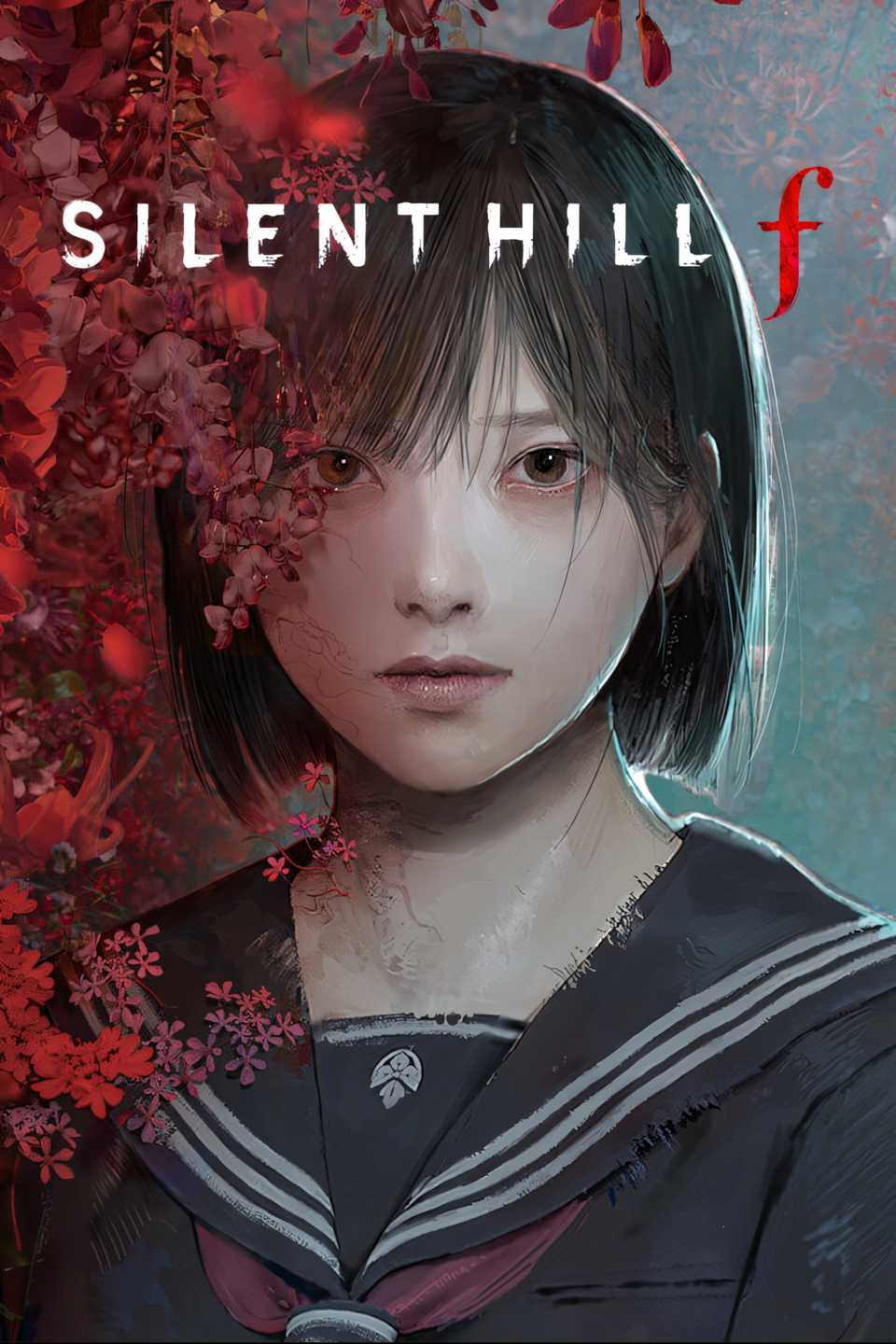
Released September 25, 2025
ESRB Mature 17+ / Blood and Gore, Intense Violence, Partial Nudity
Developer(s) Neobards Entertainment

![ELDEN RING NIGHTREIGN: Deluxe Edition [FitGirl Repack]](https://i5.imageban.ru/out/2025/05/30/c2e3dcd3fc13fa43f3e4306eeea33a6f.jpg)
 English (US) ·