.png)
 4 months ago
42
4 months ago
42
Dead Space was revealed to be permanently on ice last year. We haven’t seen a non-VR version of the Thief franchise since 2014. Deus Ex has lain dormant for a decade. Titanfall 2 also came out ten years ago. There hasn’t been a new 3D Prince of Persia for 16 years, and with this week’s news it’s looking unlikely to return. So many massive, deeply loved gaming franchises are routinely being shelved by companies too afraid to gamble the nine-figure sums publishers believe is necessary for success. Yet there’s such an obvious solution!
Every time I read a headline about a game franchise being shelved because it’s become too expensive, too big of a risk for a publisher to gamble $200 million on, I want to scream into the sky at the obviousness of the solution. But now, following the 2025 success of games like Clair Obscur: Expedition 33, Arc Raiders, Lies of P, and Helldivers 2, surely the answer is clear to everyone? License these once big-name franchises to proven mid-size AA teams, and don’t interfere.
In the wake of Ubisoft’s latest disastrous plan to rearrange itself by cancelling multiple projects, and the seemingly constant drip of major publishers shelving major franchises, all while giant company buys giant company for imaginary money, the industry has clearly got itself into a very bad place. Right now, during this grotesque phase of consolidation, with multi-billion-dollar sales seeing publishers consume one another, a financial black hole is being formed.
With the colossally over-inflated prices involved in these deals, those buying are either borrowing heavily from predatory investors or gambling huge stakes of their own fortunes, such that the sheer notion of creating a new game in a once-loved series (let alone an original IP) becomes fantastically risky. To match the ridiculous valuations, the games these companies make are burdened with a need for justification, and every project must be predicted to bring in at least half a billion bucks to be worth even storyboarding. Ubisoft has just declared that it intends the games it makes to annually bring in a billion dollars each! Development costs therefore become self-destructively high, with expectations of figures of at least $200 million being spent to create something with enough spectacle to dazzle a hypothetical mainstream audience. Everything now needs to be the next Call of Duty at a time when even Call of Duty can’t manage that.
Sure, welcome to capitalism 101: It doesn’t work. The need to always grow bigger, for share values to always increase, is a model so unsustainable that a pre-schooler could explain why. But here’s the thing, also easily grasped by toddlers: a moderately successful game that costs around $50 million to develop will make an awful lot more money than no game at all.
Dead Space Needn’t Be Dead
The most recent example of a beloved game series being shelved is Dead Space. In late 2025, following rumors some months before that a Dead Space 2 remake had been cancelled after the supposedly disappointing sales for 2023’s remake of the original game, word went around that EA had put the franchise “on ice.” In December 2024 we’d also learned that the series’ original creators had tried to pitch a Dead Space 4 to EA, but had been immediately rejected. One of those original creators, Glen Schofield, still didn’t give up, maintaining in October last year that he was attempting to buy the IP back from EA in the wake of the company’s attempted sale to Saudi Arabia, but by December 2025 this looked incredibly unlikely. Which is crazy! Because a new Dead Space is not something EA needs to be the least bit afraid of.
The original Dead Space, released in 2008, cost approximately $37 million to make. Adjusted for inflation, that’s $55 million in 2026 money. And that was an in-house Electronic Arts studio, spending EA money within EA’s ludicrous corporate structure. I truly believe, with my whole lovely heart, that a well-established AA team would be easily capable of making a game of the caliber of that first, excellent horror-shooter for even less money than that, especially if innovative and novel ideas are used in place of the very fanciest modern graphics.
 © Ubisoft
Here’s another thing my heart believes: That Prince of Persia: The Sands of Time remake that Ubisoft was unable to make for six agonizing years before eventually killing it entirely, could have been turned around by any number of excellent smaller teams. I’m not suggesting for a moment it would be easy to do so—it would be fantastically hard, just like making any other top-quality game—but it would be eminently achievable. Not least because, not being made internally at Ubisoft, it wouldn’t have Ubisoft constantly getting in the way. By all reports, Sands of Time‘s remake went through multiple iterations, scrapped and started over at least twice, and eventually was the victim of so much feature-creep that it was adding all-new powers, making Farah an entirely different character (for the better, I should add, but in the most complex way), and adding all-new content.
However, in the hands of a super-capable and proven AA team with a proclivity for the genre and a love of the original, it could have been a far more straightforward process. That 2003 original doesn’t need new powers, nor new levels, because it was fantastically good. It’s one of the best third-person action games ever made, and featured a time-manipulation gimmick that should have become industry standard. At 23 years old, the original is still a great game, but a clunky and dated one that would benefit so wonderfully from a modern refresh. And that’s all anyone had ever been hoping for from Ubisoft.
I’m sure there are many throwing up their arms and claiming that I’m over-simplifying things here. And yes, I’m being perfunctory, but I’d argue that’s because this is all relative. You might be surprised to learn just how needlessly complicated Ubisoft has made making games, even as far back as the 2000s. . I remember visiting Ubisoft Montreal for the announcement of Splinter Cell: Double Agent in 2005, and sitting in their offices as executives explained that development of the game was taking place 24 hours a day by being spread across at least three international studios. When Montreal finished work, they tagged in Ubisoft Milan, who would then pass the baton to Ubisoft Shanghai, and then back to Montreal. There were multiple daily video calls (2005 video calls at that) to try to manage this. Throughout the creation of the game it was also worked on by Ubisoft Toronto, Paris-based Gameloft, and North Carolina’s Red Storm. Imagine working like that. Try to imagine a more chaotic way to develop a game. (I remember asking developers how it could possibly work, and the rather taut smiles as they explained that it “wasn’t easy.”)
 © Ubisoft
Something > Nothing
So no, a AA team making a $50 million (or even a $5 million) game won’t deliver the spectacle and mainstream breakthrough appeal of Battlefield, but nor does it need to. If you’re spending $400m on a game (before you even factor in the cost of a global promotional campaign and wildly expensive influencer events), you need it to be bringing in numbers as close to a billion dollars as possible. If that’s not at all realistic, then the project can’t get greenlit in the first place. But if you’ve spent $50m, and justifiably charge $60 for a top-quality product, you are in the black with so many fewer sales. If your game hits (and let’s remember, we’re in this mess because of all the $200m+ gambles that have missed), you could be in for vast profits.
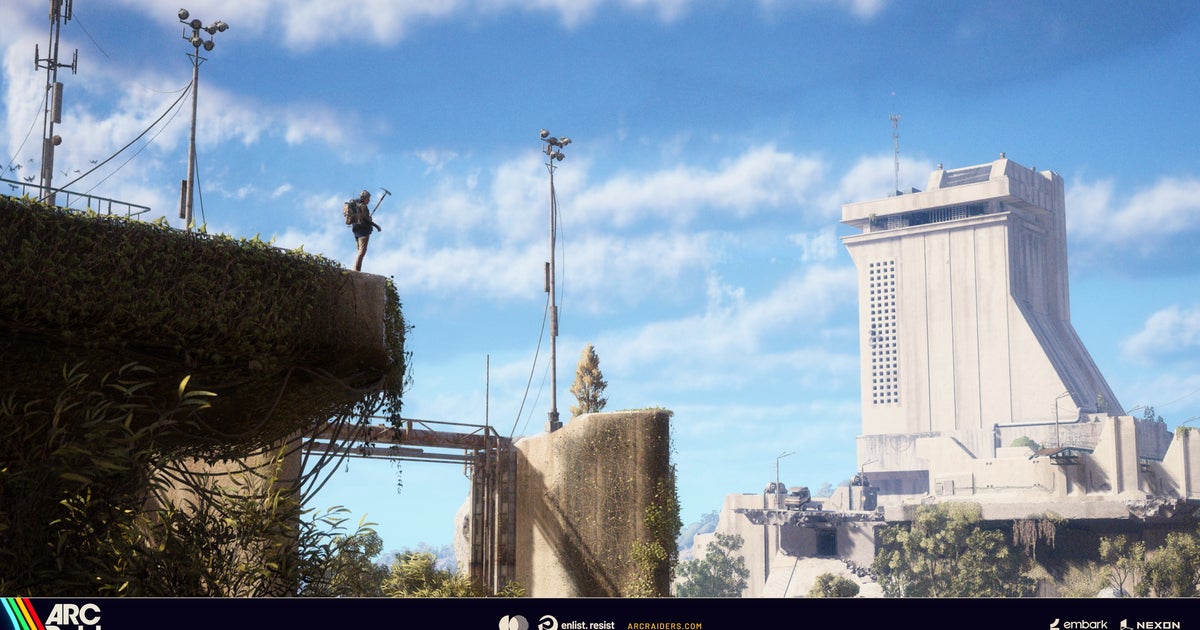
And it’s not fantasy figures, either! Arc Raiders announced this month that it has sold 12 million copies, which at $40 a pop amounts to $480,000,000. Yup. Half a billion bucks. Sure, minus store fees that’s “only” $336 million. We don’t know its development costs, but developers have stated it was nowhere near AAA budgets. And this is a game with optional in-game cosmetic purchases, meaning that figure is going to be so much higher.
Clair Obscur: Expedition 33’s developers claim it cost less than $10 million to make, and it had sold over 6 million copies by the end of 2025. That means the $50 game has brought in at least $300,000,000 before store tithes. That’s a 3000 percent profit, and these are the numbers from before the game won all the 2025 GOTY awards and the sales that will have resulted from that.
These are certainly stand-out examples from last year (although only some of them), but these are figures Ubisoft or EA would sell their grandchildren’s souls to see. The point is, I’m not talking out of my hat here about the potential of spending far less on a far smaller team.
 © EA
© EAMany AA teams wouldn’t be interested in making a licensed game using someone else’s IP, and honestly, I wouldn’t want to trust a big-name publisher right now even if I were one who did. But many would! If you’re a small team with a $10 million project that didn’t catch fire, you’re in a very difficult place no matter how incredibly talented you might be. Many, many mid-size studios fold at that point, but what if there was the route of being trusted with the next Dead Space, or Legacy of Kain, or Sleeping Dogs, or Thief, or Trespasser, or Command & Conquer, or Titanfall, or Splinter Cell, or SSX, or Red Faction, or…
Maybe there’s some big, fatal flaw with this concept that would come to the surface on trying. But I’m really doubtful. The issue is the complete lack of ever trying! And honestly, in their crumbling, fire-sale-driven state, what does an Ubisoft or an EA have to lose?! There hasn’t been a Splinter Cell game since 2013, meaning for the last 13 years precisely $0 has been made on new Splinter Cell games. I realize that’s perhaps somewhat obvious, but it’s a really rather important point! A $10,000,000 Splinter Cell that “only” sells a million copies at $50 a pop: that’s a 500 percent profit. And even if it might seem like small change in a world where (very, very few) games bring in a billion dollars, it’s a heck of a lot more than $0.




![ELDEN RING NIGHTREIGN: Deluxe Edition [FitGirl Repack]](https://i5.imageban.ru/out/2025/05/30/c2e3dcd3fc13fa43f3e4306eeea33a6f.jpg)

 English (US) ·