.png)
.png) 6 months ago
66
6 months ago
66

Usama Mehmood is a writer who has done extensive work for previous publications, including Ranking Lists, Reviews, and even Featured Pieces. This allowed him to quickly pursue a position as an Editor during his former tenure, managing different teams and their content delivery whilst continuing to provide further expertise from his own written work.
He specializes in a variety of AAA and multiplayer titles; from spending countless hours with Sam and BB in Death Stranding to plowing through the latest raid boss with his clan mates in Destiny 2, there's a lot for him to enjoy about the gaming industry.
For how long the genre has paved a way for itself, JRPGs have thrived far and wide, whether it be humble beginnings under legendary collaborations or being the core inspiration for modern GOTY winners.
One thing's for sure: a lot of the titles in the genre have succeeded with large, robust open worlds. And while it's hard to argue against that success, there's an equally fair number of games that prove the genre doesn't necessarily need these expansive worlds to succeed.

Related
8 Most Revolutionary JRPGs Every Fan Needs to Experience
These are games for those who want to dig deeper into the genre.
And that's exactly what this list is focused on, so sit back and read along as we sit down to discuss our picks for JRPGs that feel expansive without the need for an open world.
8 Phantasy Star IV
The SEGA Genesis' Beloved Relic

Phantasy Star IV: The End of the Millennium
One particular JRPG that isn't readily accessible in any way in the big '25 but that we can all consider a founding pillar of the entire genre is Phantasy Star IV.
It’s about uncovering a dying solar system’s secrets as Alys Brangwin and her young apprentice, Chaz Ashley. Multiple planets, ancient civilisations, collapsed empires, and environmental collapse make the setting feel cosmic and layered, even if the traversal itself is linear.
For a game launched back then, it proved that JRPGs didn't necessarily have to rely on a large open-world-esque map to set a stage for the storytelling to ensue. With its planetary exploration and a recurring progression cycle where you revisit planets with new traversal tools and abilities, you had a memorable title for the SEGA Genesis that would stand the test of time for years.
7 Suikoden II
A Political Escapade

I'll be blunt here, Suikoden II is yet another JRPG that's slightly inaccessible, but this time, not because of the console but because of how there's a fair number of caveats to the overall experience, most of which is a painstakingly high random encounter rate, as well as making you look up a guide to get the true ending.
But on the flip side, Suikoden II excellently establishes a world that's built through nations, not a map. See, instead of relying on one giant explorable overworld, the game makes its world feel vast by giving you multiple fully realized countries such as Highland, Jowston City-States and more. And each of them has its own political identities, alliances, and tensions.
Oh, and of course, how could I possibly miss mentioning the notable fact that this game lets you recruit over 108 party member characters along your rebellious journey?
This mechanic isn't a checklist—it’s a world-expanding mechanic that lets you see how each character's story ties back to the larger conflict of the narrative, as well as have a near-limitless roster of characters to check out as you fortify and upgrade your base.

Related
8 JRPGs That Have Aged Like Milk
As much as these JRPGs were highly regarded back in their time, not every old is gold.
6 Grandia II
Don't Touch my Ryudo!

If you ever wanted a JRPG that made itself feel naturally colossal without relying on a sprawling open-world, then Grandia II is very much worth your time. Rather than overwhelming you with an endless sandbox, it delivers a focused globe-trotting pilgrimage through warring nations, sacred cathedrals, ancient ruins, and even the heavens themselves via the final act.
And what helped it stand out in a time when the ATB formula heavily dominated the genre was the unique foundation laid by the IP Gauge combat system, which determined characters' actions through a timeline bar.
What's even better is how this system encourages players to outsmart their enemies by interrupting their casts entirely or delaying them far enough to the back of the gauge.
5 Valkyria Chronicles
Tactical Military Espionage
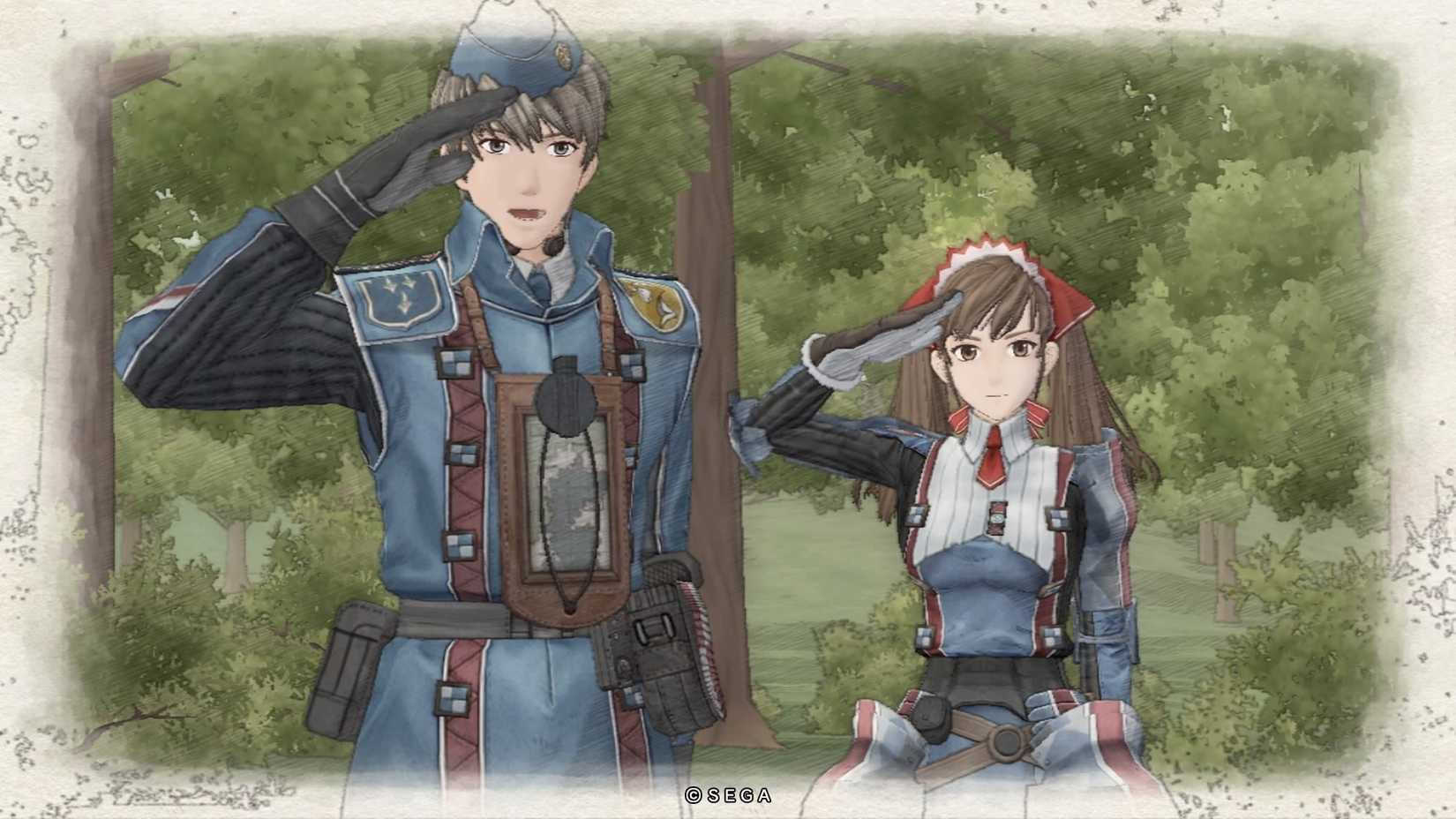
Sharing some love for the tactical sub-genre, Valkyria Chronicles to this day still feels like such a slept-on JRPG in that regard, one that brilliantly hooks you in with its strategy-based combat and character-driven storytelling.
Every single mission you embark on has something new in store, from the obvious tactile decision-making that you'll have to achieve to wipe out enemy forces or clear objectives, as well as making sure you optimally manage and plan your troops for skirmishes.
The world of Galia never feels hollow or dead without its integral cast of characters that shape alongside you over the course of each mission. That, and the cherry on top of everything, is a water-painted art direction that makes the overall game feel like reading an adventurous storybook.
4 Trails in the Sky 1st Chapter
A Giant Step for these Junior Bracers
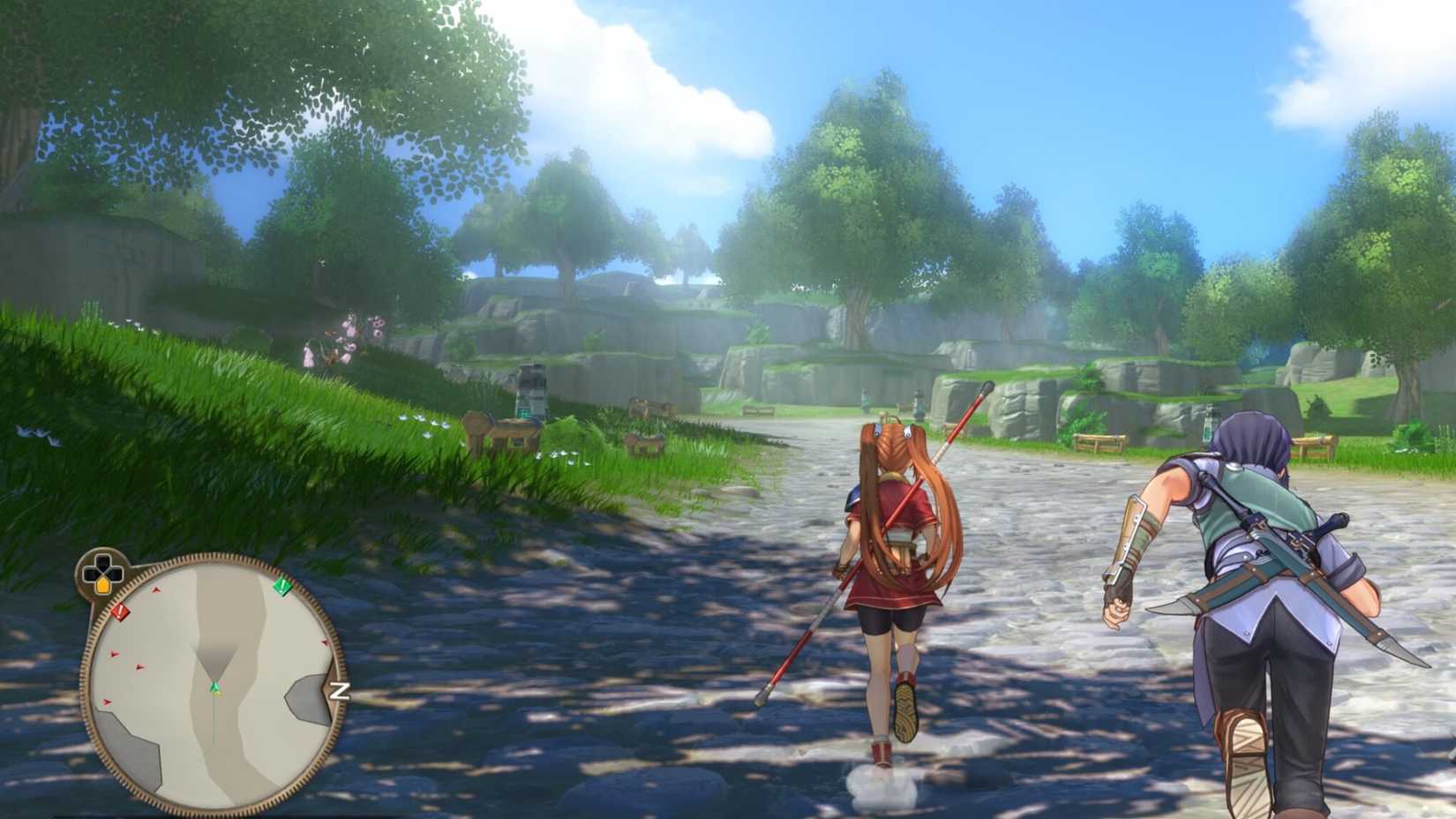
Trails in the Sky 1st Chapter
Coming off of being one of the best video game remakes to grace the past year of the big '25, Trails in the Sky 1st Chapter is a JRPG that proves how you don't need an open-world to achieve a large-scale worldbuilding.
The majority of the 1st chapter comprises our sibling duo and their posse exploring their home continent of Liberl, and if you haven't seen or heard some of the stuff this game does to make the world feel lived-in, you'd be a little surprised.
NPCs update their dialogue throughout major story arcs, creating a sense of time passing and personal lives unfolding. Each one is aptly named, and a few of them have small interactions with our protagonists. This whole detail gives you the feeling you're exploring a real country, not just a big map.
And much like other games in the series, Trails in the Sky also uses connected zones instead of a free-roam map, with each zone having a sense of purpose, whether it be a Bracer Guild task or just your main road of travel to progress the narrative.
Related
10 Best JRPGs For Non-JRPG Fans
JRPGs are an acquired taste for some, but these games are tasty no matter what.
3 Final Fantasy VI
The Zenith of the Franchise
 Image Via Square Enix
Just before Cloud and his Avalanche gang took the PS1 audience by storm, Final Fantasy VI was undoubtedly the game that pushed the story envelope and progression system to unprecedented heights.
And not to go off the grid here, but it should duly be stated that the game's evolving nature from the World of Balance to the World of Ruin gave it so much emotional depth, making the player feel like they’re traversing the aftermath of a shattered civilization.
And with the Pixel Remasters, you're honestly looking at a game that can gracefully cater to new-gen RPG players with ease, with the improved accessibility options on display here.
2 Persona 3 Reload
The Arcana is the Means...

The Persona franchise from Atlus isn't a stranger to anyone in the JRPG community. For personal reasons, we went ahead with Persona 3 Reload mainly because of its breathtaking setting of Tatsumi Port Island.
But even besides that, this is also the Persona entry that I consider has the best pacing, as you juggle between clearing the Tartarus and the Full Moon Arcana bosses, of course, the former being dependent on how much you tackle it.
Although I wholeheartedly recommend the original any day of the week, the Reload remake provides some much-needed changes and improvements from deeper character interactions, combat mechanics, and a revamped Tartarus layout—that's just barely scratching the surface of how much Atlus has made this the most feasible entry yet to the series, and dare I say, even more than Persona 5 Royal.
1 Kingdom Hearts 2
One Sky, One Destiny

Before anyone gets upset or anything, on a technical scale, Kingdom Hearts 2's world design is largely based on various planetary maps, each with fairly bite-sized areas. And unless you want to spend additional time on some worlds getting their mini-games checked off or min-maxing on some rare material drops, the main story progression is fairly linear.
KH2 is arguably one of the greatest JRPGs ever to grace the PS2, with one of the most enthralling stories ever, concluding at a mid-point in the series before the saga shifts into the conflict against the Xehanorts.
The combat is a major step-up from the first title—a stronger emphasis on action from a laser-focused pace to various forms that can momentarily power up Sora's battle prowess. And if you're hopefully playing the definitive Remix version, you're getting a handful of additions from newly added story events, post-game bosses, a whole new secret ending, and the list goes on here.
Most importantly, it also single-handedly proves that you can easily hook audiences in as long as each in-game world is more unique than the others, and even more so, honors the original IP from Disney/Pixar with so much credibility with its overall structure.





![ELDEN RING NIGHTREIGN: Deluxe Edition [FitGirl Repack]](https://i5.imageban.ru/out/2025/05/30/c2e3dcd3fc13fa43f3e4306eeea33a6f.jpg)
 English (US) ·