.png)
.png) 6 months ago
76
6 months ago
76


Murillo Zerbinatto is a contributor from Brazil. He's an RPG enthusiast (with a focus on JRPGs) who has been around the world of games and content creation for more than five years now. He has a particular love for Final Fantasy and has absorbed all the content this long-running series offers, including its obscure spinoffs such as Dimension I & II, Explorers, and My Life as a King. While playing RPGs is already a time-sinking endeavor, Murillo doubles down by being a platinum hunter as well.
Sign in to your DualShockers account
One of the things I appreciate most in JRPGs is their boldness and creativity in innovating their most fundamental systems. Even if a game is turn-based, there is always a gimmick here or there that makes it feel fresh, offering a brand-new way to engage with its mechanics.
Many of these combat systems, however, start out pretty barebones, either because they are still teaching the player the ropes or because, narratively, we have not yet unlocked a mechanic that will enrich the gameplay.

In this list, we have ten JRPGs whose combat gets better as you progress through the journey, either because we, as players, are getting better at it or because we gain access to new characters and features along the way.
10 Romancing SaGa 2: Revenge of the Seven
Glimmer is Always Fun

Romancing SaGa 2: Revenge of the Seven
When it comes to sheer combat prowess, I prefer the iterations in Scarlet Grace or Emerald Beyond. However, there are so many variables that manipulate the timeline, interrupt skills, and counters that I like to stick to a simpler system, like the turn-based one seen in Romancing SaGa 2: Revenge of the Seven.
Revenge of the Seven employs a system similar to Octopath Traveler. Every enemy has a weakness, and as we uncover them, we gain a numerical advantage in damage. The JRPG keeps the glimmer system, where we learn skills mid-combat with a given weapon. All in all, it is a natural progression in RPGs.
However, as we advance in the game, we recruit new party members by completing their sidequests. Each of these members has a passive skill that can be learned after using them X times in battle. Better yet, once you master it, you can equip these passives on other characters, which keeps expanding your customization options and, by the end, gives you an unbeatable amount of freedom with your party.
9 Fantasian
The Most Classic Modern JRPG

Whenever possible, I was right there supporting Sakaguchi in his venture at Mistwalker. I even subscribed to Apple Arcade to play Fantasian, twice, since it was split into two parts. I don't regret it, because the game is incredible and a lot of that comes from its combat. I even let the random encounters slide, which, to be fair, were ingeniously implemented.
In Fantasian, we have turn-based combat. A timeline dictates the order of the characters, and we act by choosing a command, as usual. The biggest twist, however, is that each skill has a different area of effect, which can either hit several enemies at once or control their positioning to set up the next area attack. At first, it seems just okay, but as you move forward, you realize that some battles require you to carefully weigh which abilities to use if you want to win, especially in boss fights.
Then, just when you think that Fantasian has nothing more to offer, the game unlocks the Growth Map, a sort of skill tree that further expands customization. In a normal playthrough, it is not possible to unlock all of a character's skills, so you have to pick a specialty and focus on it. The new FANTASIAN Neo Dimension added a new difficulty level. The original game, however, was one of the hardest JRPGs I have ever played, and every action had to be meticulously calculated if I did not want an early game over.

Related
8 JRPG Remakes That Improved Everything From The Original Games
The classics are still classics, but if it's your first time with these games, go for the remakes.
8 Disgaea
Leveling Up All the Way

Pick your favorite Disgaea game and go wild. These games let you go absolutely off the rails with their leveling and progression systems. For those unaware, Disgaea allows your characters to reach level 9999, with stats going through the roof and damage numbers getting ridiculous, and Disgaea 6 took it even further by allowing levels up to 99,999,999.
You do not need to grind that much to finish the main story. Just go through the campaign, use the main characters and a few odd classes, and you are good to go. But if you want to enjoy everything the games have to offer, tackle the post-game content, maximize and reincarnate your characters, there is a whole lot to sink your teeth into.
As you engage with that content, you are rewarded with more wackiness, more levels, more stats, and more skills. It doesn't mean the combat itself changes all that much, but if you are the kind of player who loves seeing damage in the zillions and feeling overpowered, then it definitely gets better.
7 Chrono Trigger
Perfect Pacing

There is a good reason why Chrono Trigger is praised for its impeccable pacing, and the battle system benefits from it as well. At the beginning, the ATB-based system is straightforward. When a party member's turn comes, you simply act, whether by attacking, using one of the few Techs, or an item. But then, something changes.
We first learn a Double Tech with Crono and Lucca, which means you now have to wait for the turns of two party members to charge. Then our time-traveling crew learns the secrets of magic at the End of Time, while also recruiting new intrepid characters into the party. All of that means more Techs, more Double Techs, and even Triple Techs.
By the end of the game, Chrono Trigger's combat becomes an absolute treat. You can build any group you want and still have a powerful arsenal, mixing physical attacks, area magic, and party-wide healing. Everything clicks so perfectly that it is easy to see why Chrono Trigger is still considered one of the finest JRPGs out there.
6 Clair Obscur: Expedition 33
No Need to Parry It
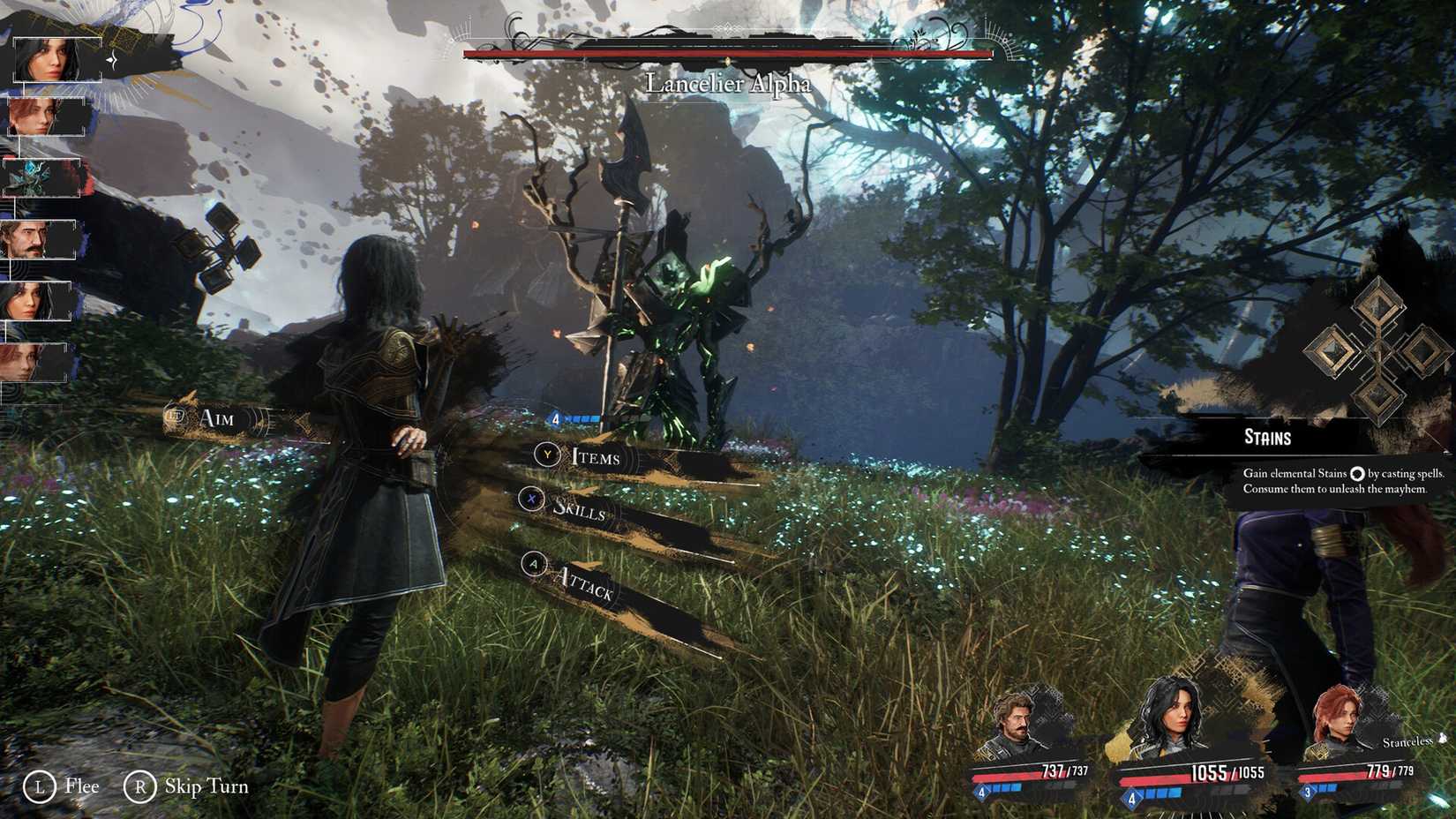
One of the features that scared a lot of turn-based fans away from Clair Obscur: Expedition 33 was the requirement to learn dodge and parry timing if you play on anything other than Story mode. And yeah, that is fair. However, as you progress through the game, find more Pictos, and use your Luminas to equip several of them, the possibilities expand.
Customization grows, along with the possibilities for builds. You can make a hyper offensive party and kill enemies before they even get a chance to attack, removing the need for defensive maneuvers. Or, from my own experience, you can create an entirely defensive build in Expedition 33 and simply tank hits head-on. It works, I tested it myself.
By the end of the game, you will have so many Pictos and Lumina points to distribute among your party members that the build prospect becomes endless. Mix that with weapons that have different passives and the unique abilities of each party member, and you can spend a long time exploring the true potential of your Expeditioners.
Related
10 JRPGs Reviewed Better Than Final Fantasy VII
Final Fantasy VII paved the way for the genre, and these JRPGs made the most of that opportunity.
5 Trails in the Sky 1st Chapter
Playing on Nightmare

Trails in the Sky 1st Chapter
For me, Trails in the Sky 1st Chapter is a perfect remake. It kept everything that makes the Trails series incredible, with its world-building, script, and characters intact, but modernized the system to please both old and new fans. The new combat system, which blends turn-based with real-time action, is mesmerizingly fun, and yeah, it gets better the more you play it.
However, there is a small catch. Trails in the Sky 1st Chapter is a fairly easy game if you play it on Normal difficulty. You can simply bulldoze enemies with your strongest attack without even paying attention to their weaknesses. That is where Nightmare difficulty comes in - or Hard if you are unfamiliar with the game's systems.
I wrote the entire Trails in the Sky 1st Chapter walkthrough, so I know what I am talking about. On Nightmare, you are forced to use everything in your arsenal, even the most overlooked Crafts and Arts. I was constantly buffing myself, interrupting enemies, paying attention to their weaknesses, and timing my stagger opportunities. It turned every single fight into a fun challenge that became more enjoyable as I unlocked more skills.
4 Final Fantasy Tactics
Your Job Here is to Have Fun
Final Fantasy Tactics: The Ivalice Chronicles
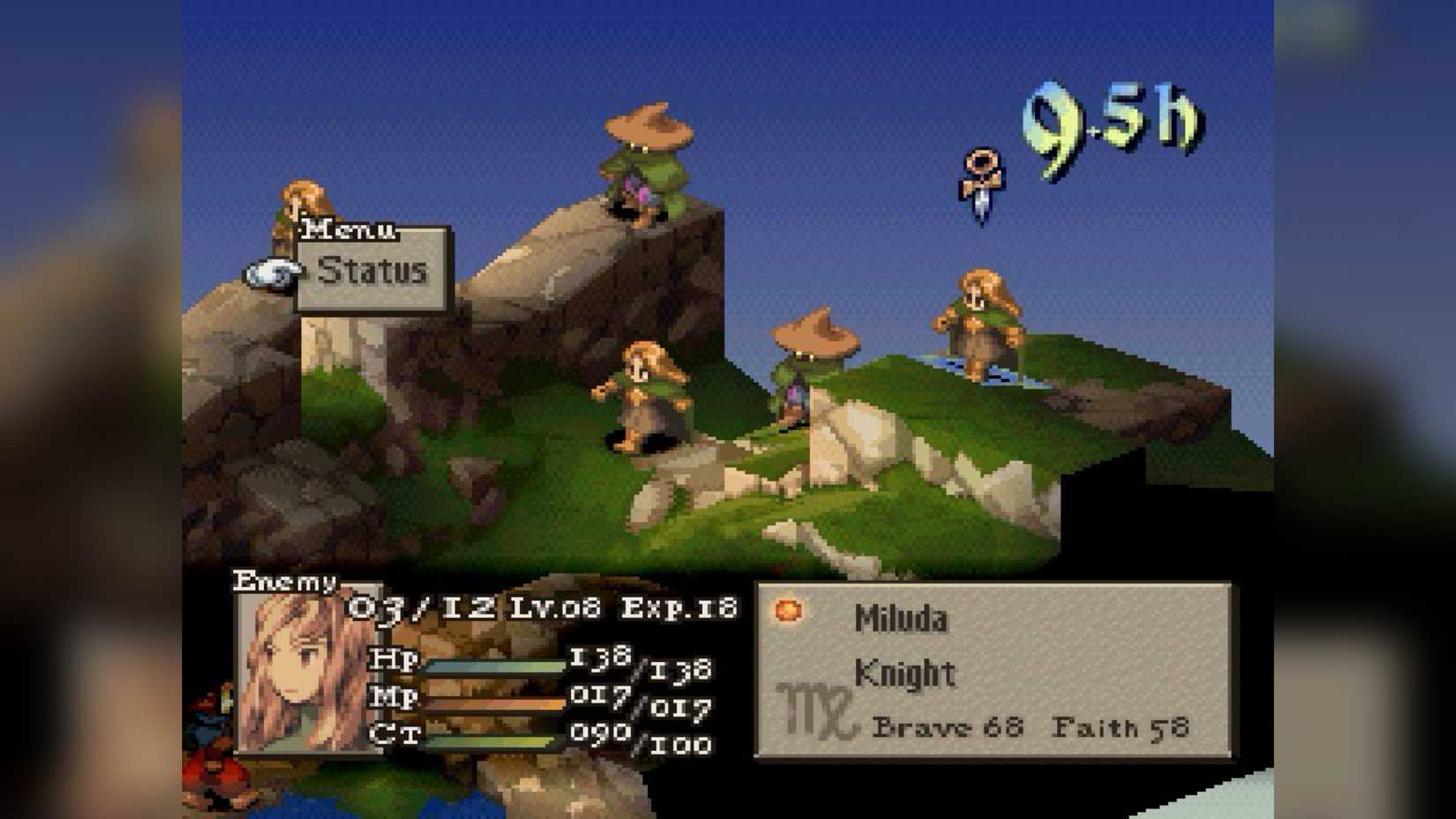
To be fair, I could put any class-based JRPG here, and it would fit the bill, since the more customization you unlock, the more engaging and personal combat becomes. But I decided to stick with one game that did Jobs best: Final Fantasy Tactics. Plus, at least in its original version, the game was known for being pretty rough on new players in the early hours.
At the start of the game, we are limited to just a few extremely straightforward Jobs. You will literally be throwing stones or potions around. But as those Jobs level up and unlock others, we get more and more options, expanding the scope of Final Fantasy Tactics' gameplay.
By the end, not only will you be dominating every battlefield like a seasoned warmonger, but you will also have a pool of characters trained across countless Jobs, whether that means doing arithmetic to cast Holy on every enemy or jumping all over the place with an army of Dragoons.

Related
9 Turn-Based JRPGs With Timed Inputs
For those who like to put their reflexes to the test in combat.
3 Xenoblade Chronicles 2
The Tutorial Gets Better

Xenoblade Chronicles 2 is notorious for its complex combat system, which is filled with tutorials that often confuse more than they help. But beneath all the markers, icons, and callouts lies an excellent, tactical, and calculated battle system.
Combat happens in real time, using a cooldown-based skill system often seen in MMOs. Both skills and weapons change depending on which Blade is linked to a character, altering their role as DPS, tank, or healer. There are also combos to be unleashed that juggle enemies around, giving the player a significant advantage.
So even though the early moments of Xenoblade Chronicles 2's combat can feel confusing or even daunting, it definitely gets better the more you play, either because you master the system or simply start to understand it.
2 Tales of Graces f
Debatably the Best Combat in the Series

Tales of Graces f Remastered
I have followed the evolution of the Linear Motion Battle System in Tales of up close. I started with Tales of Phantasia, went through Tales of Eternia, played co-op with my brother in Tales of Symphonia and Tales of the Abyss, and to this day, I keep up with all the mainline releases. And if you are wondering, I do not like Tales of Arise that much, even though the combat is highly responsive and seamless.
That is why, out of all the Tales of battle systems, I think my favorite is Tales of Graces f. Not just as a matter of personal taste, but also because I believe it is the one that most rewards players who engage with it thoughtfully. At its core, it is the same system introduced in Tales of Symphonia. Your character still moves along a line when performing actions in semi-auto, but you can freely move around the 3D battlefield.
Initially, the combat in Tales of Graces f can feel restrictive because we are limited by our CC, which starts out low. As we progress, that limit increases, and we can chain more attacks right from the get-go. The JRPG also rewards players who can play either offensively or defensively, appealing to every playstyle. On top of that, we also have dual styles, which give every character a truly unique gameplay feel.
1 Final Fantasy VII Rebirth
Unexpectedly Strategic

In my humble opinion, the battle system in Final Fantasy VII Rebirth is the best action gameplay I have ever seen. It's not just about mashing buttons. You have to think about your actions, attack when the opportunity arises, defend when it makes sense, sometimes save that ATB bar for a well-placed spell, and really spend your Synergy abilities when they will make the biggest impact on the enemy.
I didn't fully understand the depth of Final Fantasy VII Rebirth's combat until I started going for the platinum and tackling the Legendary Bouts in Chadley's Combat Simulator. Not only did I have to tap into every character's proficiencies and specialties to succeed (Aerith's bout still gives me PTSD), but I could also customize my party in wildly different ways and still win.
Since I played Rebirth early, I had to make do with what I had. I went with Cloud as physical DPS, Aerith as a caster, and Barret as a tank. But when I realized you could bulldoze those challenges with a magic-proficient Cloud and other crazy, creative builds, it completely blew my mind. It also showed me that Final Fantasy VII Rebirth's combat has way more depth than I ever imagined, definitely cementing it as my favorite action RPG battle system.

Next
8 Most Revolutionary JRPGs Every Fan Needs to Experience
These are games for those who want to dig deeper into the genre.







![ELDEN RING NIGHTREIGN: Deluxe Edition [FitGirl Repack]](https://i5.imageban.ru/out/2025/05/30/c2e3dcd3fc13fa43f3e4306eeea33a6f.jpg)
 English (US) ·