.png)
.png) 5 months ago
70
5 months ago
70

Murillo Zerbinatto is a contributor from Brazil. He's an RPG enthusiast (with a focus on JRPGs) who has been around the world of games and content creation for more than five years now. He has a particular love for Final Fantasy and has absorbed all the content this long-running series offers, including its obscure spinoffs such as Dimension I & II, Explorers, and My Life as a King. While playing RPGs is already a time-sinking endeavor, Murillo doubles down by being a platinum hunter as well.
JRPGs were born as streamlined versions of computer RPGs, a genre that sought to mimic D&D's rules as closely as possible. As they evolved, JRPGs retained their more accessible structure but innovated in other elements, such as progression and battle systems.
There are some titles with highly dynamic combat systems and extremely flexible progression tied to party members, so much so that changing your party composition makes it feel like you are playing a completely different game.

Related
8 Best JRPG Spinoffs Ever
If a spinoff gets bigger than the main work, does it become a spin-on? I'll see myself out.
Whether because of a class-like system, because each character is highly unique with their own specialty, some different progression mechanic, or even a mix of all of these, here are some JRPGs with party systems so flexible they let you create wildly different playstyles.
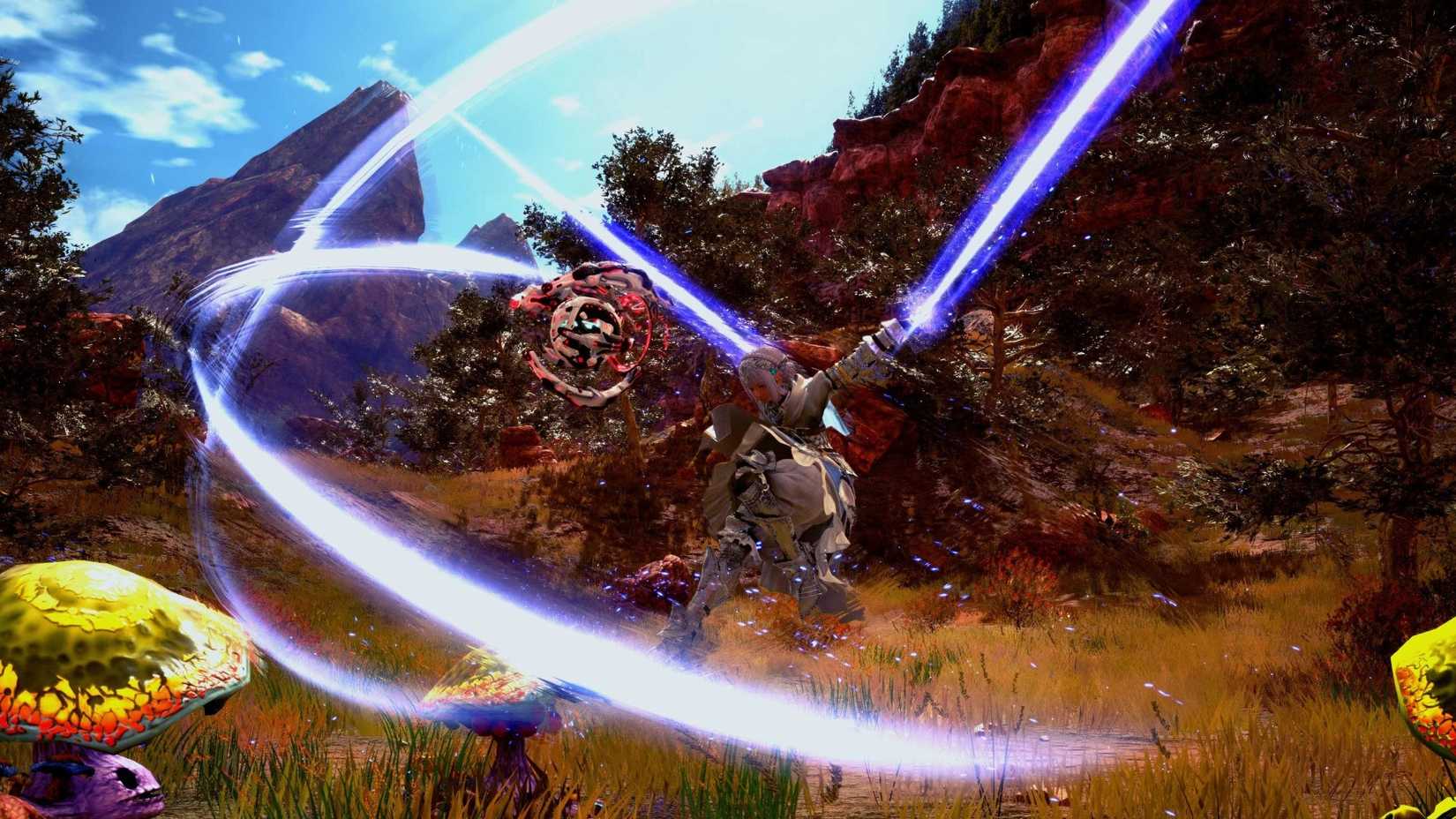
8 Star Ocean: The Divine Force
A Very Varied Cast
Star Ocean: The Divine Force
Every Star Ocean offers quite a fun action RPG, which becomes even better when you tap into the potential of its Item Creation system. Additionally, we have numerous distinct party members, some of whom are exclusive to each playthrough, depending on the chosen protagonist, such as J.J. in Raymond's story or Theo in Laeticia's story in Star Ocean: The Divine Force.
The combat in Star Ocean: The Divine Force features DUMA, a mechanical lifeform that adds numerous features to the action, most notably the ability to glide and dash forward to engage enemies.
To those who love to change their composition at all times, you're in for a treat, because each party member in The Divine Force has their own moveset and abilities, so even playing as a caster is not much of a slog, because you don't have to stand still casting spells with DUMA's help.
7 Trails in the Sky 1st Chapter
Quartz and Orbments

Trails in the Sky 1st Chapter
One of the modernized changes Trails in the Sky 1st Chapter brought in the remake is the blend of action combat with a turn-based system. However, while I appreciate how the action makes the game more seamless and dynamic, I want to focus on the turn-based side, the different party members, and how the Quartz system allows for unmatched versatility in combat.
The Quartz system in Trails in the Sky 1st Chapter is inherently flexible. By placing certain Quartz in each character's Orbment, you increase the elemental values of specific elements and unlock new Arts. Some characters are magic-oriented and have more connected Quartz nodes, making it easier to reach high elemental values, while others have fewer connections.
Even if your focus isn't unlocking new Arts, each Quartz also grants passive bonuses, like stat increases or modifiers. The system works organically with combat because characters who lean toward physical attacks can use Quartz that boost raw stats or add attributes like Sleep or Petrify to regular attacks, while others can focus purely on casting Arts. Countless variables are reinforcing the already excellent combat of Trails in the Sky 1st Chapter.
6 Final Fantasy VII Rebirth
Synergy Among Members

Final Fantasy VII Rebirth
I had my reservations about the shift from the turn-based system of the classic Final Fantasy VII to the action-oriented approach of Final Fantasy VII Remake, but after I played it, all my doubts vanished. Not only did I like it, but it also became my favorite action-combat combat. So when Final Fantasy VII Rebirth took that same formula and refined it even further, I was ecstatic.
The biggest difference between Rebirth and Remake is the presence of Synergy Skills and Abilities, which are combined attacks between two party members. That alone already shows how flexible the party system is, and how swapping members around further promotes this mechanic. Then, even individually, each character has a unique identity that shines even more within a party.
Tifa can unleash a flurry of blows to keep enemies permanently staggered and then slide away to safety. Despite being slower and more dependent on casting time and the ATB bar, few enemies can survive an Aerith double spell under Arcane Ward. Yuffie earns her ninja moniker thanks to the versatility of her skills and how effortlessly she can turn the tide of battle. This dynamic becomes even stronger when you factor in the whole party, making Final Fantasy VII Rebirth boast one of the best combat systems in modern JRPGs.

Related
10 JRPGs Perfect for Players Who Love Final Fantasy, But Want Something Different
The Final Fantasy series has produced some of the best games of all time, but some of the most amazing JRPG franchises aren't connected to it.
New Archetype, New Playstyle

Metaphor: ReFantazio was produced by Studio Zero, helmed by Katsura Hashino, director of Persona and producer of several Shin Megami Tensei titles. So it's no surprise that this new fantasy IP brings in gameplay elements from those series, such as the Press Turn combat system and customization through different Archetypes.
Initially, you have a limited number of Archetypes, so it's pretty clear that each party member will fill a different role. But as you progress, unlocking more Archetypes and raising your party members' Bonds, which in turn unlock unique passives for them, the flexibility of the gameplay becomes more evident.
At one point, I thought all characters were becoming a bit homogeneous since they could equip the same Archetypes. Then I unlocked the Royal Archetypes, exclusive to each party member. It became possible to mix and match passives from other Archetypes with each member's Royal one to create unusual strategies. Combine that with the Press Turn system, and it's even possible to defeat the secret boss by overwhelming it with almost infinite turns on the player's side.
4 Granblue Fantasy: Relink
Several Builds per Character

Even though Granblue Fantasy: Relink has a party system, I know it isn't fully player-controlled. Still, that doesn't mean it isn't flexible or lacks build and synergy potential, because it absolutely has it. Also, whenever you get tired of playing one character, you have a massive roster to refresh your gameplay.
For instance, suppose you build Narmaya as a highly offensive damage dealer. In that case, it makes sense to bring party members with buff or healing skills, letting you go all out while your AI companions take care of you. Or, if you want to optimize farming, you can build an entire aggressive party with massive damage output and go wild.
Anyone who has tried to farm every Terminus Weapon knows how important it is to build a balanced party, even when playing with AI. While my Id was focused on dealing the highest burst damage possible with each attack, Katalina handled the healing, and Gran applied debuffs. It was the perfect team.
3 Final Fantasy Tactics A2: Grimoire of the Rift
Race-exclusive Jobs Enhance Flexibility

Final Fantasy Tactics A2: Grimoire Of The Rift
Final Fantasy Tactics practically created the blueprint for how a great Job system can enrich a tactical RPG (I love Tactics Ogre, but its class system was a bit weird). And while the first Tactics deserves all the praise it gets, I still think Final Fantasy Tactics A2 took things even further in terms of flexibility.
There is a good reason for that: race-exclusive Jobs. While Final Fantasy Tactics lets almost every recruitable character take on nearly every available Job (except some pivotal characters), in Final Fantasy Tactics A2 you need to recruit members of all races if you want to dive deep into the wide range of Jobs on offer.
A Hume Thief eventually becomes a Ninja, while a Moogle in the same Job turns into a Juggler, offering a completely different playstyle. If you want to explore all Jobs, you need every race in your clan, which expands your customization options and flexibility to the max.
2 Tales of Berseria
Swapping the Action on the Fly

I often repeat how much I think the combat in Tales of Graces is the best in the franchise, and I still agree. It would probably be the best entry here in terms of different playstyles. However, I also want to shine a light on another title that offers great party flexibility, which is Tales of Berseria.
In Tales of Berseria, we have six unique characters, each with their own Artes. Four members can be active in combat, but you can seamlessly switch in reserves. Every single one is a blast to play, with their own specialties, attack types, and strengths.
In the post-game, we unlock Dual Mystic Artes, which not only encourage chaining combo attacks on enemies but also swapping between two specific party members if you want to trigger their Mystic Artes. I was replaying Tales of Berseria while hunting for the platinum trophy, and that gave me the chance to fully explore each party member in combat.
1 Bravely Default
Jobs Doing All the Work

Bravely Default Flying Fairy HD Remaster
Bravely Default naturally offers a respectable level of flexibility, as any JRPG with a class system should. The fact that you can master a Job and then carry all its skills and passives over to another one is pure nirvana for any build-focused player.
The biggest differentiator here, and what makes every playstyle more strategic, is the Brave and Default system. Each character can defend for one turn to build up BP and then spend those points to act several times in a single turn, or cast powerful skills that cost more than one BP.
So, imagine your go-to strategy is finding a debuff a boss is vulnerable to. You can stockpile BP and, in a single turn, attempt to inflict four different negative statuses to see if one sticks. If it does, you can then shape your entire strategy around it. This is just one of the insane number of strategies you can come up with thanks to both the Job system and the Brave and Default mechanics.
Next
10 JRPGs That Don't Feel At All Like Anime
Just because they’re RPGs inspired by Japanese culture doesn’t mean they automatically have anime aesthetics.





![ELDEN RING NIGHTREIGN: Deluxe Edition [FitGirl Repack]](https://i5.imageban.ru/out/2025/05/30/c2e3dcd3fc13fa43f3e4306eeea33a6f.jpg)

 English (US) ·