.png)
 5 months ago
95
5 months ago
95

Even master storytellers need to rest
 Image: Critical Role / Photographer: Robyn Von Swank
Matthew Mercer is one of the most popular Dungeon Masters in the world. Alongside other stellar DMs like Deborah Ann Woll and Aabria Iyengar, Mercer gave me the courage to try my own hand at being a Dungeon Master.
Yet despite being as talented as he is, Mercer admitted on the Crispy's Tavern: Tales and Tea podcast that one of the reasons why he walked away from being Critical Role’s Campaign 4 Dungeon Master — the role now lies in the hands of the prestigious Brennan Lee Mulligan — was largely due to DM burnout. After falling victim to the same issue, Mercer’s admission resonated with me but also inspired me in a way I did not expect.
Unless you’re very lucky, we’ve all experienced burnout before. It’s a type of mental exhaustion, often caused by prolonged and overwhelming stress. On the podcast, Mercer went on to say that, as one of Critical Role’s co-founders and the storyteller behind the previous three Critical Role campaigns, he’d started to feel “a continuous need to produce creatively.” Feeling like that was both a drain of emotions, and something scary to tangle with.
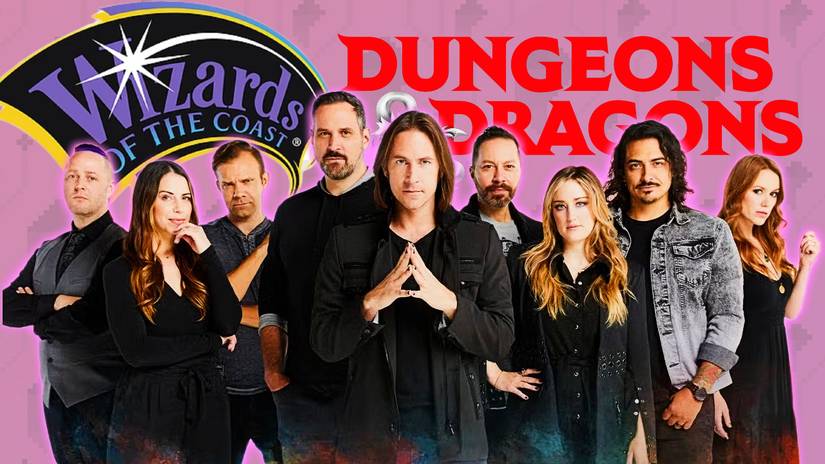 Image: Critical Role/Wizards of the Coast via Polygon
Hearing Mercer candidly speaking about the creative pressure made me look back at my own “career” as a Dungeon Master. DM burnout is a very real thing, and for anyone who has either played Dungeons & Dragons as a DM or is close to people who do, it’s easy to see why.
While Dungeons & Dragons is a collaborative experience, with the DM narrating the story and their players reacting to it, it can also be incredibly time-consuming for the former. While players also have a lot to remember and think about at the table , the Dungeon Master has far more to juggle with. From enemies' motivations to their stats, the lore of the world the players are moving through, as well as the many different items and quests the players can participate in. That’s not to mention all the times they have to improvise and come up with things on the spot.
The Dungeon Master also has to find or create maps for their world, a highly important feature for scenarios like social or battle encounters. Then there are props (for those who use them), terrain, miniatures, and so on. You get the gist.
While there are plenty of resources, such as Reddit communities, dedicated to offering DM advice and even free maps, to help make being a DM easier, it doesn’t change that having to creatively produce a story — collaborated or not — can be stressful and tiring if you don’t know what your limits are. My own burnout came from refusing the help offered by other, far more experienced DMs and throwing myself into homebrewing everything about my custom world and campaign. When I wasn’t working, I was sitting at my computer, plugging away at detail after detail until the joy of creating something grew into exhaustion.
 Graphic: Polygon; Images: Darrington Press/Wizards of the Coast/Matthew Mercer
Worse yet, instead of resting, I attempted to push through, and my failure to walk away inevitably left me resenting the campaign. Without meaning to, the “break” that I eventually took has lasted more than a few weeks: it’s been a couple of years. My players are wonderful and understanding, but not going back to that campaign, knowing how much they love it, has left me feeling some serious guilt.
But maybe I shouldn’t. In an interview with Business Insider, Mercer explains the benefit of stepping back.
“I find walking away and taking some time to enrich your creative input means that whatever time you lost beating your head against the wall will be more than made up for when you can return from a place of genuine inspiration and renewal.”
Genuine inspiration and renewal is right. More and more, I’ve been thinking of returning, if not to the campaign I left, to something different and already pre-written. More importantly: something short and sweet. One of the best things about Dungeons & Dragons is that, even if the setting isn’t beloved by everyone, its system is so useful that there are plenty of original campaigns (short or long in length) for you to pick from. I love to write, I love to create, and sharing that creation with others is even better. But not everything has to be created by you, the DM. It’s not a personal failure, and its why sourcebooks like Curse of Strahd and Descent into Avernus are useful: it takes some of the pressure off the DM while still letting them customize the campaign to their tastes, and add all the content they want.
 Image: Mike Schmidt/Critical Role
Furthermore, it’s also not a bad thing to simply rest. Mercer has a fantastic job as one of the co-founders of Critical Role, but his creativity and love for being a DM have also become his job. It’s not a terrible problem to have, but it makes the work-life balance difficult; something which I also can’t help but relate to as someone who writes for a living.
Ultimately, while resting may feel like defeat at first, the reality is that it’s allowed me to sit with my own ideas and find creativity in other outlets, like TV and film. As a huge Star Wars fan, I’ve toyed with the idea of leaving high fantasy behind altogether to jump into telling a story in a galaxy, far, far away. It would be completely different from what I’m used to, but jumping into a world I love and know has me eager to pick up my pen, paper, and dice again. After all, if Matthew Mercer can step back and come back with a new sense of purpose and renewed energy, then maybe I can too.


![ELDEN RING NIGHTREIGN: Deluxe Edition [FitGirl Repack]](https://i5.imageban.ru/out/2025/05/30/c2e3dcd3fc13fa43f3e4306eeea33a6f.jpg)

 English (US) ·