.png)
.png) 4 months ago
103
4 months ago
103


Published Feb 10, 2026, 11:30 AM EST
Murillo Zerbinatto is a contributor from Brazil. He's an RPG enthusiast (with a focus on JRPGs) who has been around the world of games and content creation for more than five years now. He has a particular love for Final Fantasy and has absorbed all the content this long-running series offers, including its obscure spinoffs such as Dimension I & II, Explorers, and My Life as a King. While playing RPGs is already a time-sinking endeavor, Murillo doubles down by being a platinum hunter as well.
Sign in to your DualShockers account
The SNES JRPG catalogue is one of the most celebrated in the genre. It's where we saw some of the most spectacular and famous titles, like Earthbound, Chrono Trigger, and Final Fantasy VI. While these JRPGs conquered the world and still maintain loyal fanbases, countless other games never received their due spotlight.
Whether it was because of poorly implemented ideas, being produced by newcomer developers with little experience, or perhaps simply never being localized, there are many obscure SNES JRPGs that deserve attention, which is exactly what I'll try to provide with this list.

Related
8 Most Revolutionary JRPGs Every Fan Needs to Experience
These are games for those who want to dig deeper into the genre.
I'm not saying you have to play them, but I will showcase some JRPGs that had everything they needed to succeed if the execution had been a bit better. Who knows, considering Square Enix resurrected Live A Live with a full-fledged remake, and Nintendo continues to add legacy games to Nintendo Switch Online, we might see these titles from the past returning to the present.
I've only included JRPGs that were released internationally or those that have a fan translation available.
8 Bahamut Lagoon
First Fantasy Tactics

If you like dragons (lots of dragons), tactical gameplay, and Final Fantasy, chances are you'll enjoy Bahamut Lagoon. Although the game was never officially released outside Japan, it's easy to find a fan translation online. That's how I played it, and it works wonderfully.
In this game helmed by Kazushige Nojima, the writer of many Final Fantasy entries, we play as the Dragon Squad on a quest to save the kingdom of Kahna from the hands of Emperor Sauzer. To do this, we must awaken the strongest dragon of them all: Kaiser. Okay, okay, wrong game, it's Bahamut.
Battles take place on grids, and every squad comprises four characters plus a CPU-controlled dragon. The major hook is the dragon itself: we can feed them virtually any item, and doing so will evolve them, changing their attributes, appearances, and skills - for better or worse, mind you.
7 Tecmo Secret of the Stars
Two Parties, One Mission
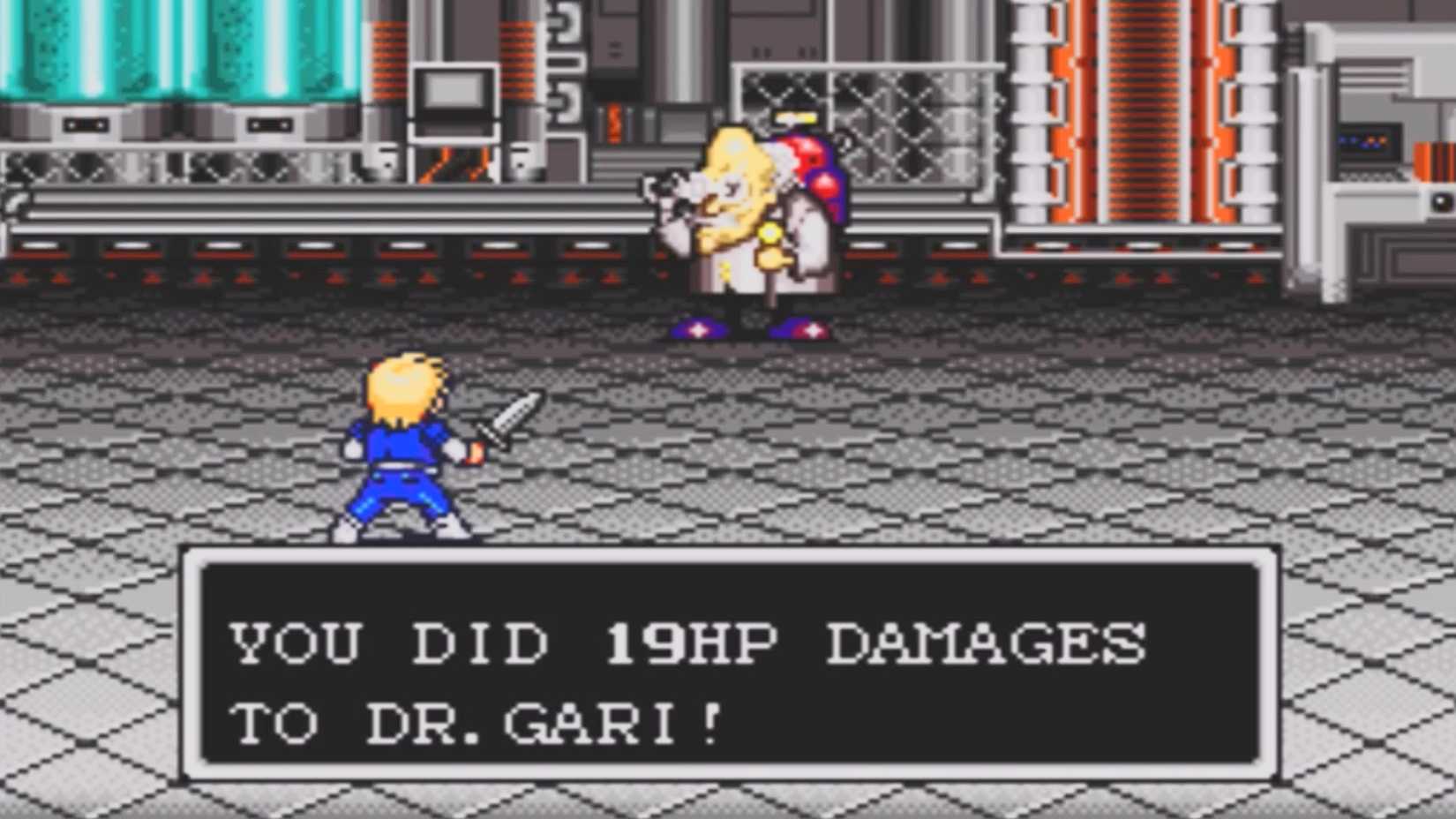
Tecmo Secret of the Stars
As the name suggests, Secret of the Stars was Tecmo's unmistakable foray into the RPG genre. The developer released some NES games that could be considered RPGs, but the elements were bare-bones. But after that, you only need to look at a screenshot of Secret of the Stars to understand where its inspirations came from.
This JRPG features traditional turn-based gameplay, but its biggest draw at the time was that we controlled two parties and could switch between them at any time — either the Hero party or the side party. However, depending on your progression, the story forces you to play with both parties at various points.
The protagonist is Ray, a boy who must defeat the evil Homncruse. To do so, he must assemble an elite team called Aqutallion. Not coincidentally, Aqutallion is the original Japanese name for Secret of the Stars. Plus, the game features some town-building elements, if you fancy those as much as I do.
6 The 7th Saga
Seven Heroes

The 7th Saga is perhaps one of the least obscure games on this list, especially since it's notorious for being one of the hardest JRPGs on the SNES — and in the genre in general. The Japanese version is actually easier. Apparently, in the international version, the player gains less experience than normal, among other tweaks that made it brutally challenging.
If you can ignore these balance issues — or if you enjoy grinding and powerleveling to the max — you'll find an unusual JRPG that offers seven protagonists to choose from before starting your journey. You can then ally with another hero to progress, or go solo if you're looking for new ways to suffer.
In The 7th Saga, we need to find the seven crystals in the land of Ticondera, but we also have to beat rivals along the way, who, not coincidentally, are the other heroes. That's where the difficulty spike lies: the rival levels scale with ours, and since we get less experience, expect a tremendous challenge down the road if you're not grinding with fast-forward.
5 Treasure of the Rudras
Bring Back the Mantra System

I just mentioned it, but ever since Square Enix brought back Live A Live, I've been delusionally spoiled, thinking they could do the same for any game that ever crossed their catalogue. One such game is Treasure of the Rudra, a JRPG with a truly creative magic system and a compelling plot. It was released only in Japan, so a fan translation is necessary for English speakers.
The world of Treasure of the Rudra is essentially reset every 4,000 years by divine entities. The game starts with 15 days left before this reset, and our main characters, Sion, Riza, and Surlent (and a fourth one later on), must try to stop it while uncovering why this loop happens. Most of the time, the game plays as a standard JRPG, with us traveling to towns, scouring dungeons, facing enemies, and getting stronger through experience or equipment.
However, it's the magic system that really highlights the JRPG. Called the Mantra system, you create new spells simply by typing them. You can come up with a spell named Babayaga, and it would have a different effect from an Ethan spell. Throughout the game, you'll learn new, more effective spell components, such as Lef, a healing one. Add the suffix -na to it, and you get Lefna, a party-wide heal. Leflus is a single-target heal, but stronger than Lef.
On the surface, it seems like a great system, and it is! But the execution was still a bit lacking. You could have a spell named Bread that had the same effect as Lef but cost more MP, meaning it wasn't quite optimal. In the end, there are a few dedicated Mantras that just work better than Yolo-ing it. Still, the system is intriguing, and I would love to see it remodeled in an HD-2D remake.
Related
10 Best GBA JRPGs, Ranked
Those who wanted to explore Nintendo's JRPG catalog in the 2000s would have to rely on its handhelds rather than home consoles.
4 Dragon View
Born as Drakkhen

In 1989, Infogrames (now known as Atari SA) released Drakkhen for the Amiga and Atari. It was a 3D role-playing fantasy game that certainly couldn't be called a JRPG. The game was then ported to the SNES by Kotobuki System, which goes by Kemco nowadays.
While I don't have the full details on the IP rights, Kotobuki System took hold of the game and developed a sequel called Super Drakkhen in Japan, known as Dragon View elsewhere. And you know if it were made solely by a Japanese developer, it must be a JRPG, right? Even though it brings several Western fantasy tropes to the table.
Dragon View has two gameplay styles: the side-scrolling view used in villages to talk to NPCs, buy items, and also in dungeons, where action-based combat takes place. Combat movements felt incredibly fluid for the time. The second style is a first-person view that activates whenever we're exploring the world map and traversing from one area to another. It was a solid SNES game with great visuals for its era.
3 Arcana
Card-Based Visuals

Arcana is a dungeon crawler JRPG in the vein of Wizardry. We play as Rook, the last in a lineage of Card Masters who has the power to defeat Galneon before he brings back the empress Rimsala. As the name of the game and Rook's title imply, the game features a heavy card-based theme.
The visuals for characters and monsters in battle are framed as cards, but the gameplay is your typical turn-based RPG. We explore dungeons, face enemies, and reach our objectives before returning to a hub village to rest and buy new equipment. After encountering elementals on the adventure, Rook can swap between them in the party, bringing new spells to the fray. Other human characters join him on the quest as well.
The most interesting fact about Arcana is that it was developed by HAL Laboratory, the creators of the Kirby and Super Smash Bros. series. Ok, granted, those franchises are more the brainchild of Masahiro Sakurai, but he was working at HAL when he masterfully created them.
2 The Twisted Tales of Spike McFang
Nothing Twisted Here

The Twisted Tales of Spike McFang
This year, I started a personal quest, asking some friends to pick obscure RPGs for me to play so I could learn more about the genre's library. One of those friends suggested The Twisted Tales of Spike McFang, a game I thought he had made up just to troll me. To my surprise, the game actually exists.
We play as the titular Spike McFang, a vampire prince who must save his kingdom and the entire Vladamasco Islands. To do this, the prince utilizes two warfare-inclined abilities: throwing his boomerang hat and spinning his cape. Both actions can damage enemies, with the hat getting stronger whenever you buy a new one and the cape improving by leveling up.
It's a wildly straightforward action game that doesn't try to innovate much. You kill enemies, get experience, level up, earn some money, and buy hats or items. Items are shaped like cards and act as the game's skill system. You can freeze enemies, turn into a bat, teleport back to safety, or simply eat to recover HP. It's definitely obscure, but not necessarily good.
1 Treasure Hunter G
Searching for the G Treasure

|
Sting |
|
Square |
|
May 24, 1996 |
If you think Square already nailed it back on the SNES, it's because you can't imagine how many games never left Japan. The developer was even more prolific than people realize. One of the games they published was Treasure Hunter G, developed by Sting, the creators of Riviera: The Promised Land and the Dept. Heaven series.
Treasure Hunter G plays like a standard JRPG. In the roles of brothers Red and Blue, we must search for their lost father. However, videogame destiny dictates that we must also save the world after crossing paths with a mysterious girl. Exploration involves an overworld map, towns, and dungeon trekking, you know, standard fare.
Enemies appear on the map, and as soon as we touch one, we transition to a battlefield that plays more like a tactical game than traditional turn-based combat. Every movement is tile-based, and we spend AP to act. If we are close to an enemy, we can attack more than once by forgoing movement. Treasure Hunter G received high scores upon release and even appeared on the Wii Virtual Console in 2007, but only in Japan. Yeah, you'll need a fan translation to play it nowadays.
Next
10 Most Obscure PS1 JRPGs
If you know five or more titles from this list, I've failed my mission.

![ELDEN RING NIGHTREIGN: Deluxe Edition [FitGirl Repack]](https://i5.imageban.ru/out/2025/05/30/c2e3dcd3fc13fa43f3e4306eeea33a6f.jpg)
 English (US) ·