.png)
.png) 4 months ago
39
4 months ago
39
If there's one genre that's evolved the most over time in terms of quality of life, it's definitely JRPGs. While older titles featured staple mechanics that were seen as perfectly normal back then, nowadays they can be considered outdated.
I prefer using the term old-fashioned because, depending on the JRPG, I still think there's room for some of them. If fashion taught us anything, it's that trends tend to revisit the modern zeitgeist from time to time. And even so, games that use some of the mechanics I'll mention below are the exception, not the rule.

Related
8 Best JRPGs That Aged Like Fine Wine
These JRPGs can still teach a thing or two to their modern counterparts.
What's most evident is how many of these mechanics are also removed or adapted in modern remasters or remakes, further proving that today's audience probably doesn't look at them too fondly. Without further ado, let's take a look at some old-fashioned mechanics that most modern JRPGs have dropped.
8 Random Encounters
Show Me My Enemies
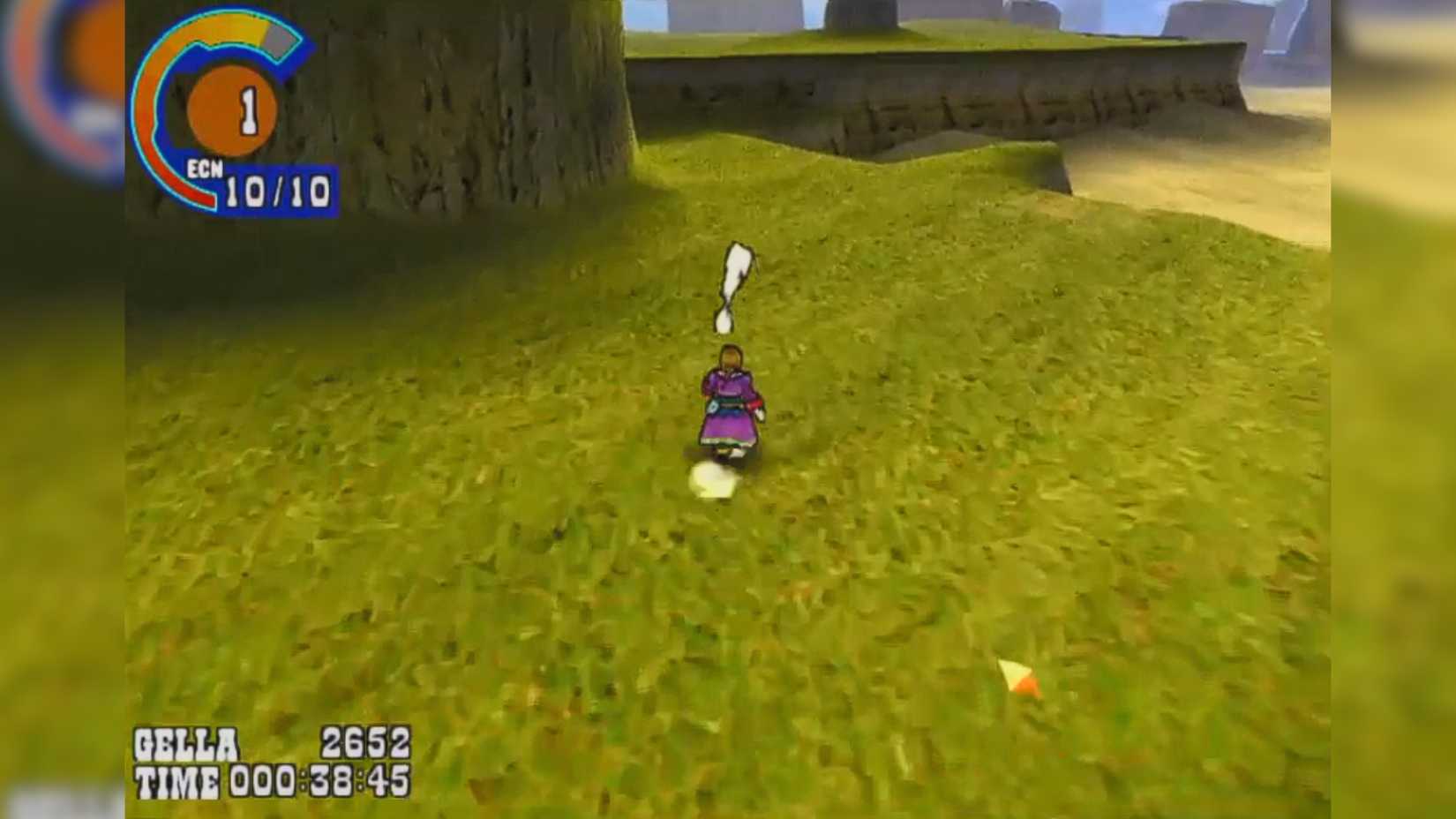
Call it a technical limitation or just a creative choice, but one of the oldest JRPG mechanics was random encounters. Personally, it's the mechanic I dislike the most. As someone who loves exploring every nook and cranny of a new map, random encounters always get in the way of my enjoyment.
That feeling gets even worse when the game demands backtracking, and you keep running into enemies that are ridiculously weak compared to your party. Thankfully, many modern JRPGs have dropped this mechanic, and even those that keep it try to reinvent it somehow, like Fantasian, or give you tools to avoid encounters altogether if you use the right options.
It's emblematic to think that one of the quality-of-life additions in the remastered versions of Final Fantasy VII, Final Fantasy VIII, and Final Fantasy IX is the ability to turn off random encounters. In those games, random encounters made sense because you were constantly progressing your characters, but I totally get why the option to remove them exists.
7 Reserve Members Not Getting Experience
Learning by Osmosis

One of the things I enjoy doing the most in any JRPG is rotating my party members whenever possible. It's a blast in action JRPGs like Star Ocean or Tales of because each character refreshes the combat system with their own specialties, but I do the same in turn-based games and even strategy RPGs.
I was encouraged to play like this when I first played Final Fantasy X, because if you don't put all party members into battle, even if it's just to defend once, they don't gain experience. Since I wanted to keep everyone at an even level, I was constantly swapping characters in and out.
Even so, I prefer it when even reserve characters gain experience, even if it's at a reduced rate. Otherwise, every time I want to switch party members, I've gotta grind a bit. Octopath Traveler does this, and it's quite annoying because it forces you to play with certain characters in their chapters. Since reserve members don't gain experience, the level gap between your protagonist and the remaining party members is always pretty noticeable.
6 Battles Without Fast-Forward
Fodder Battles Get Repetitive Fast

A feature that increases battle speed is dangerous. It's one of those things that once you turn it on, you can't turn it off because suddenly the game feels wrong, and I hate that about myself. Fast-forward is usually reserved for turn-based JRPGs, and it feels kind of icky that that's a testament to the rhythm of the system itself.
Some games don't rely on fast-forward because combat is highly dynamic or requires timed player inputs. But if a JRPG is strictly turn-based, there's about a 90 percent chance it'll have a fast-forward option. I played the entire Dragon Quest HD-2D trilogy in ultra-fast mode because the default speed is insanely slow for no good reason.
To at least enjoy combat properly, I've got a personal rule where I only speed things up against fodder encounters. Against bosses, I stick to the default speed and pay attention to every command being executed, whether it's from my party or the boss. The same goes for autobattle, which I didn't include as a topic on the list because my argument's pretty much the same as with fast-forward.

Related
10 JRPGs That Take Forever To Complete
I really want to emphasize the “forever” in the title.
5 Unpausable or Unskippable Cutscenes
Let Me Go to the Bathroom

For the record, I never skip cutscenes. I'm a JRPG fan, for God's sake, I'm used to verbosity and long cutscenes. However, at the same time, I love hunting platinum trophies, and unfortunately, many games need to be replayed two or even three times, and well, I'd really love to skip cutscenes in this case.
I platinumed Digimon Story: Cyber Sleuth – Hacker's Memory last year, and it was a slog because cutscenes were completely unskippable. Many modern JRPG remasters still don't let you skip them, which is basically abuse toward my DualSense's X button.
There's also the worst-case scenario, when you need to pause a cutscene for whatever reason, and pressing Start doesn't pause it but skips it outright, without any confirmation. Take your Soulslike games-don't-need-pause debate somewhere else. I just wanna be able to pause a 40-minute-long Star Ocean: The Last Hope cutscene because my bladder's got limits.
4 Save Points
I Miss Them

I'll admit there was nothing better than pushing through an extremely difficult dungeon for hours and suddenly finding a save point, knowing all your progress was safe. On the flip side, there was nothing worse than not finding one, losing all your progress, and having to redo everything from scratch.
Some JRPGs nonetheless feature fixed save points, but now they mostly serve as indicators that a boss battle's coming up or as a safe haven that fully restores the party's HP and MP. Generally speaking, most modern games have autosave systems that either replace save points or let you save at any time through a menu.
As a 36-year-old, married, with a two-year-old kid and, technically, adult responsibilities, I like being able to save at any moment in case something unexpected happens, and I need to stop playing immediately. That said, I'm not a huge fan of how some save points nowadays fully heal the entire party, because that takes away a lot of the dungeon's challenge.
3 Limited Inventory
I Don't Miss Them

Even in older JRPGs, limited inventory was already a pretty uncommon mechanic. Of course, the biggest example is none other than the forefather of the genre, Dragon Quest, which even in its HD-2D versions still features a limited backpack and forces you to manage items within the party.
On one hand, I think it adds an extra layer of strategy, making item usage more deliberate. On the other hand, limiting inventory, especially for equipment, is quite annoying, especially when the interface is clunky. The Legend of Dragoon, for example, limits usable items but doesn't include equipment.
In the present day, there are very few JRPGs with strict inventory limits, but some cap the maximum number of items. Tales of Arise only lets you carry 15 of each item, which feels fine on normal difficulties but can turn into a welcoming struggle on harder ones.
2 No Fast Travel
The Arch-Nemesis of Backtracking

If a JRPG presents me with a world that's genuinely explorable and rewarding, you won't see me touching the fast travel button. But if that's not the case and the narrative structure relies heavily on backtracking, then give me fast travel galore.
More than a few older JRPGs were the worst offenders when it came to backtracking. Many of them forced you to return to old areas for mundane reasons and offered no fast travel system, making the whole process tedious and unnecessarily long. Remember when I talked about random encounters with weak enemies? That's precisely what I'm talking about.
The remake Star Ocean: The Second Story R streamlined the game's narrative immensely thanks to fast travel. The game demands a lot of backtracking, but since you can solve that entire ordeal with the press of a button inside a menu, it doesn't hurt the pacing at all.
1 Lack of Markers
A Guiding Hand

This one leaves me a bit torn. I like knowing where my next main destination is in a JRPG, even if it's obvious. Even then, I'll still talk to every NPC as if I didn't know, a habit I picked up after diving deep into the Trails series.
However, I feel like most sidequests have become kind of stale because of all the markers. Granted, most of them still boil down to grabbing an item from a specific place or killing a particular enemy, so knowing exactly where to go does optimize the execution of a run-of-the-mill objective. Still, that convenience can numb the overall experience.
Speaking of Trails in the Sky, I remember when a Bracer Quest was presented in the form of a riddle in the original. It was quite hard to solve, but I managed to do it (with some external help, I'll admit). The remake features that same quest, but a marker already points you to the solution, stripping away any sense of mystery and riddle-solving. You can turn quest markers off in the options, but it's useful for every other one in the game.
Ultimately, I still love my markers. When I played Eiyuden Chronicle: Hundred Heroes, I felt it was trying to bring back many mechanics from Suikoden II, like locking mechanics behind recruitable characters. Still, a few quality-of-life additions would've been more than welcome, like a simple interface to track all accepted sidequests.

Next
8 Most Revolutionary JRPGs Every Fan Needs to Experience
These are games for those who want to dig deeper into the genre.



![ELDEN RING NIGHTREIGN: Deluxe Edition [FitGirl Repack]](https://i5.imageban.ru/out/2025/05/30/c2e3dcd3fc13fa43f3e4306eeea33a6f.jpg)

 English (US) ·