.png)
.png) 3 months ago
73
3 months ago
73


Published Apr 21, 2026, 5:51 PM EDT
Ethan Krieger (He/Him) is an editor at DualShockers that got started in the writing industry by covering professional basketball for a sports network. Despite being a diehard sports fan (mainly formula one, basketball, American football, and golf), video games have always been his #1 interest.
Sign in to your DualShockers account
It almost feels like a different lifetime ago that Pragmata was initially revealed during the original PlayStation 5 presentation back in 2020. In a way, I suppose it kind of is. Six years later in a post-COVID, current AI-boom global landscape in which so many things have changed, it's surreal to look back at our first glimpse of the game and finally be hands-on with it in 2026.

Related
The question then, naturally, becomes, "Was Pragmata worth the wait after all this time?" Was what initially felt like a far-off game highlighted to show what the PS5 was going to be capable of ultimately just a lofty-goaled tech demo for the now current gen, or was there really something more cooking under the hood?
By now, you've surely seen the general consensus on this topic. Pragmata is here, and yeah, it's super freaking cool. No, it won't cure whatever life has thrown at you between the original reveal and today, but it's a darn fine sci-fi action game full of unique and creative ideas. Is it the next revolution in gaming? Well, no. But I greatly enjoyed my time with it overall, and I'm excited to tell you more. Engaging liftoff.
(Inter)Stellar Presentation
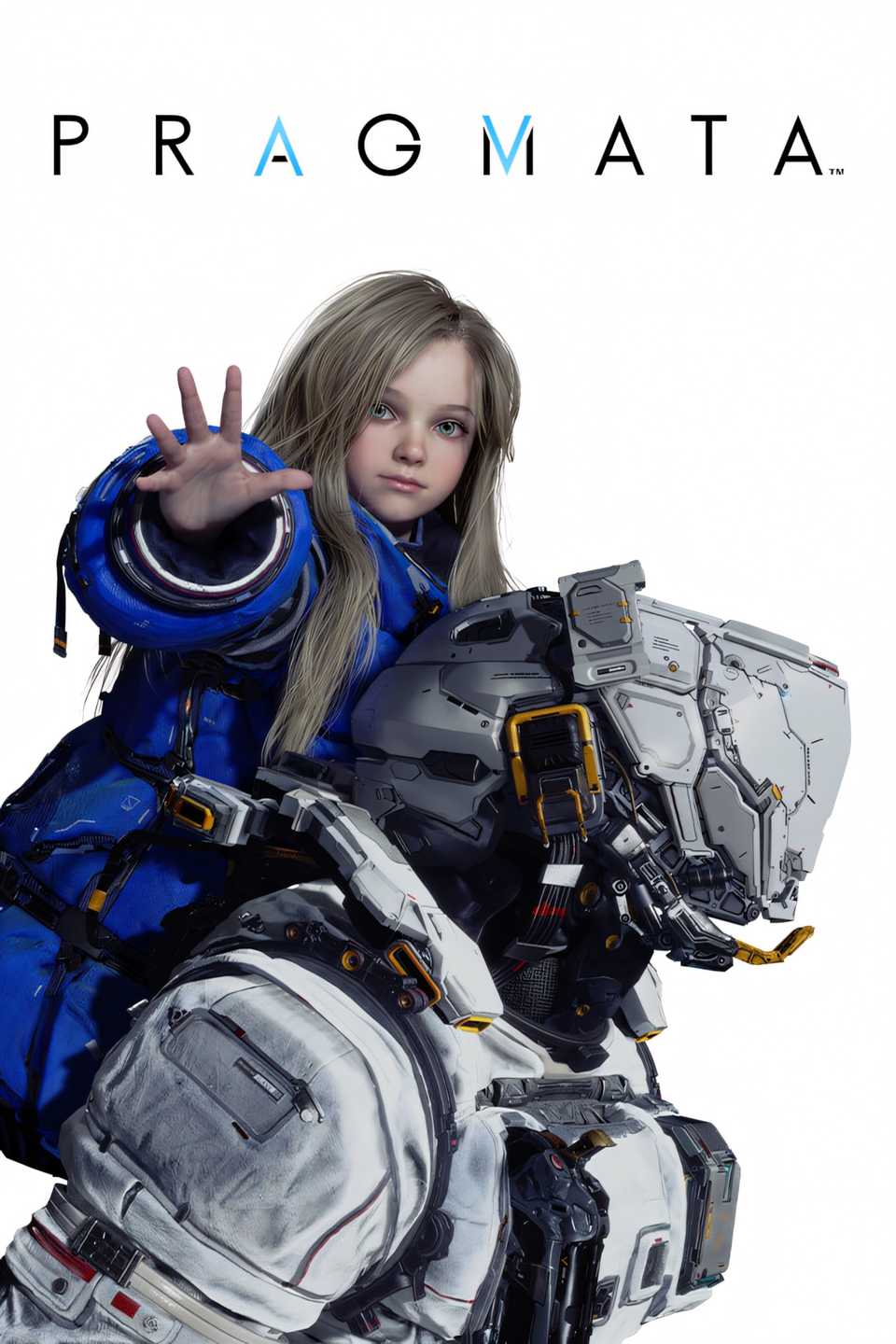
Pragmata is a beautiful game, full stop. From most accounts, this is a team at Capcom that doesn't have quite as much conglomerative experience under their belts compared to others in-house, but you absolutely would never be able to tell from the game's presentation. Its depiction of sterile, NASA-like, realistic sci-fi is genuinely top-notch and amazing to behold.
Sci-fi nerds will be in love with how the game looks, from main character Hugh's astronaut suits, the location's lunar base designs, and everything in between. I personally love how "grounded" the game feels, as these instances of sci-fi that you can kind of see happening IRL someday are typically most affective for me.
Pragmata is here, and yeah, it's super freaking cool.
And of course, Pragmata does get weird with it at times and brings in some story beats and locations that feel more far-flung than the standard moon base setting you start in, but I also appreciate how thought-out it all feels, thus creating a setting that we can believe in while taking in the gorgeous animations and designs that all run without a performance hitch to ever be seen.
The game's soundtrack is another high-point, a mix of poignant piano-led pieces full of emotion, as well as sci-fi-sounding electronic rhythms that get your pulse pumping when it needs to. The AI-focused set dressing of the game, combined with some of its visuals and the specific mix of the music actually gave me NieR: Automata vibes, so it was funny to then learn after having this thought and looking up the game's team that Cho Yonghee, Pragmata's director, was on the art team for NieR: Automata itself.
You also see this in the robotic enemies in Pragmata, as well as a collection of bosses and enemies that can occasionally delve into nightmare-fuel design complete with giant baby heads, far too many hands, and robot/human/animal-looking hybrids that are a level of sci-fi weird I'm not sure I've seen since my time with 2B and 9S.
Like NieR: Automata, Pragmata isn't really a horror game, though it does have tinges of terror placed throughout, and these creepy yet somehow possible-feeling enemy designs serve the game really well, despite the fact that they do all ultimately share the same sterile, metallic white design between them all for the most part.
Life Hacks

Taking down said enemies in Pragmata is, of course, another highlight of the game, and what you'll spend the vast bulk of your time doing here. Before release, it was no secret that Pragmata's gunplay combined with the hacking abilities of co-protagonist Diana were what was going to either make or break the experience.
When aiming at enemies, a grid appears to their right, which you navigate using the face buttons on your controller to pass over nodes, inflict status ailments/debuffs, deal damage, and break open enemy weakpoints once you complete a connecting path on this grid. It sounds complicated, and there was concern it would be too cumbersome in practice while actually playing the game.
Pragmata is a beautiful game, full stop.
The truth is, this system is awesome, intuitive, and works way better than I could've ever predicted (before previewing the game earlier this year, at least). It turns each enemy encounter into a tiny puzzle as you decide how to hack it and which nodes to inflict on which enemies, while also making you learn where each enemy's weakpoint is to then exploit with Hugh's extensive collection of awesome and varied weaponry (that feel particularly cool with the PS5's adaptive triggers) and toggle-able suit mods to give the exact perks you want in battle.
Pragmata also does a very nice job of doling out each new hacking/combat ability, weapon, and general idea at the perfect pace. When it's all said and done, you have a pretty large arsenal of mechanics and systems to keep track of, and it would've been overwhelming to have them all dropped on you at once. It's nice instead that Pragmata seems to understand this and eases you in appropriately until you're a hacking, gun-firing machine.
The main boss fights at the end of each level in the game are standout moments every time, the vast majority of which are hulking, imposing, and threatening-feeling in a way that makes each one feel like a genuine spectacle of a set piece that you then have to figure out how to expose and take down.

Related
There is a slight risk of combat burnout by the end of the game since Pragmata keeps you in the action so much, but you can also break it up as often as you like by traveling back to your in-game hub, The Shelter, to hang out with Diana, upgrade gear, spend time in dozens of challenge levels in the simulation machines, or unlock items on a bingo card with an adorable, baseball cap wearing talking robot named Cabin.
A Light Story with a Solid Emotional Core
In the introduction sequence of the game, Pragmata telegraphs itself a bit by having main character Hugh jokingly remark to a colleague that he feels bad for him for having kids. Joke's on you, Hugh. We all know you're about to have an AI six-year-old as a backpack for the next 10 hours as you both try to escape a hauntingly abandoned lunar base where something has gone terribly wrong.
This style of somewhat surface-level storytelling doesn't really let up across Pragmata, as it's a fairly box-standard sci-fi tale of surviving in space/getting back home, a father/daughter dynamic of two unlikely paired characters, and thwarting a larger-scale plan that shows its face about halfway through the game.
It's all totally serviceable, but also never really takes its themes of AI, humanity, self-worth, or relationships to very deep places. You'd expect Hugh and Diana's journey as "Guy Who Doesn't Want Kids" and "AI Child Adorably Learning The World" to be a little more lined with formative moments, tension, and personal growth, but it takes about one in-game level for Hugh to immediately turn around and land on "This kid is awesome, I gotta get her back to Earth with me."
There are a couple fun story reveals along the way, but nothing that doesn't seem like something we haven't already seen before. That said, it's all still well-done, it's just not revolutionary, either. I don't fault the game much for any of this, but I do think it missed the boat a little bit in the emotional department as a title that does seem to want to lean into this pseudo-father/daughter dynamic that tends to land harder in other instances.
Regardless, the game's ending is still really strong, and the last thirty-or-so minutes of Pragmata were so good that they nearly made me forget that along the way leading up to it, it wasn't necessarily anything to write home about. This all sounds harsh, but I don't mean it to. Pragmata does much more well than it does wrong.
I still truly enjoyed the connection between Hugh and Diana as she starts to draw pictures for him and ask him to play hide-and-seek around The Shelter. They're an awesome duo, and they're great to see together on the screen. They're also just shockingly quick friends, and I guess I thought there'd be more to this pairing's journey along the way.
Your Progression is at Another Terminal
While the aforementioned combat in Pragmata is a hybrid of incredibly creative, interesting, and unique ideas thanks to the expert implementation of the game's hacking system, I would argue that the actual moment-to-moment experience is a bit of a mild letdown. There are six main levels/areas of the game, and while they do vary in scale and visual design, it does kind of feel like you end up doing more or less the same things between each one.
The game is structured around "Find a locked door/gate, find/hack the appropriate locks/terminals to open it, fight enemies along the way that block your path in arenas, proceed, and fight a boss." This is switched up from time to time (sometimes, you find three microchips instead of three locks for a door), but it's all a bit same-y after a while.
To be clear, none of it is outright bad, and most of us are probably here for the game's stellar combat anyway, but when you kind of feel like you're doing the same things again regardless, it does start to show the seams of the game eventually. It can drag at times, too, when the game asks you to rely on Hugh's movement for some light platforming, simply because he's a bit clunky and unwieldy to use in these instances. It's not a big deal, but I couldn't help but think the game occasionally put Hugh in situations he wasn't fully designed for.
All of that said, the game was still always fun for me, it's just that the novelty of it all does eventually wear off when you get far enough into it. Once again, however, there are smart ways Pragmata does try to interject some more interesting things into the mix, like finding hidden paths and rooms to discover items for weapon/skill/suit upgrades, combat challenge rooms with big rewards, as well as little collectible figurines that you can hear calling out to you as you're exploring the game.
It's a fairly linear experience in the end, but I don't personally mind that at all, and often times find myself gravitating to and preferring a tight, Point A to Point B, 10-hour game that respects my time and that I can digest and enjoy over a long weekend. Pragmata is this type of experience, and I think it's better off for that 100%. There's enough exploring here to scratch the itch, but nothing that will ever get you too far off the critical path, either.
Pragmata is cool. Pragmata is fun. Pragmata has unique and creative ideas. Pragmata is also a little formulaic at times. You're going to have a predominantly good time with this one, and I walked away feeling very positive about my playthrough overall. It's not a title that is going to reinvent the world, but perhaps the moon is enough to start with.

Closing Thoughts
Pragmata is endlessly cool, visually sharp, and a testament to the fact that Capcom is really cooking with their IP these days, old and new alike. The combat system along with the hacking gameplay are incredibly intuitive, and it's fun puzzling out each encounter to handle it most efficiently. I do think the core loop of each level is a bit basic in terms of moment-to-moment action, and the game's story, while serviceable, doesn't quite capture the emotions I think it wanted to. Regardless, at the end of the day, this is a very entertaining and impressive video game, and what's been pulled off is worthy of celebration.
Released April 17, 2026
ESRB Teen / Language, Violence, In-Game Purchases
Pros & Cons
- Amazing on all fronts in terms of presentation and performance.
- Very smart, intuitive, and creative combat and mechanics.
- Paced very well in terms of how it layers in new ideas and systems.
- Solving each combat encounter feels like a fun mini-puzzle.
- Ultimately a very cool and enjoyable sci-fi action experience.
- Moment-to-moment gameplay across levels that becomes a bit similar and repetitive.
- A story that never really subverts, nor is incredibly interesting until the ending.
- Hugh is a bit clunky and unwieldy at times for the situations he's placed in.

Next
15 Best Sci-fi Shooters, Ranked
Looking for your next sci-fi shooter? This list breaks down the best sci-fi shooters from across gaming.





![ELDEN RING NIGHTREIGN: Deluxe Edition [FitGirl Repack]](https://i5.imageban.ru/out/2025/05/30/c2e3dcd3fc13fa43f3e4306eeea33a6f.jpg)
 English (US) ·