.png)
.png) 3 months ago
35
3 months ago
35

Published Apr 28, 2026, 9:00 AM EDT
Usama Mehmood is a writer who has done extensive work for previous publications, including Ranking Lists, Reviews, and even Featured Pieces. This allowed him to quickly pursue a position as an Editor during his former tenure, managing different teams and their content delivery whilst continuing to provide further expertise from his own written work.
He specializes in a variety of AAA and multiplayer titles; from spending countless hours with Sam and BB in Death Stranding to plowing through the latest raid boss with his clan mates in Destiny 2, there's a lot for him to enjoy about the gaming industry.
Your mid-20s are arguably one of the most confusing arcs of your life; you're learning to be independent, finding out about the reality of the world, of people around you, and most importantly, you're thinking about how to settle down for the future. And yet, as much as it can feel like an existential crisis to navigate through this arc on your lonesome, video games can sometimes keep those crushing tidal waves of reality at bay, and perhaps teach you something new about yourself along the way.
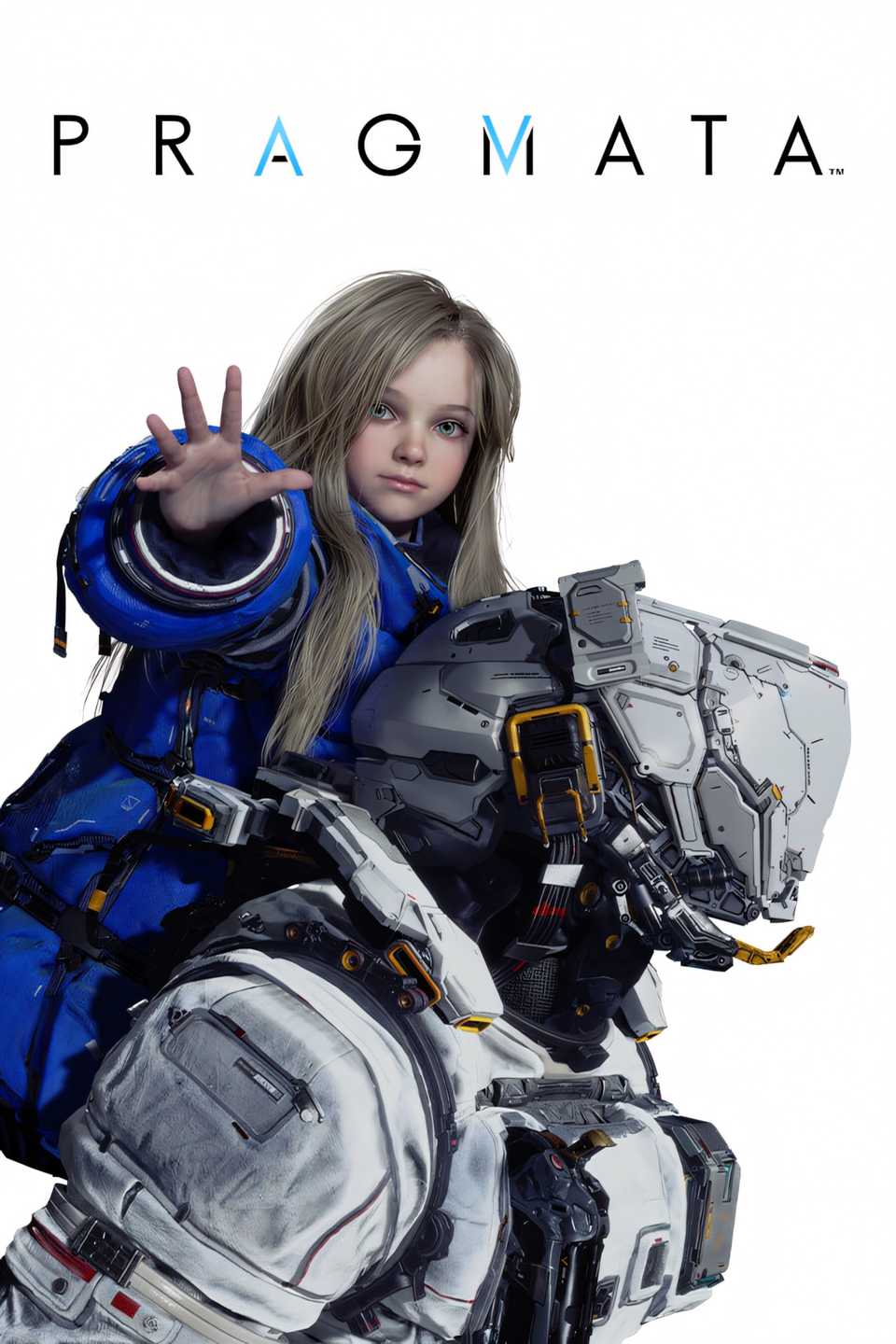
For example, Capcom's recently released Pragmata solidified my undying dream of being a girl dad. And no, this wasn't just recency bias; a few of my IRL experiences and exposure to certain media influenced that feeling for me well into my adolescence. And then Pragmata ended up sealing all of that to a tee with how adorable and heartwarming Hugh and Diana's bond is throughout the game.
But just how well does Capcom execute this? Also, this wholesome father-daughter representation isn't the same everywhere in the world, so surely this warrants a comparative exchange between the West and the East's showcases of the father-daughter/son duo trope. Well, stick around, because this one's for anyone else feeling parental after rolling credits on Pragmata.
The Parent-Child Archetype in Video Games Across Two Cultures
The parental relationship angle is such a rare yet affective theme in video games when delivered with the right mindset. Of course, perspectives matter in this context, and both the West and the East (specifically Japan) have distinct ways of showcasing this theme in their games, whether through manners of conflict or just pure nurturing guidance.
From Kratos and Atreus, Geralt and Ciri, and Joel and Ellie, many of these duos often portray the parental figure as a flawed individual, yet one who also sincerely strives to harden their child so that they won't go down the same dark paths as them, or just so they're ready to fight back against their respective world's ruthless nature.
Furthermore, a deeper and more intriguing contrast here is that one focuses on Fatherhood as an act of letting go, while the other focuses on Fatherhood as possession. You'll know which one is which if you've played both, but the point is that a character like Geralt doesn't end up suffocating his bond and actually ends with rewarding the player with a sense of emotional maturity by letting Ciri make her own choices, even if they’re dangerous.
And in The Last of Us, Joel goes in almost the completely opposite direction. He's a grief-stricken man who starts detached and monotone, like Geralt. But this time, when Joel bonds with Ellie, it eerily becomes all-consuming. In the end, Joel doesn’t just protect her—he chooses her over the world. And crucially, he makes that critical choice for her, not with her. It is meant to be morally messy, and yet another poetic element of the destructive, gritty writing style in both The Last of Us games.

Now compare that to characters like Barret Wallace from Final Fantasy VII, or Kazuma Kiryu from the Yakuza series. Here, fatherhood leans more toward sheltering and quiet sacrifices.
These characters know the world is harsh, but instead of preparing the child to face it head-on, they try to delay that exposure for as long as possible. Kiryu runs an orphanage while still getting entangled in the Yakuza underworld, and Barret softens himself around Marlene; it’s about preserving innocence.
The parental relationship angle is such a rare yet affective theme in video games when delivered with the right mindset.
Despite ultimately having different narrative priorities in each game, it is incredibly fascinating to me how both cultures uphold fatherhood with such esteem and portray its burden through diverging executions. One hardens the child against the world by exposing them to it, while the other softens the world’s grueling impact by standing between it and the child.

Related
10 Games to Play if You Love Resident Evil Requiem
If you just beat Resident Evil Requiem and are looking for games that will give a similar experience, we've got you covered.
While I'm not a veteran Capcom fan who's lived to tell the tale since their golden days all the way through their time in the trenches, I can still confidently say that they've been on a generational run this year. But more importantly, lightning struck twice with how Capcom repeated a familiar element between Resident Evil Requiem and Pragmata.
In Pragmata, the bond between Hugh and Diana leans into an almost emergent parenthood scenario. Hugh isn’t built to be a father, and Diana isn’t a conventional child, yet their relationship grows into something deeply protective. What’s interesting is how Diana often carries a quiet, almost maternal awareness herself as she guides, reassures, and playfully learns about life on Earth with Hugh.
Meanwhile, RE9 approaches this idea from a more grounded yet slightly unconventional perspective through Grace and Emily. Here, the maternal instinct is more recognizable, especially when Grace becomes a quietly resilient yet sympathetic guardian you’d least expect in a bleak horror setting. But Emily isn’t just a passive recipient of that care. Much like Diana, she reflects it back through trust, emotional anchoring, and moments when her vulnerability becomes Grace’s strength.
The key difference lies in tone and context, because Capcom didn’t just “do it twice.” You can clearly see that both these games explored the same emotional core of protective, caring, and parental-like bonding, but stretched it across two genres: in Pragmata, care is learned and mutually built upon as Hugh and Diana try to escape back to Earth. Whilst on the other side of the coin, in Resident Evil Requiem, care is instinctive and reactive, which is so potent to experience with a scaredy-cat protagonist like Grace, who slowly embodies the indomitable human spirit against all terrifying odds.
Pragmata's “Girl Dad” Identity Doesn't Say it Out Loud, and That's for the Better
Early on, Hugh (understandably) treats Diana like a mission objective. He’s cautious, a bit distant, operating on instinct more than attachment. But the first real shift comes in those initial segments of Pragmata, when Diana starts guiding him instead.
Mechanically, she’s the one hacking the enemies, opening paths through obstacles and corridors, and is the MVP to your survival. That gameplay dependency indirectly rewires their relationship: Hugh isn’t just a guardian; he’s someone who needs her. That’s the first crack in the typical hardened-father archetype.
Then you get the smaller, humanizing beats that you just know that Japanese developers love to tenderize audiences with: Diana’s whimsical curiosity, her childlike questions, the way she reacts to the world with wonder instead of fear.
Unlike the stereotypical dads represented in the surface-level scape of Western media, Hugh doesn’t lecture her at all. Instead, you can feel him recalibrating in real time when talking to Diana at the Shelter or during exploration, choosing reassurance over realism, comfort over conditioning. It’s not about preparing her for the world; it’s about preserving who she is for as long as possible.

One of the most cathartic elements comes from how he starts checking on her more often, in how his tone shifts from directive to protective, almost gentle. And when he finally does express urgency for her rather than the escape mission, it hits harder because the game obviously hasn’t been shouting about it during the first half of the playthrough.
In Pragmata, the bond between Hugh and Diana leans into an almost emergent parenthood scenario.
A game like Pragmata evokes a soft, definite urge to raise a daughter, while also giving you a brief glimpse of what that could feel like.
By all means, it isn't a clear-cut depiction of the struggles you'll endure in real life as a father, but I firmly believe that Hugh and Diana's fictional space dad story will at least make you care enough to understand the hardships, challenges, and metaphorical sacrifices that come along the journey to raising a family.








![ELDEN RING NIGHTREIGN: Deluxe Edition [FitGirl Repack]](https://i5.imageban.ru/out/2025/05/30/c2e3dcd3fc13fa43f3e4306eeea33a6f.jpg)
 English (US) ·