.png)
 3 hours ago
2
3 hours ago
2

Published Jul 22, 2026, 1:30 PM EDT
Everything's on fire, but in a good way
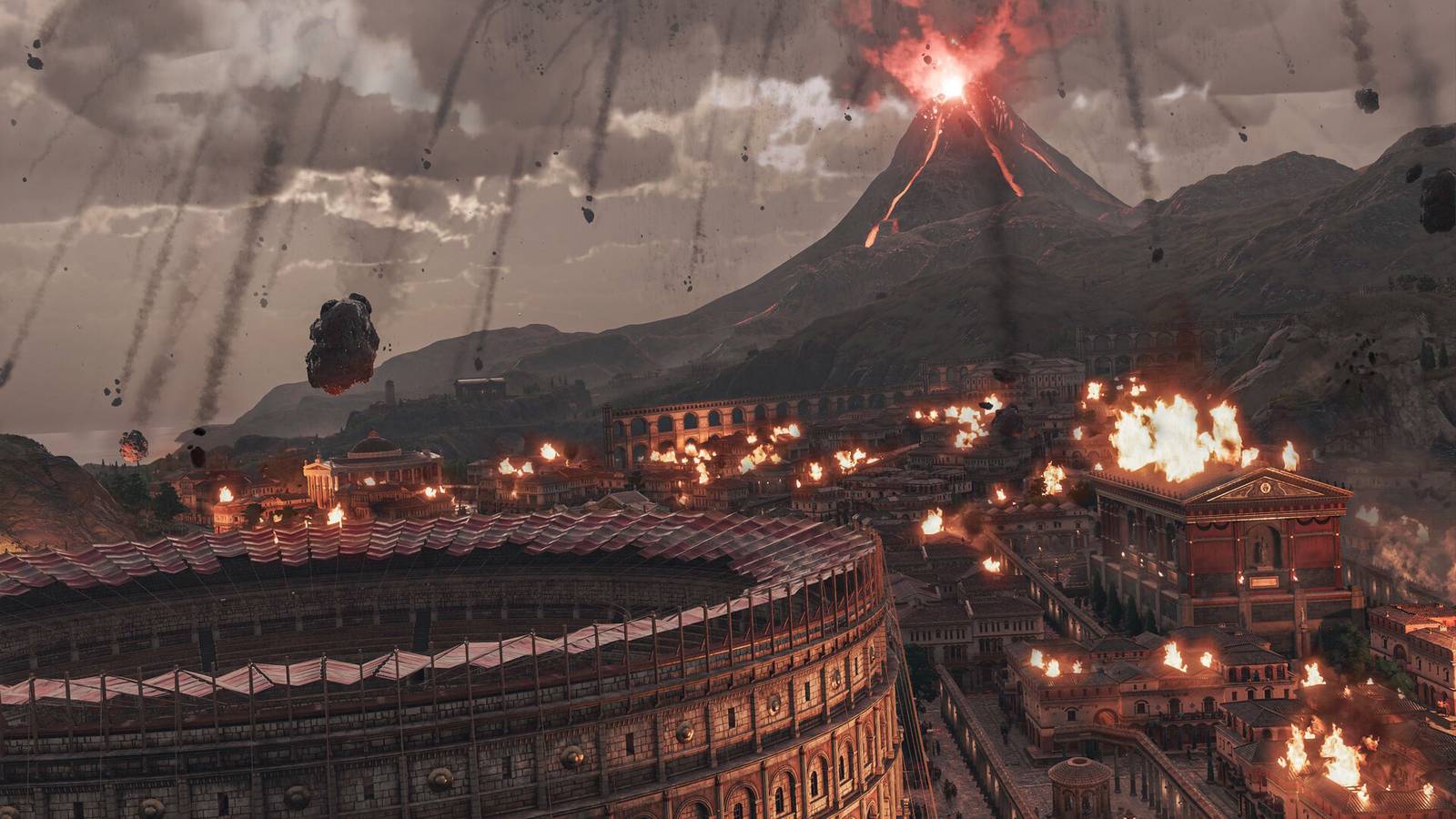 Image: Ubisoft Mainz/Ubisoft
I've fallen down the Anno 117: Pax Romana rabbit hole this year, despite the negative buzz around it. Steam reviews and the Reddit consensus hold that 117 is empty, dull, and generally just less than its predecessor, Anno 1800. I can sort of see why. Quite a few elements seem like they're waiting for future add-ons to come alive and wake them up. But I've enjoyed myself thoroughly, so when I saw the "mostly negative" reviews for Anno 117's first big DLC, Prophecies of Ash, I figured I'd give it a try, despite the haters. I'm glad I did. An inaugural bit of DLC can't fix every problem. But it solves some pretty big ones, and throws a welcome wrench into the usual flow of city building.
In the normal, volcano-less way of things, you reach the third population tier in Latium and just kind of keep going. That's when the Equites, or the Roman version of the upper-middle class, (if you're old enough to remember a time when such a class existed) join your population. These folks demand things you can't produce normally, like cheese, and so send you out to Albion to produce concrete and grapes and theatrical productions. It's a more complicated step in the logistics chain of building a major city, but it's also just another step in the logistics chain of building a new city. You get the Patricians (the rich folks) to live in your city after that and carry on with even more complicated problem solving.
That's still largely the process in the Prophecies of Ash DLC, but the new additions instantly shake things up and add some much-needed structure for the mid-game. None of the new stuff starts happening until you have 500 Equites calling your islands home, which either gives you incentive to make your population bigger and happier quickly, or lets you proceed eruptionless for as long as you want to. Once you've gentrified your realm enough, you've got a few more quests to do, like stockpiling food resources for a sacrifice and restricting goods from public consumption so you have enough to trade.
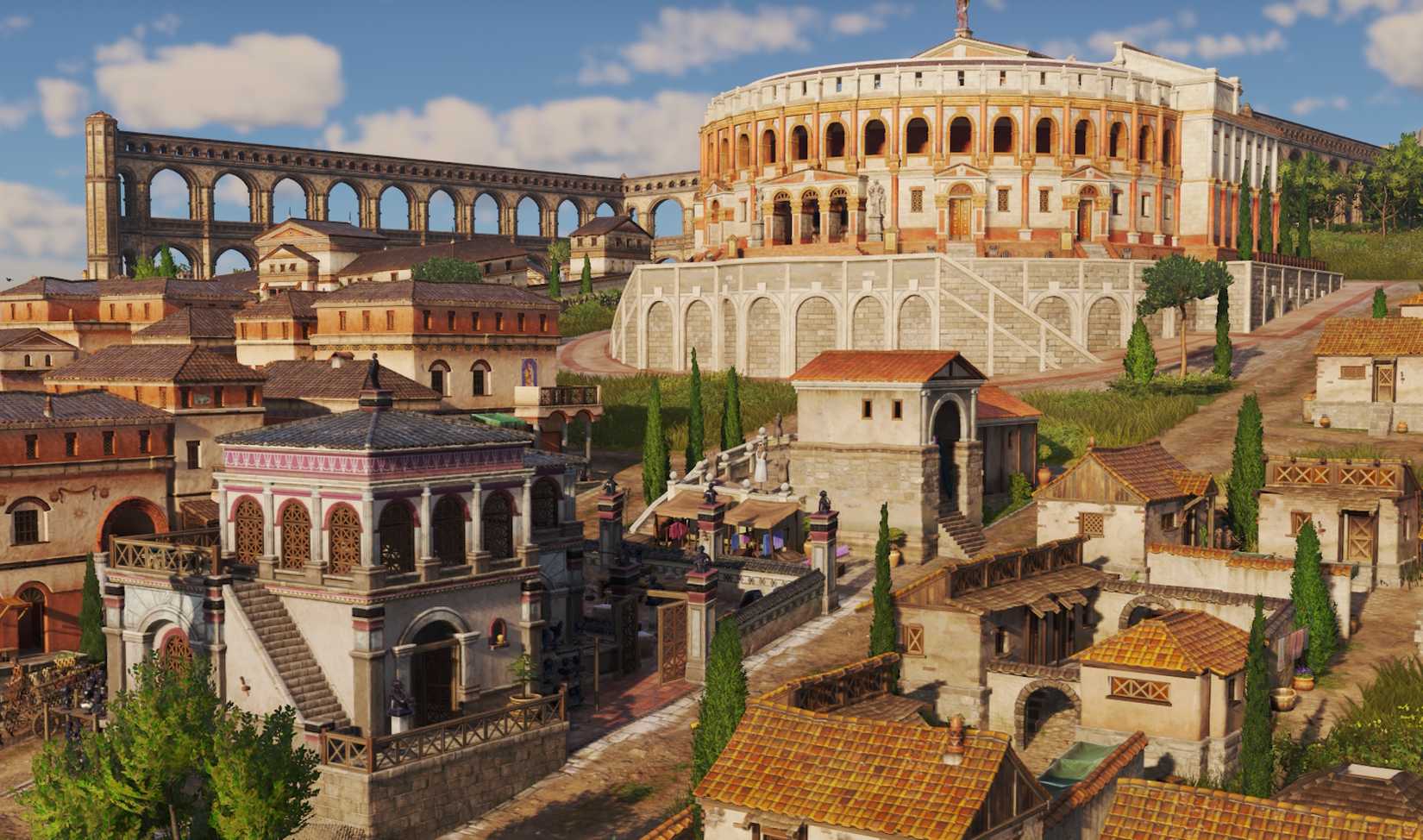 Image: Ubisoft Mainz/Ubisoft via Polygon
Stockpiling is something you almost never need to do until you start specializing, and the game doesn't tell you "hey, you can pause consumption as a way to hoard goods," which may or may not have led me to build more production sites than was necessary just so I could trade. This kind of hoarding has a volcano-specific purpose (more on that soon), but in the absence of proper onboarding even in the campaign, I appreciated how it acts as a gentle guide to building up goods for passive and active trade. Even if it was a bit too late for me.
Then you need to start quarrying and refining marble. Unless you were very lucky at the start, your home island probably doesn't have marble on it, nor do its immediate neighbors. So it's a big shove out of your comfort zone to start settling other islands and (if you haven't disabled them) dealing with the raiders inevitably haunting your trade routes like sea wolves.
Finally at the end of it all, Occasus pops. The eruption is a huge event, as you'd expect. Stuff gets damaged, and fire safety values — always precarious in larger cities — plummet to Hades. Acid rain strips the trees. Nobody's happy (I mean, who would be?) which means unrest is much more likely. Then in the volcanic winter that follows, agricultural and aquatic production gets axed to 25% of its usual value, thanks to the ash in the air. Supplies are scarce, but less so if you stockpiled and strategically limited consumption of the harder-to-source goods. If not, well, there's always next time. After the winter ends, all that ashy trauma rejuvenates the soil and kickstarts your agricultural production again. Plus, there's more obsidian.
There's enough space between eruptions that this turmoil rarely feels unwelcome or badly timed. I haven't gotten tired of it yet and rather enjoy the change to my usual routine: The sudden hoarding of goods, seeing who can do without what before the economy collapses. It reminds me a bit of Frostpunk, a game I absolutely adore, except the stress (thankfully) lasts for a shorter time. And if I ever do get tired of it, there's a suite of options to tinker with the weather or just shut the volcano off entirely. Sure, that means no more replenishing obsidian, but the material is a helpful boost — not an essential one.
You need it for making some of the new objects, but its really important function is as a trade good with Caecillia, the prophetess of Vulkan who makes the new island Cinis her home. Caecillia accepts payments of obsidian for new specialists (yes, you're trading stone for people; don't ask) that grant fertility for a single resource, usually at half the normal production value. In my current playthrough, only a handful of small islands can host snaileries and I have no use for the other resources on them. Magically gaining the ability to exploit snails on one of my other islands saved wasting a lot of denarii and materials.
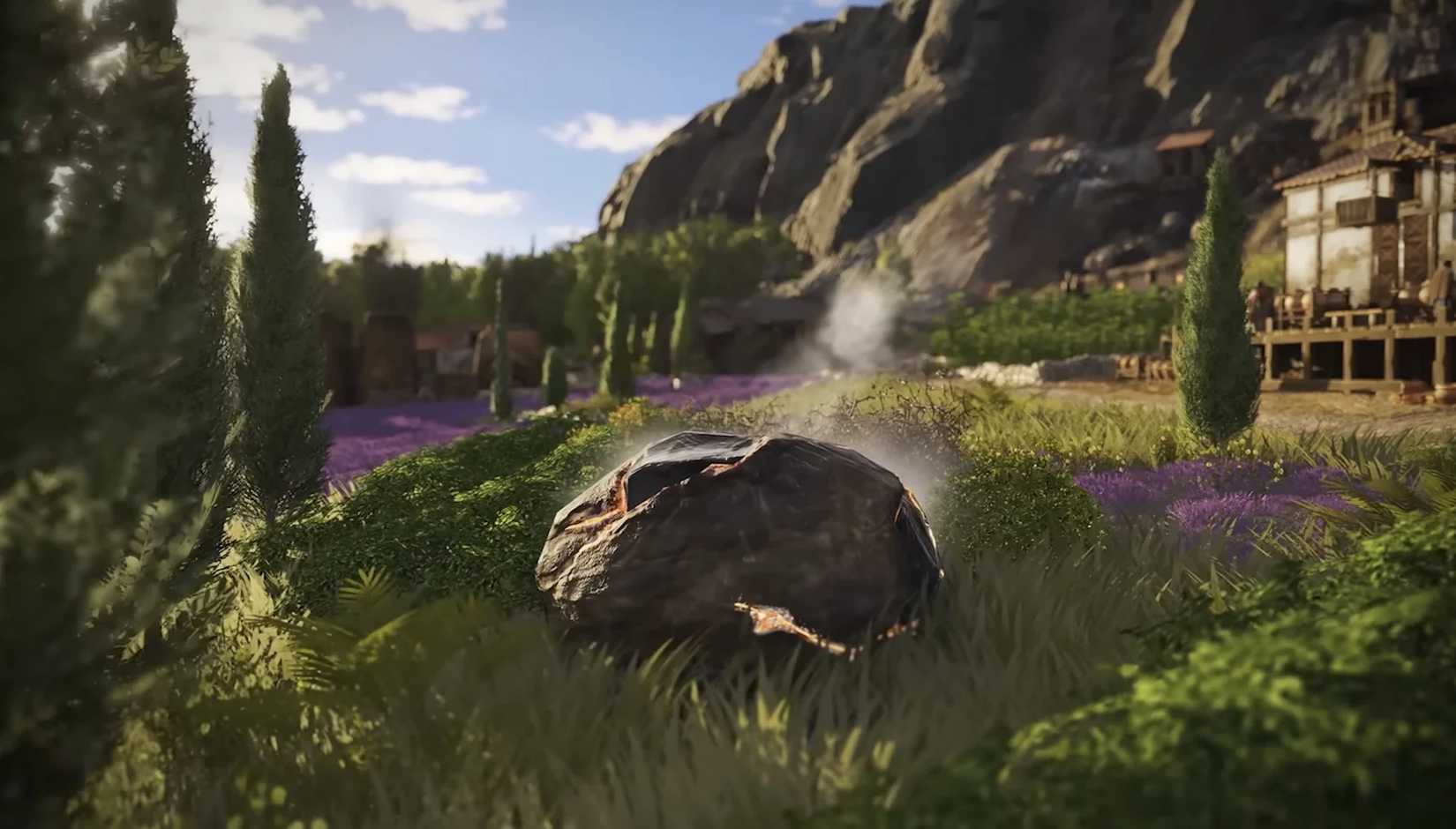 Image: Ubisoft Mainz/Ubisoft
The expansion comes with a big tech tree to fill out, but easily one of my favorite new bits of research is an early node that lets porridge stands swell your population. Ships and military units come with exorbitant worker costs, and while you could just spread your fleets and legions out across several islands, it's nice that you don't have to anymore. Settling small islands to extract things like marble or handle production chains without making more elaborate trade networks was, if not impossible, pretty darn close. Small islands only have so much room, usually not enough to support enough households of each population tier to get the workforce you want.
Now, plunk a porridge kitchen down in strategic locations, and you can have a little marble-farming, grape-growing, soap-making colony without major shortages. (Almost like populations grow when their basic needs are met, a concept most real-world governments could stand to learn, too.) Anyway, the boost feels like a more natural helping hand than, say, the bump you get from Bright Harvest's silos in Anno 1800 — essential for certain functions, but not game-breaking.
The rest of the tech tree is hit and miss, admittedly. The two new production chains and the products they result in are nice, though almost seem like groundwork for future additions. The buildings that produce statuettes with obsidian, for example, increase prestige, a stat that's still almost functionally useless for anything but recruiting specialists. The cult of Vulkan is fantastic for mining and lets you get coal more easily, but religion is still just a case of "like and subscribe for godly bonuses." Hopefully, future additions make better use of these dangling threads.
But really, for a first big DLC, Prophecies of Ash is pretty massive and starts to plug some of the gaps that made Anno 117 feel emptier than its predecessor. There's still work to be done, but I'm enjoying myself even more than I was before and am eagerly looking forward to what Ubisoft Mainz does next.








![ELDEN RING NIGHTREIGN: Deluxe Edition [FitGirl Repack]](https://i5.imageban.ru/out/2025/05/30/c2e3dcd3fc13fa43f3e4306eeea33a6f.jpg)
 English (US) ·