.png)
 1 month ago
17
1 month ago
17

Published May 5, 2026, 3:00 PM EDT
May 5 marks 20 years since the end of the Ravnica block
 Image: Wizards of the Coast
When I first started playing Magic: The Gathering around 1999, I quickly became obsessed with green: beautiful art focused on fantastical nature scenes, towering treefolk, and plenty of cool elves. When I first considered dipping into a secondary color, I wanted to try out black. But the friend who taught me the game said I couldn’t do that. (Remember, we were kids.)
Pointing to the pentagon formed by the five mana symbols on a random card back, he said black was an enemy to green. You could only build a two-color deck using adjacent colors. For green, its allies are red and white. There wasn’t a simple term I could use to describe the green-white elves and angels deck that I went on to make, but all that changed a few years later.
May 5 marks 20 years since the Ravnica block ended with the release of Dissension. It was, unfortunately, a block I missed in its entirety, since I barely played the game in high school. When I returned to the game a few years later, I was baffled when I started hearing people use terms like “Selesnya” to describe my green-white deck.
Ravnica is a sprawling city-plane where society is divided among 10 guilds, each representing a two-color pairing with its own philosophy, culture, and way of wielding magic. Before the Ravnica block, the various color combos didn’t have a cohesive identity. My deck was just a bunch of elves and angels. But these various guilds — first introduced in Ravnica: City of Guilds and completed across Guildpact and Dissension — transformed the identity of these color combos into something players could identify instantly. This is why we still use the names of these guilds to describe card and deck colors today, even when said decks don’t have a single Ravnica card in them.
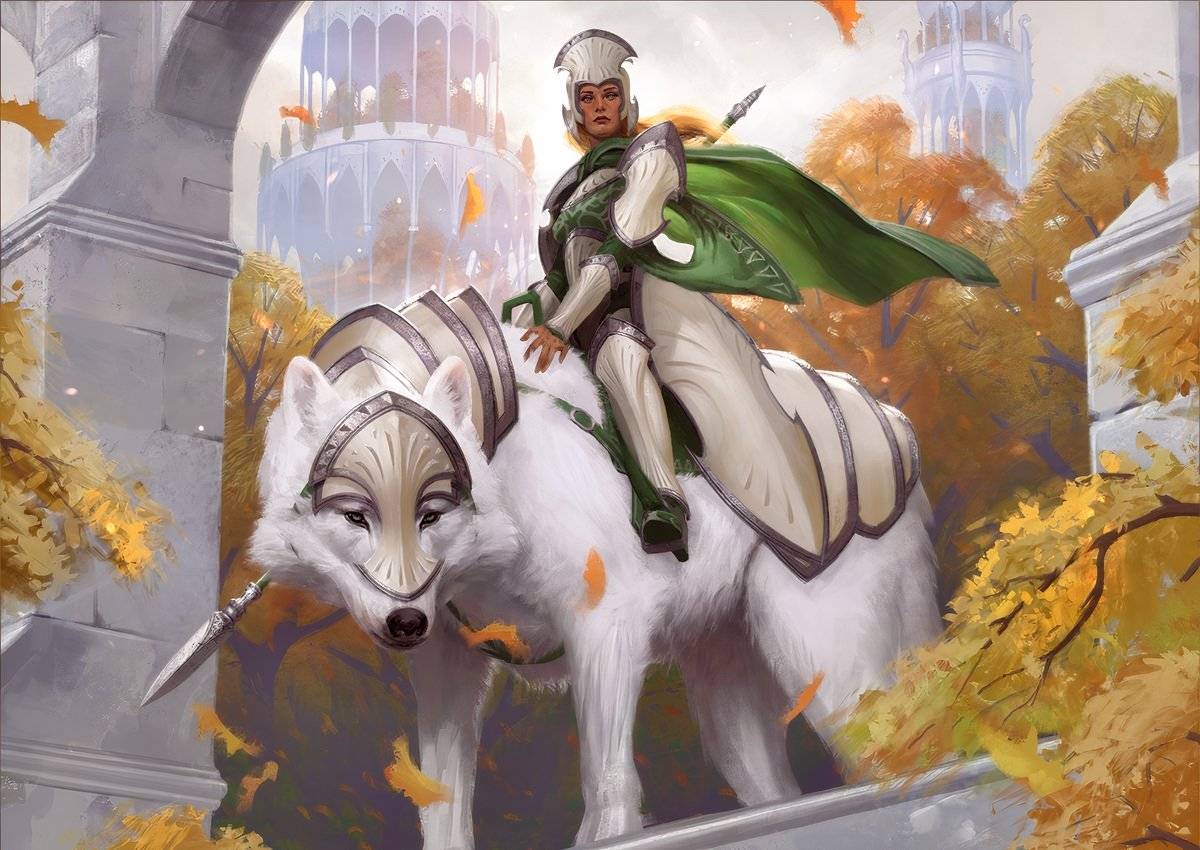 Official art for the Ledev Guardian, wolf-riders who serve the Selesnya Conclave.Image: Wizards of the Coast
The Selesnya Conclave is essentially a nature cult of zealots, a spiritual collective devoted to order and harmony. Mechanically, Selesnya strategies involve large bands of creatures that overwhelm opponents. Within the Ravnica block, that meant emphasizing the Convoke mechanic, allowing you to tap creatures to help pay the cost of other creatures. This leans into the core overlapping themes: playing lots of small creatures and ramping up mana to play even bigger creatures as quickly as possible.
The various guild identities weren’t just established as flavor either, because the mechanics reinforced these identities. Red has a totally different vibe in a spellslinging Izzet deck than it does in an aggro Boros deck with white. Collectively, the Magic community decided to use the guild names because they spoke to more than just the colors. They said something about the identity and strategies being employed. Selesnya got Convoke, but every other guild had its own signature mechanic within the Ravnica block as well.
City of Guilds introduced Boros, Dimir, Golgari, and Selesnya. Guildpact then did the same for Gruul, Izzet, and Orzhov. As the block’s capstone set, Dissension completed the cycle with Azorius, Rakdos, and Simic. Compared to the previous sets, Dissension can be seen as a bit more experimental — especially in how it redefined the +1/+1 counter ecosystem.
Before Dissension, +1/+1 counters were a mechanic that existed in a vacuum, usually from isolated effects that made one creature just a little bit bigger. Temporary creature buffs were far more common. But the Simic (green-blue) Combine had a slate of 0/0 creatures with the Graft ability that allowed the player to move their counters to other creatures. It leans into this idea that power can be transferred and scaled across your board, a sort of mathematical optimization that’s central to Simic’s identity (something that’s on full display with the Quandrix college in Strixhaven).
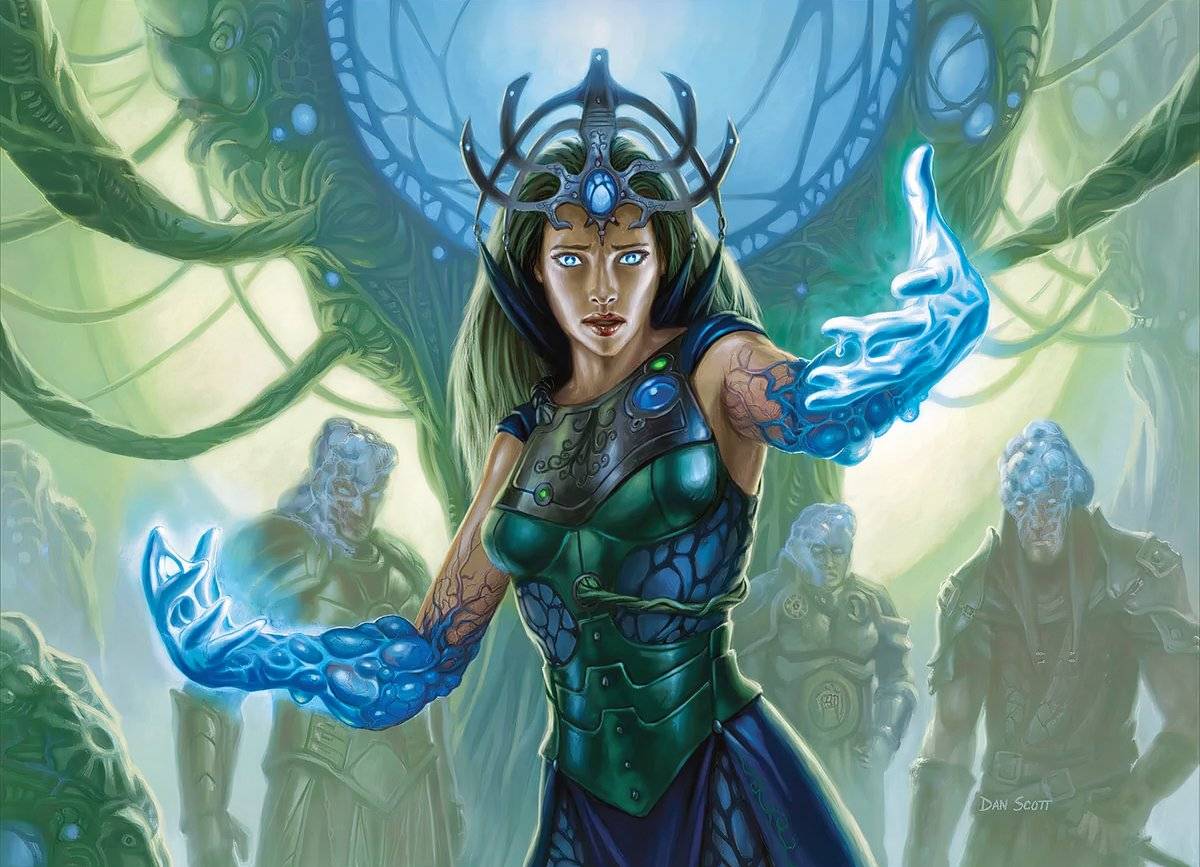 The Cytoplast Manipulator has Graft 2 and can gain control of any creature with a +1/+1 counter on it.Image: Wizards of the Coast
Mechanical pivots like this were prominent across the entire block and had a profound impact on Magic at large. Synergy amongst cards became that much more explosive, particularly when other mechanics like Proliferate were introduced a few years later to make counter-based strategies even more effective. Constructing a deck became that much more nuanced and challenging, but so much more interesting.
That’s really the legacy of Ravnica, not just that it introduced new mechanics or even new archetypes, but that it gave players a shared language to describe them.
Back in 1999, I didn’t have a word for what I was building. It was just green and white, elves and angels, a pile of cool-looking cards that kind of worked together. Today, that same deck has an identity. It’s Selesnya.
That might seem like a small thing, but it fundamentally changed how we understand Magic. Decks aren’t just colors anymore. They’re philosophies, playstyles, entire schools of thought. You’re not just playing blue-white control. You’re playing Azorius. You’re not just casting spells in blue-red. You’re Izzet.
The Ravnica block didn’t invent color combinations. Those have been around since the game began. But Ravnica did codify the mechanical identities that helped redefine them. Dissension's completion of the cycle 20 years ago, gave us a vocabulary that every one of us has been speaking ever since. And that will never change.





![ELDEN RING NIGHTREIGN: Deluxe Edition [FitGirl Repack]](https://i5.imageban.ru/out/2025/05/30/c2e3dcd3fc13fa43f3e4306eeea33a6f.jpg)

 English (US) ·