.png)
.png) 4 months ago
31
4 months ago
31


Published Feb 9, 2026, 10:00 AM EST
Usama Mehmood is a writer who has done extensive work for previous publications, including Ranking Lists, Reviews, and even Featured Pieces. This allowed him to quickly pursue a position as an Editor during his former tenure, managing different teams and their content delivery whilst continuing to provide further expertise from his own written work.
He specializes in a variety of AAA and multiplayer titles; from spending countless hours with Sam and BB in Death Stranding to plowing through the latest raid boss with his clan mates in Destiny 2, there's a lot for him to enjoy about the gaming industry.
Sign in to your DualShockers account
As the first true HD entry in the series, with its share of highs and lows, the original Yakuza 3 is often cited by many fans as the black sheep of the franchise. But those loyal enough like me will defend the game like no tomorrow, especially the combat that often leaves other players frustrated or agonized. But hey, that's a skill issue that I'll refrain from pointing out too much.
It's due to that and other low standout points of the game that made it warrant a Kiwami remake from RGG. And quite honestly, it was the most anticipated one for many fans since they couldn't stand playing the original title, even in its remastered state. But you know what they say, be careful what you wish for, which is exactly what I said after rolling credits on Yakuza Kiwami 3 & Dark Ties.

Related
Like A Dragon: Pirate Yakuza In Hawaii Review
Hoist those sails, we're going on a jolly adventure with the scurvy Mad Dog himself.
This isn't me inevitably spoiling my overall opinion on the game, but just keep in mind that I have the utmost fondness for the original Yakuza 3, despite the struggle it gave me on the initial playthrough. The critique I have to present today makes this the most polarized I've ever been on an RGG entry, and for good reason: there's so much good stuff, but then there's also a ton that left a sour aftertaste. Strap yourselves in, because I have a lot to say about both Kiwami 3 and Dark Ties, and it might cost me my pinky finger.
Excluding the finale for both Kiwami 3 & Dark Ties, other major story spoilers for the game will be discussed in this review to properly cover the nature of this version of Yakuza 3; please read at your discretion.
The Changing Tide in this Seaside Town
Firstly, it's important to establish how Kiwami 3's narrative structure differs from the original game, at least in some parts. While the core storyline is mostly the same, there are a bunch of new scenes added in here as well as some stuff moved around or cut to better pace everything. And boy, you'd be surprised by what's gone and what still exists, the latter having me baffled.
Due to the Morning Glory kids having their own short-term stories to experience in the new Orphanage mode, backseat story arcs like Taichi's wrestling or getting Izumi acquainted with Mame the dog have been cut from the main campaign. Instead, they've been pre-established here, with Mame already being a pet at the Orphanage and Taichi having enrolled in the local Junior Sumo competition.
So they're not totally removed per se, because their individual backgrounds (sort of) align with those in the original game. Still, of course, they've been appropriately remade here to better reflect their development. That bonding session of Kiryu helping Mitsuo smooth-talk Riona is still there and feels 1:1, but the others got a well-deserved touch-up, such as Ayaka and Eri; it's super freaking wholesome, and I'll go over more on that in a bit.
You've also got a bunch of new sub-stories that further complement Kiryu's laid-back character in the third game. Ones like where Kiryu happily accompanies a famed TV star on her tour of Okinawa with her crew, as well as ones where he becomes a Host for the Stardust club back in Kamurucho; one night only, of course. They're such a welcoming new foundation here that if you have any recollection of the substories from the original Yakuza 3, chances are most of them will feel like duds compared to these.
Besides that, the sunny town of Ryukyu in general got a particular facelift in the NPC department—the new local townsfolk from the neighborhood association, as well as Miya. The former are part of the new Morning Glory Orphanage mode, but Miya slightly tweaks a couple of parts of the narrative as he's the laid-back single-dad sensei who teaches Kiryu the Ryukyu Fighting Style at his dojo.
You've also got a bunch of new sub-stories that further complement Kiryu's laid-back character in the third game.
The most unexpected thing was seeing how these characters came into play in that one chapter where the Orphanage gets demolished by the Tamashiro Family thugs. A scene where Kiryu originally just heads straight to the Bullring to save Nakahara is now recontextualized with having these endearing townsfolk show up to let us know they'll be handling the reconstruction of the Orphanage. And that, to me, is such a great way to tie in these characters that mostly serve as background components at first glance.
Speaking of added context, there are a couple of new scenes here; from a minor one where Tamiya meets Kiryu early on in the story to lay the seeds for their eventual meet-up, the Snake Family Triad dealing with the aftermath of losing Lau Ka Long by going after Hamazaki and Kiryu, as well as Kiryu squaring off with Kanda in a round two of sorts, with a post-fight cutscene that really shined light on the Dragon of Dojima's utter disdain and disappointment in the Nishikiyama Family's latest patriarch.
These contextual scenarios didn't necessarily pivot the story, but it felt nice to have a change of pace from what I usually remember from the original Yakuza 3, or from when I tried comparing cutscenes from it.
However, remember when I said some things still existed that baffled me? The entire Chapter 9 sequence remains unchanged, infamously known for being a massive exposition dump. With how they changed things around in the earlier chapters to better compensate for the pacing, you'd think they would at least fine-tune this to some degree, but then again, all three of the PS3 era titles had narratives that needed explaining to you like you're five years old, so I guess it's better that they left this as is in the remake.

Related
12 Best Yakuza Final Boss Fights, Ranked
From sworn brothers to men who have nothing to lose, here are the best final boss fights in the Yakuza series so far.
Kiwami Doesn't Always Mean Extreme
Although frustrating on paper for many, the original Yakuza 3's combat was a learning curve that I grew too fond of in my later playthroughs. The Komaki skills were essential, and you could also do a couple of nifty techs as well, such as some occasional ground juggling with Kiryu's kicks and even achieving infinite loops via the wall rebound mechanic or the enemy's knockback animations.
These small details made Yakuza 3's gameplay such a fascinating challenge to overcome and a joy to adore in the long run. But then again, not everybody is built for it or has the patience to carefully master the Tiger Drop or Komaki Parry's timing.
And that's where Yakuza 3 Kiwami's combat comes into the fray. The Dragon of Dojima fighting style has been reworked to match Kiwami 2, 6, and Gaiden. But most notably, you've got a new stance, the Ryukyu fighting style, that embodies the heart of Okinawan culture. This style allows you to access eight different weapons in various combos and charge-up attacks, as well as utilize unique mechanics like perfect guarding and applying effects to enemies, such as bleed or stun.
Let it be known here that I tried my best to give this game's combat system all the flowers it deserved. And this is coming from someone who isn't afraid to try something new or at least be forgiving in some regard.
The "new and improved" DoD style we all love feels like a sloppy version of the Kiwami 2 one, which I absolutely despised. Kiryu's finisher grabs are tied into the new extreme heat mode. The Komaki skills are gone except for Tiger Drop, which (obviously) feels weaker, similar to its iteration in every other Dragon Engine game. And don't get me started on the overall hit feedback, combo speed, and magnetized grabs either. They're all such an important detail to the combat's foundation, and they've been lazily implemented here.
The Ryukyu Style surprisingly earns some plus points, but that's mainly how it keeps the combat fresh during most boss fights with its versatile kit, as well as letting you counter anyone trying to play that Blockuza trick on you with their constant guard. And in some cases, when the target isn't spamming their white aura-infused attack, you can constantly perfect guard their attacks to demolish them. Although this style also feels a little janky to use early on, I'm sure it isn't a problem for anyone who got through the original or even managed to digest the combat styles of Tanimura or Shinada in prior titles.
But most notably, you've got a new stance, the Ryukyu fighting style, that embodies the heart of Okinawan culture.
Furthermore, other combat intricacies, like the aura system, feel so unbalanced. Having finished both it and Dark Ties on Professional difficulty, there would be several moments where bosses would instantly pull back their hyperarmor aura after QTE moments, requiring me to optimally plan out how much damage to deal to them before removing this hideous thing from them again. Especially with that final boss fight, good luck with your combo cancel damage on it, since Kiryu feels like the most sluggish character ever next to him.
I honestly don't think either of these fighting styles adds much value. It is evident from the moment you lay your hands on the reworked DoD style that you know they've streamlined everything here. Some might like it, and that's fine, but come on, these were the same developers who created such a high-octane brawler system with Lost Judgment's combat. I don't like making assumptions, but it's clear RGG has a one-dimensional outlook on its combat systems as of late, as seen in Pirate Yakuza and now in Kiwami 3. And the only chance they might have to prove me wrong in that is with their upcoming Stranger than Heaven title.

Related
10 Mini Games We Wish Were Full Games
Sonic Adventure's Chao Garden or Yakuza 0's Cabaret Club are more than addicting enough to be full games on their own.
Becoming the World's Greatest Dad
With the negative Nancy bit on the combat done for now, the heart of almost any Yakuza game has been divided into the storyline, of course, but the other half has to be the side content, at least for me. And I can wholeheartedly tell you that they never skipped a beat with the side activities here, even if there is one major thing here that sticks out as the most overused thing they've done.
The Morning Glory Orphanage was a huge part of the original Yakuza 3 experience. The game had a fine balance, where at one point it kept shifting between Kiryu butting heads with the crime underworld and, in the next moment, him chasing his Orphanage kids around town over their temper tantrums or other ordeals. This slice-of-life component brought out Kiryu's nurturing side as he bonded with the kids through small acts of compassion and empathy just by being there for them.
Kiwami 3 reinvents this concept and actually takes it a step further beyond with the brand-new Morning Glory Storyline. The entire Orphanage has been redesigned across the board as a separate game mode where Kiryu can now grow a backyard garden of veggies, manage a feeding farm, partake in various mini-games/chores with the kids, and accomplish tasks for the neighborhood committee via the bulletin board. Most importantly, to advance the storyline and become the best dad, Kiryu needs to fulfill major cooking requests for the kids throughout the mode.
The mini-games and other small tasks also help build your relationship with each kid. From sewing, spearfishing, and helping with their homework, or even catching bugs with them, it feels like the perfect follow-up activity they've made after the Dondonko Island stuff in LAD Infinite Wealth. Taking a break here after bashing the skulls of the Reapers or random thugs around town is just so cathartic, even if, for the most part, I was trying to optimize everything to get a boatload of cash via the bulletin board requests.
Most importantly, the reimagined story arcs for each kid are among my highlights of the game and something I hope the writers get a lot of credit for. You've got a bonding session with each kid this time, no exceptions, from helping Koji realize that being captain means more than winning, to Kiryu helping Taichi in a Rocky-style training montage to get him ready for his Sumo Wrestling match.
My favorite one was with Eri, where Kiryu decides to just have some father-daughter time with her in town because she got bullied for having no parents. She was one of the kids that I found so irrelevant in the original game, and now she feels like the one with the most cherishable bonding session with fully voiced dialogue.
Now for that overused activity I mentioned earlier. While I'm all for RGG reusing their assets to hasten the development of their games, I was just not a huge fan of the Bad Boy Dragon activity. This is essentially a rehash of the team-based activity formula from the Cabaret Club and Real Estate in Yakuza 0, or the Devil Fleet in Pirate Yakuza. A storyline where Kiryu helps Miya's daughter, Tsubasa, take down the Tokyo Terror gang and others in all-out brawls or turf wars with four squads of different NPCs.
These include returning characters from the series as cameos that you can earn from other mini-games or as part of substory rewards. You've even got my adored Ichiban Kasuga as a pre-order bonus unit here for your squad—it's disappointing at what he's been reduced to as the next torch-bearer of the franchise. There is nothing special about this mode other than it repeats the same stuff, where you take down an X number of rival gangs or leaders and then topple them all together with the power of friendship.
All in all, from two new major side content additions, one's a wholeheartedly welcoming one, while the other just feels like the most bland thing ever due to how I've done this same kind of things in prior titles. The other minor stuff, like the new substories, are great; some bring out the whimsical or loony nature of Kiryu that's rare to see. And with other mini-games that the series has been known for, like being able to play a handful of SEGA Game Gear titles or go bowling with Rikiya, things didn't seem to get tiring, even with Bad Boy Dragon making me want to shut my eyes off at some moments.
The Man Who Erased His Idealism
The Dark Ties is essentially a separate, compact storytelling mode included with Kiwami 3 that you can access right from your first boot-up. It tells the story of Yoshitaka Mine before he ascends to the head of the Hakuho Family and before his inevitable fate in the events of Yakuza Kiwami 3. His fighting style is reminiscent of his boss fight one, with a brush of nuance added, and the whole overall experience is similar in length to the Kaito Files. But just like Kiwami 3, the available side content here can pad that playtime well past a few hours.
Firstly, Mine's combat is arguably something that I liked more than Kiryu's, even in the demo version before I got access to the full game. Those same aggressive yet controlled strikes that he'd rain down on you with his boss fight are now given to you, sort of like playing as Vergil in DMC or having any video game villain in the palm of your hands. Mine's ruthless yet precise fighting style also lets him channel his Dark Hearts to empower his attacks and go all-out on the offense, similar in nature to Kiryu's Dragon Heat mode.
While you dilly-dally yourself with the Orphanage kids or become the CEO of the Haisai Girls gang in Kiwami 3, things are slightly different for Mine in the Dark Ties. Firstly, you have Kanda Damage Control, an activity like the Akame Network from LAD Gaiden, where you slowly raise Kanda's reputation across Kamurucho by completing different tasks, such as small-time fetch requests, fending off hostile crowds around town, or just completing the bite-sized amount of substories for Mine. Don't accidentally skip them, as I almost did; they're really well-written and shed more light on Mine's cynical yet authoritative character.
Mine's ruthless yet precise fighting style also lets him channel his Dark Hearts to empower his attacks and go all-out on the offense, similar in nature to Kiryu's Dragon Heat mode.
On the other hand, you have the Hell's Arena, where Mine can compete in Coliseum-esque brawls for cash, but most importantly, you have the Survival Hell mode. The latter is basically a risk-reward roguelite mode that lets you traverse three different phases in a dungeon, defeating enemies, looting chests, and avoiding any deadly traps before ultimately facing off against the Master boss fight of each trial. This is the mode where you'll earn the most cash to min-max Mine's abilities, but if you die, you lose everything you've earned in the run, even any newly collected items like the stat-boosting Gospels.
The Kanda Damage Control stuff is fine; nothing extraordinary or bad either. Just another hub-esque mode where you can also progress your Drink Link relationship with Kanda, where he and Mine comically exchange banter on various topics and their taste in women. The standout stuff is obviously the Survival Hell. It's neither too expanded nor short-handed, has the right number of trials for you to do, even if repeating some can feel repetitive rather quickly. And if this is experimental content, I wouldn't mind RGG exploring and creating more activities like this in their future titles or possible remakes.
An Ambitious Deviation Can't Always Fly

With all that's been said about everything else, I think now is a fair time to discuss some of the concerns I have about the series' direction after this remake sort of, well, retconned some things. I won't point out what that is, of course, but with how RGG somehow pushed for a major deviation here—I kid you not, it'll make you question things, especially if you're devoted to this franchise like me.
Firstly, as a fan, it is imperative that I acknowledge that one of the recast actors (not talking about Rikiya) has stirred up some controversy with his presence here. While I wholeheartedly stand with the community against his actions, none of that matter has impacted the review and my overall opinion on Yakuza Kiwami 3 & Dark Ties.
Secondly, Rikiya's recasting, for lack of a better term, is just unsuitable. There were rare moments where I found him growing on me, but you just can't shake off the feeling that he looks like any two-bit thug that Kiryu would beat up on the streets. The original Rikiya's model had warmth to him, like an actual countryside town boy who's eccentric when the situation demands it. It wasn't a huge turnoff for me, but I imagine so many people adore this character as I do, so it ends up being a prominent factor in their enjoyment.
And you just know I couldn't wrap this up without mentioning the cut content in some shape or form. The biggest is how the Revelations are gone, and that means no more Mack nor any of the finisher moves at the end of boss fights. Other things, like that one heat action of Kiryu with the cigarette, aren't there either because of the removal of the IF7 substory.
On the bright side, something that I obviously appreciate is those brand-new substories that I mentioned earlier. The removed ones that you'll realize yourself, well, let's just say that those would absolutely not fly by today's standards, especially with what they contained or showcased to audiences.
Most importantly, it's worth noting that the whole 'Yakuza' angle of the series sort of concluded with Infinite Wealth. RGG needed another central catalyst to build up to, and that's primarily where the Daidoji faction lies. This isn't me going off track from Kiwami 3, but with the deviation I keep mentioning, the game made it seem like it's building towards something bigger with this reworked timeline.
Could we expect Kiwami 4? As much as I wouldn't want to, possibly. The series has always embodied a soap-opera storytelling device beneath its crime theatrics, so things like extremely dramatic twists that break any sense of logic should feel normal, right? And yet I still wrap my head around in disbelief over some of the uncalled-for things here. It is understandable how certain characters in a game can become more popular than ever, and they seem even more adored now with a makeover, but that still does not mean you can magically change the core foundation of the series with them, at least, something with them that's already been established with the original game.

Yakuza Kiwami 3 & Dark Ties is a remake that dares to change just enough to feel fascinating—and frustrating in equal measure. There’s genuine heart here, especially in the expanded Morning Glory content, both games' sub-stories, and Mine’s surprisingly compelling Dark Ties storyline. Yet, those highs are constantly at odds with combat changes and narrative deviations that feel less like refinement and more like overcorrection. As someone who deeply adores the original Yakuza 3, this remake constantly left me torn between appreciation and disappointment, because it’s occasionally brilliant yet so undeniably polarizing at some levels, serving as fine evidence for me that not every black sheep in a series needs to be remade.
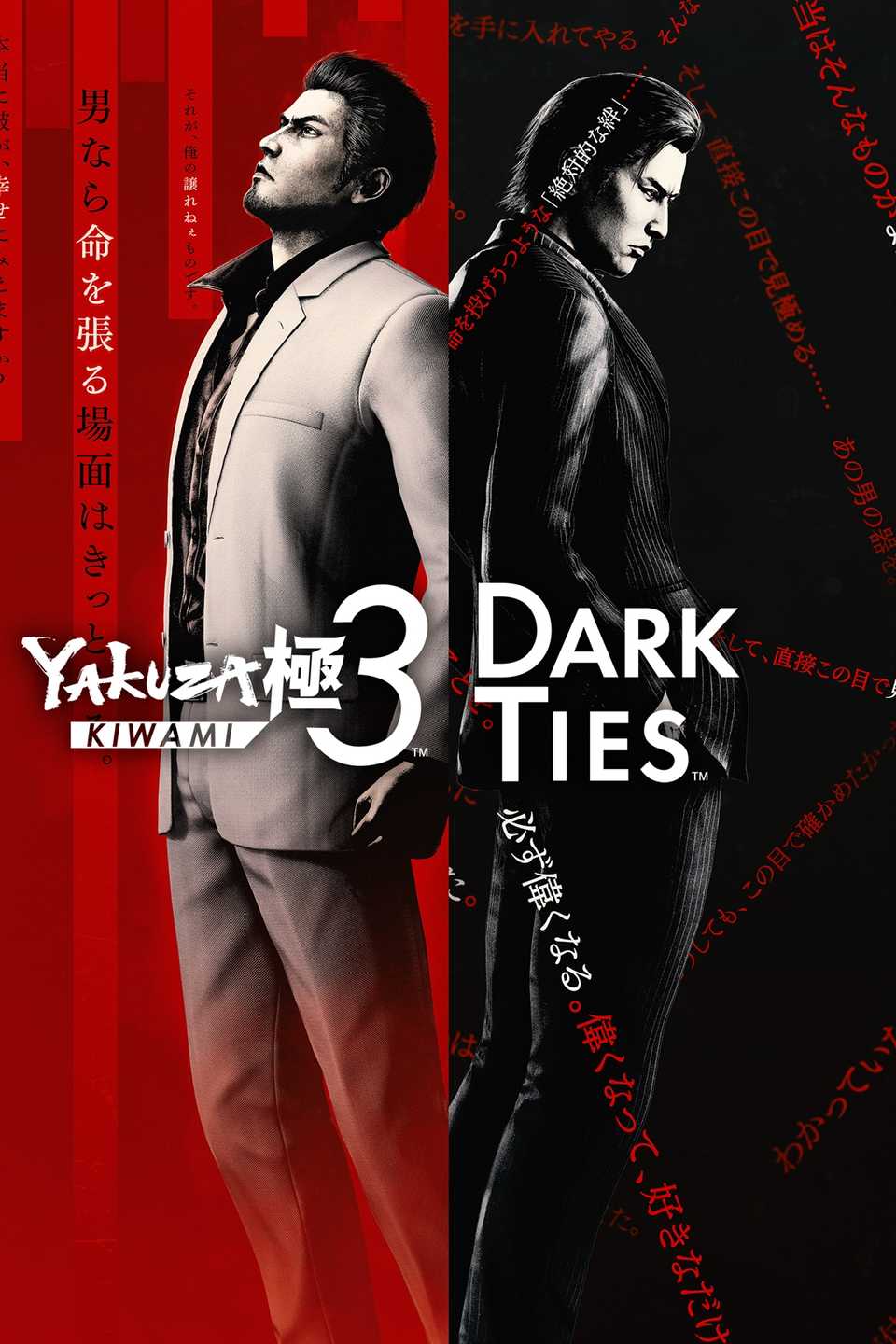
Released February 11, 2026
ESRB Mature 17+ / Blood, Intense Violence, Sexual Themes, Strong Language, Use of Alcohol, In-Game Purchases
Pros & Cons
- The expanded Morning Glory Orphanage is fantastic
- Better pacing than the original with new scenes adding more context
- Dark Ties is a strong companion campaign
- Mine's character in Dark Ties makes him incredibly endearing and redeeming
- The brand-new substories for Kiryu are an absolute delight
- Reworked combat lacks weight and identity
- Questionable character redesigns and recasting
- Major story deviations makes you raise concerns about the direction of the series

Next
Ghost Of Yotei Review
The highly anticipated sequel to Tsushima finishes strong, albeit with some bumps along the way.



![ELDEN RING NIGHTREIGN: Deluxe Edition [FitGirl Repack]](https://i5.imageban.ru/out/2025/05/30/c2e3dcd3fc13fa43f3e4306eeea33a6f.jpg)
 English (US) ·